Dry Heat

Last week, Lake Mead, which sits on the border of Nevada and Arizona, set a new record low—the first time since the construction of the Hoover Dam in the 1930s that the lake’s surface has dipped below 1,080 feet above sea level.

The West’s drought is so bad that official plans for water rationing have now begun—with Arizona’s farmers first on the chopping block. Yes, despite the drought’s epicenter in California, it’s Arizona that will bear the brunt of the West’s epic dry spell.

The huge Lake Mead—which used to be the nation’s largest reservoir—serves as the main water storage facility on the Colorado River. Amid one of the worst droughts in millennia, record lows at Lake Mead are becoming an annual event—last year’s low was 7 feet higher than this year’s expected June nadir, 1,073 feet.

If, come Jan. 1, Lake Mead’s level is below 1,075 feet, the U.S. Bureau of Reclamation, which manages the river, will declare an official shortage for the first time ever—setting into motion a series of already agreed-upon mandatory cuts in water outlays, primarily to Arizona. (Nevada and Mexico will also receive smaller cuts.) The latest forecasts give a 33 percent chance of this happening. There’s a greater than 75 percent chance of the same scenario on Jan. 1, 2017. Barring a sudden unexpected end to the drought, official shortage conditions are likely for the indefinite future.

Why Arizona? In exchange for agreeing to be the first in line for rationing when a shortage occurs, Arizona was permitted in the 1960s to build the Central Arizona Project, which diverts Colorado River water 336 miles over 3,000 feet of mountain ranges all the way to Tucson. It’s the longest and costliest aqueduct in American history, and Arizona couldn’t exist in its modern state without it. Now that a shortage is imminent, another fundamental change in the status quo is on the way. As in California, the current drought may take a considerable and lasting toll on Arizona, especially for the state’s farmers.

“We need to stop growing alfalfa in the deserts in the summertime.”

Robert Glennon, water policy expert at the University of Arizona

“A call on the river will be significant,” Joe Sigg, director of government relations for Arizona Farm Bureau, told the Arizona Daily Star. “It will be a complete change in a farmer’s business model.” A “call” refers to the mandatory cutbacks in water deliveries for certain low-priority users of the Colorado. Arizona law prioritizes cities, industry, and tribal interests above agriculture, so farmers will see the biggest cuts. And those who are lucky enough to keep their water will pay more for it.

According to Robert Glennon, a water policy expert at the University of Arizona, the current situation was inevitable. “It’s really no surprise that this day was coming, for the simple reason that the Colorado River is overallocated,” Glennon told me over the phone last week. Glennon explained that the original Colorado River compact of 1922, which governs how seven states and Mexico use the river, was negotiated during “the wettest 10-year period in the last 1,000 years.” That law portioned out about 25 percent more water than regularly flows, so even in “normal” years, big reservoirs like Lake Mead are in a long-term decline. “We’ve been saved from the disaster because Arizona and these other states were not using all their water,” Glennon said.

They are now. Since around 2000, Arizona has been withdrawing its full allotment from the Colorado River, and it’s impossible to overstate how important the Colorado has become to the state. About 40 percent of Arizona’s water comes from the Colorado, and state officials partially attribute a nearly 20-fold increase in the state’s economy over the last 50 years to increased access to the river.

On April 22, Arizona held a public meeting to prepare for an eventual shortage declaration, which could come as soon as this August. The latest rules that govern a shortage, established in 2007 by an agreement among the states, say that Arizona will have to contend with a 20 percent cut in water in 2016 should Lake Mead fall below 1,075 feet, which will decrease the amount available to central Arizona’s farmers by about half. At 1,050 feet, central Arizona’s farmers will take a three-quarters cut in water. At 1,025 feet, agriculture would have to make due largely without water from the Colorado River. That would probably require at least a temporary end to large-scale farming in central Arizona. Below 1,025 feet, the only thing Colorado River states have agreed to so far is a further round of negotiations. In that emergency scenario, no one really knows what might happen. More


Iran Calls GOP Letter ‘Propaganda Ploy,’ Offers To ‘Enlighten’ Authors

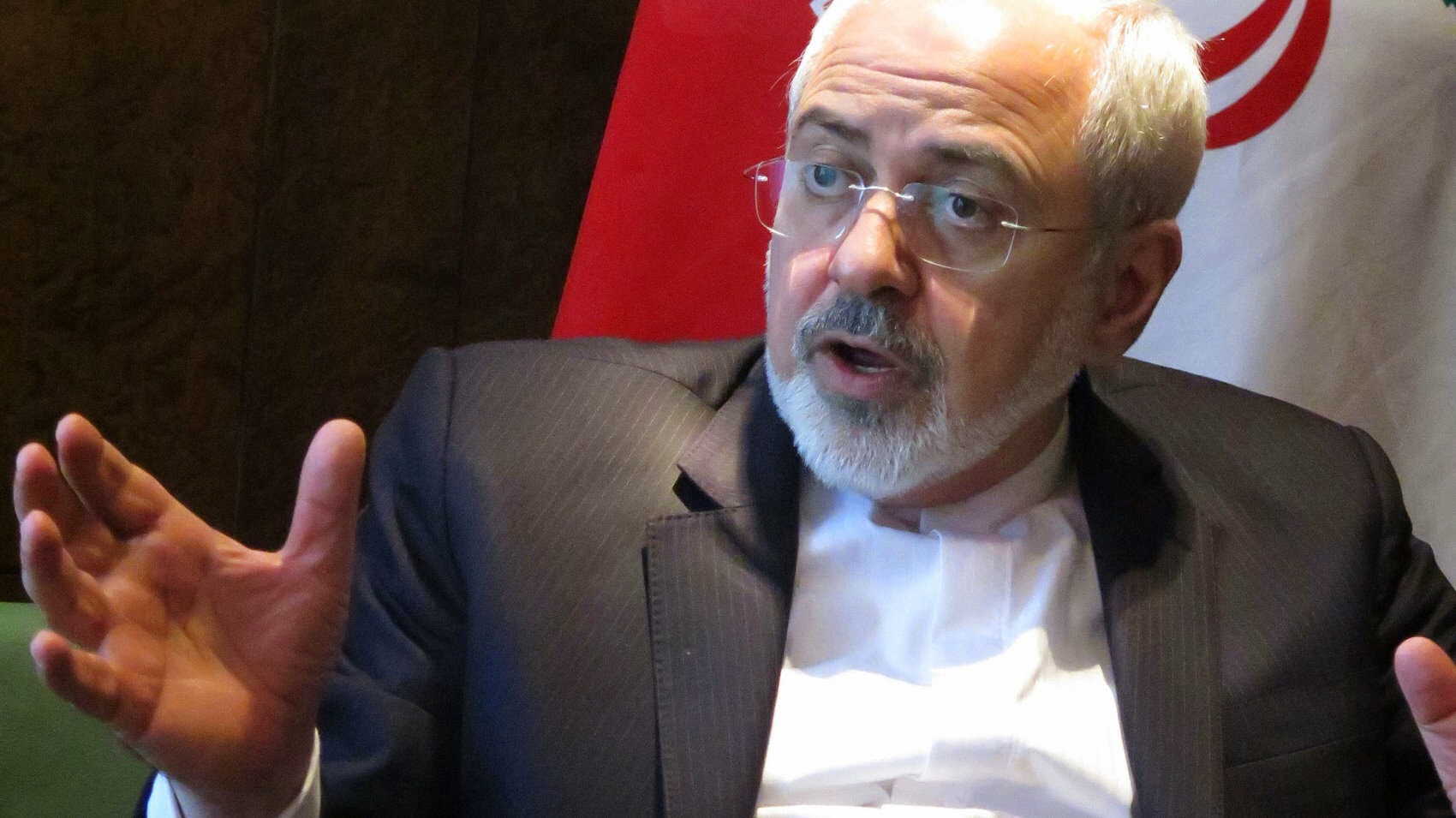
A letter from U.S. senators suggests the lawmakers “not only do not understand international law, but are not fully cognizant of the nuances of their own Constitution,” says Iranian Foreign Minister Mohammad Javad Zarif.

Republican senators’ letter to Iran about ongoing nuclear talks has prompted a lengthy response from Iranian Foreign Minister Mohammad Javad Zarif, who delivered an overview of international law as he critiqued the letter.

Zarif said he was astonished by the letter, saying it suggests the U.S. lawmakers “not only do not understand international law” — a subject in which he is a professor — “but are not fully cognizant of the nuances of their own Constitution when it comes to presidential powers in the conduct of foreign policy,” according to Iran’s Foreign Ministry.

The Iranian minister said that “in our view, this letter has no legal value and is mostly a propaganda ploy.”

His response (we have more of it below) came after it was announced Monday that 47 Senate Republicans who oppose a potential deal with Iran over its nuclear program had signed a letter to the country’s leaders.

Coming two weeks before the deadline for envoys to reach general terms with Iran, the signatories wrote that they had been observing the negotiations over potentially relaxing economic sanctions — and told Iran’s leaders they were concerned “that you may not fully understand our constitutional system.”

The letter seemed to strike a nerve for Zarif, who moved to the U.S. as a teenager and holds a doctorate and two other advanced degrees from American universities.

As NPR’s It’s All Politics blog noted, “The letter was written by freshman Arkansas Sen. Tom Cotton and co-signed by 46 of his GOP colleagues, including Majority Leader Mitch McConnell.”

The senators cited the U.S. process of ratifying treaties in Congress and President Obama’s term that expires in January of 2017, writing:

“What these two constitutional provisions mean is that we will consider any agreement regarding your nuclear-weapons program that is not approved by Congress as nothing more than an executive agreement between President Obama and Ayatollah Khamenei. The next president could revoke such an executive agreement with the stroke of a pen and future Congresses could modify the terms of the agreement at any time.”

The Republicans’ message was quickly criticized by Vice President Joe Biden, a former senator who said it was “beneath the dignity of an institution I revere.”

Seven Republicans did not sign the letter, as NPR’s Ailsa Chang reported today on Morning Edition.

President Obama said, “I think it’s somewhat ironic to see some members of Congress wanting to make common cause with the hard-liners in Iran” who are also against making a deal over Iran’s nuclear program.

Zarif, noting that negotiations are ongoing and haven’t yielded an agreement, said the U.S. lawmakers’ “unconventional methods” show that they “are opposed to any agreement, regardless of its content.”

Saying he hopes to “enrich the knowledge of the authors,” Zarif said:

“I should bring one important point to the attention of the authors and that is, the world is not the United States, and the conduct of inter-state relations is governed by international law, and not by US domestic law. The authors may not fully understand that in international law, governments represent the entirety of their respective states, are responsible for the conduct of foreign affairs, are required to fulfill the obligations they undertake with other states and may not invoke their internal law as justification for failure to perform their international obligations.”

Zarif also noted that many previous international agreements the U.S. has been a party to have been “mere executive agreements,” and not full treaties that received Senate ratification.

He said any deal on sanctions and Iran’s nuclear program would not be bilateral; would require approval by the U.N. and the U.N. Security Council; and would not be subject to modification by Congress.

He added, “I wish to enlighten the authors that if the next administration revokes any agreement with the stroke of a pen, as they boast, it will have simply committed a blatant violation of international law.”

For a different perspective, Ailsa spoke to Richard Nephew, who was on U.S. teams negotiating with Iran during both the Bush and Obama administrations.

Nephew said, “The idea that a sitting group of senators of either party would write to the other side of a negotiation to say, ‘Eh, don’t sign a deal with these guys’ — to me, it really smacks of a misplaced understanding of how the international system is supposed to work.” More


Cutting off the Somali Lifeline, a heated debate in Somaliland

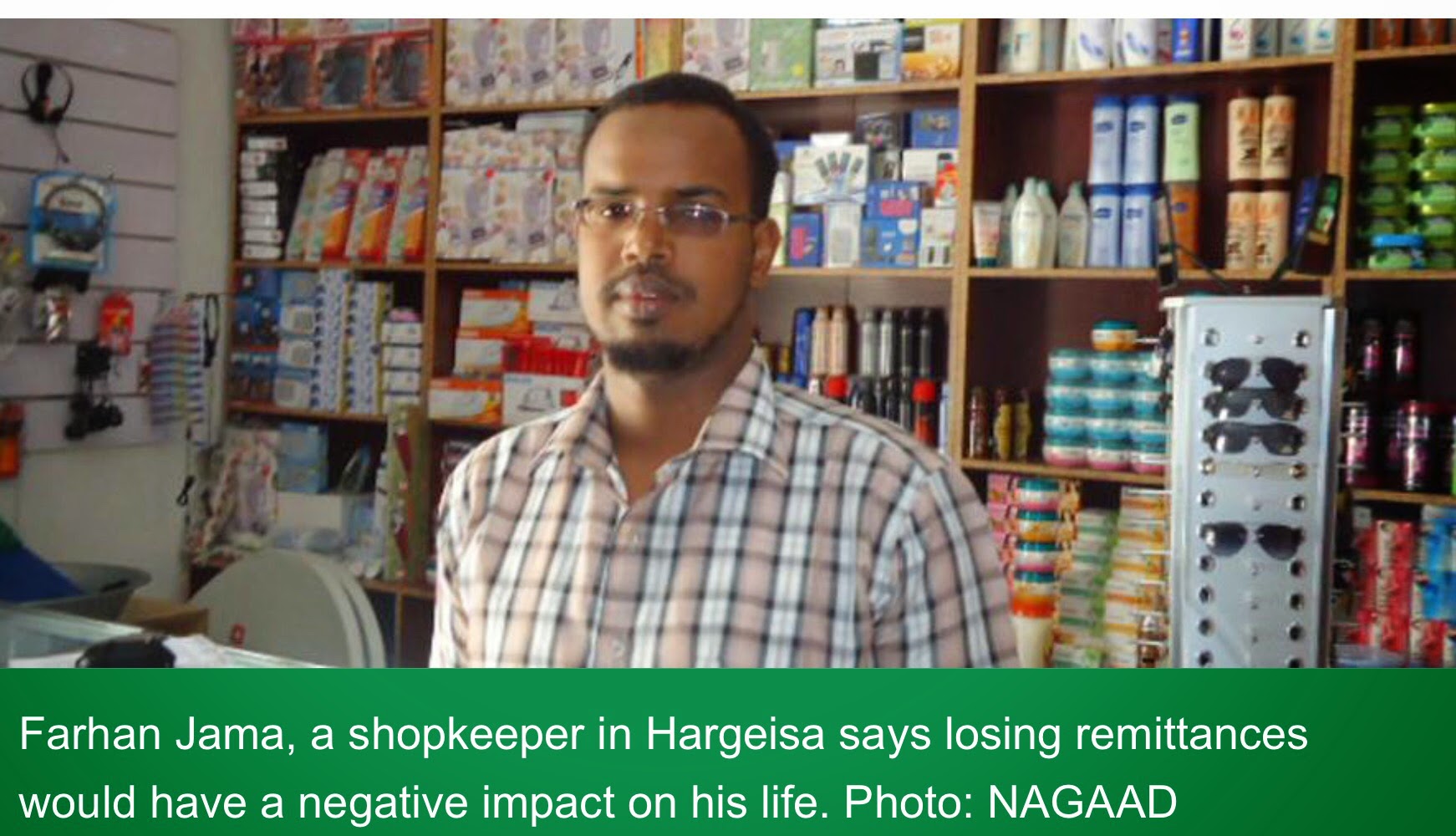
According to Oxfam’s report, Keeping the Life Line Open – Remittances and Markets in Somalia, Somalis abroad use money transfer companies to send home an estimated $1.3 billion annually. These companies have a presence throughout the Somali territories and beyond, and together they provide basic financial services.

In January 2015, Merchants Bank of California, which handles an estimated 60 to 80 percent of the remittances sent to Somali territories from the United States, announced the closure of its business with Somali-American money transfer operators (MTOs). This has created a heated debate amongst Somali communities all over the world due to the fact that remittances have played a huge role in boosting the Somali economy amidst the turmoil over the past two decades. In a bid to address this matter, Red Sea Cultural Foundation organized a public lecture and debate at the Hargeysa Cultural Centre, in Somaliland, under the theme: “Breaking the Lifeline: the Crisis Facing Somali Remittances from the US” on the night of 12 February 2015.

The discussion was led by Dr. Laura Hammond, Head of the Development Studies Department of the School of Oriental and African Studies (SOAS), with the participation of influential members from the government, international organisations, MTOs, university students, remittance senders and recipients.

From basic needs and school fees to business start up

Dr. Hammond discussed the recent decision of Merchants Bank, to close the accounts of Somali money transfer companies, in the context of similar dynamics that took place in the UK in 2013. Dr. Hammond reflected on a study she undertook for FSNAU “Family Ties: Remittances and Livelihoods Support in Puntland and Somaliland” on receipt of remittances in both urban and rural areas of Somaliland and Puntland.

Her study shed light on what Somalis primarily use the remittances for and highlighted that millions of Somalis are dependent on the remittances on a daily basis. A large portion of remittances are spent on basic needs and have also been used to build hospitals, schools, start businesses and other communal development projects. MTOs are also used by the students to pay their tuition fees, for traders to buy goods, and non-governmental organisations including UN agencies to deliver aid.

Impact on families ties and the new Somali generation

“Somalis have a deep-rooted traditional value where they uphold their family ties. One way of expressing this is through sending remittances. Therefore, breaking that lifeline means breaking up their relationships,” said Dr. Bulhan, a Somali-American scholar currently living in Somaliland.

“Cutting off the Somali lifeline will destroy the hope of many youth who are dependent on the remittances,” said Abduladif Abby, an aspiring Somaliland youth “the closure of MTOs will trigger the resentment on which terrorist groups thrive. But the truth is no one suffers more from insurgence than us Somalis!”

“Remittances are not sustainable though,” said Dr. Bulhan “because the young generation of the Somali Diaspora are not like their parents, connected to their families back home; they do not care anymore! So we’re likely to see a reduction of remittances sent from abroad in the next generation.”

Terrorist financing and money laundering

Dr. Hammond anticipated the possible impacts of the cut and the fact that people will pay higher rates, so less money may get through. “They will be forced to engage in illegal sending making them vulnerable; and for those who would like to engage in terrorist financing, money laundering, etc. this is a golden opportunity for them,” she explained.

During the discourse, the Minister of Somaliland National Planning and Development raised the rights of American and European citizens to send money back home to their relatives as being violated. Dr. Saad A. Shire also assured that Somalis will send the money anyway. “They will find more new ways,” he said.

More regulation and transparency

Looking into the future, Dr. Hammond reiterated the Oxfam recommendation to establish regulatory regime, including assurance for banks working with approved MTOs. She also mentioned the ‘Safer Corridor Pilot Project’ and maintained the need to educate banks about how MTOs work and what remittances are used for. She mentioned the requirement of more regulation and oversight on part of the Somaliland government and more cooperation and transparency by MTOs. More

In conclusion, the debate was lively and among the issues raised was the need to have more open discussions on conventional banking systems in Somaliland, and a call to pass the regulatory laws on remittances and anti-money laundering.

Act now

With Oxfam America, tell the US Treasury: Step in and take action to keep the money transfer lifeline open


The US is heading for a ‘megadrought’ if climate change continues at this pace

The long and severe drought in the US southwest pales in comparison with what’s coming: a “megadrought” that will grip that region and the central plains later this century and probably stay there for decades, a new study says.

Thirty-five years from now, if the current pace of climate change continues unabated, those areas of the country will experience a weather shift that will linger for as long as three decades, according to the study, released Thursday.

Researchers from Nasa and Cornell and Columbia universities warned of major water shortages and conditions that dry out vegetation, which can lead to monster wildfires in southern Arizona and parts of California.

“We really need to start thinking in longer-term horizons about how we’re going to manage it,” said Toby R Ault, an assistant professor in the department of Earth and atmospheric sciences at Cornell, one of the co-authors. “This is a slow-moving natural hazard that humans are used to dealing with and used to managing.”

Megadroughts are sustained periods of sparse precipitation and significant loss of soil moisture that span generations, about 10 times as long as a normal three-year drought.

Tucson had less than 80 percent of its normal rainfall for long stretches in the 1990s. If that were to last for two decades, “that’s a megadrought,” Ault said.

Based on climate models the researchers used for the study, there is an 80 percent chance that such an extended drought will strike between 2050 and 2099, unless world governments act aggressively to mitigate impacts from climate change, the researchers said.

North America’s last megadroughts happened in medieval times, during the 12th and 13th centuries. They were caused by natural changes in weather that give megadroughts a 10 percent chance of forming at any time.

But climate change driven by human activity dramatically increases those chances. “With climate change, the likelihood of a megadrought goes up considerably,” Ault said.

The other writers for the study were its lead author, Benjamin I Cook, a research scientist for NASA’s Goddard Institute for Space Studies, and co-author Jason E Smerdon, a research professor at Columbia’s Lamont-Doherty Earth Observatory. The report was published Thursday in the journal Science Advances.

“We got some exciting, thrilling and important research,” said Marcia Kemper McNutt, a geophysicist and editor in chief of the journal Science. “We are facing a water situation that hasn’t been seen in California for 1,200 years.”

At the study’s presentation, Ault had a word of caution. Weather conditions can vary, climate impacts can be mitigated, and the warnings of the study might not come to pass. A single El Niño weather pattern in the West could interrupt periods of prolonged drought.

Smerdon said the researchers went back over a thousand years’ worth of data to look at conditions that caused drought in North America and observing patterns in tree rings to determine wet and dry periods.

After 2050, there is “overwhelming evidence of a dry shift,” he said, “way drier than the megadroughts of the 1100s and 1200s.” The cause, Smerdon continued, “is twofold, reductions in rainfall and snowfall. Not just rainfall but soil moisture and changes in evaporation that dry out the soil much more than normal.”

The research is newly published, but its findings are not dramatically different from similar studies in the past. Beverly Law, a specialist in global change biology at Oregon State University’s College of Forestry, co-authored a study of megadroughts three years ago.

It showed that a drought that affected the American West from 2000 to 2004 compared to conditions seen during the medieval megadroughts. But the predicted megadrought this century would be far worse. Law said Thursday’s study confirmed her previous findings.

“We took the climate model and compared” two periods, 2050 to 2099 and 1950 to 1999, she said. “What it showed is this big, red blotch over Southern California. It will really impact megacities, populations and water availability.”

Law is also co-author of an upcoming study commissioned by the U.S. Geological Survey about forest mortality later this century, and the preliminary findings are disturbing, she said.

According to predictions, the amount of precipitation in Arizona will be half of what it was between 1950 and 1999.

“We have drinking water to be concerned about,” she said. “That area’s really vulnerable.” More


Antibiotics, bacteria, resistance genes found in dust from feedlots

After testing dust in the air near cattle feedlots in the Southern High Plains, researchers at The Institute of Environmental and Human Health at Texas Tech University found evidence of antibiotics, feedlot-derived bacteria and DNA sequences that encode for antibiotic resistance.

The study was published online in the National Institutes of Environmental Science’s peer-reviewed journal, Environmental Health Perspectives. The research was funded through a grant from Texas Tech’s College of Arts and Sciences. It is the first study documenting aerial transmission of antibiotic resistance from an open-air farm setting.

Phil Smith, an associate professor of terrestrial ecotoxicology at the institute, said that while scientists couldn’t assess if the amounts of these materials were dangerous to human health, it helped explain a previously uncharacterized pathway by which antibiotic-resistant bacteria could travel long distances into places inhabited by humans.

The findings come weeks after a report commissioned by British Prime Minister David Cameron concluded that failure to battle drug-resistant infections and their causes could result in 10 million extra deaths a year by 2050 at a cost of $100 trillion to the global economy.

“You can look in the news, and people are raising red flags about antibiotic resistance all the time,” Smith said. “Microbes are pretty promiscuous with their genetic information, and they share it across species fairly easily. We know it’s there. We know what causes it, but we don’t have a really good handle on how it’s transmitted and how it moves in the environment. This is an attempt to provide better clarity on that issue.

“Everyone is fairly certain antibiotic resistance comes from extensive use of antibiotics in animal-based agriculture. About 70 percent of all antibiotics used are for animal agricultural purposes. Overuse contributes to antibiotic resistance. But how does it happen? How does it get from where the drugs are used into the human environment and natural environment?”

Smith said scientists collected air samples upwind and downwind of each feedlot. After analysis, they found greater amounts of bacteria, antibiotics and DNA sequences responsible for antibiotic resistance downwind of the feedlots compared to upwind, which helped scientists determine the source of the materials they found.

Because the antibiotics are present on the particulate matter with bacteria, the selective pressure for bacteria to retain their resistance remains during their flight, said Greg Mayer, an associate professor of molecular toxicology at the institute.

With wind blowing regularly on the Southern High Plains, the antibiotics and bacteria can travel on the dust and particulate matter far from the original starting point at the feedlot. Add the infamous West Texas dust storms into the picture, and these materials have the potential to travel hundreds of miles into cities and towns and possibly around the globe.

“I think implications for the spread of some feedlot-derived, antibiotic-resistant bacteria into urban areas is paramount to the research,” Mayer said. “Now, we haven’t yet taken samples from an urban area to determine whether bacteria from that particulate matter originated from feedlots or whether it still has antibiotic resistant bacteria on it. However, this study is proof of the principle that antibiotic-resistant bacteria could plausibly travel through the air.

“Further studies are now needed to show where the particulate matter is traveling and what is happening to its passengers when it gets there.” More


Prosecute Torturers and Their Bosses

Since the day President Obama took office, he has failed to bring to justice anyone responsible for the torture of terrorism suspects — an official government program conceived and carried out in the years after the attacks of Sept. 11, 2001.

He did allow his Justice Department to investigate the C.I.A.’s destruction of videotapes of torture sessions and those who may have gone beyond the torture techniques authorized by President George W. Bush. But the investigation did not lead to any charges being filed, or even any accounting of why they were not filed.

Mr. Obama has said multiple times that “we need to look forward as opposed to looking backwards,” as though the two were incompatible. They are not. The nation cannot move forward in any meaningful way without coming to terms, legally and morally, with the abhorrent acts that were authorized, given a false patina of legality, and committed by American men and women from the highest levels of government on down.

Americans have known about many of these acts for years, but the 524-page executive summary of the Senate Intelligence Committee’s report erases any lingering doubt about their depravity and illegality: In addition to new revelations of sadistic tactics like “rectal feeding,” scores of detainees were waterboarded, hung by their wrists, confined in coffins, sleep-deprived, threatened with death or brutally beaten. In November 2002, one detainee who was chained to a concrete floor died of “suspected hypothermia.”

These are, simply, crimes. They are prohibited by federal law, which defines torture as the intentional infliction of “severe physical or mental pain or suffering.” They are also banned by the Convention Against Torture, the international treaty that the United States ratified in 1994 and that requires prosecution of any acts of torture.

So it is no wonder that today’s blinkered apologists are desperate to call these acts anything but torture, which they clearly were. As the report reveals, these claims fail for a simple reason: C.I.A. officials admitted at the time that what they intended to do was illegal.

In July 2002, C.I.A. lawyers told the Justice Department that the agency needed to use “more aggressive methods” of interrogation that would “otherwise be prohibited by the torture statute.” They asked the department to promise not to prosecute those who used these methods. When the department refused, they shopped around for the answer they wanted. They got it from the ideologically driven lawyers in the Office of Legal Counsel, who wrote memos fabricating a legal foundation for the methods. Government officials now rely on the memos as proof that they sought and received legal clearance for their actions. But the report changes the game: We now know that this reliance was not made in good faith.

No amount of legal pretzel logic can justify the behavior detailed in the report. Indeed, it is impossible to read it and conclude that no one can be held accountable. At the very least, Mr. Obama needs to authorize a full and independent criminal investigation.

The American Civil Liberties Union and Human Rights Watch are to give Attorney General Eric Holder Jr. a letter Monday calling for appointment of a special prosecutor to investigate what appears increasingly to be “a vast criminal conspiracy, under color of law, to commit torture and other serious crimes.”

The question everyone will want answered, of course, is: Who should be held accountable? That will depend on what an investigation finds, and as hard as it is to imagine Mr. Obama having the political courage to order a new investigation, it is harder to imagine a criminal probe of the actions of a former president.

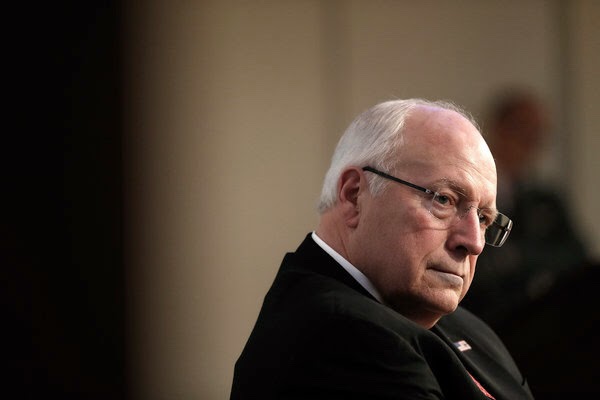
But any credible investigation should include former Vice President Dick Cheney; Mr. Cheney’s chief of staff, David Addington; the former C.I.A. director George Tenet; and John Yoo and Jay Bybee, the Office of Legal Counsel lawyers who drafted what became known as the torture memos. There are many more names that could be considered, including Jose Rodriguez Jr., the C.I.A. official who ordered the destruction of the videotapes; the psychologists who devised the torture regimen; and the C.I.A. employees who carried out that regimen.

One would expect Republicans who have gone hoarse braying about Mr. Obama’s executive overreach to be the first to demand accountability, but with one notable exception, Senator John McCain, they have either fallen silent or actively defended the indefensible. They cannot even point to any results: Contrary to repeated claims by the C.I.A., the report concluded that “at no time” did any of these techniques yield intelligence that averted a terror attack. And at least 26 detainees were later determined to have been “wrongfully held.” More


Israel, U.S. attempting to prevent Geneva Convention summit on Palestinians

Israel and the United States are trying to dissuade the nearly 200 states that are party to the Fourth Geneva Convention from convening a special session in mid-December to address conditions in the West Bank, Gaza Strip and East Jerusalem, Israeli and Western diplomats told Haaretz Wednesday.

Government officials believe that convention sponsor Switzerland has come under strong pressure from the Palestinians and Arab states, and is expected to issue invitations to the conference within days.

In early April, following Israel’s refusal to free the last scheduled group of Palestinian prisoners, and its announcement that it would build 700 homes in East Jerusalem, Palestinian Authority President Mahmoud Abbas decided to sign, in the Palestinian state’s name, on 15 international conventions and ask to join them. One of them was the Fourth Geneva Convention, which deals with protecting the civilian population in fighting areas or occupied territories.

This move brought to a head the crisis that led to the collapse of U.S. efforts to extend the talks between Israel and the Palestinians. A few weeks later the Palestinians and Arab League asked Switzerland officially to call a conference of the convention signatories to discuss the Israeli occupation in the West Bank and East Jerusalem, as well as the damage Israel caused civilians in Gaza.

So far four attempts have been made to convene the Fourth Geneva Convention – all of them in regard to the Israeli-Palestinian conflict. The last attempt was made in 2009 after Operation Cast Lead in the Gaza Strip.

However, after consultations of the Swiss Foreign Ministry at the time, it was decided there wasn’t sufficiently broad international support for holding the conference. In 2001, on the other hand, after the outbreak of the second intifada, such a conference was held. Israel and the United States boycotted it.

Recently Swiss diplomats said their country, as the convention’s sponsor, couldn’t decide by itself on calling the conference again. So Switzerland began consultations with the other signatory states to see if enough of them were interested in holding the conference.

Switzerland distributed to all the signatories a proposal to hold the conference in Geneva in mid-December. The Swiss made it clear they wanted the event to focus on the upholding of international humanitarian law.

The Swiss proposal is for a three-hour conference at an ambassadorial level, with few speeches and no media coverage except for a statement to the press to be released at the end.

“We made it clear we didn’t want a political event or debate club, or a conference that would blame or criticize one of the sides,” a Swiss diplomat said.

Israel objected to the move strongly despite the low profile Switzerland suggested. Senior Israeli diplomats went to Bern and Geneva a few times in a bid to persuade the Swiss Foreign Ministry not to hold the conference, saying Israel would boycott it if it were held.

“They told us that holding the conference would help a one-sided Palestinian move intended to make Israel look bad and attack it in an international forum,” the Swiss diplomat said.

Updated draft refers to settlements

The conference cannot make binding decisions, but could increase international criticism of Israel’s policy in the territories, especially regarding the settlements.

The Israeli fear over the conference increased after Jerusalem received an updated draft of its proposed contents. Unlike previous versions, the updated draft was phrased in a very political way, mentioning Israel by name and referring in detail to issues like the West Bank settlements.

Israeli and Swiss diplomats said the United States, Canada and Australia were helping Israel and exerting pressure on Switzerland and other states to thwart the conference. Israeli diplomats said that despite the fact that the Americans have yet to make a formal decision on the matter, U.S. officials have told Switzerland they would boycott the conference if it is held. Canada has conveyed a similar message to Switzerland.

Speaking with Haaretz on Wednesday, Edgar Vasquez, a spokesman for the U.S. State Department, affirmed the American disapproval. “We strongly oppose the convening of the High Contracting Parties to the Geneva Conventions and have made our opposition unmistakably clear,” he said.

Foreign Minister Avigdor Lieberman held telephone conversations in the last few days with colleagues worldwide, asking them to object to the conference and declare they would boycott it if it is held. Also, Israeli ambassadors in several key Western states have been instructed to try to obtain a commitment from those states to boycott the conference.

The Palestinians, meanwhile, along with the group of Arab nations, are pushing for the summit to be held.

But the Israeli efforts look bound to fail. Israeli and Swiss diplomats estimate that the Swiss government will in the coming days announce the holding of the summit.

Western diplomats knowledgeable of the proceedings described the Swiss as determined to move forward despite the significant resistance by nations such as the U.S., Canada, Australia and others.

The Fourth Geneva Convention is one of the four treaties of the Geneva Conventions, adopted in 1949, which deals with the protection of civilian populations residing in areas of armed conflict and in areas under military occupation. The treaty forbids harming any agents uninvolved in the fighting – which includes, in addition to civilians, captured and wounded soldiers.

In regarding to a state of protracted military occupation – such as exists in the West Bank – the treaty decrees that the occupying power must uphold the human rights of the occupied civilian population, and ensure its conditions of living. The treaty also forbids any and all movement of civilian population from within the borders of the occupying power into the areas under military rule – such as the Israeli settlements in the West Bank.

Israel is a party to the convention, but the Knesset has never legislated the treaty into Israeli law. Israel claims the treaty is not applicable to the West Bank or East Jerusalem, for it considers these areas to be “disputed,” and not as under occupation. Thus, Israel does not regard the settlements as violations to the treaty.


Wrong Priorities in Ferguson and Beyond: We Must Invest in Communities, Not Violence

In the lead-up to the grand jury outcome in the Michael Brown murder the St. Louis and Ferguson-area police have ramped up their preparation with stockpiles of more weapons and rhetoric that contributes to the public frenzy.

Demonstrators outside Ferguson
Police Department 11/19/14

While I understand the need for security, does the narrow-minded focus on military and weapons actually make us more secure? Human security and peace economists understand that increased weaponization makes us more insecure.

Researchers for some time now have been able to understand how freedom from violence and the threat of violence, community-based economic development, authentic democratic processes and transparency increase human security. Violence and security have often been linked; human security research suggests they are mutually exclusive. Choosing violence to attain security precludes that very security for anyone who critiques violence, as thousands have learned in Ferguson. Clanging claims that we live in a great democracy that protects everyone’s rights sound awfully hollow to an unarmed protestor who has just been injured and arrested by a jack-up cop strapped with an official lethal sidearm and a legal system that affords him every benefit of every doubt.

Democracy is not just a system of voting but an approach to governing that recognizes obstacles to participation and development and listens, trying to hear what communities need. It is not ever envisioned as a system where the majority can vote itself immunity and vote the minority vulnerable to brutality committed by agents of the state. That sort of system is a false democracy. We want a real one.

Communities don’t want handouts—people want to work to determine their own futures. But many young people question the very concept of future. In the immediate aftermath of the murder of unarmed Michael Brown last August, St. Louis City police gunned down another African American youth, Kejeme Powell across the street from my parents’ home. He had a little knife and was simply depressed and told the police, “Shoot me.” They were exceedingly unprofessional and lacking even a whit of compassion as they did just that—at least six shots each. Where is the hope?

The current state of affairs concerning the outcome of the grand jury is extremely disconcerting, contributing to an increased sense of insecurity. Governor Nixon needs to appoint an independent prosecutor to avoid the perception of injustice. A real involvement of the community in plans for any grand jury outcome as hands up united suggested, or focusing on all of the positive efforts the community in Ferguson and Beyond are doing to teach nonviolence would be actions that ease the air of panic of the entire region.

People of color in the US, in general, don’t trust the legal system to bring justice. Fixing that might seem like a daunting task, but democratic theorists point out that even the smallest communities must have their needs addressed if we as a society are to maintain the promise of democracy.

The lack of real understanding of the protestors, beyond the sense that they are a nuisance, is part of the continuing failure of local and national officials. Their response continues to point out the deep racial divide and necessity of deep conversation and action. For instance, there was a demonstrationfor second amendment rights in downtown St. Louis in October where demonstrators carried guns openly. Some had three or four weapons including automatic assault weapons. This gathering of an all white crowd was not met with riot gear, but only a few police with luminescent vests. In San Franciso, exuberant Giants fans set fires broke windows and destroyed property. While police arrested some- where was the rethoric around violent whites or even the call for the national guard? Fans were excited, expressing joy, although a bit much, but Whites are allowed to be angry, express emotions. But don’t protestors, who are rightly angered over police killings of Blacks, have the same humanity to express their frustration?

I reiterate the need for dialogue, for listening to people’s truth so they can move forward. This is not just desirable, but actually required for reconciliation. If that is not what our society is about, then there needs to be a conversation about who we really are as Americans. But as it stands, the assertion by our elected leadership is that this is a democratic nation concerned with all of its citizens. My message to government officials is that all of the preparation for the violence following the grand jury; the cost of increased overtime for police, money spent on weapons and security with the threat of violence does not provide authentic security, but instead exacerbates the root causes of the protests- the inattention to the dignity of already marginalized. Governor Nixon, you and Ferguson area officials are bracing for a storm you helped to create. More


Duty to Refuse’: Top Medical Groups Back Nurse Who Said ‘No’ to Force-Feeding Guantanamo Hunger Strikers

Force-feeding a competent person is not the practice of medicine; it is aggravated assault.'

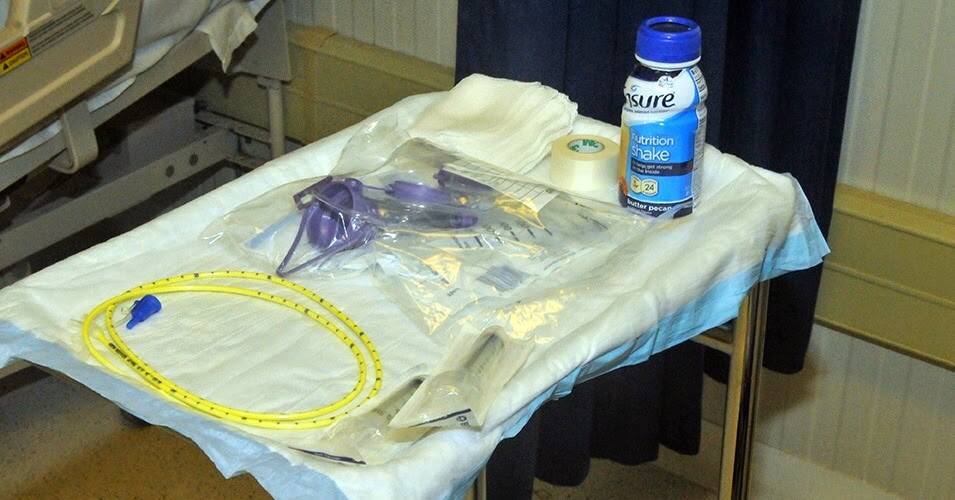
Leading medical groups are speaking out in support of a U.S. Navy nurse who refused on ethical grounds to force-feed hunger strikers held captive at Guantanamo Bay.

The American Nurses Association announced Wednesday that they have penned letters to U.S. government and military officials strongly urging against any punishment or retaliation for the act of refusal, which occurred in July. The military is planning to try the unidentified nurse, who is an officer, before a Board of Inquiry, which could result in a dishonorable discharge that strips him of his veterans benefits.

“The ANA Code of Ethics for Nurses clearly supports the ethical right of a professional nurse to make an independent judgment about whether he or she should participate in this or any other such activity,” reads an October 17 letter (pdf) to Secretary of Defense Chuck Hagel from Pamela Cipriano, ANA president. “The military setting does not change the nurse’s ethical commitments or standards.”

Doctor Vincent Iacopino, senior medical adviser for Physicians for Human Rights, told Common Dreams that his organization strongly supports the nurse's refusal to take part in the force-feeding of competent adults, which is banned by the World Medical Association and the American Medical Association and has been condemned by the office of the United Nations high commissioner for human rights as torture and a violation of international law.

“Force feedings are being done without informed consent, against people's wishes,” said Iacopino. “We have codes of conduct that prohibit us from conducting therapeutic interventions or diagnostic procedures that people do not consent to.”

“The government is claiming it is doing this to save people's lives,” Iacopino continued. “The reality is that people are on hunger strike, protesting something: indefinite detention, often without charges. Any health professional under those circumstances has a duty to refuse. This is ill treatment with no respect for autonomy.”

This is not the first time medical professionals have called for non-participation in the Guantanamo Bay force-feedings.

In op-ed published in the New England Journal of Medicine in July, a time of doctors writes, “Force-feeding a competent person is not the practice of medicine; it is aggravated assault. Using a physician to assault prisoners no more changes the nature of the act than using physicians to 'monitor' torture makes torture a medical procedure. Military physicians are no more entitled to betray medical ethics than military lawyers are to betray the Constitution or military chaplains are to betray their religion.”

Furthermore, the American Medical Association also penned a letter to Hagel in April declaring, “Every competent patient has the right to refuse medical intervention, including life-sustaining interventions.”

The nurse's act of refusal was originally revealed by Abu Wa'el Dhiab, a Syrian man and father of four who currently held in Guantanamo Bay despite being cleared for release since 2009. Dhiab told his lawyers at Reprieve that he heard the nurse, described as an approximately 40 year-old Latino man, state, “I have come to the decision that I refuse to participate in this criminal act.”

“Before we came here, we were told a different story,” the nurse reportedly added. “The story we were told was completely the opposite of what I saw.”

The U.S. military has been broadly criticized for its treatment of hunger strikers. In response, the U.S. has imposed secrecy on its procedures and practices, including a media blackout on the number of people participating in the protest.

One hundred forty eight men remain incarcerated at Guantanamo Bay without charges or fair trial. More

This work is licensed under a Creative Commons Attribution-Share Alike 3.0 License

If this brave and honourable nurse is going to be tried, then so should President Obama and the Joint Chief of Staff. Editor


Reality of National Security State Trumps ‘Delusions’ of U.S. Democracy

In the halls of U.S. government, “policy in the national security realm is made by the concealed institutions,” political scientist argues in new book

“I think the American people are deluded.”

So says Tufts University political scientist Michael J. Glennon, whose new book, National Security and Double Government (Oxford University Press), describes a powerful bureaucratic network that's really pulling the strings on key aspects of U.S. foreign policy.

The 'double government' explains why the Obama version of national security is virtually indistinguishable from the one he inherited from President George W. Bush.

The American public believes “that when they vote for a president or member of Congress or succeed in bringing a case before the courts, that policy is going to change,” Glennon told the Boston Globe in an interview published Sunday. “Now, there are many counter-examples in which these branches do affect policy… But the larger picture is still true—policy by and large in the national security realm is made by the concealed institutions.”

Glennon argues that because managers of the military, intelligence, diplomatic, and law enforcement agencies operate largely outside the institutions meant to check or constrain them—the executive branch, the courts, Congress—national security policy changes very little from one administration to the next.

This explains, he says, why the Obama version of national security is virtually indistinguishable from the one he inherited from President George W. Bush. It's also why Guantanamo is still open; why whistleblowers are being prosecuted more; why NSA surveillance has expanded; why drone strikes have increased.

“I was curious why a president such as Barack Obama would embrace the very same national security and counterterrorism policies that he campaigned eloquently against,” Glennon said. Drawing on his own personal experiences as former legal counsel to the Senate Foreign Relations Committee, as well as conversations with dozens of individuals in U.S. military, law enforcement, and intelligence agencies and elected officials, Glennon drew the following conclusion: “National security policy actually bubbles up from within the bureaucracy. Many of the more controversial policies, from the mining of Nicaragua’s harbors to the NSA surveillance program, originated within the bureaucracy.”

To dismantle this so-called “double government”—a phrase coined by British journalist and businessman Walter Bagehot to describe the British government in the 1860s—will be a challenge, Glennon admits. After all, “There is very little profit to be had in learning about, and being active about, problems that you can’t affect, policies that you can’t change.”

But he is not hopeless. “The ultimate problem is the pervasive political ignorance on the part of the American people. And indifference to the threat that is emerging from these concealed institutions. That is where the energy for reform has to come from: the American people,” he said. “The people have to take the bull by the horns.” More

This work is licensed under a Creative Commons Attribution-Share Alike 3.0 License