Polish chemical weapons cover-up threatens US interests in Europe

 According to Terrance Long, founder of the International Dialogue on Underwater Munitions, the organisation was designed specifically to remove countries’ liabilities for dumping toxic munitions in seas throughout the 20th century.
30% of all fish tested in the Baltic Sea now contain warfare agents. This figure will only increase over time to almost 100% of the fish stocks, as such chemical weapons have a half-life of 5,000 years. EU consumers, plus the 16-20 million American citizens visiting Europe every year, would recoil in disgust, posing a serious financial problem as four of the seven largest European fish exporters come from the Baltic.

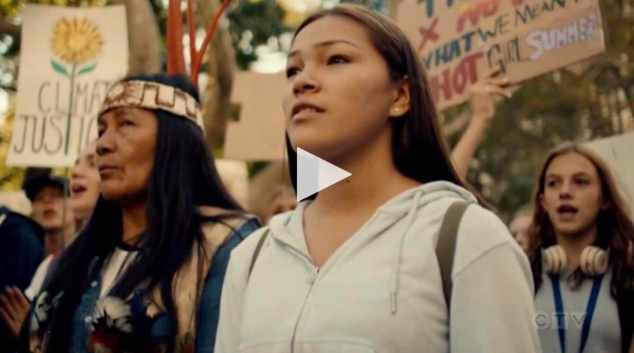
Indigenous ​activist Autumn Peltier vows to hold feds accountable for 61 boil water advisories​

 OTTAWA — A new documentary that premiered at the Toronto International Film Festival has put a renewed spotlight on an Indigenous clean water advocate known as the “water warrior.”
Autumn Peltier is Anishinaabekwe and a member of Wiikwemkoong First Nation. In 2018, at the age of 13, she pressed world leaders at the United Nations General Assembly on the issue of water protection.
Peltier is the focus of a new short film titled, “The Water Walker.” The film tracks her journey from Wiikwemkoong First Nation in northern Ontario to Manhattan where she spoke at UN headquarters for a second time in 2019 about the importance of universal access to clean drinking water.

We Can Partner With Nature To Food Everybody

We Can Partner With Nature To Feed Everybody
 Reginaldo Haslett-Marroquin is transforming the food system from the ground up by introducing poultry-powered, planet-cooling, regenerative agriculture. He talks about the need to rebalance humanity’s relationship with nature with Pip Wheaton, Ashoka’s co-lead of Planet & Climate.

I came into this because of people’s suffering. I’m an agronomist; I’m passionate about nature. I believe I understand how nature operates, and how we can be partners with nature to feed everybody. The current system isn’t doing that. As a consequence, the way people live, the quality of people’s lives because of the food they eat, is impacted. Consumers are sick from conventional foods; diet related diseases, diabetes, heart disease. Minorities are more severely affected because of the way food reaches minority communities all around the world. Whether it is indigenous communities in Guatemala and Mexico, or African Americans or Hispanic or other minorities in the United States, or minorities in other countries, they’re the ones at the tail end.

I Live On An Island And I cannot See The Ocean

I Live On An Island and I Cannot See The Ocean 

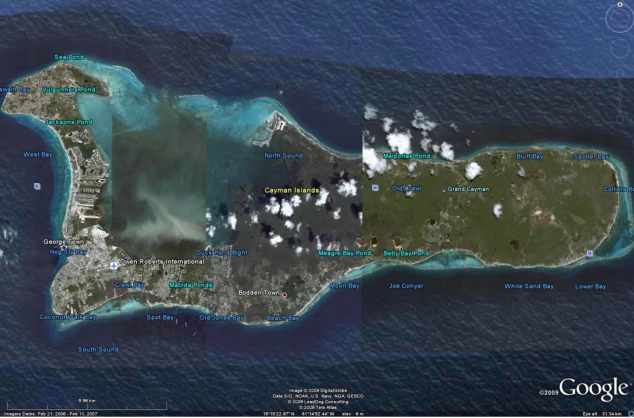
I am an islander. A multi-generational islander. I was born on a very small island (23 square miles), I grew up on a medium sized island and have lived most of my life on a third island, Grand Cayman in the Cayman Island.

I woke up this morning and could hear the ocean roaring, calling to me, with a a loud voice of seas left behind by Hurricane Delta, which passed us yesterday. 

As I drove down the West Bay Road I would have enjoyed being able to see the state of the ocean with the waves rolling in, and changing its color, as it always does to,  to a wonderful light turquoise. 

Unfortunately, with all the hotels and condominiums that have been constructed over the last thirty years the ocean is invisible. 

In other islands, such as Hawaii, visitor accommodation has been sited on the landward side of the coast road allowing those of us who live on islands to enjoy the beauty of our homes. However, our leadership caters only to the developers and never to to those of us who are citizens.

Do we have a problem? Are citizens being overlooked by leaders concerned solely with Gross Domestic Product (GDP,) which is great for developers who are also given massive import duty consessions. We must ask the question ‘Who are we developing for?’.

Who should be responsible for removing CO2 from the atmosphere?

World Economic Forum 

As a Small Island Sustainable State (SISS), (hopefully) a sustainable nation, the Cayman Islands should be concerned with atmospheric carbon as this is what drives climate change and, more importantly for SISS Sea Level Rise. In thirty years Sea Level Rise will be the largest issue affecting these islands.

I must therefore question what are we doing to mitigate climate change? 
My reason for asking this question is this; when we go to the International Community for mitigation funding the first question we shall be asked is; “What have you done so far in your islands  to help yourselves?”  
I realize that my readers will be saying that we are so small a nation that nothing we can do will make any difference given the size of the global problem. This is however about facilitating the ability to obtain funding in future.  Not having a reasonable answer will not be in our best interests.
= = =

Equitable shares of CDR responsibility

Our research looks at how to assign responsibility for CDR equitably to countries and regions, using model scenarios as a starting point.

We developed two different approaches to sharing out CDR needs – one based on culpability for climate change (following a “polluter pays” principle) and the other based on for addressing it.

Our modelling takes into account different pathways of how human society can either stay below 1.5C or overshoot temporarily and bring temperatures back down. This is representative of the emissions scenarios used for the special report on 1.5C by the Intergovernmental Panel on Climate Change (IPCC).

Our method allowed us to explore how responsibility varies with the strength of near-term emission reduction targets – and, thus, the level of peak warming and total amount of CDR required – as well as with the socioeconomic assumptions that underlie each scenario.

In our first approach, countries with more responsibility for causing climate change take a greater share of the burden. We allocated CDR in proportion to the degree to which countries’ cumulative per-capita emissions exceed the global average. Following this scheme brings countries closer together in terms of their per person contribution to climate change.

Our second approach allocates CDR to those countries that have the capability to deploy it, using GDP per capita as a measure of their ability to pay for CDR. In other words, those countries that are relatively wealthy shoulder more of the burden. Countries with below-average GDP per capita are spared from any CDR obligation.

The figure below shows how these different approaches (centre and right-hand panels) – as well as a “least-cost” option (left) – translate into CDR quotas for individual countries and regions (lower panels). The box plots display the range of model scenarios – including limiting warming to 1.5C with little or no overshoot (black squares), limiting to 1.5C after a large overshoot (grey circle) and missing 1.5C, but limiting warming to 2C (white circles). https://bit.ly/2Du7qsU

Our Civilization Needs a Great Transformation

Our Civilization Needs a Great Transformation | by umair haque | Jul, 2020 

 Any thoughtful person should understand that, at this juncture in human history, civilization is in trouble. We face three to five decades of mounting catastrophe, three apocalyptic waves of it — of which the Coronavirus pandemic is a mere foreshadowing. Climate change goes nuclear in the 30s, by the 2040s mass extinction begins to kill off life as we know it on planet earth, and by the 2050s, the planet’s great ecosystems — on which our civilization depends for food, water, air, medicine, and energy — all begin to irreversibly and finally implode.
Bang! The depressions, panics, upheavals, migrations, lockdowns, and fascisms unleashed by the waves of catastrophe heading our way are going to make the last six months look like a pleasant memory.
The stakes have never been higher. We aren’t Rome collapsing. We’re more like the dinosaurs. We face existential threats so vast they challenge our ability to really comprehend them. By the middle of the century, on the path it’s on, our civilization will simply not be able to survive. And if you doubt me, take a hard look at America — a nation that denies all the above. How’s life working out there?  Read More

Towards a great forest transition – part 1

The Covid-19 pandemic did not come out of the blue. It was a symptom of the fundamental structures of industrial civilization, and it is an early warning signal for how this civilization is rapidly eroding the very conditions of its own existence.

Over the last decade, environmental scientists have warned that human activities are increasingly at risk of the breaching planetary boundaries that define the environmental limits in which humanity can safely operate.
As industrial civilisation increasingly encroaches on natural ecosystems, we are reducing this ‘safe operating space’ for human survival.
Impasse
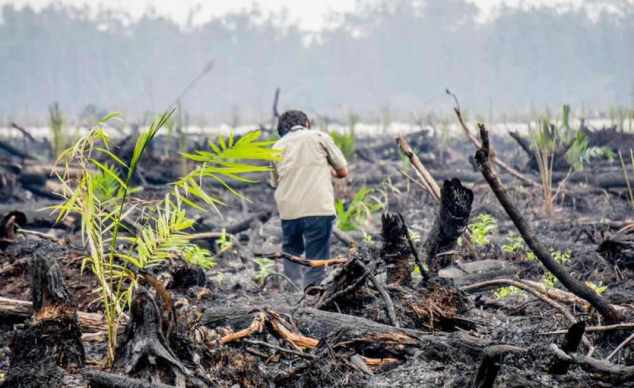
Deforestation is one of the most intractable and yet most potent drivers of environmental crisis. It is also among the four out of nine planetary boundaries that civilisation was already at high risk of crossing five years ago according to research published in the journal Science.
Other boundaries we were on the brink of breaching at that time included the rate at which species were going extinct, levels of atmospheric carbon dioxide, and the flow of nitrogen and phosphorus into the environment due to industrial agriculture. The further we breach these and other planetary boundaries, the greater the risk of irreversibly driving the Earth into a less hospitable state for humanity. Read More

Vision 2030: A New National Strategic Plan 2020 – 2030?


This 10-Year National Strategic Plan was based on the belief that the Cayman Islands can continue to develop in harmony and prosperity if we implement the recommendations of Vision 2008 according to the principles of balanced growth and integrated policy development.

This National Strategic Plan was created through a strategic planning process. Strategic Planning is a means by which an organization, and in our case, a country, continually recreates itself. This process deals with people and the way they see themselves. It is based on aspirations. It is proactive; it allows us as a people to celebrate our uniqueness and enables us to choose the future we desire. The design of the planning process invited participation and created a climate that produced real change champions. This type of strategic planning is based on our core beliefs and values, the things we, the people of the Cayman Islands hold most dear.

Vision 2008, the planning process which led to the creation of the National Strategic Plan, began in March 1998 with a series of Visioning meetings held with different groups including Executive Council and Members of the Legislative Assembly. District meetings were held in every district and in all three Cayman Islands. The purpose of these meetings, and of the interviews, focus groups and public polling exercise that followed was to identify the people’s key issues of concern. These were the issues that had to be addressed if we were to plan confidently for a bright future.

From the outset, Vision 2008 caught the imagination of the people of the Cayman Islands and beyond. The Vision 2008 Office received many calls, letters and visits, and numerous electronic communications through our web-site. It was very obvious that the people of the Cayman Islands were ready and anxious to take part in the long-term planning necessary to ensure the prosperity and quality of life for which we are known.

In June 1998 a 30-member planning team, which reflected the composition of our community, was appointed, and met for three days. In this first Planning Session, they developed a statement of beliefs, a vision statement for the Cayman Islands, parameters, objectives, and sixteen strategies.

Following a recruitment drive, Round Table leaders were identified and trained in a two day session. Sixteen Round Tables, one for each strategy began meeting in early October. Two hundred and fifty individuals continued to meet in their Round Table groups over the next four months to come up with the action plans required to implement each strategy.

Unfortunately, Vision 2008 was great on paper, but,  in practice, it did not accomplish as much as it should have.

Do we need to look forward again and plan the course for these islands for the next twenty years?
Looking around it would appear that we are developing for the benefit of foreign investors. My question therefore, is what do you, the people and citizens of the Cayman Islands want?
  • Do you want a more affordable cost of living? 
  • Do you believe that the government should be building affordable housing for Caymanians?
  • Do you want to see the environment protected?
  • Do you want your electrical (CUC) bill to be lower?
  • Do you find your health insurance very costly?

The Cancer Stage of Capitalism

“It is reliably estimated that species extinctions now proceed at 1000 times their normal rate, and that up to 99% of the materials used in the US production process end up as waste within 6 weeks. For every ton of garbage, in turn, there are 5 tons of materials to produce it, and 25 tons extracted from nature to yield these materials.


But these facts are not connected across the fields of expertise which track them. As the earth is thus stripped and polluted by ever more unfettered global market operations, the market paradigm of value that leads governments does not factor into its calculus the countless life forms, habitats and systems which are thus extinguished and poisoned. When objections are raised, the followers of the paradigm that rules sternly warn that all is necessary ‘to keep the economy going’. Peoples increasingly observe that their life-ground is being devastated, but no ‘new discovery’ reports that every step of decision behind this process of life-destruction is taken to enact the global market programme.”

At this stage of the global market system’s reproduction of transnational money sequences to unheard-of volumes and velocities of transaction and growth, a systematic and irreversible destruction of planetary life-organization emerges for the first time in history. If we consider the defining principles of carcinogenic invasion and eventual destruction of a life-host, and do not avoid or deny the symptom profile in evidence, we discern a carcinogenic pattern increasingly penetrating and spreading across civil and environmental life-organization. 

There are seven defining properties of a cancer invasion which medical diagnosis recognizes at the level of the individual organism. These seven properties can now be recognized for the first time at the level of global life-organization as well. And this is the pathological core of our current disease condition.

That is, there is: 

(1) an uncontrolled and unregulated reproduction and multiplication of an agent in a host body; that 

(2) is not committed to any life function of its life-host; that 

(3) aggressively and opportunistically appropriates nutriments and resources from its social and natural hosts in uninhibited growth and reproduction; that 

(4) is not effectively recognized or responded to by the immune system of its hosts; that 

(5) possesses the ability to transfer or to metastasize its growth and uncontrolled reproduction to sites across the host body; that 

(6) progressively infiltrates and invades contiguous and distant sites of its life- hosts until it obstructs, damages and/or destroys successive organs of their life-systems; and that 

(7) without effective immune-system recognition and response eventually destroys the host bodies it has invaded.

John McMurtry