We’re not as small as we like to think

The dilemma facing the Small Island Developing States (SIDS) of the Caribbean, including Jamaica, is that they are not as small as they like to make out — based on comparisons with the population, land area and Gross Domestic Product (GDP) of other countries. Neither are they as deprived of resources, if they measure their land and their marine space.

For example, the land area of The Bahamas is 5,383 square miles but its exclusive economic zone (EEZ) is 242,970 square miles. St Kitts and Nevis is only 100 square miles, but its EEZ is 7,900 square miles. The importance of this is that the sea is a vital resource. Some three billion people live in coastal areas and 90 per cent of all international trade is transported by sea. Fish and fish products are an important sector of global trade. In 2013, total world exports of fish and fishery products were estimated to reach US$136 billion.

Oceans and seas are essential resources to be utilised for a more sustainable future for all countries. This is particularly true in the case of SIDS. Marine fisheries are particularly important in SIDS for income generation, earning of foreign exchange and employment, particularly in coastal communities. In 2012, SIDS exports of fish products were valued at US$1.75 billion and represented approximately seven per cent of their total exports and 1.7 per cent of their total GDP. In some SIDS, fish contributes 90 per cent of animal protein consumed by their populations.

In the Caribbean, most of the population lives on the coast where economic activity and infrastructure is concentrated. The most important industry, the tourism industry, is also on the coast. The sea is an indispensable means of transportation and, according to the Caribbean Tourism Organisation, nearly 24 million cruise ship passengers pass through the Caribbean Sea.

The Caribbean is not, however, making the most of the potential of the sea. First, it is not fully utilising the potential for fishing; and secondly it is not making a vigorous attempt to exploit the possibility of oil and natural gas in the coastal waters.

Just as unfortunate as underutilising the sea is the inadequate provision for protecting the quality of the Caribbean Sea. The value of the Caribbean Sea will not long be attractive if our governments do not immediate intensify their national and regional programmes to protect it. Human and financial resources must be directed to (1) developing a blue economy approach to economic development based on sustainable marine resource management; (2) establishing an integrated approach to ocean governance and regulation; (3) applying marine spatial planning; (4) increasing research and knowledge of the Caribbean Sea; (5) taking measures to ameliorate the impact of climate change and (6) improving institutional and human capacity to act.

If these measures are implemented, the SIDS of the Caribbean will be able to utilise the large potential of the vast area of the sea which fall within their EEZs. The benefits are more productivity from existing activities such as fishing and tourism, realising the potential for underwater resources which might include oil and natural gas, and developing entirely new industries, for example, various forms of aquaculture and blue biotechnology. More


Climate Education Week Nears – 18th – 25th April, 2015

caribbeanclimate's avatarcaribbeanclimate

The Climate Education Week Toolkit is now available! It is a free, easy-to-use, ready-to-go resource with everything you need raise awareness and boost knowledge about climate change. The Toolkit includes a week’s worth of lesson plans, activities, and contests for K-12 students that meet Next Generation Science Standards and Common Core (a curriculum in the United States). Each day covers a different theme related to climate change with two highlighted activities handpicked by Earth Day Network for your use.

This cross-disciplinary resource has a range of activities from an energy conservation action plan to reading and discussing Rachel Carson’s Silent Spring, with the goal being to educate and engage your students on climate change.

As we prepare to celebrate Climate Education Week, we invite you to also peruse the 1.5˚C Stay Alive – An Education Initiative, which was specifically developed for the Caribbean. The four unit curriculum (The Warming Climate, Sea Level Rise, Pine Forest and…

View original post 55 more words

Scientists Map Caribbean Seafloor as Part of 12-Year Project

caribbeanclimate's avatarcaribbeanclimate

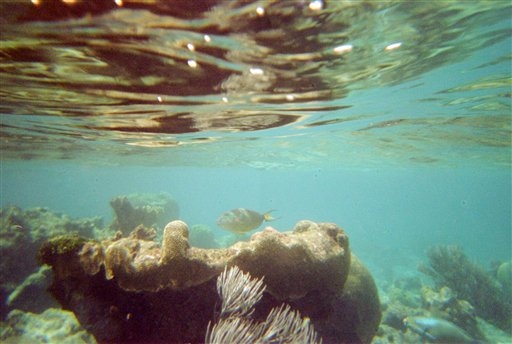
This April 6, 2005 file photo shows a coral reef and fish on a snorkeling trail off Buck Island near St. Croix, U.S. Virgin Islands. U.S. scientists on Tuesday, April 7, 2015 completed a nearly two-week mission to explore waters around the U.S. Virgin Islands as part of a 12-year project to map the Caribbean sea floor and help protect its reefs. (AP Photo/Brent Hoffman, File) This April 6, 2005 file photo shows a coral reef and fish on a snorkeling trail off Buck Island near St. Croix, U.S. Virgin Islands. U.S. scientists on Tuesday, April 7, 2015 completed a nearly two-week mission to explore waters around the U.S. Virgin Islands as part of a 12-year project to map the Caribbean sea floor and help protect its reefs. (AP Photo/Brent Hoffman, File)

U.S. scientists on Tuesday completed a nearly two-week mission to explore waters around the U.S. Virgin Islands as part of a 12-year project to map the Caribbean seafloor and help protect its reefs.

A team with the National Oceanic and Atmospheric Administration studied an area of 270 square miles (700 square kilometers), using equipment including underwater gliders and a remotely operated vehicle to help map the seafloor and locate areas where fish spawn. They focused mostly on the southern coast of St. Croix and…

View original post 256 more words

More Than Scientists – a new video campaign

caribbeanclimate's avatarcaribbeanclimate

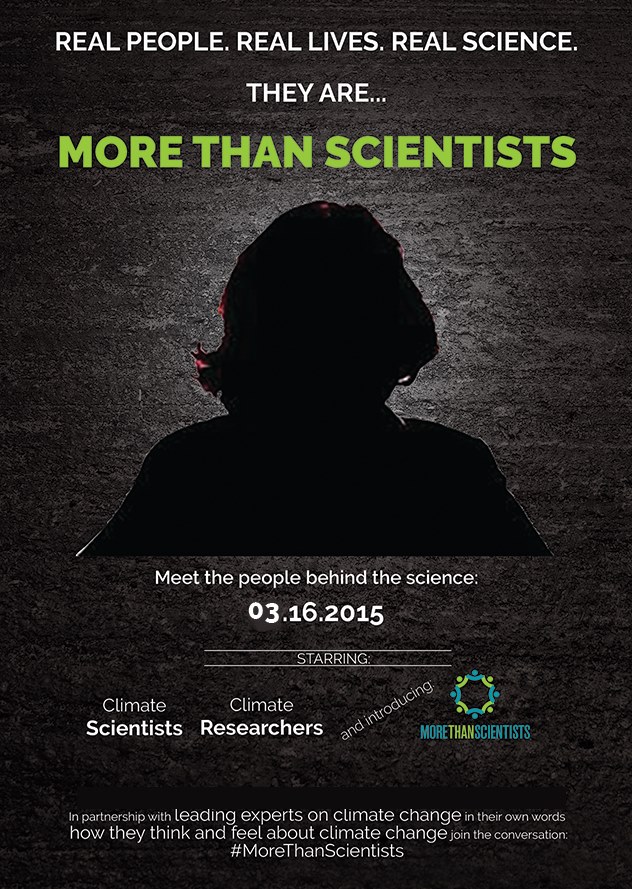
more than scientists

A new project—More Than Scientists was launched March 15. It brings together climate scientists, advocacy organizations and the public in an innovative campaign that offers a unique glimpse into the real life stories, personal views and feelings of the experts on climate change.

From leading universities such as MIT, University of Washington and Harvard, climate experts share via video their hopes for the future and what they fear will happen if we don’t act now to reverse the impacts of climate change.

The more than 200 featured videos, created by dozens of climate scientists, are available as a resource to the climate community via their website and YouTube at www.morethanscientists.org.

In addition to sharing the resource, we want to invite climate scientists to participate in sharing their stories.

To learn more about making a video, contact:

Mary Kadzielski, Campaign Manager
More Than Scientists
e: mary@morethanscientists.org | p:  202.810.5462
w: www.morethanscientists.org

View original post 6 more words

Gallery

Growing a future – Coral restoration in Bluefields Bay, Jamaica

caribbeanclimate's avatarcaribbeanclimate

Fishers of Bluefields Bay tell stories of a time when the coral grew so high parts of the reef were impassable, when boats had to navigate around the coral tips emerging out of the Caribbean’s blue waters. Four decades later a trip underwater will show you a seafloor still covered with the skeletons of these same corals. Due to the effects of hurricanes, decline of algae grazers and climate change, the once lush thicket is only a story told around a bottle of Red Stripe beer and a cup of fish soup (since the fish is too scarce to cook any other way).

Until now. The climate isn’t the only thing changing for some communities around the Caribbean. In Bluefields Bay, Jamaica, the community has come together with the Government to establish one of the fourteen (14) fish sanctuaries island wide. Since 2009, the community based organisation, Bluefields Bay Fishermen’s…

View original post 580 more words

ECMMAN project – This is who we are

caribbeanclimate's avatarcaribbeanclimate

“This is who we are” by Ambi, J Mouse, Famus and Bridget Barkan from chad harper on Vimeo.

The Eastern Caribbean Marine Managed Areas Network (ECMMAN) Project produced a local music video: This Is Who WE ARE by Ambi, J Mouse, Famus and Bridget Barkan for respecting Marine Life across 6 Caribbean Islands. Dominica, Grenada, St. Vincent and the Grenadines, St. Kitts and Nevis, Antigua and Barbuda and St. Lucia.

View original post

FAO success stories on climate-smart agriculture

caribbeanclimate's avatarcaribbeanclimate

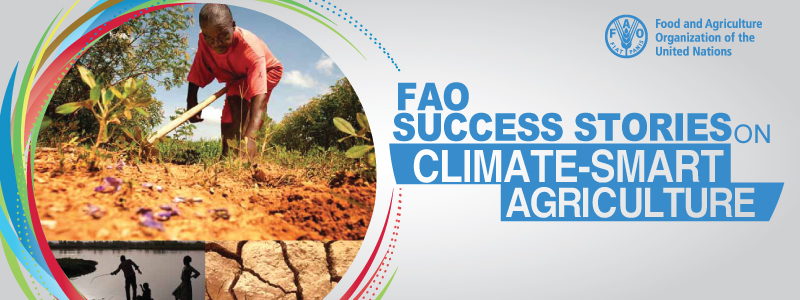
FAO success story

This booklet provides examples of climate-smart systems by showcasing some FAO success stories in various countries. The cases have been selected from the FAO Climate-Smart Agriculture (CSA) Sourcebook launched in 2013 to show the diversity of potential options across different regions and agricultural systems also covering subjects such as biodiversity and gender.

Download here

Credit: Food and Agriculture Organization of the United Nations

View original post

Gold Standard Sustainable Cities Framework

caribbeanclimate's avatarcaribbeanclimate

The Gold Standard Cities Programme is developing ground-breaking solutions that will unlock the finance needed by cities around the globe for low carbon development.

Urbanization and climate change will be defining issues of the 21st century. Half of the world’s population resides in cities and it is expected that by 2015, the world will have over 350 cities with more than one million inhabitants each.

Cities are already feeling the impacts of climate change and they will increasingly be susceptible to rising sea levels, inland flooding, frequent and stronger tropical cyclones, periods of increased heat and the spread of diseases. To mitigate climate change and to adapt to these impacts, it is estimated that by 2050 more than a trillion U.S. dollars in investment will be needed for cities but currently, less than 2% of climate finance is channeled into urban projects due to a lack of reliable monitoring, reporting…

View original post 295 more words