5 Crucial Lessons for the Left From Naomi Klein’s New Book

In her previous books The Shock Doctrine: The Rise of Disaster Capitalism (2007) and NO LOGO: No Space, No Choice, No Jobs (2000), Canadian author and activist Naomi Klein took on topics like neoliberal “shock therapy,” consumerism, globalization and “disaster capitalism,” extensively documenting the forces behind the dramatic rise in economic inequality and environmental degradation over the past 50 years.

Naomi Klein

But in her new book, This Changes Everything: Capitalism vs. the Climate (due in stores September 16), Klein casts her gaze toward the future, arguing that the dangers of climate change demand radical action now to ward off catastrophe. She certainly isn’t alone in pointing out the urgency of the threat, but what sets Klein apart is her argument that it is capitalism—not carbon—that is at the root of climate change, inexorably driving us toward an environmental Armageddon in the pursuit of profit. This Changes Everything is well worth a read (or two) in full, but we’ve distilled some of its key points here.

1. Band-Aid solutions don’t work.

“Only mass social movements can save us now. Because we know where the current system, left unchecked, is headed.”

Much of the conversation surrounding climate change focuses on what Klein dismisses as “Band-Aid solutions”: profit-friendly fixes like whizz-bang technological innovations, cap-and-trade schemes and supposedly “clean” alternatives like natural gas. To Klein, such strategies are too little, too late. In her drawn-out critique of corporate involvement in climate change prevention, she demonstrates how profitable “solutions” put forward by many think-tanks (and their corporate backers) actually end up making the problem worse. For instance, Klein argues that carbon trading programs create perverse incentives, allowing manufacturers to produce more harmful greenhouse gases, just to be paid to reduce them. In the process, carbon trading schemes have helped corporations make billions—allowing them to directly profit off the degradation of the planet. Instead, Klein argues, we need to break free of market fundamentalism and implement long-term planning, strict regulation of business, more taxation, more government spending and reversals of privatization to return key infrastructure to public control.

2. We need to fix ourselves, not fix the world.

“The earth is not our prisoner, our patient, our machine, or, indeed, our monster. It is our entire world. And the solution to global warming is not to fix the world, it is to fix ourselves.”

Klein devotes a full chapter of the book to geoengineering: the field of research, championed by a niche group of scientists, funders and media figures, that aims to fight global warming by altering the earth itself—say, by covering deserts with reflective material to send sunlight back to space or even dimming the sun to decrease the amount of heat reaching the planet. However, politicians and much of the global public have raised environmental, health and ethical concerns regarding these proposed science experiments with the planet, and Klein warns of the unknown consequences of creating “a Frankenstein’s world,” with multiple countries launching projects simultaneously. Instead of restoring an environmental equilibrium, Klein argues these “techno-fixes” will only further upset the earth’s balance, each one creating a host of new problems, requiring an endless chain of further “fixes.” She writes, “The earth—our life support system—would itself be put on life support, hooked up to machines 24/7 to prevent it from going full-tilt monster on us.”

3. We can’t rely on “well-intentioned” corporate funding.

“A great many progressives have opted out of the climate change debate in part because they thought that the Big Green groups, flush with philanthropic dollars, had this issue covered. That, it turns out, was a grave mistake.”

Klein strongly critiques partnerships between corporations and major environmental groups, along with attempts by “green billionaires” such as Bill Gates and Virgin Group’s Richard Branson to use capitalism to fighting global warming. When capitalism itself is a principal cause of climate change, Klein argues, it doesn’t make sense to expect corporations and billionaires to put the planet before profit. For example, though the Gates Foundation funds many major environmental groups dedicated to combating climate change, as of December 2013, it had at least $1.2 billion invested in BP and ExxonMobil. In addition, when Big Greens become dependent on corporate funding, they start to push a corporate agenda. For instance, organizations such as the Nature Conservancy and the Environmental Defense Fund, which have taken millions of dollars from pro-fracking corporate funders, such as Shell, Chevron and JP Morgan, are pitching natural gas as a cleaner alternative to oil and coal.

4. We need divestment, and reinvestment.

“The main power of divestment is not that it financially harms Shell and Chevron in the short term but that it erodes the social license of fossil fuel companies and builds pressure on politicians to introduce across-the-board emission reductions.”

Critics of the carbon divestment movement often claim that divestment will have minimal impact on polluters’ bottom lines. But Klein argues that this line of reasoning misses the point, quoting Canadian divestment activist Cameron Fenton's argument that “No one is thinking we’re going to bankrupt fossil fuel companies. But what we can do is bankrupt their reputations and take away their political power.” More importantly, divestment opens the door for reinvestment. A few million dollars out of the hands of ExxonMobil or BP frees up money that can now be spent developing green infrastructure or empowering communities to localize their economies. And some colleges, charities, pension funds and municipalities have already got the message: Klein reports that 13 U.S. colleges and universities, 25 North American cities, around 40 religious institutions and several major foundations have all made commitments to divest their endowments from fossil fuel stocks and bonds.

5. Confronting climate change is an opportunity to address other social, economic and political issues.

“When climate change deniers claim that global warming is a plot to redistribute wealth, it's not (only) because they are paranoid. It's also because they are paying attention.”

In The Shock Doctrine, Klein explained how corporations have exploited crises around the world for profit. In This Changes Everything, she argues that the climate change crisis can serve as a wake-up call for widespread democratic action. For instance, when a 2007 tornado destroyed most of Greensburg, Kansas, the town rejected top-down approaches to recovery in favor of community-based rebuilding efforts that increased democratic participation and created new, environmentally-friendly public buildings. Today, Greensburg is one of the greenest towns in the United States. To Klein, this example illustrates how people can use climate change to come together to build a greener society. It also can, and indeed must, spur a radical transformation of our economy: less consumption, less international trade (part of relocalizing our economies) and less private investment, and a lot more government spending to create the infrastructure we need for a green economy. “Implicit in all of this,” Klein writes, “is a great deal more redistribution, so that more of us can live comfortably within the planet’s capacity.” More


Can This Transform the Caribbean?

In the immortal words of Montserratian singer/songwriter, Arrow, the Caribbean is “…feelin’ hot, hot, hot!” And, that’s a good thing.

With a little help from Mother Nature, the islands of the Caribbean are learning to harness the power of high temperature geothermal energy beneath the earth’s surface.

In an effort to move away from reliance on expensive, fossil-fueled, diesel-powered generators toward a dependable, eco-friendly source of renewable energy, a number of forward-thinking Caribbean islands are aggressively searching for and identifying alternative sources of power beneath the surface.

Energy self-sufficiency, long sought-after by local governments may soon become a reality for some islands in the Caribbean.

While the road to sustainable geothermal power generation has no short cuts and faces a number of financial, administrative and physical challenges, the rewards can be substantial in the long-run.

Geothermal power produces an environmentally-friendly, long-lasting energy source that can provide electricity at significantly lower cost and, in some cases, may produce enough excess power, exported via submarine cables, to create a revenue stream between islands.

The Caribbean island of Montserrat is among the leaders in geothermal exploration.

It is also on a mission of rebirth from the devastation caused by the eruption of the Soufrière Volcano in the mid-1990s which destroyed the capital town of Plymouth, left more than half of the island’s residents homeless and covered more than 30 percent of the island with lava and ash.

Today, Montserrat has plans for a new capital town, a new port, a vibrant hospitality and tourism industry and the regeneration of private enterprise equipped with a sustainable infrastructure. Geothermal power will play a major role in this transformation.

Ironically, the same geological forces that created the Soufrière Volcano will now be harnessed to power the island’s electricity grid from a geothermal source. Iceland Drilling Company Ltd., a leading high-tech company in the field of high temperature deep geothermal drilling, has successfully tested two geothermal wells on Montserrat and the foundation is now in place for a third well backed by the UK government, part of its continuing support for the British Overseas Territory’s Master Plan for Growth.

It is our hope that Montserrat’s geothermal resources and sustainable, “green” energy infrastructure will attract environmentally-conscious developers and investors as “founding fathers” of our new capital town.

Ultimately, “going green” in Montserrat may help the nation move to the forefront in eco-tourism while driving a self-sufficient economic future.

In Dominica, geothermal exploration supported by the European Union brings with it the hopes of clean energy generation sufficient to supply the entire island and provide electricity for export as well.

Nevis, another volcanic island, is hoping to become a regional supplier of power to nearby St. Kitts, among others, and has said it intends to begin exploratory well-digging at various sites around the island.

Geothermal power has the possibility of transforming the Caribbean.

It will allow for a rise in the standard of living, an increase in job opportunities and a cleaner environment for residents and visitors to enjoy.

If nations can reduce, or eliminate, their reliance on expensive, environmentally harmful fossil fuels, they will not only pave the way for energy independence but also create an attractive environment for investors to support sustainable practices and economic development that will benefit the entire region. More


UN warns frequency of extreme weather will grow with climate change

The UN is set to release a series of imagined, but probable weather forecasts to highlight how extreme weather events will increase in frequency and intensity over the next three decades.

The videos, to be released ahead of a crucial UN climate summit on September 23 in New York, use fictional weather forecasts to illustrate how global warming will change the world by 2050, if mitigation action is not taken.

A teaser video has been released, to be followed by 14 ‘weather reports from the future’ from around the world.

The forecasts are described as “imaginary but realistic” if global warming continues at the pace currently seen. Scientists warn that temperatures are currently on track to increase by 4C above pre-industrial levels, double the 2C limit that scientist believe would lead to irreversible tipping points.

Weather presenters from around the world were invited to make the videos, with the US Weather Channel and ARD in Germany taking part.

“What they created are only possible scenarios, of course, not true forecasts,” the WMO said.

“Nevertheless, they are based on the most up-to-date climate science, and they paint a compelling picture of what life would be like on a warmer planet.”

The UN is calling on world leaders to make “bold pledges” regarding climate change at the summit later this month. It is hoped the summit will act as a step towards the agreement of a global deal next year in Paris.

UN general-secretary Ban Ki-Moon commented, “Climate change is affecting the weather everywhere. It makes more extreme and disturbs established patterns. That means more disasters; more uncertainty.” More

Photo: U.S. Geological Survey via Flickr


Geothermal Power Approaches 12,000 Megawatts Worldwide

In 2013, world geothermal electricity-generating capacity grew 3 percent to top 11,700 megawatts across 24 countries. Although some other renewable energy technologies are seeing much faster growth—wind power has expanded 21 percent per year since 2008, for example, while solar power has grown at a blistering 53 percent annual rate—this was geothermal’s best year since the 2007-08 financial crisis.

Geothermal power’s relatively slower growth is not due to a paucity of energy to tap. On the contrary, the upper six miles of the earth’s crust holds 50,000 times the energy embodied in the world’s oil and gas reserves. But unlike the relative ease of measuring wind speed and solar radiation, test-drilling to assess deep heat resources prior to building a geothermal power plant is uncertain and costly. The developer may spend 15 percent of the project's capital cost during test-drilling, with no guarantee of finding a viable site.

Once built, however, a geothermal power plant can generate electricity 24 hours a day with low operation and maintenance costs—importantly because there is zero fuel cost. Over the life of the generator, geothermal plants are often cost-competitive with all other power sources, including fossil fuel and nuclear plants. This is true even without considering the many indirect costs of fossil- and nuclear-generated electricity that are not reflected in customers’ monthly bills.

The top three countries in installed geothermal power capacity—the United States, the Philippines, and Indonesia—account for more than half the world total. California hosts nearly 80 percent of the 3,440 megawatts of U.S. geothermal capacity; another 16 percent is found in Nevada.

Despite having installed more geothermal power capacity than any other country, the United States currently generates less than 1 percent of its electricity from the earth’s heat. Iceland holds the top spot in that category, using geothermal power for 29 percent of its electricity. Close behind is El Salvador, where one quarter of electricity comes from geothermal plants. Kenya follows at 19 percent. Next are the Philippines and Costa Rica, both at 15 percent, and New Zealand, at 14 percent.

Indonesia has the most ambitious geothermal capacity target. It is looking to develop 10,000 megawatts by 2025. Having only gained 150 megawatts in the last four years, this will be a steep climb. But a new law passed by the government in late August 2014 should help move industry activity in that direction: it increases the per-kilowatt-hour purchase price guaranteed to geothermal producers and ends geothermal power’s classification as mining activity. (Much of Indonesia’s untapped geothermal resource lies in forested areas where mining is illegal.) Even before the new law took effect, geothermal company Ormat began construction on the world’s largest single geothermal power plant, a 330-megawatt project in North Sumatra, in June 2014. The plant should generate its first electricity in 2018.

Indonesia is just one of about 40 countries that could get all their electricity from indigenous geothermal power—a list that includes Ecuador, Ethiopia, Iceland, Kenya, Papua New Guinea, Peru, the Philippines, and Tanzania. Nearly all of them are developing countries, where the high up-front costs of geothermal development are often prohibitive.

To help address this mismatch of geothermal resources and funds, the World Bank launched its Global Geothermal Development Plan in March 2013. By December, donors had come up with $115 million of the initial $500 million target to identify and fund test-drilling for promising geothermal projects in the developing world. The Bank hopes that the experience gained from these projects will lead to lower costs for the geothermal industry overall. This would be good news on many fronts—simultaneously reducing energy poverty, air pollution, carbon emissions, and costly fossil fuel imports. More


Beware, fellow plutocrats, the pitchforks are coming

Nick Hanauer: Beware, fellow plutocrats, the pitchforks are coming

Published on Aug 12, 2014 • Nick Hanauer is a rich guy, an unrepentant capitalist — and he has something to say to his fellow plutocrats: Wake up! Growing inequality is about to push our societies into conditions resembling prerevolutionary France. Hear his argument about why a dramatic increase in minimum wage could grow the middle class, deliver economic prosperity … and prevent a revolution.

TEDTalks is a daily video podcast of the best talks and performances from the TED Conference, where the world's leading thinkers and doers give the talk of their lives in 18 minutes (or less). Look for talks on Technology, Entertainment and Design – plus science, business, global issues, the arts and much more.

Find closed captions and translated subtitles in many languages at http://www.ted.com/translate

Follow TED news on Twitter: http://www.twitter.com/tednews

Like TED on Facebook: https ://www.facebook.com/TE D

Subscribe to our channel: http://www.youtube.com/user/TEDtalksDirector

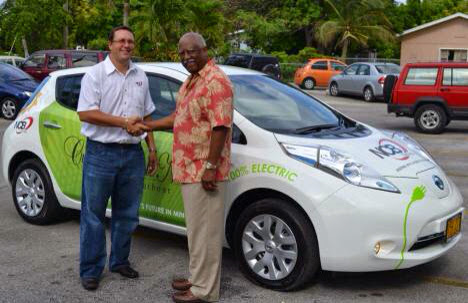
Goodbye gasoline… first green LEAF arrives in the Cayman Islands

GEORGE TOWN, Cayman Islands — The NCB group in the Cayman Islands has purchased the very first new all-electric Nissan LEAF in the Caribbean, reinforcing its commitment to environmental sustainability.

“NCB Group is proud to be a part of the innovative movement towards electric cars in the Cayman Islands,” said Matthew Wight, managing director.

Considered the premier residential developer in the Cayman Islands, the NCB group is seeking to further reduce its ecological footprint in an effort to protect the Caribbean and the planet from harmful greenhouse gasses.

Wight said that he drives electric vehicles because he knows that he is helping the environment.

“As a company, we strive to employ sustainable and green technologies when we build our residential and commercial projects and we wanted to carry this mission through to the vehicles we drive,” he explained.

Driving a Nissan LEAF – a 100% electric car — has been extremely rewarding “in the sense that the LEAF does not use a single drop of gas. It has no tailpipe, no fumes and produces zero emissions,” he said.

“As we build with Cayman’s future in mind we are also looking to alternative energy sources in everything we do with the goal to be as eco-conscious as possible,” Wight added.

For nearly a decade John Felder, president and CEO of Cayman Automotive Leasing, has been at the forefront of the burgeoning electric vehicle industry in the Caribbean.

His hope is to see electric vehicles being driven in every country in the Caribbean and eventually the world in years to come.

“I applaud Mr Matthew Wight and NCB for investing in the future for a cleaner and healthier environment. The energy generated to power the Nissan LEAF and the energy to move the car is 97% cleaner in terms of noxious pollutants,” Felder said.

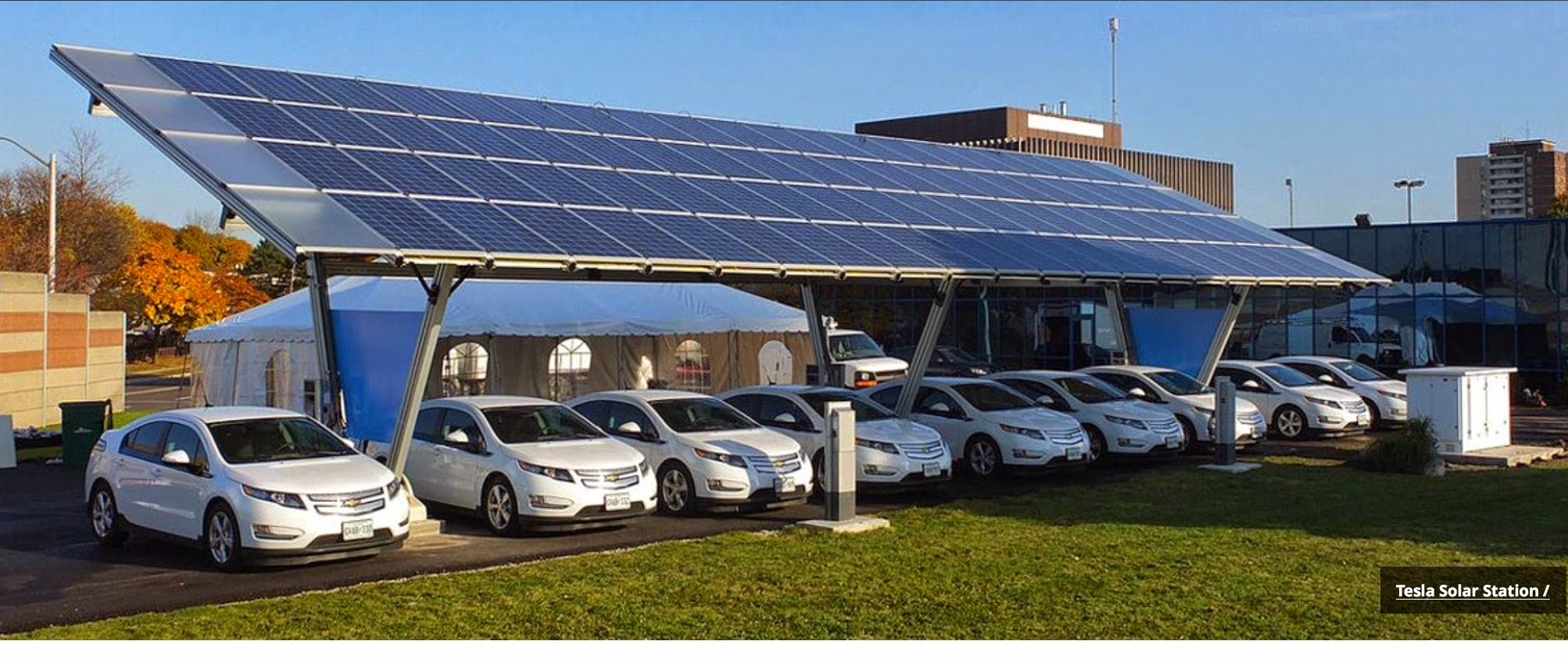
The Nissan LEAF boasts one of the quietest and smoothest rides ever experienced. The vehicle does not have a gas tank and drivers will never have to pay at the pumps again. The motor is powered by an advanced lithium-ion battery, which is half the weight and twice the power of the nickel-metal hydride batteries used in hybrids, and can easily be charged at home, or at any solar panel charging station in Grand Cayman.

Felder is certain that electric cars are the cleanest, most efficient, and most cost effective form of transportation around.

“Electric cars are high performance vehicles that will continue to meet new challenges in the future,” he said. More


UN Releases Six Briefs for SIDS Conference Partnership Dialogues

The UN Department of Economic and Social Affairs (DESA) has released a series of six briefing papers on priority themes for discussion during the Third International Conference on Small Island Development States (SIDS), set to take place in Apia, Samoa, from 1-4 September 2014.

August 2014: The SIDS conference will include six multi-stakeholder ‘Partnership Dialogues’ intended to strengthen existing partnerships and promote new ones. The UN briefing papers correspond to the partnership dialogue themes of: sustainable economic development; climate change and disaster risk management; social development in SIDS, health and non-communicable diseases (NCDs), youth and women; sustainable energy; oceans, seas and biodiversity; water and sanitation, food security and waste management. The papers suggest a wide range of opportunities that could be addressed through new or existing partnerships, especially public-private collaborations.

On sustainable economic development, the authors propose conducting investment impact monitoring, and establishing regional SIDS programmes to promote investment through public-private partnerships.

On climate change and disaster risk management, the authors suggest the adoption of risk financing instruments, such as contingency funds and insurance, as part of spatial and development planning initiatives.

On social development, they note that obesity and diabetes rates are “staggering” in the Pacific, and they aim to prevent premature morbidity and mortality from NCDs, including measures to protect SIDS from the negative impacts of bilateral and global trade agreements. They also aim to make education more relevant, and to improve labor market access and secure quality jobs for young people.

On sustainable energy, the authors recommend supporting an enabling environment for sustainable energy markets; facilitating access to modern, affordable and reliable energy services for rural households; decreasing reliance on fossil fuel imports; and improving women’s access to renewable and cost-effective energy.

On oceans, they recommend addressing the impacts of ocean acidification and climate change, promoting inclusive and sustainable development of local economies using the oceans, preventing marine and land-based pollution, and reversing the decline in fish stocks.

On water and sanitation, they propose strengthening regional mechanisms for managing hazardous wastes and ship-generated wastes; promoting resource efficiency as a means to reduce the generation of waste and wastewater, and incorporating climate information into practices and policies for supporting agriculture and food security. [Partnership Dialogue Briefs] [SIDS Conference Website] [SIDS Partnerships Platform]


Why Morgan Stanley Is Betting That Tesla Will Kill Your Power Company

There’s a reason that power companies are attacking rooftop solar across the nation: They see those silicon panels as nothing short of an existential threat.

As the cost of solar continues to fall, and more people opt for the distributed power offered by solar, there will be less demand for big power plants and the utilities that operate them. And one major investment giant has now released three separate reports arguing that Tesla Motors is going to help kill power companies off altogether.

Earlier this year, Morgan Stanley stirred up controversy when it released a report that suggested that the increasing viability of consumer solar, paired with better battery technology—that allows people to generate, and store, their own electricity—could send the decades-old utility industry into a death spiral. Then, the firm released another one, further emphasizing the points made in the first. Now, it’s tripling down on the idea with yet another report that spells out how Tesla and home solar will “disrupt” utilities.

“There may be a ‘tipping point’ that causes customers to seek an off-grid approach,” the March report argued. ”The more customers move to solar, the [more the] remaining utility customers’ bills will rise, creating even further ‘headroom’ for Tesla’s off-grid approach.”

Yes, Tesla Motors, everyone’s favorite electric car company. And that’s where the controversy comes in. Morgan Stanley breathlessly pegged Tesla as “the most important auto company in the world” in part because its electric car business was pushing it to develop better energy storage technology, and then mass manufacture said batteries. That’s exactly what Tesla CEO Elon Musk and company will be doing at its forthcoming Gigafactory, which it is building in the Southwest with Panasonic.

With the new manufacturing facility, Morgan Stanley reasons, Tesla stands to double its business (adding another $2 billion in revenue) by selling the lithium ion batteries it typically ships under the hood of a Model S to homeowners with solar panels, too. If consumers can store energy the panels generate during the day for use at night, it would ostensibly render the need for utilities to pipe in faraway power—and their electric bills—obsolete.

Energy storage, when combined with solar power, could disrupt utilities in the US and Europe to the extent customers move to an off-grid approach

Musk is also the chairman of Solar City, a company that leases rooftop solar setups to homeowners, and one that would benefit from the battery tech. Now, the shadiness here is that Morgan Stanley released the report trumpeting Tesla’s crossover energy storage potential—causing Tesla’s stock to rise—right before it underwrote a fundraising round for… Tesla.

So the whole thing is very incestuous, and it does render some of the projections a little suspect, but the bottom line here is that private solar and battery companies are viable enough that they’ve attracted the backing of one of the world’s biggest financial services companies—over the multi-trillion dollar utility industry.

“Energy storage, when combined with solar power, could disrupt utilities in the US and Europe to the extent customers move to an off-grid approach,” Morgan Stanley writes in its third report this year emphasizing the prospect. ”We believe Tesla’s energy storage product will be economically viable in parts of the US and Europe, and at a fraction of the cost of current storage alternatives.”

In other words, Morgan Stanley has Tesla’s back, big time. It’s betting that Musk is going to make the best solar energy batteries money can buy.

Ironically enough, however, even staunch clean energy advocates are wary about Morgan Stanley’s finding that utilities are going the way of the buffalo. “Barring extraordinary circumstances, the economic case for grid defection is still very weak for US consumers,” Stephen Lacey, the senior editor of Greentech Media, wrote of the Morgan Stanley report. ”The electricity system offers valuable backup in case a customer over- or under-invests in an on-site system.”

It’s more likely, then, that people will still buy home solar—by the tens of millions, Greentech suggests—but not unplug from the grid entirely. Utilities will be diminished, but not broken. This process is underway in Europe already, where countries like Germany have powerful incentives for consumers to switch to solar.

Last year, the Economist called the sharp decline of European utilities “startling,” noting that together, they lost half their value—$600 billion—in just five years. Here in the states, utilities and conservative politicians are fighting solar tax credits to prevent the same thing from happening. For the most part, the utilities are losing.

All of this is, ideally, what needs to happen. Climate change is accelerating, and we need to transition away from those massive, fossil fuel-slurping power plants. Distributed solar is an increasingly powerful force behind that weaning process.

And even if some of Morgan Stanley’s calculations are shaky, the trends that Tesla is helping to amplify are anything but—clean, personalized (or community-wide) power will play a major role in shaping our energy future.

The fact that a greed-driven titan of finance like Morgan Stanley recognizes as much, and is willing to triple down on its bets on battery storage and distributed power, is a promising sign that the energy revolution is underway. More