Engineers purify sea and wastewater in 2.5 minutes

A group of engineers have created technology to recover and purify, either seawater or wastewater from households, hotels, hospitals, commercial and industrial facilities, regardless of the content of pollutants and microorganisms in, incredibly, just 2.5 minutes, experts say.

A group of Mexican engineers from the Jhostoblak Corporate created technology to recover and purify, either seawater or wastewater from households, hotels, hospitals, commercial and industrial facilities, regardless of the content of pollutants and microorganisms in, incredibly, just 2.5 minutes, researchers say.

The System PQUA, works with a mixture of dissociating elements, capable of separating and removing all contaminants, as well as organic and inorganic pollutants. “The methodology is founded on molecularly dissociating water pollutants to recover the minerals necessary and sufficient in order for the human body to function properly nourished,” technical staff explained.

Notably, the engineers developed eight dissociating elements, and after extensive testing on different types of contaminated water, implemented a unique methodology that indicates what and how much of each element should be combined.

“During the purification process no gases, odors nor toxic elements that may damage or alter the environment, human health or quality of life are generated,” said the Mexican firm.

The corporation has a pilot plant in their offices that was used to demonstrate the purification process, which uses gravity to save energy. We observed that the residual water in the container was pumped to reactor tank, where it received a dosing of the dissociating elements in predetermined amounts.

In this phase solid, organic and inorganic matter as well as heavy metals are removed by precipitation and gravity; and a sludge settles at the bottom of the reactor. The latter is removed and examined to determine if it is suitable to use as fertilizer or manufacture construction materials.

Subsequently, the water is conducted to a clarifier tank, to sediment the excess charge of dissolved elements; then the liquid reaches a filter to remove turbidity and is finally passed by polishing tank that eliminates odors, colors and flavors. The treated water is transported to a container where ozone is added to ensure its purity, and finally is ready to drink. Indeed, the resulting liquid is fresh, odorless and has a neutral taste.

“We have done over 50 tests on different types of wastewater and all have been certified and authorized by the laboratories of the Mexican Accreditation Agency (EMA). Also, the Monterrey Institute of Technology and Higher Education (ITESM), the College of Mexico and the National Polytechnic Institute (IPN) have given their validation that the water treated with our technology meets the SSA NOM 127 standard, which indicates the parameters and quality characteristics for vital liquid to be used for human consumption,” says the Corporate Jhostoblak.

Moreover, they report that this development is protected under trade secret in America and soon will get the same record in Switzerland. Its implementation in the market will depend on the needs of users and the issue of new laws regarding use, consumption and water discharge. More


The Banyan Tree Leadership Forum with Tony de Brum, Foreign Minister of the Marshall Islands

The Banyan Tree Leadership Forum with Tony de Brum, Foreign Minister of the Marshall Islands Center for Strategic and International Studies,

1616 Rhode Island Avenue, NW, Washington, DC 20036

10am, Tuesday 21 April 2015

The CSIS Pacific Partners Initiative is pleased to invite you to a discussion with His Excellency Tony de Brum, Minister of Foreign Affairs of the Republic of the Marshall Islands. As the chief diplomat of o, Minister of Foreign Affairs of the Republic of the Marshall Islands. As the chief diplomat of one of the world’s lowest lying atoll nations, Minister de Brum will discuss the security implications of climate change and progress in negotiations towards a new global agreement, scheduled to be adopted at the UN Climate Change Conference in Paris later this year.

Minister de Brum resumed his position as the Minister of Foreign Affairs on March 17, 2014, after having previously served in the position from 1983 to 1985, and again from 2008 to 2009. He has also served as Minister-in-Assistance to the President, Minister of Finance, and Minister of Health and the Environment during his distinguished career with the Marshallese Government. Minister de Brum has led international calls for more urgent action to address climate change. In February 2013, Senator de Brum addressed the UN Security Council on climate change and security issues, and later that year coordinated the Marshall Islands’ hosting of the Pacific Islands Forum Leaders’ Meeting, which produced the Majuro Declaration for Climate Leadership.

The CSIS Sumitro Djojohadikusumo Banyan Tree Leadership Forum is the premier Washington venue for Asian, Pacific, and American leaders to share their vision and articulate views on vital issues impacting regional and bilateral relations. The Banyan Tree is a symbol expressing the power of many standing as one, and a harbinger of hope for strong and enduring U.S. ties with Southeast Asia and the Asia-Pacific. The CSIS Sumitro Djojohadikusumo Banyan Tree Leadership Forum is sponsored by the Arsari Djojohadikusumo Foundation of Indonesia.

REGISTER NOW (IMPORTANT):

http://my.csis.org/csis/CSIS1700/CSISEventRegistration.aspx?eventcode=2015_156

Follow the event on Twitter @MinisterTdB | @PacPartnersDC | @CSIS | #CSISLive


China’s wealthy are fleeing the country like crazy

Last year, Chinese millionaires maxed out the quota for EB-5 visas under the U.S.’s Immigrant Investor Program, and recently it was reported that 90% of Australia’s Significant Investor visas were given to Chinese nationals. All over the world, immigrant investor programs are being flooded with applicants from China.

Since 1990, China has gone from being the 7th largest exporter of immigrants to the 4th largest, an increase of more than 125%. Chinese people are emigrating in ever greater numbers, particularly the wealthy. Meanwhile, a recent survey from Barclays shows that 47% of wealthy Chinese would like to emigrate. The response rate for the survey was 29% worldwide.

As more Chinese become wealthy, the number of people who want to emigrate is increasing. So where do wealthy Chinese want to go? Rich Chinese Want to Go to North America

According to the Hurun Report’s “2014 Immigrant Investor White Paper,” the U.S. and Canada are the first choices for wealthy Chinese looking to emigrate.

Top Destinations for Wealthy Chinese Emigrants

Since most high-net-worth Chinese accumulate their wealth in China, from a business perspective it is advantageous for them to remain close to China. So what is involved in getting an immigrant visa to a foreign country?

Requirements for Getting an Immigrant Investor Visa

Types of immigration include immigrant investor programs, skilled worker programs, study abroad, and irregular immigration. Most wealthy Chinese immigrate through investment.

Minimum Investment Required to Immigrate, by Country


Should the Cayman Islands be activly be trying to attract this type of investor tot he Cayman Islands? See http://www.scmp.com/business/companies/article/1677989/li-ka-shing-restructures-group?page=all>

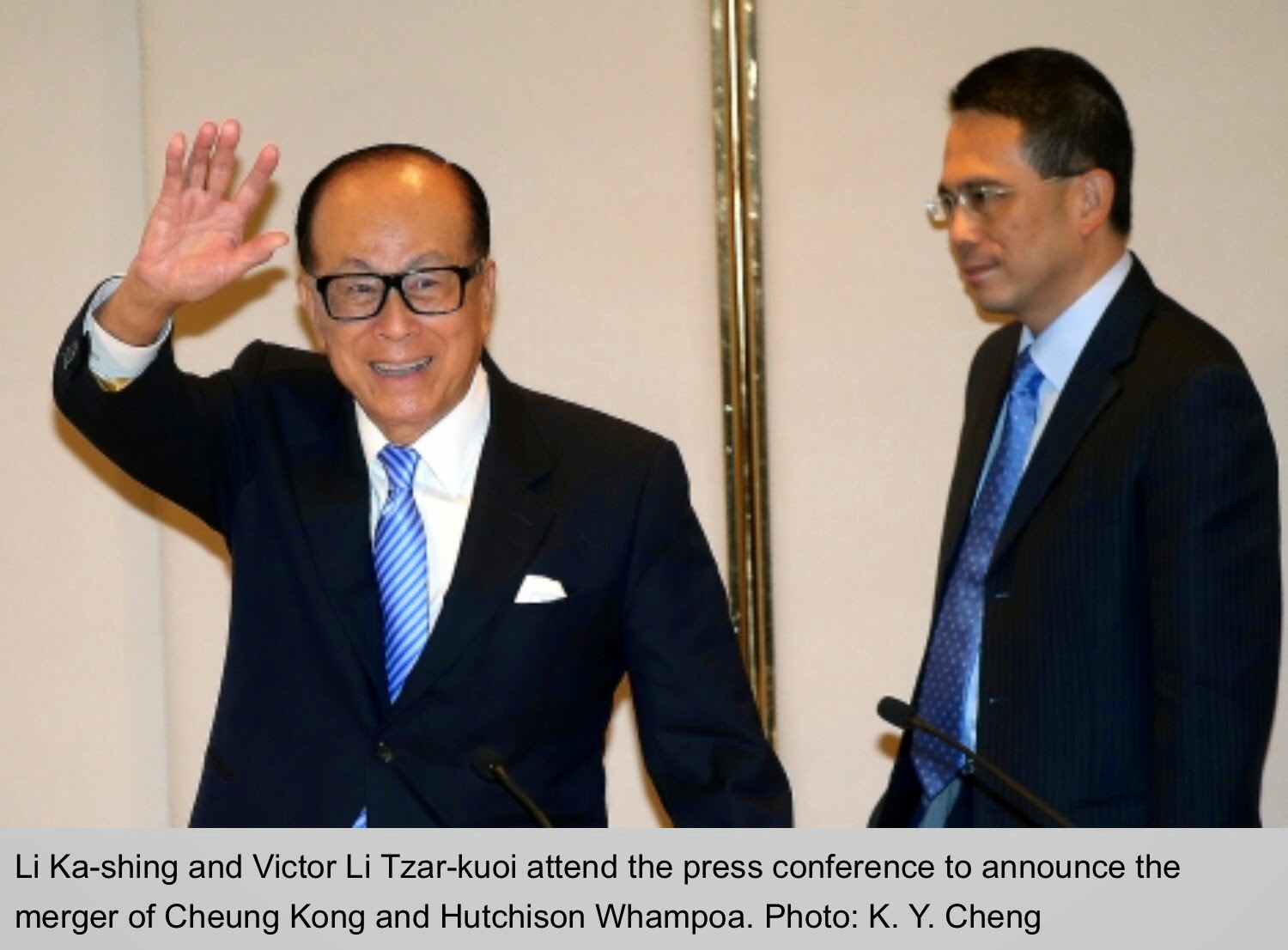
Li Ka-shing yesterday added fresh grist to rumours about his waning interest in Hong Kong as he unveiled a sweeping restructuring of his business empire, switching its base of incorporation to the Cayman Islands from Hong Kong.

Li – the chairman of Cheung Kong (Holdings) and its subsidiary Hutchison Whampoa, which together have a total market capitalisation of HK$661.68 billion – said all of his two flagship companies’ non-property assets, including ports, telecommunications, retail, infrastructure and energy, would be injected into a newly formed company, CK Hutchison Holdings (CKH Holdings), incorporated in the Cayman Islands.

As part of the reorganisation, all property businesses including those overseas in the two companies will be injected into another new entity, Cheung Kong Property Holdings, which will seek a separate listing on the Hong Kong stock exchange by introduction.

CK Property will be one of the largest property companies listed in Hong Kong.

Speaking at a press conference yesterday, Li, the richest man in Hong Kong, said the restructuring would be good for all shareholders.

According to a 70-page announcement filed with the Hong Kong stock exchange, the move is aimed at creating shareholder value as it will enable all the group’s assets to be fully reflected and remove the “layered holding structure” between Cheung Kong and Hutchison.

That would allow shareholders to directly invest in the two separate listed vehicles.

Li, however, rejected suggestions that the proposed reorganisation is a sign of his withdrawal from the city.

“More than 75 per cent of companies that have listed in Hong Kong in the past 10 years or so are incorporated in Cayman Islands, including state-owned enterprises. Have they also lost confidence in Hong Kong?” said Li, adding that the company was just “following the trend”. More

Should the Cayman Islands be trying to fast-track investors like Li Ka-shing in order to spur inward investment and the economy of the Cayman Islands? Editor

UNEP Report Proposes Pooling Facilities as Solution to Micro-grid Financing

April 2015: The UN Environment Programme (UNEP) has launched a study on mini-grids that proposes ‘Mini-grid Pooling Facilities (MPFs)’ as a solution to overcoming key investment barriers. Presenting mini-grids as a critical solution for improving energy access globally, the study examines the challenges of associated investment risks and transaction costs, and proposes addressing these through project and capital pooling.

The report, titled ‘Increasing Private Capital Investment into Energy Access: The Case for Mini-grid Pooling Facilities’: provides an overview of mini-grids, including ownership models; identifies and examines two key investment barriers, namely risks to investment in emerging markets and project costs in developing economies; assesses the benefits and drawbacks of project pooling facilities; and explores MPF structures and stakeholders.


On risks, the study notes that mini-grids in emerging markets present a complex risk profile. In addition to discussing perceived risks, such as political or fuel cost volatility, the study examines risks to investment in mini-grids during the development, construction and operation phases, as well as across phases. The study also identifies high transaction costs in developing countries in the areas of project identification, evaluation and diligence, and platform development.


According to some estimates, achieving universal electricity access by 2030 will require mini-grids to serve over 65% of off-grid populations globally. Arguing for the need to develop new financing models to reach such levels of deployment, the report presents MPF as conceptual framework for private-sector financing that pools projects and capital to support the development of mini-grids internationally. According to the study, MPFs can diversify risk and increase capital requirements by strategic selection of projects into portfolios.


The report suggests that MPFs can also help: lower transaction costs through centralizing fixed expenses; decrease technology costs; attract previously unavailable capital; and leverage philanthropic investment, among others. The study stresses the need for developers, investors and researchers to work jointly, conducting proper analyses and determining the appropriate structures for each working context. [UNEP Publications Webpage] [Publication: Increasing Private Capital Investment into Energy Access] More


Coal-Tar-Sealant Runoff Causes Toxicity and DNA Damage

Runoff from pavement with coal-tar-based sealant is toxic to aquatic life, damages DNA, and impairs DNA repair, according to two studies by the U.S. Geological Survey published in the journals Environmental Science and Technology and Science of the Total Environment.

Pavement sealant is a black liquid sprayed or painted on the asphalt pavement of parking lots, driveways and playgrounds to improve appearance and protect the underlying asphalt. Pavement sealants that contain coal tar have extremely high levels of polycyclic aromatic hydrocarbons (PAHs). Coal tar is a known human carcinogen; several PAHs are probable human carcinogens and some are toxic to fish and other aquatic life.

Rainwater runoff collected as long as three months after coal-tar-sealcoat application caused 100% mortality to minnows and water fleas, which are part of the base of the food chain, when the test organisms were exposed to ultra-violet radiation to simulate sunlight. The full study, reported in the scientific journal Environmental Science and Technology, is available online.

Exposure of fish cells to coal-tar sealant runoff damaged their DNA and impaired the ability of the cells to repair DNA damage. “The simultaneous occurrence of DNA damage and impairment of DNA repair has important implications for cell health,” said Sylvie Bony, who led the study at the Ecole Nationale des Travaux Publics de l’Etat (ENTPE), a French research agency in Lyon, France. The study is reported in the scientific journal Science of the Total Environment.

The studies were done to address the concern that rainfall runoff occurring within hours or days of coal-tar-based sealant application might be toxic to fish and other organisms in streams. The two studies collected and tested simulated runoff at various times beginning just hours after coal-tar-sealant application.

“The USGS has been studying coal-tar-sealcoat as a source of PAHs for 10 years, and findings from these two studies are consistent with what is known about toxicity and genotoxicity of these chemicals,” said USGS scientist Barbara Mahler.

A previous publication detailed the chemical concentrations in runoff from coal-tar-sealed pavement at a range of times following sealant application. The results, reported in the scientific journal Environmental Pollution, are available online.

Coal-tar sealants have significantly higher levels of PAHs and related compounds compared to asphalt-based pavement sealants and other urban sources, including vehicle emissions, used motor oil, and tire particles. Previous studies have concluded that coal-tar sealants are a major source of PAHs to lake sediments in commercial and residential settings, and that people living near pavement sealed with coal-tar sealant have an elevated risk of cancer.

To learn more, visit the USGS website on PAHs and sealcoat.


Climate Education Week Nears – 18th – 25th April, 2015

caribbeanclimate's avatarcaribbeanclimate

The Climate Education Week Toolkit is now available! It is a free, easy-to-use, ready-to-go resource with everything you need raise awareness and boost knowledge about climate change. The Toolkit includes a week’s worth of lesson plans, activities, and contests for K-12 students that meet Next Generation Science Standards and Common Core (a curriculum in the United States). Each day covers a different theme related to climate change with two highlighted activities handpicked by Earth Day Network for your use.

This cross-disciplinary resource has a range of activities from an energy conservation action plan to reading and discussing Rachel Carson’s Silent Spring, with the goal being to educate and engage your students on climate change.

As we prepare to celebrate Climate Education Week, we invite you to also peruse the 1.5˚C Stay Alive – An Education Initiative, which was specifically developed for the Caribbean. The four unit curriculum (The Warming Climate, Sea Level Rise, Pine Forest and…

View original post 55 more words

Scientists Map Caribbean Seafloor as Part of 12-Year Project

caribbeanclimate's avatarcaribbeanclimate

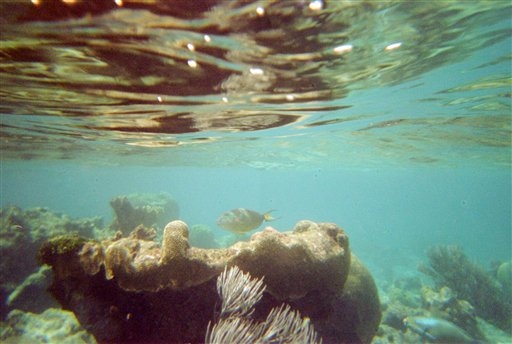
This April 6, 2005 file photo shows a coral reef and fish on a snorkeling trail off Buck Island near St. Croix, U.S. Virgin Islands. U.S. scientists on Tuesday, April 7, 2015 completed a nearly two-week mission to explore waters around the U.S. Virgin Islands as part of a 12-year project to map the Caribbean sea floor and help protect its reefs. (AP Photo/Brent Hoffman, File) This April 6, 2005 file photo shows a coral reef and fish on a snorkeling trail off Buck Island near St. Croix, U.S. Virgin Islands. U.S. scientists on Tuesday, April 7, 2015 completed a nearly two-week mission to explore waters around the U.S. Virgin Islands as part of a 12-year project to map the Caribbean sea floor and help protect its reefs. (AP Photo/Brent Hoffman, File)

U.S. scientists on Tuesday completed a nearly two-week mission to explore waters around the U.S. Virgin Islands as part of a 12-year project to map the Caribbean seafloor and help protect its reefs.

A team with the National Oceanic and Atmospheric Administration studied an area of 270 square miles (700 square kilometers), using equipment including underwater gliders and a remotely operated vehicle to help map the seafloor and locate areas where fish spawn. They focused mostly on the southern coast of St. Croix and…

View original post 256 more words

Excluding complacency in Small Island Developing States

MasterCard CEO Ajay Banga’s six lessons on leadership

Ajay Banga

What I want to focus on is leadership. How do you take the leadership potential all of you have and cultivate it. Here are some perspectives around leadership that I can offer.

1. A sense of urgency: Today’s world of rapidly-advancing technology and ever-shortening innovation cycles have no space for procrastination. It’s that urgency that makes me say to colleagues in my company that “if you have good news for me, take the stairs. If you have bad news, take the elevator.” I need that information fast, so I can do something about it.

2. A sense of balance: A lot of people think that urgency and patience are contradictory. And they could not be more wrong. You need to be patient enough to listen to everybody, but yet, you must have a sense of urgency to take a decision and to execute.

3. Courage to take thoughtful risks: Rarely are you going to have perfect information. The willingness to take a decision at that time will depend on your ability to take a thoughtful risk. The thoughtful part depends also on your humility and realising that you don’t have all the answers—that you can learn something from everybody. You get a good dose of humility as soon as you arrive here. You come from a school where you were the top gun. You get here and everybody’s a top gun. Humility is practically a rite of passage.

4. Be competitively paranoid: I don’t mean be fearful. What I mean is constantly ask yourself if you’re missing something. Is there more to the problem? If you don’t question everything, if you’re not competitively paranoid, you will not have the sense of self-introspection that you need to be a real leader.

5. Develop a global view: Leadership attributes are tremendously facilitated if you surround yourself with people who don’t look like you, don’t walk like you, don’t talk like you, and don’t have the same experiences as you. Admittedly, when I’m in the US, I’m suddenly diverse. In India, I’m obviously not. But it’s not where you come from or what you look like that matters. What matters is what you do and how you do it. That’s the true essence of diversity.

What makes diversity so important? Diversity is essential because a group of similar people tends to think in similar ways, reach similar conclusions, and have similar blind spots. To guard against that, you need to harness the collective uniqueness of those around you to widen your field of vision—to see things differently, to fail harder, to innovate, and to question everything. Widening that field of vision means widening your worldview

Increase your connectivity to the world around you. For example, once you get acclimated to your new jobs, consider getting involved in organisations outside of your work but that connect back to it as well. Explore avenues like the World Economic Forum. The key is to go beyond looking at the world through the lens of your company or your organisation or even your country.

6. Do well and do good: It’s the highest form of leadership. It’s the idea that you can pursue what is in your best interest as well as what is in the interest of others. It’s the recognition that your success is tied to the success of others. You know the saying, it’s lonely at the top? It’s only lonely at the top when you don’t bring other people along with you.

This principle of doing well and doing good holds true for any one person or organisation, but it’s an especially powerful principle for business and the private sector today. In a business sense, it’s the idea that the private sector can be a force for growth and a force for good. That business can make money and make a difference.

Both the private and the public sector have a role to play in the following: Bring more people into the financial mainstream—at a time when half the world’s adults don’t have a bank account, guard against a future where we have the Internet of Everything, but not the Inclusion of Everyone, give women same opportunities as men.

Of course, this very school was founded, not just on the idea of public-private partnerships but literally by public-private partnerships. It was the government of Gujarat, the government of India, local businessmen, Harvard Business School, and the Ford Foundation—all coming together, not only to help build industry in India but to help build India herself.