

Al Jazeera English
fossil fuel
fossil fuel
We will not go quietly into the sea’: Hearings for world’s biggest climate case conclude at the ICJ
Vanuatu and other vulnerable states gave impassioned evidence – aided by a few European allies. Now they wait for the World Court’s opinion.
A landmark legal case to establish countries’ climate responsibilities is wrapping up in The Hague today after two weeks of hearings.
Judges at the International Court of Justice (ICJ) heard from more than 100 countries and organisations between 2 to 13 December, making this the biggest ever legal case in terms of participation.
At its heart is an attempt by vulnerable countries to create a tighter framework of accountability that sets clear international legal obligations for climate action. The small Pacific island nation of Vanuatu has led efforts to secure an advisory opinion from the ICJ, which is now due next year.
https://bit.ly/3ZUa42W
Brave Barbados P.M Publicly Expose America and Europe’s Hypocrisy.
Historical Africa
Oil Projects Must Consider Full Climate Impact, Top U.K. Court Rules
Britain’s highest court has ruled that local councils and planning groups must consider the full environmental impact of new fossil fuel projects when deciding whether to approve them, a decision that could have far-reaching consequences and that climate activists hailed as a major victory.
In particular, the ruling will make it harder for Britain to move ahead with plans to develop large offshore oil fields in the North Sea, including Rosebank, one of the country’s largest undeveloped oil fields. Situated off the coast of Scotland, Rosebank contains an estimated 300 million barrels of recoverable oil.
‘I want people to wake up’: Nemonte Nenquimo on growing up in the rainforest and her fight to save it | Autobiography and memoir | The Guardian
When Nemonte Nenquimo was a young girl, experience began to reinforce what she had come to know intuitively: that her life, and those of the Waorani people of Ecuador’s Amazon rainforest, were on a collision course with forces it would take all their strength and determination to resist. “Deep down, I understood there were two worlds,” she remembers in We Will Not Be Saved, the book she has written with her husband and partner in activism Mitch Anderson. “One where there was our smoky, firelit oko, where my mouth turned manioc into honey, the parrots echoed ‘Mengatowe’, and my family called me Nemonte – my true name, meaning ‘many stars’.

UN Chief: The TRULY DANGEROUS RADICALS are the ONES THAT INCREASE THE FOSSIL FUELS PRODUCTION
Extinction Rebellion (XR)
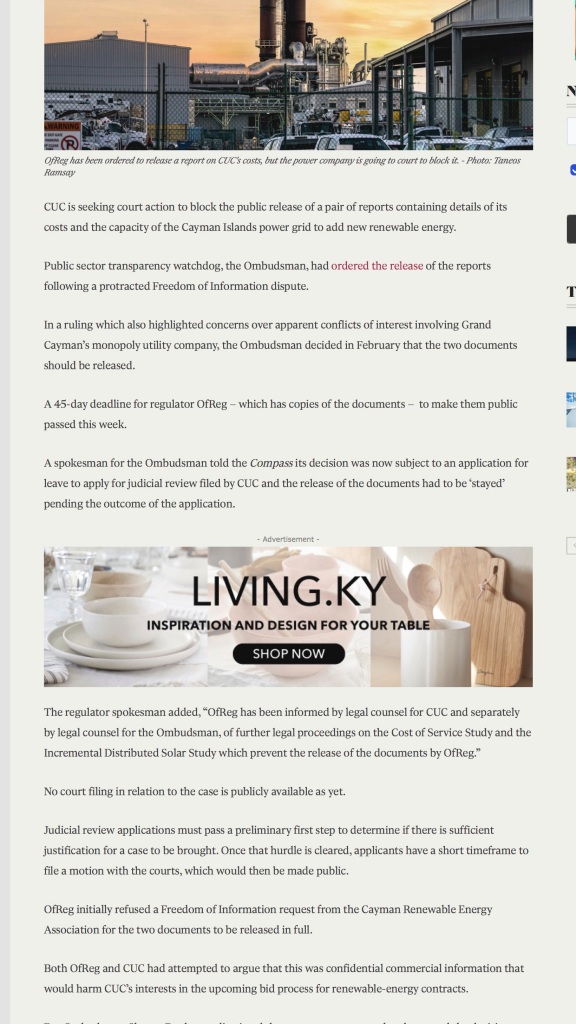
Caribbean Utilities Company (CUC) seeks court order to block release of costs report
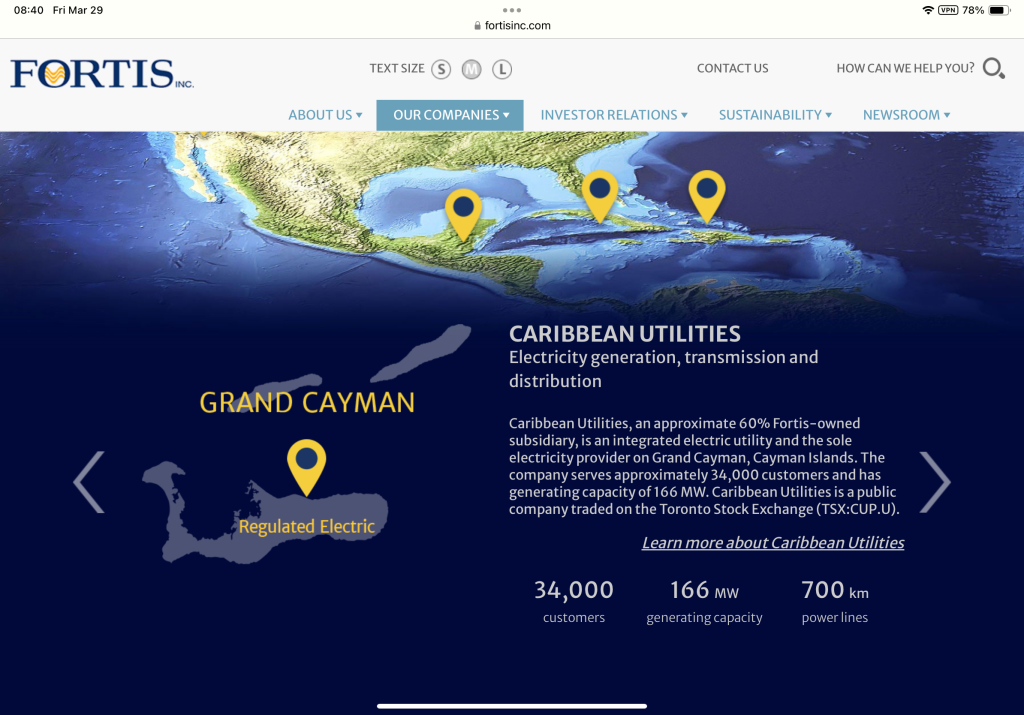
I shall attempt to unpack the Caribbean Utilities Companies situation here in the Cayman Islands, as well that of its majority shareholder Fortis Inc of Canada. https://www.fortisinc.com which owns at least 60% of Caribbean Utilities Company Ltd.
“Realise therefore, that over half of every dollar of Caymanians hard earned money ends up in the pockets of Fortis Inc. Shareholders.”
In fact, the total foreign ownership of Caribbean Utilities Company is in the vicinity of 81%.
FortisBC will Invest Close to $700 Million to Reduce GHG Emissions and Lower Energy Costs for Customers
Reducing energy use is a key pillar in the company’s goal to lead the clean energy transformation in BC Canada.
FortisBC will invest a record CA$694.8 million to help customers reduce their energy use over the next four years, a key pillar in the company’s goal to lead the clean energy transformation in B.C. The investment will allow FortisBC to shift its efforts to more advanced energy-efficiency initiatives, build new energy-saving programs and work with Indigenous communities to develop targeted programs for their unique needs.
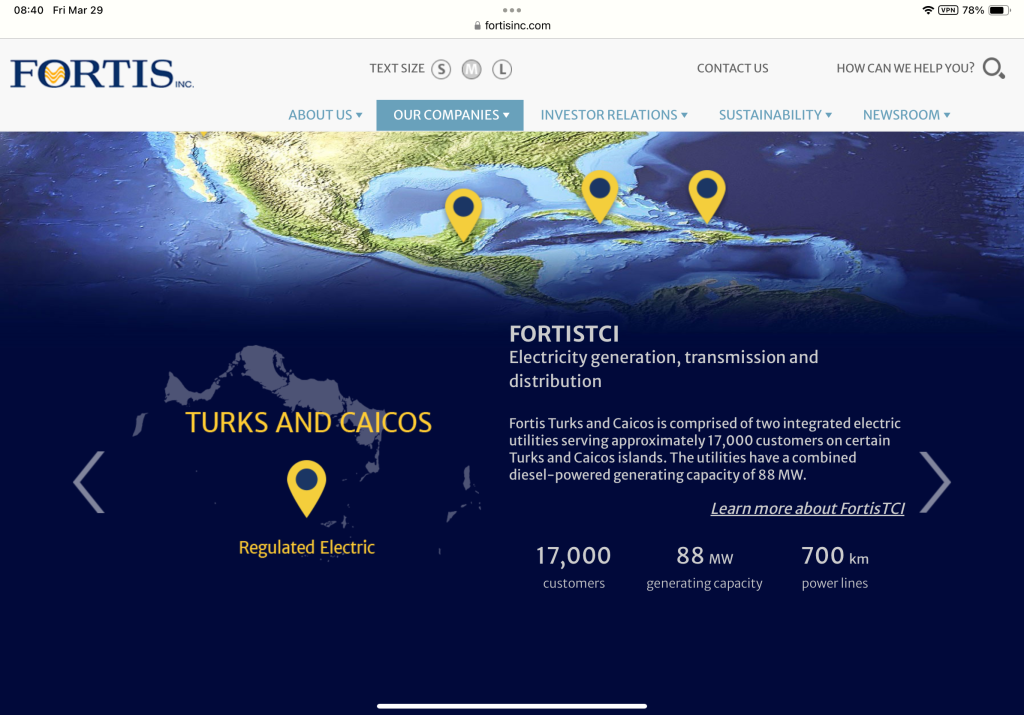
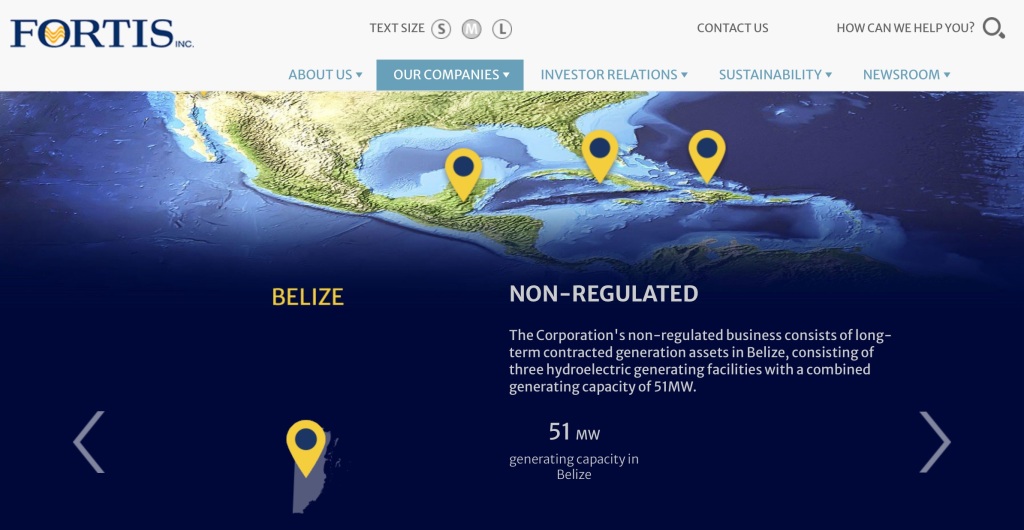
It is indeed interesting to note the difference between Fortis Inc’s policies in Canada and their regional policies in The Cayman Islands, The Turks & Caicos Islands and Belize.
In British Columbia (BC) Canada FortisBC will invest CA$694.8 million to help customers reduce their energy use over the next four years, a key pillar in the company’s goal to lead the clean energy transformation in B.C.
In the Cayman Islands however Caribbean Utilities Company is seeking court action to block the public release of a pair of reports containing details of its costs and the capacity of the Cayman Islands power grid to add new renewable energy.
Public sector transparency watchdog, the Ombudsman, had ordered the release of the reports following a protracted Freedom of Information dispute.
In a ruling which also highlighted concerns over apparent conflicts of interest involving Grand Cayman’s monopoly utility company, the Ombudsman decided in February that the two documents should be released.
The differences in policy between the way customers are treated by Fortis Inc in BC Canada, and how they are treated in the Caribbean by their subsidiary Caribbean Utilities Company Ltd (as well as Fortis Inc’s Belize and Turks & Caicos operations) leads to only one possible conclusion which is that their Cayman Islands operation is exceedingly profitable, and that they will do everything possible to maintain their monoply. The fact that the cost of living in the Cayman Islands is the highest in the world is obviously meaningless to the management of Caribbean Utilities Company as they are at heart Capitalists whose only care is Fortis Inc shareholder profits.
Jaw-Dropping’ Analysis Shows Fossil Fuel Companies to Burn Through 62% of Carbon Budget
‘Jaw-Dropping’ Analysis Shows Fossil Fuel Companies to Burn Through 62% of Carbon Budget

In another high-profile case of “greenwashing,” the oil and gas companies that signed a decarbonization pact at last year’s 28th United Nations Climate Change Conference have plans that would burn through around 62% of the carbon dioxide that can still be emitted without pushing global temperatures past 1.5°C above preindustrial levels.
(https://www.commondreams.org/news/fossil-fuel-companies-carbon-budget)

UAE’s COP 28 Leaked Plans
The United Arab Emirates planned to use its role as the host of UN climate talks as an opportunity to strike oil and gas deals, the BBC has learned.
Leaked briefing documents reveal plans to discuss fossil fuel deals with 15 nations.
This week the OECD has a once-in-a-decade chance to stop funding oil and gas — it’s time to step up
This week the OECD has a once-in-a-decade chance to stop funding oil and gas — it’s time to step up

By Sandrine Dixson-Declève, co-president of The Club of Rome and co-lead of the Earth4All initiative
07 November 2023 — This week, the Organisation for Economic Cooperation and Development (OECD) is meeting in Paris for its annual forum. On the negotiating table is a once-in-a-decade opportunity to end the flow of public money into fossil fuels, but you’d be forgiven for not knowing about it.
The OECD is made up of a group of primarily wealthy countries, who collectively set their own standards around big global issues like tax, trade and the environment. Despite being one of the world’s most influential trade bodies, decisions at the OECD often happen behind closed doors. Members say that this allows them to get on with ‘building better policies for better lives‘ without distraction. The problem is that channelling billions of dollars of public money into fossil fuels each year doesn’t square with that aim.
 Democracy & Good Governance