

Elly From Africa
climate refugee
Vandana Shiva: We Must Fight Back Against the 1 Percent to Stop the Sixth Mass Extinction
United Nations
Climate change refers to long-term shifts in temperatures and weather patterns. Human activities have been the main driver of climate change, primarily due to the burning of fossil fuels like coal, oil and gas.
Democracy Now!
Caribbean advocate: Cayman voiceless in international climate-change talks – Cayman Compass
Fletcher told the audience that when he was negotiating with Amber Rudd, when she was the UK’s minister for climate change, “she was fighting me on loss and damage because loss and damage meant liability and compensation, which is something that the United Kingdom did not want to consider.
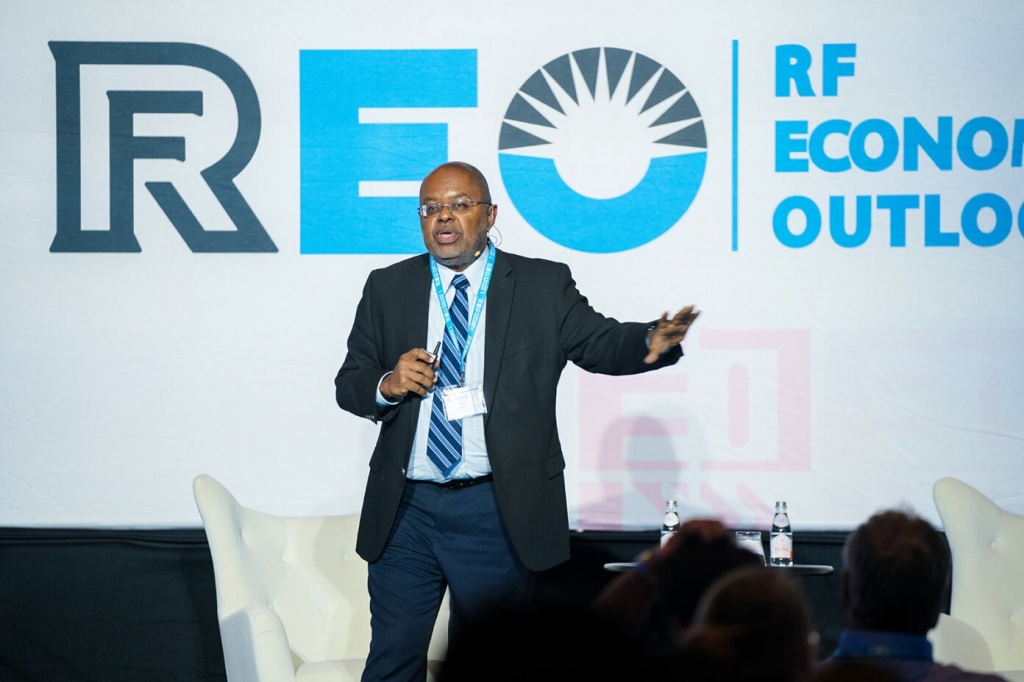
“But, for you in Cayman, loss and damage is important, so who speaks on your behalf now?”
Atlantic at Tipping Point

The Atlantic is calculated to rise by a metre. Photo: Henrik Egede-Lassen This is Climate Crisis article Number 26. A study finds the circulation of …
Atlantic at Tipping Point
Portraits of Resilience | Christine Germane | TEDxRenfrewCollingwood
Portraits of Resilience | Christine Germane | TEDxRenfrewCollingwood
Published on Nov 26, 201 4 • This talk was given at a local TEDx event, produced independently of the TED Conferences. Listen as photographer and educator Christine Germane tells the stories of Portraits of Resilience, a unique project that illustrates the ethical dimension of the climate change discussion through documenting and sharing the personal stories of indigenous youth. Since 2000, Christine Germane has been collaborating with Indigenous communities as a photographer, educator and curator. The international photojournalism project titled Portraits of Resilience has allowed her to work with indigenous youth to illustrate the personal and ethical effects of climate change on their communities. Since its creation in 2008, the project has occurred in 12 countries and has been exhibited internationally, including the launch at the National Museum of Denmark. With a range of education, awards, and project coordination experience within art and design under her belt, Christine’s exceptional work has provided youth with a medium to share their voice during a crucial period of time.
Twitter ©Germane Photo
Facebook Christine Germane Photography
Email: christinegermano@yahoo.com
 © 2014
World Is Locked into ~1.5°C Warming & Risks Are Rising, New Climate Report Finds
World Is Locked into ~1.5°C Warming & Risks Are Rising, New Climate Report Finds

Latin America and the Caribbean
In Latin America and the Caribbean, the report warns of longer droughts, extreme weather, and increasing ocean acidification. In the tropical Andes, rising temperatures will reduce the annual build-up of glacier ice and the spring meltwater that some 50 million people in the low-land farms and cities rely on. Heat and drought stress will substantially increase the risk of large-scale forest loss, affecting Amazon ecosystems and biodiversity, as well as the forests’ ability to store carbon dioxide.
Rising temperatures also affect food security. The oceans, which have absorbed about 30 percent of all human-caused carbon dioxide so far, will continue to acidify and warm, damaging coral ecosystems where sea life thrives and sending fish migrating to cooler waters. The result for the Caribbean could be the loss of up to 50 percent of its current catch volume.
Middle East and North Africa
People in the Middle East and North Africa have been adapting to extreme heat for centuries, but the report warns of unprecedented impact as temperatures continue to rise. Extreme heat will spread across more of the land for longer periods of time, making some regions unlivable and reducing growing areas for agriculture, the report warns. Cities will feel an increasing heat island effect, so that by 4°C warming – possibly as early as the 2080s without action to slow climate change – most capital cities in the Middle East could face four months of exceedingly hot days every year Rising temperatures will put intense pressure on crops and already scarce water resources, potentially increasing migration and the risk of conflict. Climate change is a threat multiplier here – and elsewhere.
Eastern Europe and Central Asia
In Eastern Europe and Central Asia, the report shows how the impact of climate change will vary region to region. Melting glaciers and warming temperatures will shift the growing season and the flow of glacier-fed rivers further into spring in Central Asia, while in the Balkans in Eastern Europe, worsening drought conditions will put crops at risk. Rising temperatures also increase the thawing of permafrost, which releases methane, a potent greenhouse gas many times more powerful than carbon dioxide at trapping heat. By mid-century, if temperatures continue to rise toward 2°C, the release of methane from thawing permafrost is likely to increase 20 to 30 percent in Russia, creating a feedback loop that will drive climate change.
Working to Lower the Risk
“The good news is that there is a growing consensus on what it will take to make changes to the unsustainable path we are currently on,” President Kim said. “Action on climate change does not have to come at the expense of economic growth. At the World Bank, we are investing in energy efficiency and renewable energy to help countries lower their emissions while growing their economies, and in clean transportation that can put fast-growing cities onto more sustainable growth paths. We are also working with governments to design policies that support clean growth, including developing efficiency standards, reducing fossil fuel subsidies, and pricing carbon. It’s clear that the public sector cannot solve the climate challenge alone – private investment and smart business choices are crucial, but business leaders tell us they need governments to provide clear, consistent policy direction that reflects the true costs of emissions. We now screen our projects in 77 countries for climate risk and for opportunities for climate action. We are helping countries find opportunities in climate action and developing financial instruments to increase funding that can help them grow clean and build resilience.
“Our response to the challenge of climate change will define the legacy of our generation,” President Kim said. “The stakes have never been higher.” More
I’m fighting to keep my home above water
My name is Milañ Loeak, I’m from the Marshall Islands, and I bring you a message on behalf of my Climate Warrior brothers and sisters from across Oceania.

You’ve probably heard it all before — that the climate is changing, that the ocean is rising, that my home in the islands will be the first to go. But the people of the Pacific are not drowning, we are fighting. And the biggest threat to our homes is the fossil fuel industry.
So here’s how we’re fighting back: there’s a coal port in Newcastle, Australia and it’s the largest in the world, shipping approximately 617,000 tons of coal every single day. If the port were a country, it would be the 9th highest emitting country in the world. That’s why I have travelled to Australia to shut it down for a day.
Using traditional canoes, I and 30 other Pacific Climate Warriors are going to paddle into the oncoming path of coal ships. Behind us will be hundreds of Australians in kayaks, on surfboards and whatever else they can find, united with us as we stand up to the fossil fuel industry.
But we need more than hundreds of Australians standing with us — we are going to need you too.
The fossil fuel industry will try to dismiss us. They will launch their PR machine to say that we are just a small group acting alone and that we do not speak for others. But we know that we are not acting alone. We are standing with front line communities around the world when we say it is time to end our addiction to fossil fuels before it destroys our homes, our communities, and our culture.
Stopping one day of coal exports alone won’t keep our homes above water, but it marks the rise of the Pacific Climate Warriors, and the beginning of our defense of the Pacific Islands.
I ask you to join us in this fight — because we cannot save the Pacific Islands on our own.
Warm Pacific wishes,
Milañ Loeak, Republic of the Marshall Islands

350.org is building a global climate movement. Become a sustaining donor to keep this movement strong and growing.
WHAT’S POSSIBLE: The U.N. Climate Summit Film
WHAT'S POSSIBLE: The U.N. Climate Summit Film
Published on Sep 23, 2014 • Presented to world leaders at the United Nations Climate Summit in New York, this short inspirational film shows that climate change is solvable. We have the technology to harness nature sustainably for a clean, prosperous energy future, but only if we act now. Narrated by Morgan Freeman, it calls on the people of the world to insist leaders get on the path of a livable climate and future for humankind.
Learn more about climate change and take action at takepart.com/climate.
WHAT'S POSSIBLE was created by director Louie Schwartzberg, writer Scott Z. Burns, Moving Art Studio, and Lyn
Davis Lear and the Lear Family Foundation.
SEQUEL ALERT! Sign up at MovingArt.com to be the first to hear about the launch of the sequel to WHAT'S
POSSIBLE: movingart.com/un/
Directed by Louie Schwartzberg
Written by Scott Z. Burns
Produced by Lyn Davis Lear
Narrated by Morgan Freeman
Music by Hans Zimmer
Climate Injustice – Excerpt from Disruption
‘When it comes to climate change, why do we do so little when we know so much?’
Through a relentless investigation to find the answer, Disruption takes an unflinching look at the devastating consequences of our inaction.
The exploration lays bare the terrifying science, the shattered political process, the unrelenting industry special interests and the civic stasis that have brought us to this social, moral and ecological crossroads.The film also takes us behind-the-scenes of the efforts to organize the largest climate rally in the history of the planet during the UN world climate summit.
This is the story of our unique moment in history. We are living through an age of tipping points and rapid social and planetary change. We’re the first generation to feel the impacts of climate disruption, and the last generation that can do something about it. The film enlarges the issue beyond climate impacts and makes a compelling call for bold action that is strong enough to tip the balance to build a clean energy future. More
The Pale Blue Dot
THE SAGAN SERIES – The Pale Blue Dot
Published on Oct 21, 2013 • Facebook – http://www.facebook.com/thesaganseries
Twitter – http://twitter.com/reidgower
G+ – http://bit.lyA/pHzQh
The Sagan Series is an educational project working in the hopes of promoting scientific literacy in the general population. Created by ©ReidGower http://twitter.com/reidgower
Copyright Disclaimer Under Section 1 07 of the Copyright Act 1976, allowance is made for “fair use” for purposes such as criticism, comment, news reporting, teaching, scholarship, and research. Fair use is a use permitted by copyright statute that might otherwise be infringing. Non-profit, educational or personal use tips the balance in favor of fair use. All copyrighted materials contained herein belong to their respective copyright holders, I do not claim ownership over any of these materials. I realize no profit, monetary or otherwise, from the exhibition of these videos.
 Democracy & Good Governance