
Dare to be great: Polly Higgins at TED×Whitechapel
TEDx Talks

Dare to be great: Polly Higgins at TED×Whitechapel
TEDx Talks
This week the OECD has a once-in-a-decade chance to stop funding oil and gas — it’s time to step up

By Sandrine Dixson-Declève, co-president of The Club of Rome and co-lead of the Earth4All initiative
07 November 2023 — This week, the Organisation for Economic Cooperation and Development (OECD) is meeting in Paris for its annual forum. On the negotiating table is a once-in-a-decade opportunity to end the flow of public money into fossil fuels, but you’d be forgiven for not knowing about it.
The OECD is made up of a group of primarily wealthy countries, who collectively set their own standards around big global issues like tax, trade and the environment. Despite being one of the world’s most influential trade bodies, decisions at the OECD often happen behind closed doors. Members say that this allows them to get on with ‘building better policies for better lives‘ without distraction. The problem is that channelling billions of dollars of public money into fossil fuels each year doesn’t square with that aim.
“Who Is Bob Lazar?”
Theories of Everything with Curt Jaimungal
Hurricane Irma’s destruction of the Caribbean island opened the door for rampant development that threatens its unique ecosystems – but islanders are fighting back

Standing on a truck after a helicopter dash to the tiny airport of Barbuda in the wake of Hurricane Irma, prime minister Gaston Browne addressed the people. He declared all must leave the Caribbean island for their own safety as Hurricanes Jose and Maria were predicted to soon hit. Islanders would be allowed to return “when it was safe”.
It was 2017, and the destruction of Barbuda was reported worldwide to be “catastrophic”, with homes, infrastructure and livelihoods decimated and the inhabitants left in despair.
A state of emergency was declared and the evacuees restricted to the more populous sister island of Antigua for 30 days. Some islanders would never return. Browne said Barbuda was 95% destroyed and estimated it would take up to $300m (£245m) to rebuild.
Within weeks, heavy machinery was at work on the construction site of a private airport for billionaire US investors who had luxury mansions and exclusive hotels already planned.
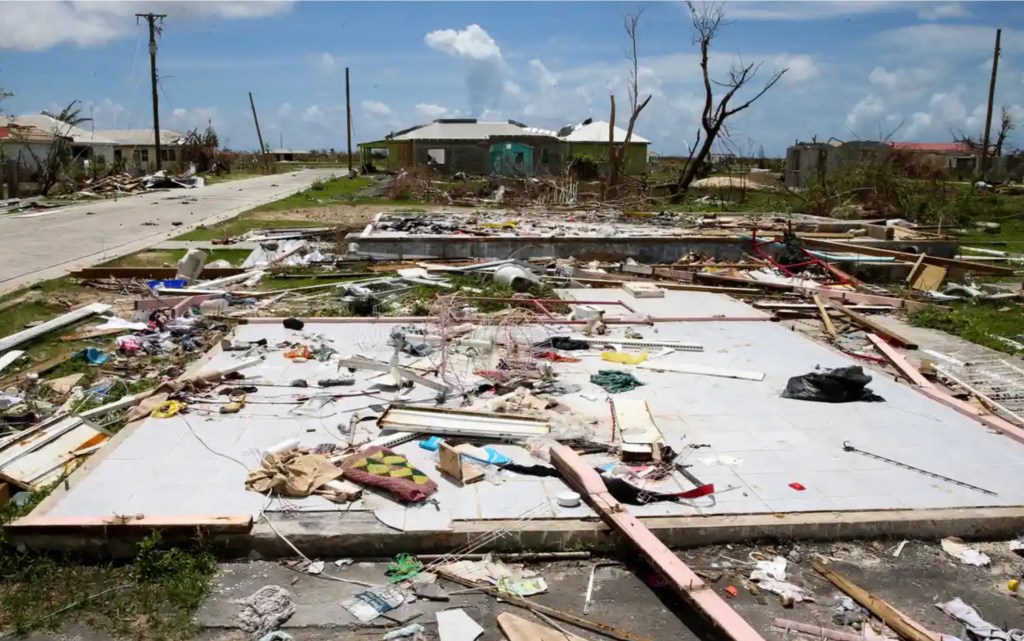
In 2018, two Barbudans obtained a temporary injunction on the construction of the airport, challenging its impact on the island’s fragile ecosystem. The Antiguan government responded by questioning whether the citizens’ had any legal right to make a challenge. The case reached appeal in 2021 with the focus on the legitimacy of the Barbudans to object to government plans for Barbudan land. In 2022, the court ruled they had no standing – or right.
This week, the UK privy council is expected to make a final judgment over the issue. Antigua and Barbuda achieved independence from the UK in 1981, but remain in the Commonwealth with a constitutional monarchy under Charles III, so the privy council is the final court of appeal. The verdict could impact activists far beyond this tiny island, as a decision against the Barbudans could set a precedent across the Caribbean for citizens challenging governments’ perceived environmental violations.
Doctors from around the world unite to call for urgent climate action
Global health bodies are demanding international governments urgently phase out fossil fuels and fast-track renewable energy as health professionals increasingly see patients suffering from harm caused by climate change.
The world’s leading GP and health bodies, representing more than three million health professionals worldwide, will deliver an open letter on Saturday calling for urgent action against climate change to protect the health of communities.
“We the family doctors, doctors and health professionals of the world call on world leaders to take urgent action to safeguard the health of global populations from the climate crisis,” the open letter reads.
Signatories from 39 leading health bodies, including Australia’s peak body for GPs and rural medicine, say they’re already seeing widespread impacts on human health caused by climate change in their patients.
‘Dramatic’ acceleration: Switzerland has lost 10% of its glaciers in the last two years https://www.euronews.com/green/2023/09/28/dramatic-acceleration-switzerland-has-lost-10-of-its-glaciers-in-the-last-two-years
Native Hawaiian Activist Kaniela Ing on Fires, Colonialism & Miss-management of Land and Water
in the age of Climate Change
Is this an issue that the Cayman Islands should be cognisant of today?
Democracy Now!
G20 pledge to triple renewables
JOINT DECLARATION: After months of wrangling, the Indian G20 presidency managed to secure a joint leaders’ declaration this week. The text included a pledge to “pursue and encourage efforts” to triple renewable energy capacity by 2030, the Associated Press reported. The global goal, widely understood to mean 11,000 gigawatts (GW) by 2030, is “vital” to keeping 1.5C within reach, the International Energy Agency (IEA) said in July. IEA chief Dr Fatih Birol told DeBriefed it was a “good step, but far from enough” (see Spotlight).
Neri Oman: Biology, Art, and Science of Design & Engineering with Nature | Lex Fridman Podcast #394
Lex Fridman
 Democracy & Good Governance