

Extinction Rebellion (XR)
climate change
Caribbean Utilities Company (CUC) seeks court order to block release of costs report
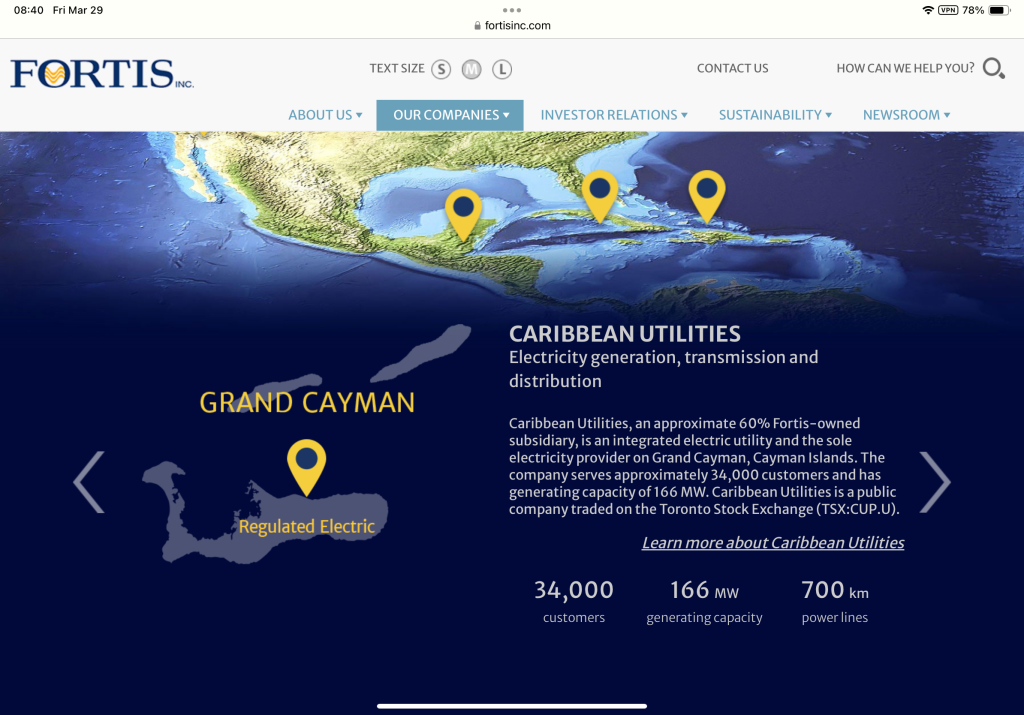
I shall attempt to unpack the Caribbean Utilities Companies situation here in the Cayman Islands, as well that of its majority shareholder Fortis Inc of Canada. https://www.fortisinc.com which owns at least 60% of Caribbean Utilities Company Ltd.
“Realise therefore, that over half of every dollar of Caymanians hard earned money ends up in the pockets of Fortis Inc. Shareholders.”
In fact, the total foreign ownership of Caribbean Utilities Company is in the vicinity of 81%.
FortisBC will Invest Close to $700 Million to Reduce GHG Emissions and Lower Energy Costs for Customers
Reducing energy use is a key pillar in the company’s goal to lead the clean energy transformation in BC Canada.
FortisBC will invest a record CA$694.8 million to help customers reduce their energy use over the next four years, a key pillar in the company’s goal to lead the clean energy transformation in B.C. The investment will allow FortisBC to shift its efforts to more advanced energy-efficiency initiatives, build new energy-saving programs and work with Indigenous communities to develop targeted programs for their unique needs.
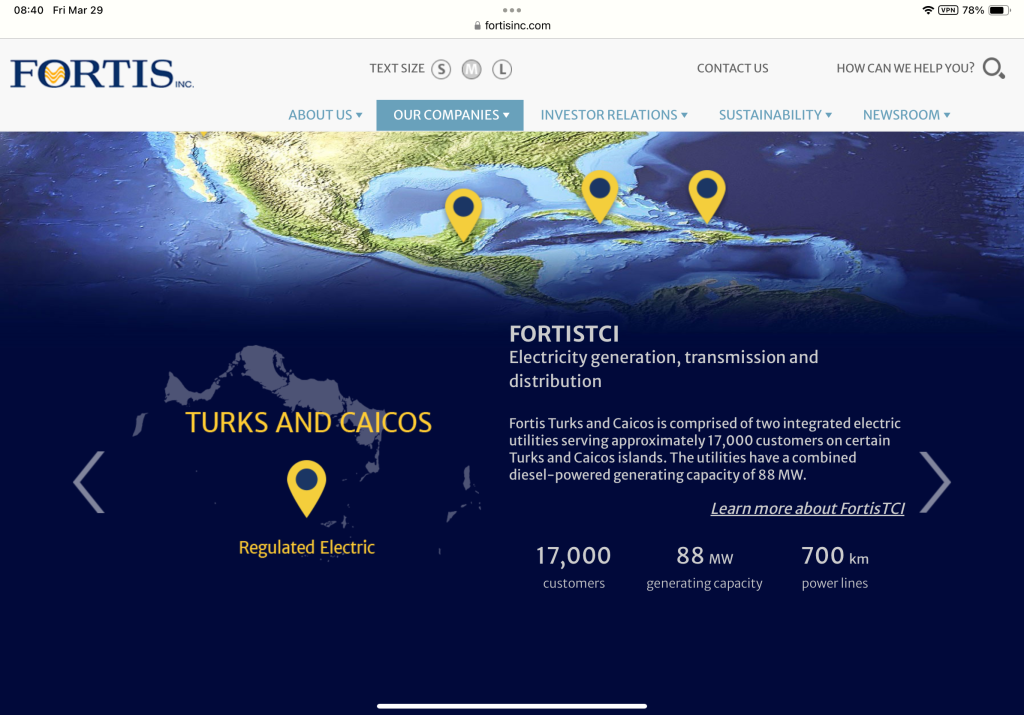
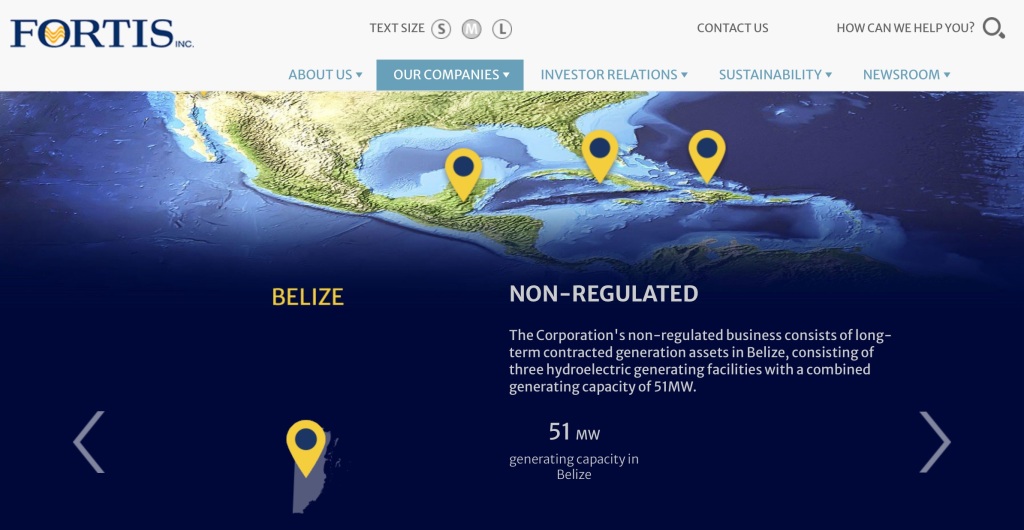
It is indeed interesting to note the difference between Fortis Inc’s policies in Canada and their regional policies in The Cayman Islands, The Turks & Caicos Islands and Belize.
In British Columbia (BC) Canada FortisBC will invest CA$694.8 million to help customers reduce their energy use over the next four years, a key pillar in the company’s goal to lead the clean energy transformation in B.C.
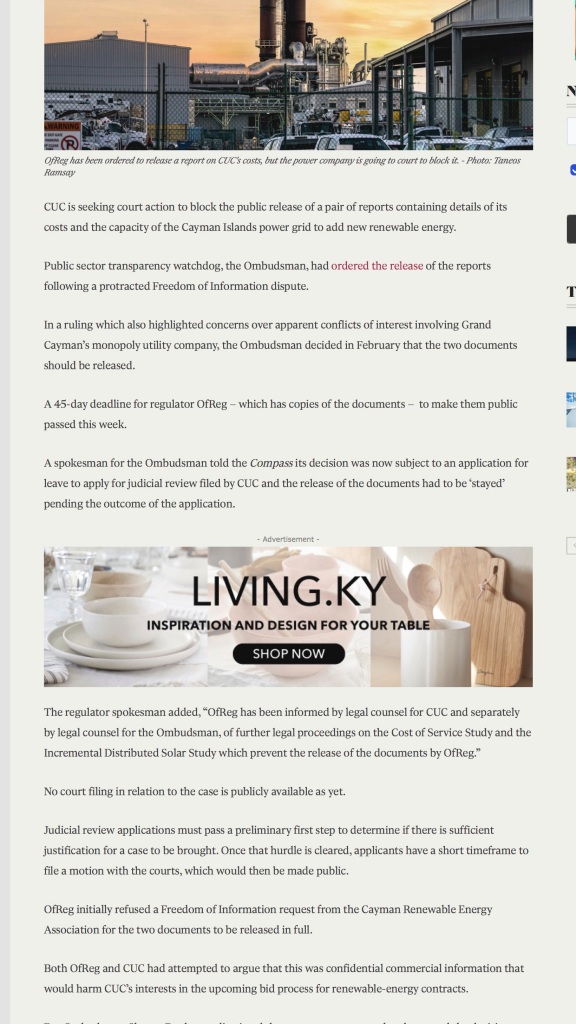
In the Cayman Islands however Caribbean Utilities Company is seeking court action to block the public release of a pair of reports containing details of its costs and the capacity of the Cayman Islands power grid to add new renewable energy.
Public sector transparency watchdog, the Ombudsman, had ordered the release of the reports following a protracted Freedom of Information dispute.
In a ruling which also highlighted concerns over apparent conflicts of interest involving Grand Cayman’s monopoly utility company, the Ombudsman decided in February that the two documents should be released.
The differences in policy between the way customers are treated by Fortis Inc in BC Canada, and how they are treated in the Caribbean by their subsidiary Caribbean Utilities Company Ltd (as well as Fortis Inc’s Belize and Turks & Caicos operations) leads to only one possible conclusion which is that their Cayman Islands operation is exceedingly profitable, and that they will do everything possible to maintain their monoply. The fact that the cost of living in the Cayman Islands is the highest in the world is obviously meaningless to the management of Caribbean Utilities Company as they are at heart Capitalists whose only care is Fortis Inc shareholder profits.
Caribbean advocate: Cayman voiceless in international climate-change talks – Cayman Compass
Fletcher told the audience that when he was negotiating with Amber Rudd, when she was the UK’s minister for climate change, “she was fighting me on loss and damage because loss and damage meant liability and compensation, which is something that the United Kingdom did not want to consider.
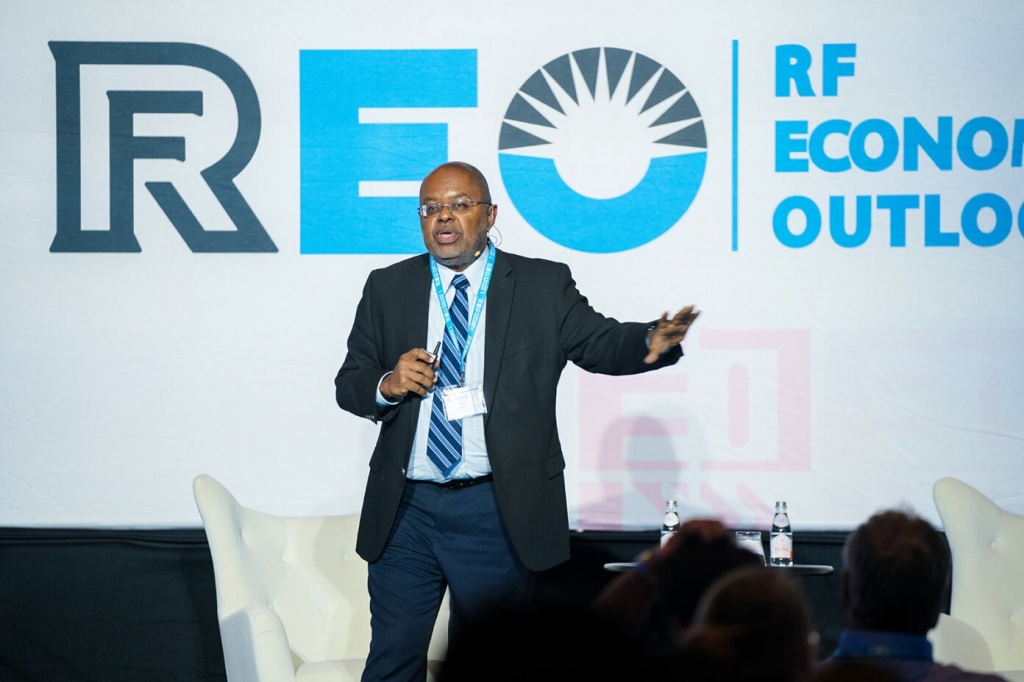
“But, for you in Cayman, loss and damage is important, so who speaks on your behalf now?”
Seagrasses and Mangroves – Full Episode
ChangingSeas
The cities stripping out concrete for earth and plants – BBC Future
From Australia to Ontario, cities are taking up unnecessary stretches of concrete and asphalt, allowing nature to take hold in their place.
On a hot July day, Katherine Rose picked up a sturdy metal pole and jammed it under the tempting lip of a pre-cut concrete slab. Rose, communications and engagement director at Depave, a non-profit in Portland, Oregon, was sweating in the heat – but she was going to win this fight.
The grubby, rectangular section of urban crust in front of her was about to move. Pushing down on her metal bar, applying it like a lever, she eased the concrete covering up and away. Now sunlight could fall once again on the ground below. A mess of gravel and dirt that was, to Rose, just bursting with potential.
Activists call on UK to prepare CI for climate change

(CNS): Following the Nor’wester that struck parts of the Cayman Islands coastline earlier this month, local environmental activists are urging the UK…
Activists call on UK to prepare CI for climate change
Atlantic at Tipping Point

The Atlantic is calculated to rise by a metre. Photo: Henrik Egede-Lassen This is Climate Crisis article Number 26. A study finds the circulation of …
Atlantic at Tipping Point
Jaw-Dropping’ Analysis Shows Fossil Fuel Companies to Burn Through 62% of Carbon Budget
‘Jaw-Dropping’ Analysis Shows Fossil Fuel Companies to Burn Through 62% of Carbon Budget

In another high-profile case of “greenwashing,” the oil and gas companies that signed a decarbonization pact at last year’s 28th United Nations Climate Change Conference have plans that would burn through around 62% of the carbon dioxide that can still be emitted without pushing global temperatures past 1.5°C above preindustrial levels.
(https://www.commondreams.org/news/fossil-fuel-companies-carbon-budget)

Climate Change in the Marshall Islands
Video shows massive wave crashing into US Army Base in Marshall Islands, ripping doors from hinges
 Democracy & Good Governance