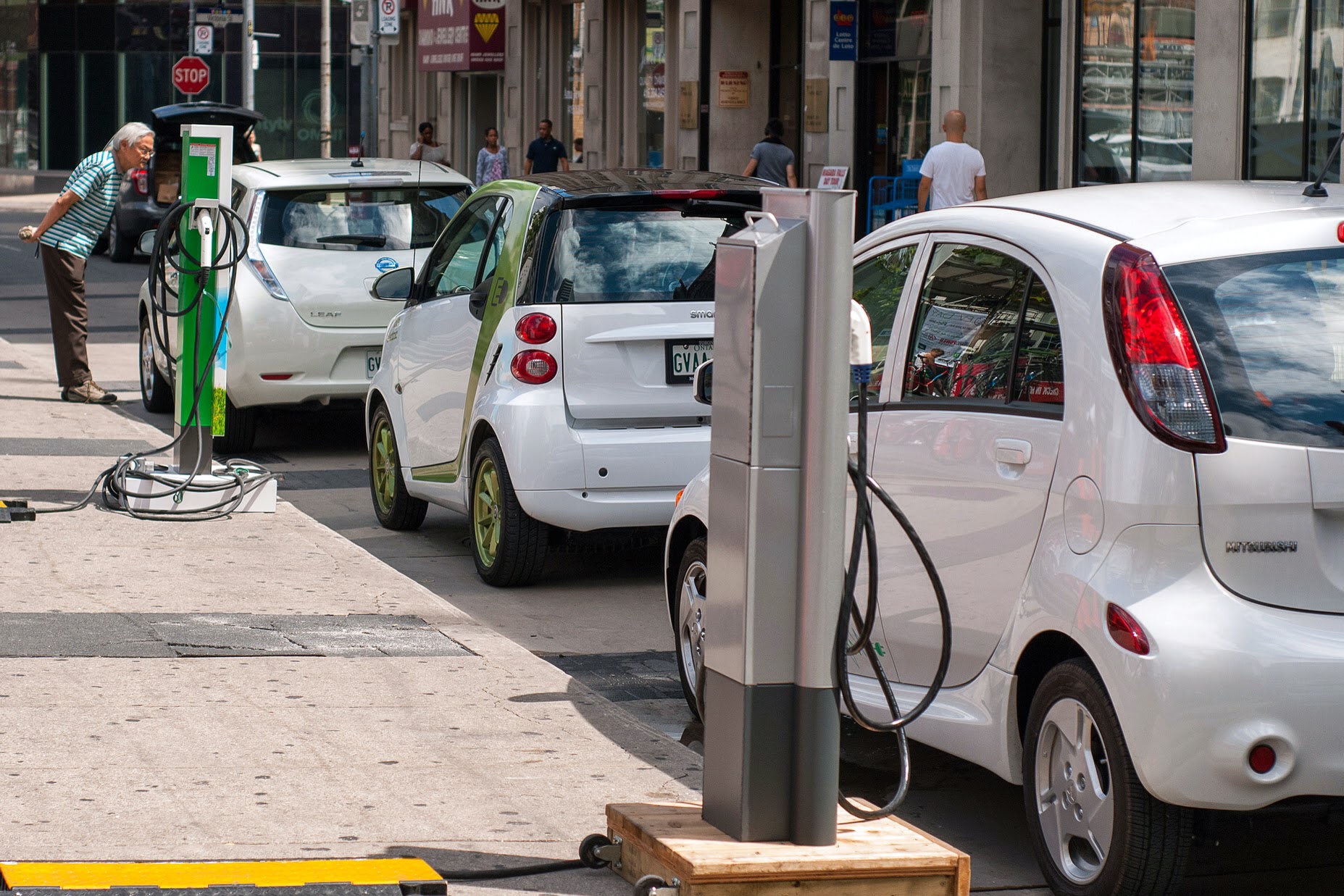
Utility Industry: We Need to Promote Electric Vehicles in Order to ‘Remain Viable’

The Edison Electric Institute, the power industry's main trade group, is calling on utilities to better promote electric cars in order to stimulate demand for electricity and help reverse trends that threaten the long-term viability of some in the industry.

Without a strategy to help connect more vehicles to the grid, utilities will continue to face slow growth and stagnant revenues, warns EEI in a new report. The organization calls electric vehicles a “quadruple win” for power companies looking to boost demand, find new ways to interact with customers, support environmental goals and mandates, and reduce operating costs through electrifying their own fleets.

“The bottom line is that the electric utility industry needs the electrification of the transportation sector to remain viable and sustainable in the long term,” conclude the authors.

Some leading investor-owned utilities have rolled out programs to support charging stations, created pilots to test integration of new vehicle-to-grid technologies and have supported studies to model how lots of electric vehicles would interact with the distribution system. But there hasn't yet been a strategic, industry-wide effort to support the electrification of transportation as a way to boost demand.

To understand why EEI is now calling for more electric vehicles, consider where the industry is headed. As the chart below illustrates, growth in retail demand has come to a virtual standstill.

At the same time, the states with the biggest solar PV markets are seeing that technology slow electricity demand growth even further. This is adding additional pressure on utilities (creating borderline disruption in some markets), as third-party developers capture much of the value from developing solar.

“Stagnant growth, rising costs, and a need for even greater infrastructure investment represent major challenges to the utility industry,” writes EEI. “Today’s electric utilities need a new source of load growth — one that fits within the political, economic and social environment.”

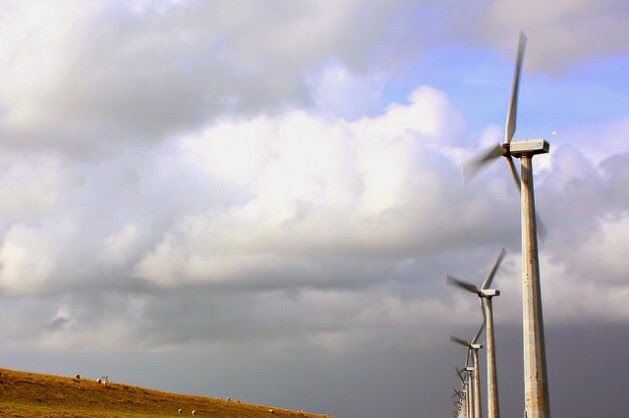
Part of the answer is electric vehicles, which could both grow electricity sales and help balance a future grid made up of much more distributed renewables.

Thus far, utilities have had a conflicted relationship with electric vehicles. Although sales continue to grow, consumer demand has been relatively low compared to initial estimates. That has prevented power companies from investing heavily in charging infrastructure. There are also legitimate concerns about how electric cars and trucks will impact circuits on local grids.

However, the potential upside is enormous. If the two charts above have utilities worried, the chart below should have them excited about the future.

As Opower pointed out in a recent analysis, owners of electric cars use nearly 60 percent more electricity than the average customer. And customers who own both a solar system and an electric car consume roughly the same amount of electricity from the grid as an average customer — offsetting much of the excess solar that utilities must buy back through net metering. More


The Sunswift eVe solar-powered car broke a 26-year-old land speed record for electric vehicles

The Sunswift eVe solar-powered car broke a 26-year-old land speed record for electric vehicles on Wednesday at the Australian Automotive Research Center in Victoria. While the record still has to be ratified by the Fédération Internationale de l’Automobile, it would make eVe the fastest electric car to ever compete a 500 km set distance course by a significant margin, Gizmodo reported. The previous record, set in 1988, was an average speed of 73 kilometers per hour; the Sunswift eVe reached 100 km per hour average over the 500 km course.

Sunswift eVe, designed and built by students at the University of New South Wales, seeks to overcome the traditional obstacles that have impeded solar-powered cars, namely, offering both speed and range in the same vehicle.

“There are many solar cars out there with a long range, and many other solar cars capable of even higher speeds,” Rob Ireland, business team leader at Sunswift, told International Business Times. “However, we’re trying to do something ground-breaking and overcome both.”

The zero-emission solar and battery storage electric vehicle is capable of covering 800 km on a single charge and has a top speed of 140 km per hour (87 miles per hour). The car’s solar panels have an 800-watt output and when the sun isn’t shining, eVe relies on its battery pack, reducing drivers’ range anxiety. The car’s motor, “supplied by Australian national science agency CSIRO, operates at 97 percent efficiency, meaning eVe consumes as much power as a kitchen toaster,” according to IB Times.

For Wednesday’s record attempt, the solar panels on the roof and hood were used to charge the battery, but were covered for the actual run, as the attempt had to be completed on a single charge.

While the Sunswift eVe is not fully road legal, the team believes that isn’t far out of reach, telling Renew Economy they hope to have the vehicle on Australian roads within the year as “a symbol for a new era of sustainable driving.” And Ireland said the practicality of the two-seat, four-wheel car is unmatched among solar-powered vehicles.

In the run-up to their attempt at the land speed record, project director and third-year engineering student Hayden Smith explained to Renew Economy why it was so significant. “Five hundred kilometers is pretty much as far as a normal person would want to drive in a single day,” Smith said. “It’s another demonstration that one day you could be driving our car.” More


How Saudi Arabia Helped Isis Take Over the North of Iraq

How far is Saudi Arabia complicit in the Isis takeover of much of northern Iraq, and is it stoking an escalating Sunni-Shia conflict across the Islamic world?

Some time before 9/11, Prince Bandar bin Sultan, once the powerful Saudi ambassador in Washington and head of Saudi intelligence until a few months ago, had a revealing and ominous conversation with the head of the British Secret Intelligence Service, MI6, Sir Richard Dearlove. Prince Bandar told him: “The time is not far off in the Middle East, Richard, when it will be literally ‘God help the Shia’. More than a billion Sunnis have simply had enough of them.”

The fatal moment predicted by Prince Bandar may now have come for many Shia, with Saudi Arabia playing an important role in bringing it about by supporting the anti-Shia jihad in Iraq and Syria. Since the capture of Mosul by the Islamic State of Iraq and the Levant (Isis) on 10 June, Shia women and children have been killed in villages south of Kirkuk, and Shia air force cadets machine-gunned and buried in mass graves near Tikrit.

In Mosul, Shia shrines and mosques have been blown up, and in the nearby Shia Turkoman city of Tal Afar 4,000 houses have been taken over by Isis fighters as “spoils of war”. Simply to be identified as Shia or a related sect, such as the Alawites, in Sunni rebel-held parts of Iraq and Syria today, has become as dangerous as being a Jew was in Nazi-controlled parts of Europe in 1940.

There is no doubt about the accuracy of the quote by Prince Bandar, secretary-general of the Saudi National Security Council from 2005 and head of General Intelligence between 2012 and 2014, the crucial two years when al-Qa’ida-type jihadis took over the Sunni-armed opposition in Iraq and Syria. Speaking at the Royal United Services Institute last week, Dearlove, who headed MI6 from 1999 to 2004, emphasised the significance of Prince Bandar’s words, saying that they constituted “a chilling comment that I remember very well indeed”.

He does not doubt that substantial and sustained funding from private donors in Saudi Arabia and Qatar, to which the authorities may have turned a blind eye, has played a central role in the Isis surge into Sunni areas of Iraq. He said: “Such things simply do not happen spontaneously.” This sounds realistic since the tribal and communal leadership in Sunni majority provinces is much beholden to Saudi and Gulf paymasters, and would be unlikely to cooperate with Isis without their consent.

Dearlove’s explosive revelation about the prediction of a day of reckoning for the Shia by Prince Bandar, and the former head of MI6′s view that Saudi Arabia is involved in the Isis-led Sunni rebellion, has attracted surprisingly little attention. Coverage of Dearlove’s speech focused instead on his main theme that the threat from Isis to the West is being exaggerated because, unlike Bin Laden’s al-Qa’ida, it is absorbed in a new conflict that “is essentially Muslim on Muslim”. Unfortunately, Christians in areas captured by Isis are finding this is not true, as their churches are desecrated and they are forced to flee. A difference between al-Qa’ida and Isis is that the latter is much better organised; if it does attack Western targets the results are likely to be devastating.

The forecast by Prince Bandar, who was at the heart of Saudi security policy for more than three decades, that the 100 million Shia in the Middle East face disaster at the hands of the Sunni majority, will convince many Shia that they are the victims of a Saudi-led campaign to crush them. “The Shia in general are getting very frightened after what happened in northern Iraq,” said an Iraqi commentator, who did not want his name published. Shia see the threat as not only military but stemming from the expanded influence over mainstream Sunni Islam of Wahhabism, the puritanical and intolerant version of Islam espoused by Saudi Arabia that condemns Shia and other Islamic sects as non-Muslim apostates and polytheists.

Dearlove says that he has no inside knowledge obtained since he retired as head of MI6 10 years ago to become Master of Pembroke College in Cambridge. But, drawing on past experience, he sees Saudi strategic thinking as being shaped by two deep-seated beliefs or attitudes. First, they are convinced that there “can be no legitimate or admissible challenge to the Islamic purity of their Wahhabi credentials as guardians of Islam’s holiest shrines”. But, perhaps more significantly given the deepening Sunni-Shia confrontation, the Saudi belief that they possess a monopoly of Islamic truth leads them to be “deeply attracted towards any militancy which can effectively challenge Shia-dom”.

Western governments traditionally play down the connection between Saudi Arabia and its Wahhabist faith, on the one hand, and jihadism, whether of the variety espoused by Osama bin Laden and al-Qa’ida or by Abu Bakr al-Baghdadi’s Isis. There is nothing conspiratorial or secret about these links: 15 out of 19 of the 9/11 hijackers were Saudis, as was Bin Laden and most of the private donors who funded the operation.

The difference between al-Qa’ida and Isis can be overstated: when Bin Laden was killed by United States forces in 2011, al-Baghdadi released a statement eulogising him, and Isis pledged to launch 100 attacks in revenge for his death.

But there has always been a second theme to Saudi policy towards al-Qa’ida type jihadis, contradicting Prince Bandar’s approach and seeing jihadis as a mortal threat to the Kingdom. Dearlove illustrates this attitude by relating how, soon after 9/11, he visited the Saudi capital Riyadh with Tony Blair.

He remembers the then head of Saudi General Intelligence “literally shouting at me across his office: ’9/11 is a mere pinprick on the West. In the medium term, it is nothing more than a series of personal tragedies. What these terrorists want is to destroy the House of Saud and remake the Middle East.’” In the event, Saudi Arabia adopted both policies, encouraging the jihadis as a useful tool of Saudi anti-Shia influence abroad but suppressing them at home as a threat to the status quo. It is this dual policy that has fallen apart over the last year.

Saudi sympathy for anti-Shia “militancy” is identified in leaked US official documents. The then US Secretary of State Hillary Clinton wrote in December 2009 in a cable released by Wikileaks that “Saudi Arabia remains a critical financial support base for al-Qa’ida, the Taliban, LeT [Lashkar-e-Taiba in Pakistan] and other terrorist groups.” She said that, in so far as Saudi Arabia did act against al-Qa’ida, it was as a domestic threat and not because of its activities abroad. This policy may now be changing with the dismissal of Prince Bandar as head of intelligence this year. But the change is very recent, still ambivalent and may be too late: it was only last week that a Saudi prince said he would no longer fund a satellite television station notorious for its anti-Shia bias based in Egypt.

The problem for the Saudis is that their attempts since Bandar lost his job to create an anti-Maliki and anti-Assad Sunni constituency which is simultaneously against al-Qa’ida and its clones have failed.

By seeking to weaken Maliki and Assad in the interest of a more moderate Sunni faction, Saudi Arabia and its allies are in practice playing into the hands of Isis which is swiftly gaining full control of the Sunni opposition in Syria and Iraq. In Mosul, as happened previously in its Syrian capital Raqqa, potential critics and opponents are disarmed, forced to swear allegiance to the new caliphate and killed if they resist.

The West may have to pay a price for its alliance with Saudi Arabia and the Gulf monarchies, which have always found Sunni jihadism more attractive than democracy. A striking example of double standards by the western powers was the Saudi-backed suppression of peaceful democratic protests by the Shia majority in Bahrain in March 2011. Some 1,500 Saudi troops were sent across the causeway to the island kingdom as the demonstrations were ended with great brutality and Shia mosques and shrines were destroyed.

An alibi used by the US and Britain is that the Sunni al-Khalifa royal family in Bahrain is pursuing dialogue and reform. But this excuse looked thin last week as Bahrain expelled a top US diplomat, the assistant secretary of state for human rights Tom Malinowksi, for meeting leaders of the main Shia opposition party al-Wifaq. Mr Malinowski tweeted that the Bahrain government’s action was “not about me but about undermining dialogue”.

Western powers and their regional allies have largely escaped criticism for their role in reigniting the war in Iraq. Publicly and privately, they have blamed the Iraqi Prime Minister Nouri al-Maliki for persecuting and marginalising the Sunni minority, so provoking them into supporting the Isis-led revolt. There is much truth in this, but it is by no means the whole story. Maliki did enough to enrage the Sunni, partly because he wanted to frighten Shia voters into supporting him in the 30 April election by claiming to be the Shia community’s protector against Sunni counter-revolution.

But for all his gargantuan mistakes, Maliki’s failings are not the reason why the Iraqi state is disintegrating. What destabilised Iraq from 2011 on was the revolt of the Sunni in Syria and the takeover of that revolt by jihadis, who were often sponsored by donors in Saudi Arabia, Qatar, Kuwait and United Arab Emirates. Again and again Iraqi politicians warned that by not seeking to close down the civil war in Syria, Western leaders were making it inevitable that the conflict in Iraq would restart. “I guess they just didn’t believe us and were fixated on getting rid of [President Bashar al-] Assad,” said an Iraqi leader in Baghdad last week.

Of course, US and British politicians and diplomats would argue that they were in no position to bring an end to the Syrian conflict. But this is misleading. By insisting that peace negotiations must be about the departure of Assad from power, something that was never going to happen since Assad held most of the cities in the country and his troops were advancing, the US and Britain made sure the war would continue.

The chief beneficiary is Isis which over the last two weeks has been mopping up the last opposition to its rule in eastern Syria. The Kurds in the north and the official al-Qa’ida representative, Jabhat al-Nusra, are faltering under the impact of Isis forces high in morale and using tanks and artillery captured from the Iraqi army. It is also, without the rest of the world taking notice, taking over many of the Syrian oil wells that it did not already control.

Saudi Arabia has created a Frankenstein’s monster over which it is rapidly losing control. The same is true of its allies such as Turkey which has been a vital back-base for Isis and Jabhat al-Nusra by keeping the 510-mile-long Turkish-Syrian border open. As Kurdish-held border crossings fall to Isis, Turkey will find it has a new neighbour of extraordinary violence, and one deeply ungrateful for past favours from the Turkish intelligence service.

As for Saudi Arabia, it may come to regret its support for the Sunni revolts in Syria and Iraq as jihadi social media begins to speak of the House of Saud as its next target. It is the unnamed head of Saudi General Intelligence quoted by Dearlove after 9/11 who is turning out to have analysed the potential threat to Saudi Arabia correctly and not Prince Bandar, which may explain why the latter was sacked earlier this year.

Nor is this the only point on which Prince Bandar was dangerously mistaken. The rise of Isis is bad news for the Shia of Iraq but it is worse news for the Sunni whose leadership has been ceded to a pathologically bloodthirsty and intolerant movement, a sort of Islamic Khmer Rouge, which has no aim but war without end.

The Sunni caliphate rules a large, impoverished and isolated area from which people are fleeing. Several million Sunni in and around Baghdad are vulnerable to attack and 255 Sunni prisoners have already been massacred. In the long term, Isis cannot win, but its mix of fanaticism and good organisation makes it difficult to dislodge.

“God help the Shia,” said Prince Bandar, but, partly thanks to him, the shattered Sunni communities of Iraq and Syria may need divine help even more than the Shia. More


Major Companies Push for More, Easier Renewable Energy

Some of the largest companies in the United States have banded together to call for a substantial increase in the production of renewable electricity, as well as for more simplicity in purchasing large blocs of green energy.

A dozen U.S-based companies, most of which operate globally, say they want to significantly step up the amount of renewable energy they use, but warn that production levels remain too low and procurement remains too complex. The 12 companies have now put forward a set of principles aimed at helping to “facilitate progress on these challenges” and lead to a broader shift in the market.

“We would like our efforts to result in new renewable power generation,” the Corporate Renewable Energy Buyers’ Principles, released Friday, state. The companies note “our desire to promote new projects, ensure our purchases add new capacity to the system, and that we buy the most cost-competitive renewable energy products.”

The principles consist of six broad reforms, aimed at broadening and strengthening the renewable energy marketplace. Companies want more choice in their procurement options, greater cost competitiveness between renewable and traditional power sources, and “simplified processes, contracts and financing” around the long-term purchase of renewables.

Founding signatories to the principles, which were shepherded by civil society, include manufacturers and consumer goods companies (General Motors, Johnson & Johnson, Mars, Proctor & Gamble), tech giants (Facebook, HP, Intel, Sprint) and major retailers (Walmart, the outdoor-goods store REI).

These 12 companies combined have renewable energy consumption targets of more than eight million megawatt hours of energy through the end of this decade, according to organisers. Yet the new principles, meant to guide policy discussions, have come about due to frustration over the inability of the U.S. renewables market to keep up with spiking demand.

“The problem these companies are seeing is that they’re paying too much, even though they know that cost-effective renewable energy is available. These companies are used to having choices,” Marty Spitzer, director of U.S. climate policy at the World Wildlife Fund (WWF), a conservation and advocacy group that helped to spearhead the principles, told IPS.

WWF was joined in the initiative by the World Resources Institute and the Rocky Mountain Institute, both think tanks that focus on issues of energy and sustainability.

“The companies have also recognised that it’s often very difficult to procure renewables and bring them to their facilities,” Spitzer continues. “While most of them didn’t think of it this way at first, they’ve now realised that they have been experiencing a lot of the same problems.”

‘Too difficult’

In recent years, nearly two-thirds of big U.S. businesses have created explicit policies around climate goals and renewable energy usage, according to WWF. While there is increasing political and public compunction behind these new policies, a primary goal remains simple cost-cutting and long-term efficiencies.

“A significant part of the value to us from renewable energy is the ability to lock in energy price certainty and avoid fuel price volatility,” the principles note.

In part due to political deadlock in Washington, particularly around issues of climate and energy, renewable production in the United States remains too low to keep up with this corporate demand. According to the U.S. government, only around 13 percent of domestic energy production last year was from renewable sources.

Accessing even that small portion of the market remains unwieldy.

“We know cost-competitive renewable energy exists but the problem is that it is way too difficult for most companies to buy,” Amy Hargroves, director of corporate responsibility and sustainability for Sprint, a telecommunications company, said in a statement.

“Very few companies have the knowledge and resources to purchase renewable energy given today’s very limited and complex options. Our hope is that by identifying the commonalities among large buyers, the principles will catalyse market changes that will help make renewables more affordable and accessible for all companies.”

One of the most far-reaching sustainability commitments has come from the world’s largest retailer, Walmart. A decade ago, the company set an “aspirational” goal for itself, to be supplied completely by renewable energy.

Last year, it created a more specific goal aimed at helping to grow the global market for renewables, pledging to drive the production or procurement of seven billion kilowatt hours of renewable energy globally by the end of 2020, a sixfold increase over 2010. (The company is also working to increase the energy efficiency of its stores by 20 percent over this timeframe.)

While the company has since become a leader in terms of installing solar and wind projects at its stores and properties, it has experienced frustrations in trying to make long-term bulk purchases of renewable electricity from U.S. utilities.

“The way we finance is important … cost-competitiveness is very important, as is access to longer-term contracts,” David Ozment, senior director of energy at Walmart, told IPS. “We like to use power-purchase agreements to finance our renewable energy projects, but currently only around half of the states in the U.S. allow for these arrangements.”

Given Walmart’s size and scale, Ozment says the company is regularly asked by suppliers, regulators and utilities about what it is looking for in power procurement. The new principles, he says, offer a strong answer, providing direction as well as flexibility for whatever compulsion is driving a particular company’s energy choices, whether “efficiency, conservation or greenhouse gas impact”.

“We’ve seen the price of solar drop dramatically over the past five years, and we hope our participation helped in that,” he says. “Now, these new principles will hopefully create the scale to continue to drop the cost of renewables and make them more affordable for everyone.”

Internationally applicable

Ozment is also clear that the new principles need not apply only to U.S. operations, noting that the principles “dovetail” with what Walmart is already doing internationally.

In an e-mail, a representative for Intel, the computer chip manufacturer, likewise told IPS that the company is “interested in promoting renewables markets in countries where we have significant operations … at a high level, the need to make renewables both more abundant and easier to access applies outside the U.S.”

For his part, WWF’s Spitzer says that just one of the principles is specific to the U.S. regulatory context.

“Many other countries have their own instruments on renewable production,” he says, “but five out of these six principles are relevant and perfectly appropriate internationally.”

Meanwhile, both the principles and their signatories remain open-ended. Spitzer says that just since Friday he’s heard from additional companies interested in adding their support. More


All but four nations are subject to NSA surveillance – new Snowden leak

Previously undisclosed files leaked to the media by former intelligence contractor Edward Snowden now show that the United States National Security Agency has been authorized to spy on persons in all but four countries.

NSA Operations Center

The Washington Post published on Monday official documents provided by Mr. Snowden that shows new proof concerning the extent of the NSA’s vast surveillance apparatus.

One of the documents—a file marked “top secret” from 2010 and approved by the US Foreign Intelligence Surveillance Court—shows that the NSA has been authorized to conduct surveillance on 193 foreign government, as well as various factions and organizations around the world, including the International Monetary Fund, the European Union and the International Atomic Energy Agency.

“Virtually no foreign government is off-limits for the National Security Agency, which has been authorized to intercept information from individuals ‘concerning’ all but four countries on Earth, according to top-secret documents,” journalists Ellen Nakashima and Barton Gellman wrote for the Post.

The reporters write that the NSA’s ability to target the communications of foreign persons and parties is “far more elastic” than previously known, and that documents suggest the agency can acquire conversations that may not involve an intelligence target directly, but concern that individual or entity to a certain degree by relying on provisions contained within the Foreign Intelligence Surveillance Act.

Unless, of course, that person of interest is a citizen of one of the ‘Five Eyes’ nations that, together with the US, are involved in a global surveillance partnership of sorts.

According to the Post, the NSA’s computers automatically filter out phone calls from Britain, Canada, Australia and New Zealand that would otherwise be collected using FISA. Even those nations, however, aren’t entirely sparred.

Nakashima and Gellman go on to acknowledge that the list contains 28 sovereign territories, including the British Virgin Islands, where the NSA reportedly still does permit intelligence gathering [as] filtering out those country codes would otherwise slow the system down.

One former senior defense official who spoke to the journalists on condition of anonymity said that the broad authority is allowed so that the US government is able to assess any developing situations around the world at the drop of a hat.

“It’s not impossible to imagine a humanitarian crisis in a country that’s friendly to the United States, where the military might be expected on a moment’s notice to go in and evacuate all Americans,” the official said. “If that certification did not list the country,” the source suggested, then the NSA could not gather intelligence under the FISA Amendments Act, which allows for the interception of such communications.

“These documents show both the potential scope of the government’s surveillance activities and the exceedingly modest role the court plays in overseeing them,” Jameel Jaffer, deputy legal director for the American Civil Liberties Union, told the Post. More

The 28 sovereign territories undoubtly includes the Cayman Islands and all the other British Overseas Territories (OT's). I am sure that arrangement was made with the understanding that London would get the entire feed from the OT's. The NSA has vastly superior equipment to GCHQ. Editor


Solar is here

Solar is here.

That’s right. You know the solutions to the climate crisis are available today; we simply need the public (and political) will to implement them. Clean energy is urgently necessary, abundant, and becoming increasingly more affordable. That’s why on June 21, The Climate Reality Project is joining 12 other organizations in a day of action to support clean-energy solutions and show our commitment to bringing solar power to communities around the world.

If you don’t already have plans to take part on Saturday, don’t despair! Here are a few last minute ways to get involved:

  1. Sign: Send President Obama an email thanking him for putting solar panels on the roof of the White House.
  2. Share: Take your own #PutSolarOnIt photo and share it with your social media network.
  3. Discover: Check out the Mosaic website to find out if solar is right for you.
  4. Participate: Check out OFA’s website to find an event near you, some of which are being hosted by your fellow Climate Reality Leaders.

The reality is this: solar is affordable. It’s clean. And it’s powerful. The cost of solar panels has plummeted 60 percent since early 2011, and the number of installations keeps growing. The United States now has enough installed solar capacity to power more than 2.2 million homes. In several states, solar power is now competitive with other sources of energy without emitting the dangerous greenhouse gases that cause climate change.

Climate Reality Leaders are the first responders to the climate crisis and lead action across the globe. We’re proud so many of you will be participating on Saturday by hosting presentations, organizing events, and informing others about the benefits of solar power.

The Climate Reality Leadership Corps Team

Solar Array at Caledonian Bank, George Town, Cayman Islands


Iraq oil shock would kill world economic recovery, experts warn

As I have been warning people about for a number of years: Potential oil price spike in Middle East; What could this do to the Cayman Islands?

Open warfare between the government and rebels in Iraq would pose a threat to the global economic recovery should oil production from the war-torn Middle East state suffer a serious disruption, analysts have warned.

As violence threatens Iraq’s oil industry, experts fear crude at $130 per barrel would damage the global economy

Open warfare between the government and rebels in Iraq would pose a threat to the global economic recovery should oil production from the war-torn Middle East state suffer a serious disruption, analysts have warned.

Brent oil prices climbed as high as $110.25 (£65.59) on Wednesday amid concerns that 3.5m barrels per day of Iraqi exports could be knocked out of the market by the violence that has seen al-Qaeda forces seize control of Mosul, Tikrit and Samarra.

“The worst case scenario is that we see production from Iraq slip down to levels in the last Gulf war, then oil could spike $20 a barrel very quickly,” Ole Hansen, vice-president and head of commodity strategy at Saxo Bank told The Telegraph. “In that scenario, the entire economic recovery, which is still fragile, could stall and we could even slip back into recession in some regions.”

Iraq’s oil minister, Abdul Kareem Luaibi, who was attending a gathering of the 12-member Organisation of Petroleum Exporting Countries (Opec) in Vienna on Wednesday, tried to ease concerns by stressing that most of the country’s crude was pumped from fields in the Shia-Muslim dominated South, where export facilities are “very, very safe”.

Despite the deteriorating political situation in Iraq, where government forces have been seen fleeing from the Sunni-Muslim al-Qaeda insurgents, Opec decided to leave its production quotas unchanged. The cartel limits the output of its members to 30m barrels per day (bpd) of crude, roughly a third of the world’s supply.

However, the group’s ability to react to shocks to the oil market is limited, with Saudi Arabia the only producer with enough spare production capacity to cover any shortfalls. Riyadh maintains about 12.5m barrles per day (bpd) of production capacity, with 2.5m bpd – three-times Britain’s output from the North Sea – lying idle at any one time.

Although Saudi’s oil officials told reporters in Vienna on Wednesday that the kingdom and Opec could compensate for any Iraqi shortfalls, oil traders remain concerned.

In a note to Bloomberg, Helima Croft, Barclays’ head of North American commodities research, said: “The shocking escalation in violence in Iraq raises the prospect of potential output losses. It comes as other key producers, like Libya, have also seen exports ‘evaporate’ amid rising unrest.”

Helped by investment from international oil companies such as Royal Dutch Shell, BP and Lukoil, Iraq has increased its importance in the world oil market since recovering from the 2003 war.

The opening of the giant West Qurna-2 oilfield near Basra in March would allow Iraq to pump 4m bpd by the end of the year. Already the second-largest producer in Opec after Saudi Arabia, according to Reuters, Iraq has pumped an average of 3.5m bpd since the beginning of the year.

UK oil companies working in Iraq are understood to be closely monitoring the situation but at this point have no plans to withdraw workers from their fields.

Brent oil prices climbed as high as $110.25 (£65.59) on Wednesday amid concerns that 3.5m barrels per day of Iraqi exports could be knocked out of the market by the violence that has seen al-Qaeda forces seize control of Mosul, Tikrit and Samarra.

“The worst case scenario is that we see production from Iraq slip down to levels in the last Gulf war, then oil could spike $20 a barrel very quickly,” Ole Hansen, vice-president and head of commodity strategy at Saxo Bank told The Telegraph. “In that scenario, the entire economic recovery, which is still fragile, could stall and we could even slip back into recession in some regions.”

Iraq’s oil minister, Abdul Kareem Luaibi, who was attending a gathering of the 12-member Organisation of Petroleum Exporting Countries (Opec) in Vienna on Wednesday, tried to ease concerns by stressing that most of the country’s crude was pumped from fields in the Shia-Muslim dominated South, where export facilities are “very, very safe”.

Despite the deteriorating political situation in Iraq, where government forces have been seen fleeing from the Sunni-Muslim al-Qaeda insurgents, Opec decided to leave its production quotas unchanged. The cartel limits the output of its members to 30m barrels per day (bpd) of crude, roughly a third of the world’s supply.

However, the group’s ability to react to shocks to the oil market is limited, with Saudi Arabia the only producer with enough spare production capacity to cover any shortfalls. Riyadh maintains about 12.5m barrles per day (bpd) of production capacity, with 2.5m bpd – three-times Britain’s output from the North Sea – lying idle at any one time.

Although Saudi’s oil officials told reporters in Vienna on Wednesday that the kingdom and Opec could compensate for any Iraqi shortfalls, oil traders remain concerned.

In a note to Bloomberg, Helima Croft, Barclays’ head of North American commodities research, said: “The shocking escalation in violence in Iraq raises the prospect of potential output losses. It comes as other key producers, like Libya, have also seen exports ‘evaporate’ amid rising unrest.”

Helped by investment from international oil companies such as Royal Dutch Shell, BP and Lukoil, Iraq has increased its importance in the world oil market since recovering from the 2003 war.

The opening of the giant West Qurna-2 oilfield near Basra in March would allow Iraq to pump 4m bpd by the end of the year. Already the second-largest producer in Opec after Saudi Arabia, according to Reuters, Iraq has pumped an average of 3.5m bpd since the beginning of the year.

UK oil companies working in Iraq are understood to be closely monitoring the situation but at this point have no plans to withdraw workers from their fields. More

Furthermore, if the insurgencies drag Iran into the fray will Kingdom of Saudi Arabia (KSA) be tempted to respond on the side of the Wahabi / Salafi axis? Remember that KSA recently spent 60 Billion or armaments. Where may any of this leave the Cayman Islands? Editor