

Hurricane Irma’s destruction of the Caribbean island opened the door for rampant development that threatens its unique ecosystems – but islanders are fighting back

Standing on a truck after a helicopter dash to the tiny airport of Barbuda in the wake of Hurricane Irma, prime minister Gaston Browne addressed the people. He declared all must leave the Caribbean island for their own safety as Hurricanes Jose and Maria were predicted to soon hit. Islanders would be allowed to return “when it was safe”.
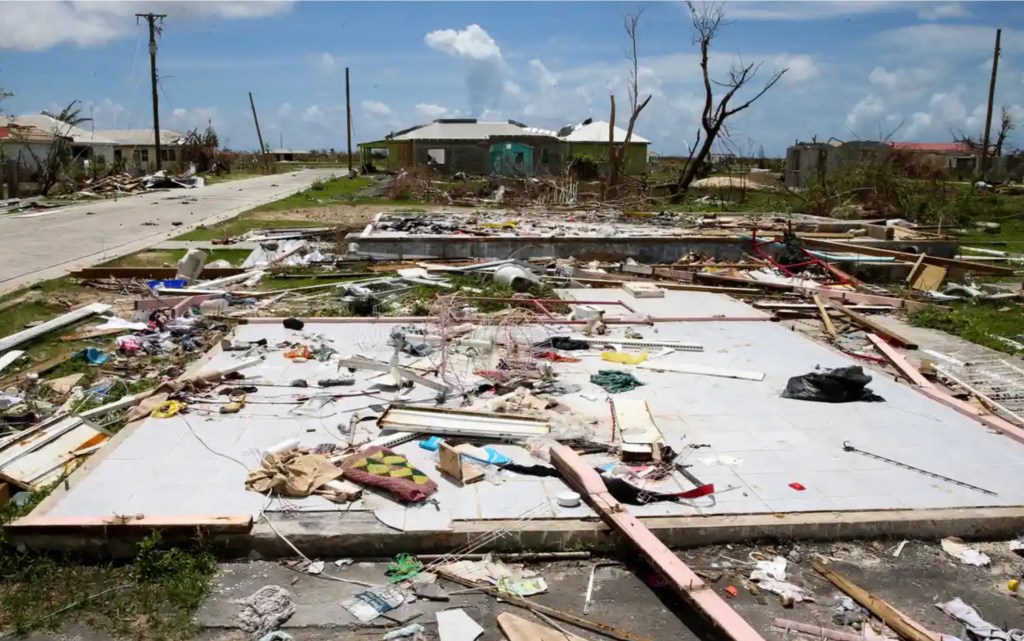
It was 2017, and the destruction of Barbuda was reported worldwide to be “catastrophic”, with homes, infrastructure and livelihoods decimated and the inhabitants left in despair.
A state of emergency was declared and the evacuees restricted to the more populous sister island of Antigua for 30 days. Some islanders would never return. Browne said Barbuda was 95% destroyed and estimated it would take up to $300m (£245m) to rebuild.
Within weeks, heavy machinery was at work on the construction site of a private airport for billionaire US investors who had luxury mansions and exclusive hotels already planned.
In 2018, two Barbudans obtained a temporary injunction on the construction of the airport, challenging its impact on the island’s fragile ecosystem. The Antiguan government responded by questioning whether the citizens’ had any legal right to make a challenge. The case reached appeal in 2021 with the focus on the legitimacy of the Barbudans to object to government plans for Barbudan land. In 2022, the court ruled they had no standing – or right.
This week, the UK privy council is expected to make a final judgment over the issue. Antigua and Barbuda achieved independence from the UK in 1981, but remain in the Commonwealth with a constitutional monarchy under Charles III, so the privy council is the final court of appeal. The verdict could impact activists far beyond this tiny island, as a decision against the Barbudans could set a precedent across the Caribbean for citizens challenging governments’ perceived environmental violations.
 © 2014
 Democracy & Good Governance