New project to create resilience culture in the Caribbean

caribbeanclimate's avatarcaribbeanclimate

7f20ae46-bbbc-4182-b073-910eb7f0b1ed

The Caribbean Disaster Emergency Management Agency (CDEMA) and the United Nations Office for Disaster Risk Reduction (UNISDR) announced the project “Strengthening Regional Disaster Risk Reduction Strategies and Capacities for Resilience in the Caribbean”, that is supported by the Austrian Development Agency (ADA), during the Disaster Risk Reduction Development Partners Meeting which took place in April, 2016 in Barbados. The purpose of the project is reinforcing disaster risk reduction and creating a resilience culture in the Caribbean.

The Caribbean is region prone to different natural hazards such as earthquakes, hurricanes, floods, tsunamis and others. Most countries are Small Island Developing States (SIDS) which can be disproportionately affected by disasters due to their unique vulnerabilities. Climate change exacerbates the effects of disasters.

The recently started project will contribute to strengthening DRR monitoring capacities at national and regional levels in the Caribbean; increased knowledge and capacities for local resilience and community safety through…

View original post 489 more words

Lakes Rising: A Climate Change Mystery in the Caribbean

caribbeanclimate's avatarcaribbeanclimate

Image by Jacob Kushner. Haiti, 2016. Add this image to a lesson

Pulitzer Center grantee Jacob Kushner spoke at the University of Wisconsin-Madison about his Pulitzer Center-supported feature for National Geographic on the mysteriously rising Caribbean lakes in Haiti and the Dominican Republic.

During the past 10 years, the surface of Lake Azuei in Haiti and Lake Enriquillo in the Dominican Republic rose 10 meters, and nobody knows why. These changes caused entire towns to sink beneath the water’s surface.

The Dominican Republic and Haiti, which share the Caribbean island of Hispaniola, have seen natural disasters before–earthquakes, hurricanes, floods–but nothing like this. Experts from the United Nations, a French NGO, a Dominican university, a New York college and others have looked for clues to explain the cause behind the rise of these lakes. Some hypothesize the phenomenon is related to climate change, but the evidence is counterintuitive: Unlike ocean levels…

View original post 249 more words

A Tool for Reef Recovery: Six Eastern Caribbean countries launch region’s first coral reef report cards

caribbeanclimate's avatarcaribbeanclimate

world oceans day 2016

On June 8th, as the world celebrates World Ocean’s Day, six Eastern Caribbean countries mark their commitment to preserving the region’s extraordinary marine ecosystems by launching the first Eastern Caribbean coral reef report cards.

Coral reefs are home to over 25 percent of all marine species, protect the shore from waves and storms, and create tourism opportunities. Despite their economic and environmental importance, it is difficult to understand their health and status without searching through complex data or becoming a regular diver.

The Nature Conservancy combined existing data, collected by regional and international scientists, to create individual report cards for six countries. The report cards not only provide information on coral reefs, but also assess mangrove and seagrass habitats, as well as management strategies to improve these ecosystems. They are a concise, visual and easy-to-understand tool designed to be accessible for audiences from students up to the policy…

View original post 327 more words

Students go Green for World Environmental Day

caribbeanclimate's avatarcaribbeanclimate

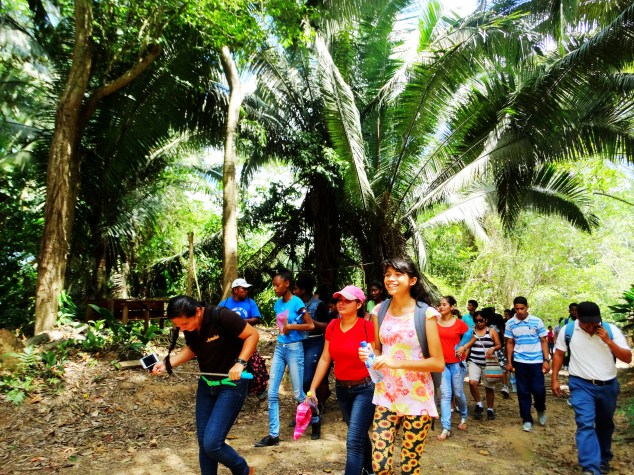
Every year on June 5th, World Environment Day (WED) which is run by the United Nations Environment Program (UNEP) is celebrated to to raise awareness about environmental issues and inspire people across earth to adapt healthy lifestyles and safe practices to keep our planet healthy. WED is revered in over 100 nations, and it is also celebrated in Belize, the host country for the Caribbean Community Climate Change Centre (CCCCC).

DSC00921_tonemapped
Protecting nature and earth, one of the focuses of WED is a priority that complements the work of the CCCCC.  This weekend, Centre liaised with teachers and students and teachers from Belmopan Comprehensive High School, Belmopan Methodist High School and Belmopan Active Youths (BAY) for an excursion in honor of WED. On Saturday June 4th, 40 teachers and students went to the Toledo District to learn about agro-farming and the lifestyle of the people of Trio Village who truly live…

View original post 704 more words

World Meteorological Organization first UN agency to formalize relationship with GCF

caribbeanclimate's avatarcaribbeanclimate

The World Meteorological Organization (WMO), the United Nations’ authority on the state of the planet’s atmosphere and climate, has become the first UN specialized agency to formalize its relationship with the Green Climate Fund (GCF). By signing its accreditation master agreement with GCF, the WMO can now receive financial resources for climate action programmes and projects.

This development represents an important milestone for both GCF and the UN system, signaling the role of the Fund in supporting other international organizations advance low-emission and carbon-resilient programmes and projects through GCF in developing countries.

The WMO joins the rank of other Accredited Entities that have concluded their accreditation master agreements with GCF: Agency for Agricultural Development (ADA) of Morocco; Caribbean Community Climate Change Centre (CCCCC); Centre de Suivi Écologique (CSE) of Senegal; and Environmental Investment Fund (EIF) of Namibia.

“The Green Climate Fund is pleased to have the World Meteorological Organization as…

View original post 188 more words

Dr Ulric Trotz: Let’s Re-imagine GCF Resources (article and interview)

caribbeanclimate's avatarcaribbeanclimate

Dr Ulric Trotz, Deputy Director and science Advisor at the Caribbean Community Climate Change Centre (CCCCC), says  calls for a transformation of Green Climate Fund resources that could optimize and efficiently direct private investment and limited public resources. Peruse his proposal  below and listen to his exclusive interview on the inaugural edition of Caribbean Climate Podcast.

The inherent differences in the nature of Mitigation and Adaptation outcomes is consequential and should be a central feature of comprehensive climate change policy decisions, policies and programmes. While they both result in the production of a public good, that derived from mitigation (decreased carbon) is a global public good, and conversely, that derived from Adaptation is a local public good. Indeed, Adaptation is very country specific, hence the localized nature of the benefits derived therefrom. As a result, the product from Mitigation can be commoditised and traded on the local and/or global…

View original post 820 more words

Electric Trainer Breaks the Flight Barrier

greenman3610's avatarThis is Not Cool

planeBusiness Insider:

A small Denver, Colorado, manufacturer has rolled out the first prototype of a new all-electric aircraft, suggesting that the same revolution currently sweeping through the auto industry may soon become airborne.

The Sun Flyer, the brainchild of engineer and pilot George Bye and his Aero Electric Aircraft Corp. (AEAC), is designed to be the perfect training aircraft with three hours of endurance and a 30-minute recharging time.

The change could very soon have profound effects on general aviation — a term for the world of private and non-airline aviation — and, one day, proper airlines.

Energy costs for an hour of flight training could be as little as $1, while maintenance costs on an engine with a single moving part could be significantly lower, Bye told Business Insider.

The aircraft has yet to be certified by the Federal Aviation Administration, a long, exhaustive process that Bye believes will be completed within three years.

He also estimates that the final unit cost will…

View original post 276 more words

CARICOM Negotiators Playing Major Role in Bonn Climate Change Talks

caribbeanclimate's avatarcaribbeanclimate

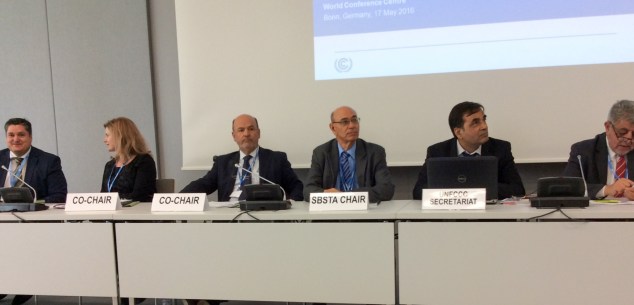
Carlos Fuller, International and Regional Liaison Officer (CCCCC) and Chairman of the Subsidiary Body on Scientific and Technological Advice (SBSTA). Photo courtesy Ann Gordon Carlos Fuller, International and Regional Liaison Officer (CCCCC) and Chairman of the Subsidiary Body on Scientific and Technological Advice (SBSTA). Photo courtesy of Ann Gordon
Countries are now in their second week of negotiations under the United Nations Framework Convention on Climate Change (UNFCCC) presently taking place in Bonn, Germany. Draft conclusions have already been adopted for some items under two of the subsidiary bodies of the Convention, the Subsidiary Body on Implementation (SBI) and the Subsidiary Body on Scientific and Technological Advice (SBSTA). Under the SBSTA, countries concluded their consideration under the Nairobi Work Programme (NWP) on adaptation, the Technology framework, metrics to calculate the carbon dioxide equivalence of greenhouse gases, emissions from international aviation and shipping, the training programme for review experts, forests in exhaustion, market and non-market mechanisms under the Convention and the Paris Agreement, modalities for accounting of financial resources mobilized for climate change, and the…

View original post 104 more words

Call for Submissions – GCCA+ Global Learning Event (GLE)

caribbeanclimate's avatarcaribbeanclimate

The European Commission announces its 3rd Global Event ‘Innovative and effective approaches to climate change adaptation and other post COP21 agreement priorities’, to be held, on 12-13-14 September 2016 in Brussels, Belgium.

The Agenda 2030 with the SDGs and the COP21 Paris Agreement on climate change provide a new strategic framework for international cooperation. Consequently, the GCCA+ plans to contribute strategically, financially and technically, over the period 2016-2020, to the efforts of LDCs and SIDS parties to address these challenges.

A year after the launch of the GCCA+, and as experiences from the GCCA, other programmes and the recent COP21 Paris Agreement accumulate across the globe, it is important that the GCCA+ ensures that lesson learning is an integral part of the development process and that knowledge generated from its implementation is shared across countries and regions and with key stakeholders and development partners. The GCCA+ Global Learning…

View original post 462 more words

Pre-sessional Meetings Being Held Prior to Bonn Climate Change Talks

caribbeanclimate's avatarcaribbeanclimate

Bonn Climate Change Conference  Photo Credit: (UNFCCC) Bonn Climate Change Conference
Photo Credit: (UNFCCC)


Major groups of countries are engaged in preparatory talks among themselves prior to the opening of the Meetings of the Subsidiary Bodies of the United Nations Framework Convention on Climate Change on Monday, May 16. These groups include the Alliance of Small Island States (AOSIS) and the Group of 77 (G77) and China. The Member States of the Caribbean Community (CARICOM) are Members of these two groups. The Caribbean Community Climate Change Centre is being represented at the meetings by Carlos Fuller, the International and Regional Liaison Officer who is the Chairman of the Subsidiary Body on Scientific and Technological Advice (SBSTA). Mr. Fuller has met with several of the negotiating groups over the past three days to advise them on how he proposes to conduct the SBSTA session. These include the Least Developed Countries (LDCs), the African Group, AOSIS, and the…

View original post 40 more words