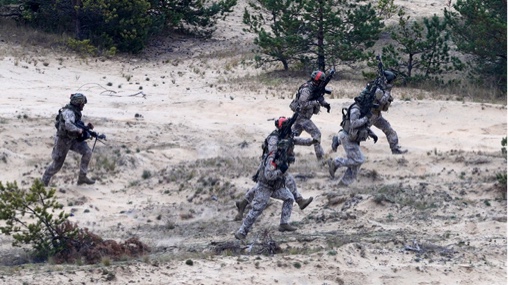
The Warsaw Pact is dead

The Warsaw Pact is dead, so why is NATO still alive? — RT Op-ed

The North Atlantic Treaty Organization has no defined purpose other than to continuously engage in conflict and antagonize Russia. With the Soviet Union a distant memory, the Western military bloc should be disbanded.

In the aftermath of the World War II, the North Atlantic Treaty Organization was formed as a bulwark against Soviet expansion. In response, the Warsaw Pact was signed, aimed at giving equal protection to Soviet Russia and its allies against Western imperialism.
When the Soviet Union collapsed in 1991 it became apparent that the Warsaw Pact would no longer be necessary and was consequently declared ‘at an end’ in February of that year. In the spirit of buried hatchets and a return to normalized relations, dismantling NATO should have been the natural response.

Instead NATO was not only maintained, it was expanded.
The months and years that followed the fall of the Soviet Union were characterized by economic hardship for the smaller, resource-dependent nations that were once dependent on the Soviet Union for their survival. These struggling economies struck deals with Western nations in the hope of economic benefits that would extract them from the likely specter of severe economic breakdown.
Tragically, however, the aid packages came with hefty price tags and, in a bid to be welcomed into the now more prosperous Western fold, the former Warsaw Pact countries were lured into the membership of the US-led military bloc. The move was not only crass. In light of the difficulties faced by these small nations coming to terms with massive changes, it was a very blatant and hostile act towards a Russia that no longer posed a threat.
Hungary, Czech Republic and most notably Poland were the first to join NATO, soon followed by Estonia Latvia and Bulgaria some five years later. By 2009, NATO bases were all around Russia. Since then, NATO has been involved in a number of wars around Europe and the Middle East with devastating long term consequences for those bearing the brunt of its formidable bombing capabilities.

(https://www.rt.com/op-ed/324840-warsaw-pact-nato-us/

The well diggers of Bangalore – a craft in renaissance

Water harvesting infrastructure in India.

zenrainman's avatarHarvesting Rainwater

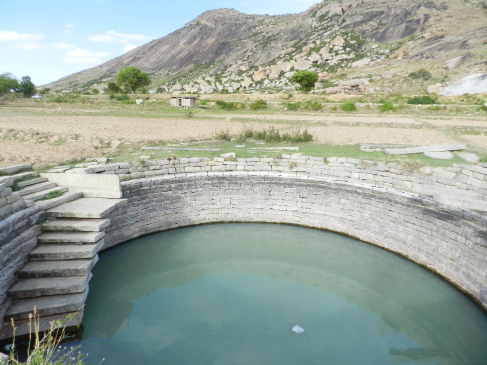
Well digging has been the forte of the ‘Mannu Vaddar’ community in Bangalore. They are the people who work with earth for many centuries. They have dug the many lakes of Bangalore and also the many wells that dotted the landscape. Then their cousins the ‘Kallu Vaddars’ would take over and line the well with stones . The craft is at least 6000 years old in India.

Image

The stone lined wells of South Karnataka

Since the 1980 ‘s , especially during a period of 3 continuous years of bad rainfall, the construction of wells stopped and people shifted to the bore-wells. This rendered the well diggers jobless and they shifted to digging foundations for buildings as well as digging pits for toilets.

With the recent rainwater harvesting interest in the city and the coming in of the bye-law , wells are being dug again, only this time to recharge water…

View original post 183 more words

A manifesto to save Planet Earth (and ourselves)


Seen in this way, renewable energy for all takes on an importance beyond stopping climate breakdown; likewise free education and the internet for all has a significance beyond access to social media – as they empower women, which helps stabilise the population.

More energy and greater information availability appear to be the necessities for any new kind of society – although these changes alone could increase our environmental problems, as in the past. To usher in a new way of living today’s core dynamic of ever-greater production and consumption of goods and resources must also be broken, coupled with a societal focus on environmental repair.
Read More

The Next Hundred Years

I look out across my world and see so many wonderful, talented kids, the next generation, and so many caring adults filled with so much good, so much altruism, kindness, compassion and beauty.

Peace

And I am terribly saddened by what may befall all these incredible beings if we cannot stop the destruction of our environment, if we cannot rein in the greed of capitalism and business as usual.

I pray that all may be filled with compassion for all living things.
NBR 6 June 2018

Those who have not studied history are doomed to repeat it. Ask why the United Nations was founded…

A senior Palestinian official has accused the United States of being part of Israel’s illegal occupation.

Nikki Haley is not world’s ‘schoolmarm’


Hanan Ashrawi took special aim at the US ambassador to the UN Nikki Haley [Nimrata Randhawa] who had walked out of a Security Council meeting when the Palestinian envoy began speaking.

Al Jazeera’s James Bays reports from the UN. See Video

Coral reef early warning system deployed in Soufriere

caribbeanclimate's avatarcaribbeanclimate

(PRESS RELEASE VIA SNO) – The Caribbean Community Climate Change Centre (CCCCC), National Oceanic and Atmospheric Administration (NOAA), University of Florida, and the government of St Lucia (Department of fisheries) formed an alliance to undertake a Caribbean Climate Change Adaptation Project.

According to Albert Jones, CCCCC Representative, “The project encompasses adaptation measures in the Eastern and Southern Caribbean.”

The installation of a Coral Reef Early Warning System (CREWS) Network took place in the Soufriere Marine Reserve on Monday, May 14th, 2018. The CREWS network will provide information to Caribbean scientists and researchers to monitor reef health, sea temperature changes, winds (speed and gusts), barometric pressure and much needed data.

“The CREWS Network will include five new countries in the Eastern Caribbean- Antigua and Barbuda, St Kitts and Nevis, St Vincent and the Grenadines, St. Lucia, and Grenada” Jones further added.

The Department of fisheries is thankful for the initiative. Fisheries…

View original post 58 more words

CCCCC, Governments of Italy and St Lucia plan Early Warning System

caribbeanclimate's avatarcaribbeanclimate

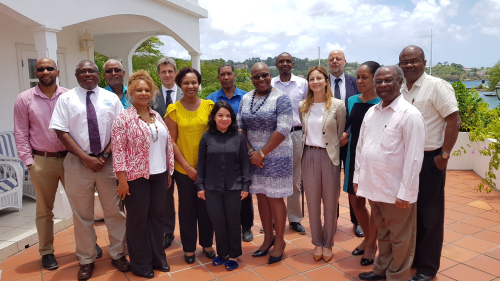
Photo shows participants in a series of meetings to discuss the development of an early warning system for St Lucia. The project is being funded by the Government of Italy through the Ministry of Environment, Land and Sea – Contributed photo

The Caribbean Community Climate Change Centre (CCCCC) and representatives from the Governments of Italy and Saint Lucia held a series of meetings this week, to discuss the development of an early warning system (EWS) for the island.

The Project is being funded by the Government of Italy through its Ministry of Environment, Land and Sea. Using geographic information, the system is expected to forecast the potential effects of national disasters, provide flood mapping and other sector- relevant and necessary information to aid decision-making during events. As the primary stakeholder, the Government of Saint Lucia would be responsible for the operation and management of the system, thereby allowing the country…

View original post 269 more words

Chastanet issues climate change challenge

caribbeanclimate's avatarcaribbeanclimate

Chastanet issues climate change challenge Hon. Allen Chastenet, Prime Minister of St. Lucia

Press Release:–  The Government of Saint Lucia and the Economic Commission for Latin America and the Caribbean of the United Nations (UNECLAC), hosted the fifth meeting of the Caribbean Development Round Table, under the theme “Promoting Climate Resilience and Sustainable Economic Growth in the Caribbean,” and the twenty-seventh session of the Caribbean Development and Cooperation Committee on April 26 and 27.

In frank and pointed remarks, Prime Minister Hon. Allen Chastenet, also the Chairperson of the Caribbean Development and Cooperation Committee called for deliberate action in dealing with climate change, questioning the preparedness of the region for the hurricane season, which is exactly one month away.

“Climate change doesn’t discriminate,” he said. “It does not have any empathy for you because you are a poor country. It does not have any empathy because more people are unemployed. It does not…

View original post 208 more words

Chastanet issues climate change challenge

caribbeanclimate's avatarcaribbeanclimate

Chastanet issues climate change challenge Hon. Allen Chastenet, Prime Minister of St. Lucia

Press Release:–  The Government of Saint Lucia and the Economic Commission for Latin America and the Caribbean of the United Nations (UNECLAC), hosted the fifth meeting of the Caribbean Development Round Table, under the theme “Promoting Climate Resilience and Sustainable Economic Growth in the Caribbean,” and the twenty-seventh session of the Caribbean Development and Cooperation Committee on April 26 and 27.

In frank and pointed remarks, Prime Minister Hon. Allen Chastenet, also the Chairperson of the Caribbean Development and Cooperation Committee called for deliberate action in dealing with climate change, questioning the preparedness of the region for the hurricane season, which is exactly one month away.

“Climate change doesn’t discriminate,” he said. “It does not have any empathy for you because you are a poor country. It does not have any empathy because more people are unemployed. It does not…

View original post 208 more words

Enhancing Environmental Management Legal And Policy Frameworks In Grenada

caribbeanclimate's avatarcaribbeanclimate

Source: CANARI; May 4, 2018

Background

CANARI is facilitating the development of  National Forest Policy and Strategic Plan and Revised Environmental Management Act 2014.  This activity is part of the Organisation of Eastern Caribbean States (OECS) Global Climate Change Alliance Project on Climate Change Adaptation and Sustainable Land Management in the Eastern Caribbean (the iLAND Resilience – Promoting a Climate for Change) funded by the European Union.  Background papers, workshop reports and draft environmental frameworks are available through the links below.

Background paper

Report of First National Workshop  (December 2017)

The revised Grenada National Forest Policy and Strategic Plan and revised Protected Area, Forest and Wildlife Act are currently being drafted based on the outputs of the December 2017 Workshop. Stakeholders are invited to submit further comments and suggestions for revisions of the documents. Please review the original documents below and email your suggestions to Dr. Natalie Boodram at natalie@canari.org by…

View original post 98 more words