Political Manifesto’s for Political Candidates It is necessary to develop political maturity

It may be wise these islands to strive for political maturity, and realize that elections come with obligations 

to the electorate, and are not a popularity contest.


Let us therefore take heed of what is put forth in other democracies to allow the voting public

 to judge the aims and objectives of the candidates.


It is necessary to put brain in gear and take pencil in hand and analyse the needs of the 

Cayman Electorate and make a list of the most important changes needed.


A great begining for your Manifesto’s list would be political accountability

`

.

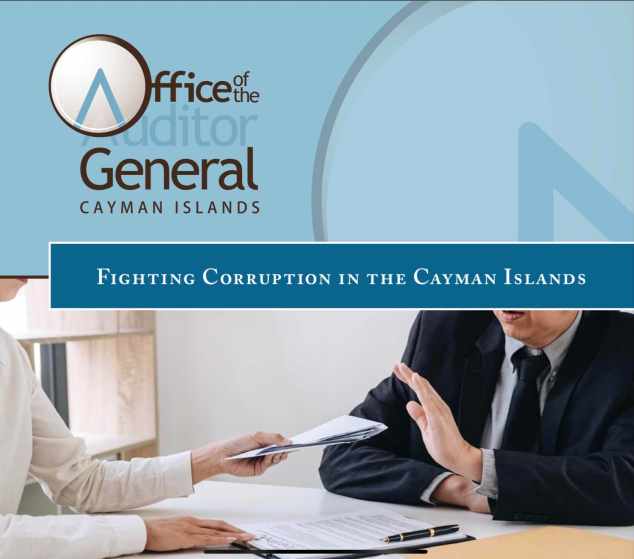
Fighting Corruption In The Cayman Islands

EXECUTIVE SUMMARY
Corruption has been identified as one of the most important problems facing the world today. 1 It is a world-wide problem that became an increasing concern in the early 1990s. Since then, addressing corruption has become increasingly urgent. Corruption exists across the public and private sectors; the International Monetary Fund (IMF) estimates that bribery alone siphons between US$1.5 trillion and US$2 trillion annually from the global economy (two per cent of global GDP). 2 Corruption has a significant negative effect on human and economic development, as it hinders economic growth, results in lost tax revenues, and contributes to sustained poverty. It can also erode public trust and confidence in governments and can stifle progress and innovation.
Given the extent of corruption, major development and capacity building institutions including the IMF, United Nations, the Organization for Economic Co-operation and Development, Transparency International and the World Bank have been encouraging and supporting countries across the world to do more to strengthen their governance, accountability and transparency arrangements with the aim of eliminating corruption.
The Cayman Islands is not immune to corruption. Since 2011, there have been around 13 high-profile cases of fraud and corruption involving public servants; over the last two years, nine cases of alleged fraud and corruption in the public sector have been reported and are being investigated. Widespread corruption creates a significant reputational risk for the Cayman Islands if government is seen to be ineffective in tackling fraud and corruption.
Since 2007, consecutive governments have introduced measures aimed at combatting fraud and corruption, including passing legislation, setting up anti-corruption bodies and strengthening government policies and procedures. However, actions have not yet been extended across the wider public sector; and it is not yet clear how effective the framework is at preventing corruption.
This audit focuses on the institutional framework for fighting corruption at the national level and within the infrastructure sector, with emphasis on the three planning entities: the Cayman Islands Government’s Department of Planning, Central Planning Authority (CPA) and Development Control Board (DCB). We selected this sector because it is integral to the country’s development and economic prosperity and because there are significant numbers of major infrastructure developments (both public
1 2013 World Independent Network/Gallup International annual survey covering 65 countries.
2 IMF Staff Discussion Note – Corruption: Costs and Mitigating Strategies, International Monetary Fund, May 2016 https://bit.ly/2LZRp2m
Fighting Corruption in the Cayman Islands and private sector) currently underway in the Cayman Islands. We have also previously recommended that the National Development Plan be updated to provide a strategic approach to infrastructure in the Cayman Islands.3 
The objective of the audit was to assess the effectiveness of the mechanisms for preventing corruption at the national level and within the infrastructure sector. Specifically, we attempted to answer the following audit questions:
• How well-designed is the national framework to prevent corruption?
• How effective is the national framework in preventing corruption at the national level?
• How well-equipped is the infrastructure sector to prevent corruption?
KEY MESSAGES
The Government has made progress in developing a national framework for countering corruption. This includes enacting a range of legislation, the main component being the Anti-Corruption Law. However, some of the legislation has only recently come into force, and some has yet to come into force. https://bit.ly/2NCtqqA

The Great Change: The Great Pause Week 48: The Climate Cabinet

The Great Change: The Great Pause Week 48: The Climate Cabinet

 A short while from now all of the President’s cabinet nominees will be confirmed and a first cabinet meeting will be convened. We’d like to imagine that after the usual banalities and formalities, it might go something like this.
PRESIDENT BIDEN: We face a great many challenges as a nation — the viral pandemic; an economy that will remain in dire straits for much of this year with consequences that will linger long after; serious security threats from both state and non-state actors — but what we are going to talk about now is the other emergency, the one that we can no longer ignore. I am going to turn the floor over to my climate advisor, Gina McCarthy. 
MS. MCCARTHY: Thank you Mr. President. I will keep this as short as I can. Many of you have years of experience getting briefings like this, but what I am about to tell you may surprise you. 
Let me begin with a few charts most of you will be familiar with. This first one is from James Hansen’s famous 2017 paper, “Young People’s Burden.” https://bit.ly/3tXI0JH

Political infighting continues as country founders, borders locked and no sign of Recovery Planning

(CNS): After Premier Alden McLaughlin said he did not intend calling a meeting of the Parliament before the body is dissolved in March, opposition members are seeking the seven signatures necessary to force a special meeting to debate the no confidence motion in Speaker McKeeva Bush. Answering questions from CNS at Thursday’s press briefing, McLaughlin said that, although government had circulated laws, there was no plan to meet before the election.
The premier said he was not prepared to call a special meeting and that it was up to the opposition members to secure the support needed for it.

How to Shrink the Israeli-Palestinian Conflict

How to Shrink the Israeli-Palestinian Conflict 

By dramatically enhancing Palestinian autonomy, Israel can deliver a better future for itself, its neighbors, and the Palestinians
 The middle east is changing in front of our eyes. The process that began with an agreement between Israel and the United Arab Emirates in August is gaining momentum and changing the political map of the region. Israel has now built ties with the United Arab Emirates, Bahrain, Sudan, and Morocco. But the Israeli-Palestinian conflict remains intractable and unsolved, standing as an obstacle to further peace deals.
There is, however, more room than is commonly understood for progress on this front—and it is found in the fascinating disconnect between the political identity most Israelis embrace and the policies they support. In polls, most Israelis today identify as politically right-wing. But when asked what they think about the Israeli-Palestinian conflict, most Israelis do not offer right-wing positions. Instead, they articulate much more complicated moderate or centrist views. If politics is about choosing an identity, then Israel is a right-wing country. But if politics is about solving problems, then most Israelis are somewhere in the center. https://bit.ly/3r5bbsj

Could Amsterdam’s New Economic Theory Replace Capitalism?

An Alternative To Capitalism?

Could Amsterdam’s New Economic Theory Replace Capitalism? 


One evening in December, after a long day working from home, Jennifer Drouin, 30, headed out to buy groceries in central Amsterdam. Once inside, she noticed new price tags. The label by the zucchini said they cost a little more than normal: 6¢ extra per kilo for their carbon footprint, 5¢ for the toll the farming takes on the land, and 4¢ to fairly pay workers. “There are all these extra costs to our daily life that normally no one would pay for, or even be aware of,” she says

The so-called true-price initiative, operating in the store since late 2020, is one of dozens of schemes that Amsterdammers have introduced in recent months as they reassess the impact of the existing economic system. By some accounts, that system, capitalism, has its origins just a mile from the grocery store. In 1602, in a house on a narrow alley, a merchant began selling shares in the nascent Dutch East India Company. In doing so, he paved the way for the creation of the first stock exchange—and the capitalist global economy that has transformed life on earth. “Now I think we’re one of the first cities in a while to start questioning this system,” Drouin says. “Is it actually making us healthy and happy? What do we want? Is it really just economic growth?” Read More


The Great Pause Week 44: Auguries of Change

Orlov in his 2013 essay proceeded to write one of the most passionate and eloquent paragraphs of his long career:

Even when viewed from this rather bizarre perspective that treats our one and only living planet as a storehouse of commodities to be plundered, it turns out that most of our economic “wealth” is made possible by “ecosystem services” which are provided free of charge. 

These include water clean enough to drink, air clean enough to breathe, a temperature-controlled environment that is neither too cold nor too hot for human survival across much of the planet, forests that purify and humidify the air and moderate surface temperatures, ocean currents that moderate climate extremes making it possible to practice agriculture, oceans (formerly) full of fish, predators that keep pest populations from exploding and so on. 


If we were forced to provide these same services on a commercial basis, we’d be instantly bankrupt, and then, in short order, extinct. 


The big problem with us living on other planets is not that it’s physically impossiblethough it may beit’s that there is no way we could afford it. 


If we take natural wealth into account when looking at economic activity, it turns out that we consistently destroy much more wealth than we create: the economy is mostly a negative-sum game [and]… we don’t really understand how these “ecosystem services” are maintained, beyond realizing that it’s all very complicated and highly interconnected in surprising and unexpected ways.


https://bit.ly/3qo6xoE

What if the world was one country?

I have studied many people who have undergone profound personal transformation following intense psychological turmoil, such as bereavement or a diagnosis of cancer. I sometimes refer to these people as “shifters”, since they appear to shift up to a higher level of human development. They undergo a dramatic form of “post-traumatic growth”. 
Their lives become richer, more fulfilling and meaningful. They have a new sense of appreciation, a heightened awareness of their surroundings, a wider sense of perspective and more intimate and authentic relationships.  Read More

Campaign to save Bermuda seagrass beds gets under way

Efforts are under way to protect Bermuda’s native seagrass beds – and the species that rely on them to survive.

Walter Roban, the Minister of Home Affairs, said the ministry launched a restoration project last summer, installing large mesh cages over struggling seagrass areas around the island.
Mr Roban said: “Anyone swimming or boating around our Island last summer is likely to have noticed that many of our seagrass meadows have disappeared, for example at Admiralty Park and Somerset Long Bay.
“In a few places where the seagrass is short, it no longer provides refuge for juvenile fish, newly settled spiny lobsters and other small animals.
“This loss of seagrass will very likely upset the dynamics of our shallow water environment as well as negatively impact recreational and commercial fisheries