Hothouse Rains for Kashmir: Worst Flooding in More Than 60 Years Puts 450 Villages Under Water

robertscribbler's avatarrobertscribbler

Kasmir Floods September 5

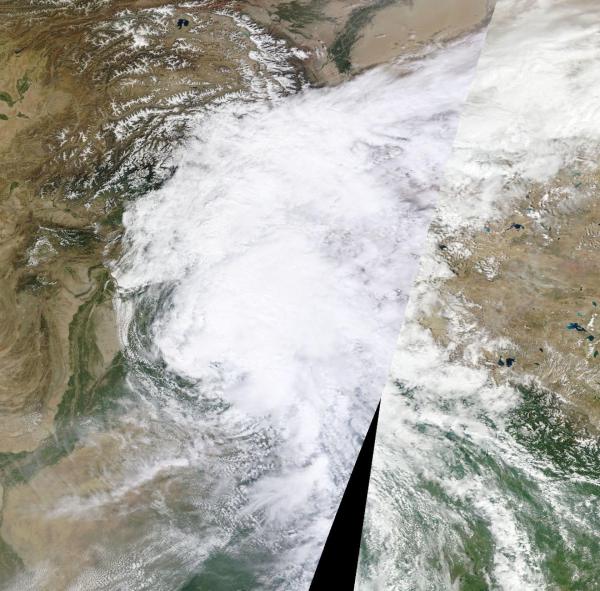
(The hurricane over land like signature that has become all-too-common during recent years as the Earth has continued to warm is plainly visible over the Kashmir region on September 5 of 2014. A multi-day flooding event that is now the worst for this Central Asian state in more than 60 years. Image source: LANCE-MODIS.)

On Tuesday, a bank of thunderstorms fed by an atmospheric river of moisture off the Arabian Sea exploded into a mountain of cloud over Kashmir in Central Asia. The rains swept in and continued through Wednesday, Thursday, Friday and Saturday. A terrible flooding rain that has now killed 160 people, forced the evacuation of 2,500 villages and buried more than 450 villages under waters rising high enough to cover the hills.

River flooding has been so intense that flood level gauges have simply been buried, with towns and cities throughout the region facing catastrophic damage…

View original post 385 more words

OAS Workshop Seeks to Improve Caribbean Sustainable Energy Projects

20 August 2014: A regional workshop organized by the Organization of American States (OAS) discussed how to improve donor interventions regarding sustainable energy projects in the Caribbean.

The workshop, titled 'Development of Sustainable Energy Projects: Experiences, Strategies and Implementation,' took place on 19 August 2014 in Saint Lucia. The event brought together major donors for Caribbean energy projects with country representatives to: examine current and planned sustainable energy projects; discuss local barriers to commercialization of sustainable energy; identify Caribbean country project priorities and gaps in current assistance; and look at ways to foster collaboration and complementarity between projects.

During the opening session, OAS consultant Christina Becker-Birck provided an overview of the 80+ energy initiatives in the region, amounting since 2004 to around US$129 million in technical assistance and grants, about US$108 million in loans and lines of credit, with at least US$100 million pending and planned.

Philipp Blechinger, Reiner Lemoine Institut, outlined the results of a survey on barriers to the development of renewable energy technologies for power generation on Caribbean island States. Carolina Peña, OAS Sustainable Development Department (DSD), outlined OAS energy interventions in the region.

During a roundtable discussion on learning from success stories and failures, the Organization of Eastern Caribbean States (OECS) detailed its Sustainable Energy Programme on technical assistance and energy labeling. The Carbon War Room discussed its 10 Island Challenge to catalyze private investment and produce a Ten Island Renewable Roadmap/Blueprint. The Caribbean Development Bank outlined the proposed Sustainable Energy for the Eastern Caribbean (SEEC) and Geothermal Drill Risk Facility projects. The EU provided an overview of its support for energy projects in the region, and the Clean Energy Solutions Center (CESC) outlined its technical support.

The workshop was organized by the OAS DSD in the framework of the Sustainable Energy Capacity Building Initiative (SECBI) of the Energy and Climate Change Partnership of the Americas (ECPA). More


What do leaders of Small Island Developing States say about living with climate change?

caribbeanclimate's avatarcaribbeanclimate

Kiran Sura, CDKN’s Head of Advocacy Fund, reviews discussions from the CDKN side event at the Third United Nations Conference for Small Island Developing States. In a related blog, “Island voices, global choices,”  she highlights major currents in the SIDS Summit as a whole.

CDKN and the Caribbean Community Climate Change Centre led a lively discussion among Small Island Developing States (SIDS) representatives on how to join climate science with action on the ground for climate-resilient economies, at the Third United Nations Conference for Small Island Developing States, in Apia, Samoa, earlier this month. The conversation focused on getting ‘the right information to the right people at the right time’ to manage climate-related disaster risks and foster climate-smart development planning in small islands. To read more on the discussions, please view this background feature, “Island voices, global choices”: reviewing the UN conference on Small Island Developing States

View original post 815 more words

To Serve and Protect or Occupy and Repress?

Rick Cooley's avatarRcooley123's Blog

Since the terrorist attacks of September 11, 2001, there has been a steady militarization of police forces in many of America’s cities. This has become increasingly obvious when the subject of dealing with public protests has arisen. Whether in dealings with Occupy protesters a few years ago, or with the unrest caused recently by the killing of Michael Brown (an unarmed teenager) by police in Ferguson, Missouri, many question the use of some of the brutal tactics and military style weapons used by police across the nation. There often seems to be a difference in opinion between police and protesters (particularly when they are dealing with mainly unarmed, peaceful demonstrators who feel they are simply exercising their civil rights to peaceably assemble and speak their minds freely as is written in the Constitution and Bill of Rights), as to what is the appropriate way in which each should act.

Granted…

View original post 1,144 more words

High-level Event Discusses Renewable Energy in SIDS


News: High-level Event Discusses Renewable Energy in SIDS

1 September 2014: Participants recognized sustainable energy for all as a tool for eradicating poverty, combating climate change, creating economic opportunities and achieving sustainable development for all small island developing States (SIDS), at a high-level side event, titled ‘Linking SIDS and Sustainable Energy for All (SE4ALL): From Barbados to Samoa, and Beyond.' The event took place on the sidelines of the Third International Conference on SIDS, in Apia, Samoa, on 1 September 2014.


The SE4ALL side event aimed to build on commitments from the UN Conference on Sustainable Development (UNCSD, or Rio+20+) and the Barbados SIDS High-Level Conference on SE4ALL, to take stock of progress since these events and chart the way forward to ensure sustainable energy for all SIDS.


Speaking at the event, UN Secretary-General Ban Ki-moon said achieving the three targets of the SE4ALL initiative is an important part of putting the world on a pathway for keeping temperature rise below two degrees Celsius. He outlined the need for a new energy paradigm, particularly for SIDS, who he said are particularly vulnerable to climate change and faced inflated energy costs due to their remoteness, and he welcomed the proposal of a dedicated Sustainable Development Goal (SDG) on sustainable energy for all with a focus on access, efficiency and renewables. Ban encouraged all leaders to “bring bold actions and ideas and strong political vision and political will” to the UN Climate Summit.


“SIDS are creating opportunities and examples that, if replicated worldwide, could lead the transition from fossil fuel energy to renewable and sustainable energy,” said UN General Assembly President John Ashe in his remarks.


The panel was moderated by Helen Clark, UN Development Programme (UNDP) Administrator, and featured: Adnan Amin, Director-General, International Renewable Energy Agency (IRENA); Camillo Gonsalves, Foreign Minister of Saint Vincent and the Grenadines; Salvatore Bernabei, General Manager, Enel Green Power Chile and Andean Countries; Naoko Ishii, CEO and Chairperson of the Global Environment Facility (GEF); and Reginald Burke, Caribbean Policy Development Centre. Key messages included the importance of reducing risk to catalyze private investment, the leadership being taken by SIDS, and various SIDS initiatives on sustainable energy, such as SIDS Dock and IRENA's SIDS Lighthouse project.


Participants highlighted: energy costs and energy security; climate change; and challenges and vulnerabilities faced by SIDS, including their small size and the high costs of importing fossil fuels. They stressed SIDS' renewable energy potential and the importance of addressing energy access and efficiency, highlighting the role of partnerships to address these issues. [UN Press Release] [UN Secretary-General Statement] [UNDP Administrator Remarks] [IISD RS Meeting Coverage, 1 September] [IISD RS Sources]


read more: http://energy-l.iisd.org/news/high-level-event-discusses-renewable-energy-in-sids/


Lessons from the Gaza War

freehaifa's avatarFree Haifa

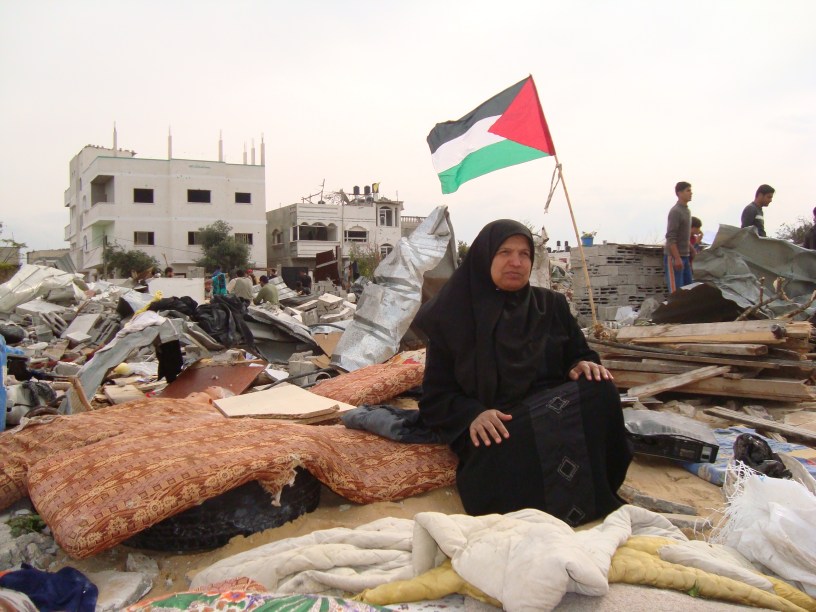
gaza_palestine_after_war_026

There are many reasons why I didn’t write any political analysis at the time of this bloody war.

One reason is that I only wanted the war to be over, to stop the bloodshed, while I knew that the longer Gaza can stand in the face of the Israeli genocidal rampage, the better the chance that the aggressors will not get what they want and that the siege of Gaza, which, in the long term, is even more destructive to Human lives and development, will be lifted.

But the best excuse is that throughout this war the monstrous Israeli war machine seemed clumsy and clueless, while the Gaza resistance seemed to keep cool and know what they are doing.

I preferred to keep quiet and do my small thing by demonstrating against the aggression.

Now, that the war is over, what can we learn from it politically? I will…

View original post 2,027 more words

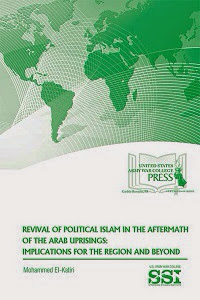
Revival of Political Islam in the Aftermath of Arab Uprisings: Implications for the Region and Beyond

Revival of Political Islam in the Aftermath of Arab Uprisings: Implications for the Region and Beyond

Authored by Dr. Mohammed El-Katiri.

Brief Synopsis

View the Executive Summary

Regime change during the Arab Spring allowed Islamist political forces that had long been marginalized to achieve political influence in Tunisia, Egypt, and Libya. Morocco’s first government led by an Islamist party has been in power since January 2012. This trend caused widespread concern over the future direction of these states; but despite the tragic example of Egypt, few negative predictions have yet been borne out. The author cautions against an overly simplistic assessment of this rise in the influence and power of political Islam. He shows that the political crises besetting each of these Islamist governments are not necessarily of their own making, but instead are determined by objective circumstances. Dr. El-Katiri describes how, in several key respects, the aims of Islamist parties are in line with U.S. aspirations for the region.

Download PDF


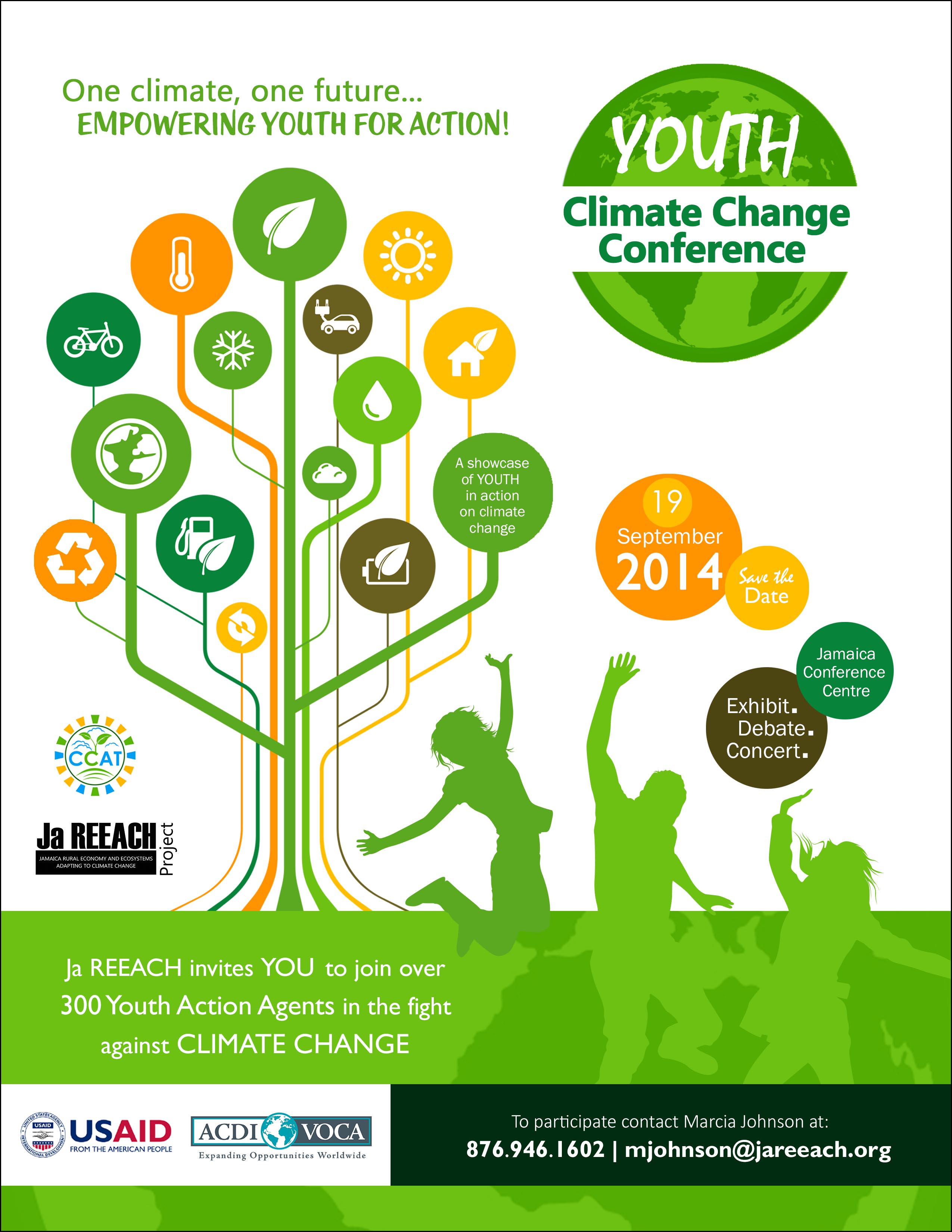
Jamaica to host Youth Climate Change Conference

caribbeanclimate's avatarcaribbeanclimate

Youth Climate Change Conference Youth Climate Change Conference

The USAID-funded Jamaica Rural Economy and Ecosystems Adapting to Climate Change (Ja REEACH) project is hosting a mock United Nations-style assembly on climate change at the inaugural Youth Climate Change Conference in Kingston, Jamaica on September 14, 2014.
Themed, "One Climate, One Future...Empowering Youth for Action" high school delegates will deliberate on the availability, access, and quality of water in Jamaica, a relevant and timely issue considering the country's current drought condition.
The assembly will discuss the rights and use of water across Jamaica's social and economic sectors, focusing on tourism, agriculture and fisheries, manufacturing and industry, health and recreation, and the environment. The deliberations will be collated to formulate a youth position on risk management strategies and actions for sustainable use of the resource in the face of a changing climate.
The conference will also incorporate a poster competition, exhibit of climate information, water…

View original post 12 more words

USA-Israel vs. Arab-Muslim Worlds: What Happens? – by Johan Galtung

25 Aug 2014

Nothing good. But let us have a look at it in the standard peace studies way: Diagnosis-analyzing, Prognosis- forecasting, and Therapy–remedies, even solutions.

Johan Galtung

“Israel-Palestine” is the discourse Tel Aviv-Washington prefers. They have all the strong cards: overwhelming military power, political veto in the United Nations Security Council, the economic upper hand in interlocking economies–not just oil cash from Saudi Arabia-Qatar–and the idea of working for a solution with Washington as “mediator”–only USA can bring the two together, gently or roughly–toward a sustainable peace.

It is needed a great distance from reality to believe in that spin. USA and Israel are interlocked by a much deeper tie: they came into being in the same way; flagging a divine mandate for a land without a people for a people without a land. Goes one goes the other.

Palestine is also part of something much bigger than itself: the Arab people with its tortured history of 500 years of colonialism and imperialism, and the religion of Islam. Two nationalisms, carried by Fatah and Hamas in Palestine, both potentially giving rise to a much bigger state, Arabia (not only Saudi), and to a region, the Islamic Umma, beyond an organization of the Islamic Community (of states).

USA is co-responsible for the current Israeli genocide in Gaza and seen as such by most of the world. Hate one hate the other.

Israeli expansion implies conflict with neighbors and their neighbors into the Arab-Muslim worlds. Your problems are my problems say the USA. So far. But one layer deeper is the US hyphenation of Judaism and Christianity to Judaeo-Christianity, leaving out the third Abrahamic religion. The stark reality is three religions hating and killing each other through millennia–but the hyphen, like in Israel-USA, calls for an alliance of 2 against 1. A political program.

Add to this the three imperialisms suffered by the Arab nation. Four centuries Ottoman Empire; four decades English-French imperialism from Sykes-Picot to Nasser; US-Israeli imperialism to make the Middle East region safe for Israel and democracy. However, democracy is rule by the consent of the ruled, not colonialism-imperialism by the consent–so far–of the demos in the rulers, USA and Israel.

The collisions are massive, involving ever more of the huge Muslim part of the world beyond the Arab part. How will this evolve?

More fear, more hatred; more terrorism, more state terrorism. USA-Israel will probably keep the military superiority for some time. But much else is happening. Both are heading downhill in the sense of losing the support they had. USA is losing its world hegemony–even within NATO where Germany de facto is siding more with Russia than with the USA over Ukraine–and Israel by its fall from the moral high grounds into the immoral abyss even among the many deeply touched by the shoa. Israel aggravates its own situation by gluing the etiquette “anti-Semitic” to its increasingly numerous and powerful critics.

But where are the Arab and Muslim worlds heading? Not downhill.

The Ottoman Empire was a relatively benign Sunni “family of nations” with a caliphate also centered in Istanbul. No effort to recreate an Arabia ruled by Turkey is acceptable to the Arab nation. But also unacceptable is Sykes-Picot Western colonialism with four colonies or “mandates”; Iraq-Palestine, Syria-Lebanon. Blindness, ignorance or stupidity is needed to be surprised at the Islamic State (IS). Sykes-Picot could not stand, but the US invasion from 2003 reified those artificial creations, one of them in the meantime divided by the UK into Israel-rump Palestine-Jordan. IS was highly predictable: extremist brutality bred by oppression, and a vision: An ottoman empire with a caliphate without a special role for Turkey.

Without Sykes-Picot no Balfour, without Balfour no Israel. The Ottoman Empire had no Israel. A problem of USA-Israel’s own making.

Patrick Cockburn in the London Review of Books 21 Aug 2014 points to a third of Syria and a quarter of Iraq, with a population beyond Denmark, quickly conquered, heading for Baghdad and Damascus–the capitals of two major Islamic dynasties. Assad may fall, so may al-Maliki’s successor(s). Al Qaeda will join IS. Their problem is Iran and the Kurds, possibly with US-engineered wars that may unravel as such. We will soon see. Imagine IS conquering Baghdad, what happens to the megalomaniac US embassy? IS uses Saddam Hussein assets like the Tikrit clan and his military. But Saddam reified Sykes-Picot as Iraq’s ruler installed by the USA till he turned against them in 1988 in the Arab-Persian Gulf.

Anyhow, stop the present IS and a new will emerge out of the same Arab nation holism and dialectic; much stronger forces in the longer run than USA-Israel on a downhill slope with the USA possibly heading for racist fascism at home and abroad. But how about Islam?

Two major factors in its favor. The counter-cyclical pendulum between Christian and Islamic dominance–up for one means down for the other being so similar–is moving from the Christian-secular toward the Islamic pole. One factor is Islam’s message of togetherness and sharing, very attractive to the victims of egocentrism, greed and inequality in the Western world. Add to that something similar to the IS factor: the long term move toward an Islamic umma, not a state system ruled by kings-emirs-sultans, even against theshahada.

And who created so much of that state system? The West, through its colonialism. What we witness today is not only IS but all over Muslim youth trying to be the umma, uniting across even colonial borders, between Iraq and Syria–like the Tutsi bridge between anglophone, francophone and afrophone Africa. Be the future you want.

Solutions beyond USA-Israel going down and the Arab-Muslim worlds up? Yes: dialogue, searching together for how all four could become masters in their own house and only that. The challenge of the century.

__________________________________

Johan Galtung, a professor of peace studies, dr hc mult, is rector of the TRANSCEND Peace University-TPU. He is author of over 150 books on peace and related issues, including ‘50 Years-100 Peace and Conflict Perspectives,’ published by the TRANSCEND University Press-TUP.

Editorials and articles originated on TMS may be freely reprinted, disseminated, translated and used as background material, provided an acknowledgement and link to the source, TRANSCEND Media Service-TMS, is included. Thank you.

Click here to download this article as a PDF file.

This article originally appeared on Transcend Media Service (TMS) on 25 August 2014.

This work is licensed under a CC BY-NC 3.0 United States License.