Economic Impact of Climate Change Concerns IDB

caribbeanclimate's avatarcaribbeanclimate

The adverse economic impacts of climate change on Latin American – and especially Caribbean – countries will be a central issue at the Inter-American Development Bank’s annual meeting, which gets under way next week in the Bahamas.

During that gathering, which will take place from April 6-10 in Nassau, the IDB governors will debate a resolution to double the volume of the bank’s climate-related financing between 2016 and 2020.

The IDB also will hold a session titled “Natural Capital, Climate Change and the Future of Coastal Cities” that Michele Lemay, the bank’s lead natural resources specialist, said would be a “wake-up call” aimed at alerting the region to the major economic and social difficulties it faces.

Last October, the IDB announced the goal of doubling the volume of its climate-related financing by 2020.

That would mean increasing its financing for climate-related projects from a yearly average of 14 percent between…

View original post 462 more words
Diplomatic Week Symposium focuses on the 2030 Agenda for Sustainable Development

caribbeanclimate's avatarcaribbeanclimate

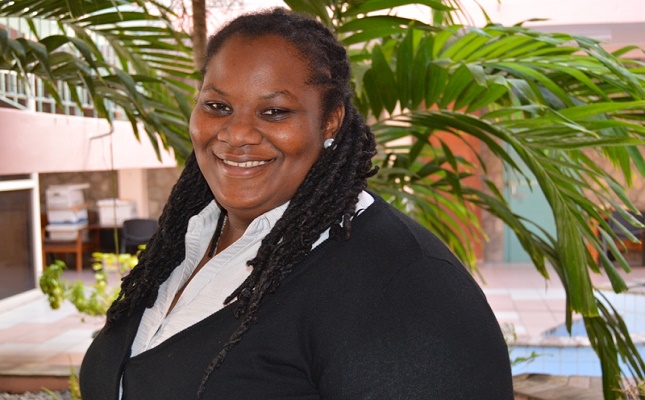
Asha DeSuza, Foreign Service Officer in the Ministry of Foreign Affairs and Aviation

A symposium held on Tuesday, April 05, is one of the Key activities of this year’s Diplomatic Week which is being held under the theme “Forging New Partnerships and Strengthening Networks for Sustainable Growth and Economic Development”.

The Symposium was held at the St. Kitts Marriott Resort and focused on The 2030 Sustainable Development Agenda for Climate Change, held under the theme “The 2030 Agenda for Sustainable Development: Demystifying Climate Change.”

Asha DeSuza, Foreign Service Officer in the Ministry of Foreign Affairs, explained the objective of the symposium.

“The aim of the symposium is to create awareness and a platform for dialogue about the 2030 Agenda for Sustainable Development and Climate Change,” said Miss DeSuza, while adding that the symposium is also geared towards heightening the awareness of the effects of climate change on the environment, economy and…

View original post 258 more words

Fishing and the future of coral reefs

Fishing and the future of coral reefs


New fishery regulations based on science are needed in the Caribbean to give coral reefs a fighting chance against climate change, according to an international study published today. The study, led by University of Queensland researchers, reveals that Caribbean coral reefs are experiencing mounting pressure from global warming, local pollution and over-fishing of herbivorous fish. Study author Dr Yves-Marie Bozec, from UQ’s School of Biological Sciences and the ARC Centre of Excellence for Coral Reef Studies, said herbivorous parrotfish were needed because they eat seaweed, which can smother coral and prevent corals from recovering. “While several countries in the Caribbean have taken the bold step of banning the fishing of parrotfish (including Belize, Bonaire, Turks and Caicos Islands), parrotfish fisheries remain in much of the region,” Dr Bozec said. The research team analysed the effects of fishing on parrotfish and combined this with an analysis of the role of parrotfish on coral reefs. “We conclude that unregulated fisheries will seriously reduce the resilience of coral reefs,” Dr Bozec said. “However, implementation of size limits and catch limits to less than 10 per cent of the fishable stock provide a far better outlook for reefs, while also allowing the fishery to persist.” Study co-author Professor Peter Mumby from UQ’s School of Biological Sciences said a number of countries wanted to modify their fisheries to reduce impacts on reefs. “What we’ve done is identify fisheries’ policies that might help achieve this,” Professor Mumby said. The new study, published in the journal Proceedings of the National Academy of Sciences, argues that science should be used to revise current fisheries practices for herbivorous fish. The authors have provided tools to help fisheries managers make such changes. “Ultimately, the more we do to maintain healthy coral reefs, the more likely it is that fishers’ livelihoods will be sustained into the future,” Professor Mumby said. “We already know that failure to maintain coral habitats will lead to at least a threefold reduction in future fish catches.” Explore further: Coral Reefs: Ever Closer to Cliff’s Edge More information: Tradeoffs between fisheries harvest and the resilience of coral reefs, PNAS, www.pnas.org/cgi/doi/10.1073/pnas.1601529113  Journal reference: Proceedings of the National Academy of Sciences   Provided by: University of Queensland   http://phys.org/news/2016-04-fishing-future-coral-reefs.html


Panama Papers leak exposes how Vladimir Putin, Xi Jinping’s friends hide money

Washington: A massive leak of documents has blown open a window on the vast, murky world of shell companies, providing an extraordinary look at how the wealthy and powerful conceal their money.

Twelve current and former world leaders maintain offshore shell companies. Close friends of Russian leader Vladimir Putin have funneled as much as $US2 billion through banks and offshore companies.

Those exposed in the leak include the prime ministers of Iceland and Pakistan, an alleged bagman for Syrian President Bashar Assad, a close friend of Mexican President Enrique Pena Nieto and companies linked to the family of Chinese President Xi Jinping.

Add to those the monarchs of Saudi Arabia and Morocco; Middle Eastern royalty; leaders of FIFA, the international body that controls international soccer; and 29 billionaires included in Forbes Magazine’s list of the world’s 500 richest people.

Also mentioned are 61 relatives and associates of current country leaders, and 128 current or former politicians and public officials.

The leak exposes a trail of dark money flowing through the global financial system, stripping national treasuries of tax revenue.

The data breach occurred at a little-known but powerful Panamanian law firm, Mossack Fonseca & Co., which has an office in Las Vegas, a representative in Miami and presence in more than 35 other places around the world.

The firm is one of the world’s top five creators of shell companies, which can have legitimate business uses but can also be used to dodge taxes and launder money.


More than 11.5 million emails, financial spreadsheets, client records, passports and corporate registries were obtained in the leak, which was delivered to the Suddeutsche Zeitung newspaper in Munich, Germany. In turn, the newspaper shared the data with the Washington-based International Consortium of Investigative Journalists. More

The Plight of Non-Islamist Muslims

nervana111's avatarNervana

When it comes to Islam, terminologies can be baffling and hotly disputed. Muslims, Islam, Islamism, and radicalism can all be confusing labels. But with the escalating waves of terror flowing around the globe, it is paramount to demystify the fog of terms and highlight a wide segment of Muslims that nowadays are largely ignored amidst the frenzy of both terrorism and Islamophobia. Who are non-Islamist Muslims?

Islam is a religion that is followed by millions of people from various countries and races who identify as Muslims. Non-Islamists are a diverse grand collection of Muslims, with various sects and beliefs that believe in Islam as a faith, and the Prophet Mohamed as a messenger from God. They can be Orthodox Muslims (Sunni or Shia), or heterodox sects such as Ahmadi or Ismaili. They have lived in areas for generations or in many diaspora communities. What unites them all is their deep…

View original post 1,216 more words

Climate Monsters We Want to Keep in the Closet: Heinrich Events, Superstorms, and Warming the Deep Ocean

robertscribbler's avatarrobertscribbler

“Think of the climate change issue as a closet, and behind the door are lurking all kinds of monsters — and there’s a long list of them,” — Steve Pacala.

***

It has been said that Nature is a serial killer. Within her vast managerie of life, climate, and the physical world, there are many, many terrible processes that could mortally impact individuals, larger groups, entire species and even families of species. And if you were to look for the means by which Nature performs her worst violence, the mass extinction events, your eyes would almost immediately settle upon the uncomfortable issue of climate change, an issue all too relevant today.

Of twelve major mass extinction events identified in past geological epochs, ten were likely caused by climate change. Marked by layers of rocks almost entirely devoid of complex life, these periods in which Earth became little more than a…

View original post 2,695 more words

“Members of the jury, you have just found Jesus Christ guilty”: Remembering the Catonsville Nine

wjastore's avatarBracing Views

IMG_0518W.J. Astore

In May 1968, nine Catholic activists set fire to draft records in Catonsville, Maryland, in a deliberate act of sabotage and protest against the Vietnam War.  For the crime of destroying government property, a crime they freely admitted, they were tried in federal court in Baltimore and found guilty.  I’ve been reading the edited trial transcript (with commentary) by Daniel Berrigan, one of the Catonsville Nine and a Catholic priest.  What unified these nine people was their moral opposition to the Vietnam War, a moral revulsion to the acts their country was committing in Vietnam, a revulsion that drove them to burn draft records with a weak brew of homemade napalm so as to gain the attention of their fellow citizens.

On this Easter Weekend, I would like to focus on a few of the statements made by the Catonsville Nine, as recorded by Daniel Berrigan in “The…

View original post 718 more words

Jarabacoa, Dominican Republic : The Caribbean’s first Carbon Neutral Town

caribbeanclimate's avatarcaribbeanclimate

A meeting where professionals and residents of the highland town join forces to make Jarabacoa a pollution-free community will be hosted by the Fernando Arturo de Meriño Agroforestry at Pinar Dorado Hotel University.

In the heels of the agreement reached at the recent summit in France, 195 countries aim to fight global warming to keep it “well below 2 degrees above pre-industrial levels.”

This initiative is being adopted throughout Latin America and the Caribbean now begins in Jarabacoa, where meeting aims to issue a document to  join “wills” and identify the sources of environmental pollution, deforestation, soil degradation and loss of water resources and greenhouse gas emissions.

In an emailed document, the UAFAM said the document signatories will pledge to work to analyze the needs to mitigate and adapt to climate change to protect the municipality’s productive ac

Take a dunk on the wild side. Jarabacoa white water rafting.

tivities.

View original post 72 more words

These ancient shipwrecks hold a hidden message about climate change

caribbeanclimate's avatarcaribbeanclimate

The result, based on comparisons between tree rings from the Florida Keys and a historical record of shipwrecks, finds that there were far fewer hurricanes, or tropical cyclones, from 1645 through 1715, when the planet went through what is called the “Maunder Minimum.” This was an era in which very low sunspot activity correlated with relatively cooler temperatures here on the Earth (the Maunder Minimum was part of a cooler period known to climate history as the “Little…

View original post 628 more words