


Climate
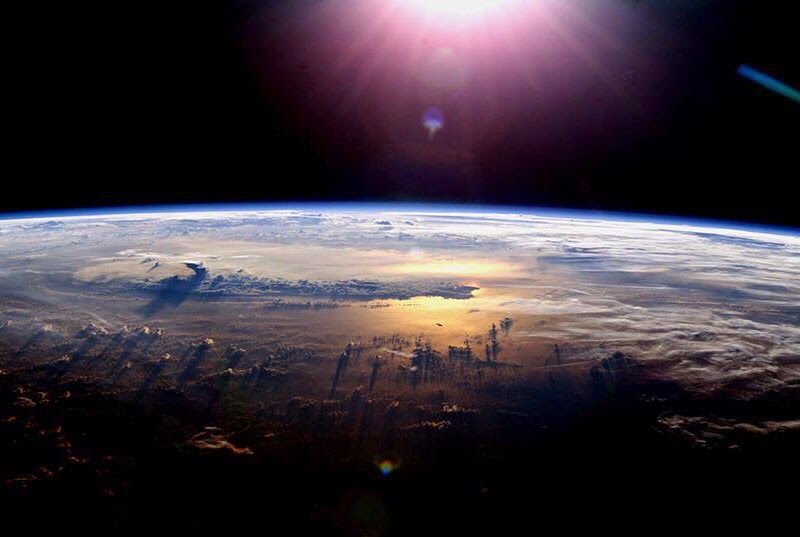
In conjunction with the one-day symposium “Living in the Anthropocene: Prospects for Climate, Economics, Health, and Security,” the Smithsonian has released the following statement on climate change:
Rapid and long-lasting climate change is a topic of growing concern as the world looks to the future. Scientists, engineers and planners are seeking to understand the impact of new climate patterns, working to prepare our cities against the perils of rising storms and anticipating threats to our food, water supplies and national security. Scientific evidence has demonstrated that the global climate is warming as a result of increasing levels of atmospheric greenhouse gases generated by human activities. A pressing need exists for information that will improve our understanding of climate trends, determine the causes of the changes that are occurring and decrease the risks posed to humans and nature.
Climate change is not new to the Smithsonian—our scholars have investigated the effects of climate change on natural systems for more than 160 years. We look at processes that occurred millions of years ago alongside developments taking place in today’s climate system.
The Smithsonian responds to climate change in four ways: by increasing knowledge of the human and natural environment through research; by making our findings available to the public; by protecting the Institution’s core asset, the national collections; and by operating our facilities and programs in a sustainable manner.
Research underlies all that we do. Scholars use the Smithsonian’s unparalleled collection of more than 138 million objects and specimens, together with our global network of marine and terrestrial monitoring stations, to examine climate change through multiple lenses. Smithsonian research scientists use satellite- and place-based sensors to study the changing composition of air, water and soil. They study climate history at geological and archaeological field sites around the world. Finally, they excel at baseline studies carried out over decades, which are recognized as essential to tracking the long-term effects of climate change.
The 500 Smithsonian scientists working around the world see the impact of a warming planet each day in the course of their diverse studies. A sample of our investigations includes anthropologists learning from the Native people of Alaska, who see warming as a threat to their 4,000-year-old culture; marine biologists tracking the impacts of climate change on delicate corals in tropical waters; and coastal ecologists investigating the many ways climate change is affecting the Chesapeake Bay.
The dissemination of knowledge gained through research is a public responsibility of the Smithsonian. Our scientists continually communicate with the scholarly community through publications and academic interactions. At the same time, the Smithsonian’s unique combination of museums and interconnected array of traveling exhibitions, publications, media and Web-based tools provide platforms to reach hundreds of millions of people each year across the world. Our goal is to explain in clear and objective terms the causes and effects of climate change as documented in our research and the research of our colleagues.
The Smithsonian has assembled collections of scientific specimens unsurpassed anywhere else in the world. These collections provide invaluable documentation of cultures and global biodiversity for scientists, scholars and the public. Extreme weather, rising sea levels and storm surges pose significant threats to the museums and research centers that house these collections, many of them located on low-lying land. Our charge is to protect, now and far into the future, this irreplaceable resource from the impacts of climate change and other hazards.
We are always striving to operate in ways that minimize the Smithsonian’s environmental footprint, meeting Institutional goals to decrease the use of potable water and fossil fuels, reduce direct and indirect greenhouse gas emissions and increase use of renewable energy. The National Museum of African American History and Culture is set to be the “greenest” Smithsonian museum yet, designed to achieve a LEED Gold rating, and the new Mathias Laboratory building at the Smithsonian Environmental Research Center is on track to receive LEED Platinum certification.
The Smithsonian will continue, as it has for more than a century and a half, to produce basic scientific information about climate change and to explore the cultural and historical significance of these changes. The urgency of climate change requires that we boost and expand our efforts to increase public knowledge and that we inspire others through education and by example. We live in what has come to be called the Anthropocene, or “The Age of Humans.” The Smithsonian is committed to helping our society make the wise choices needed to ensure that future generations inherit a diverse world that sustains our natural environments and our cultures for centuries to come. More
James Hansen writes: I was lucky to be born in Iowa. The nature of my childhood and later education at the State University of Iowa, odd as it seems, have relevance to fundamental political matters that I hope Iowans will think about. I will argue that Iowa could alter our nation’s course on energy and climate, matters of monumental importance to our children and indeed to all life on Earth.

James Hansen
I was born in 1941 in a small farmhouse in western Iowa, the fifth of seven children. My father was an itinerant tenant farmer, moving from one farm to another, sharing crops with the owner.
By 1945 small farms were disappearing. My father took a job as bartender and we moved a small house to a lot in Denison Iowa. Our life then seems hard by today’s standards. There were three bedrooms for nine of us. Even after we got a septic system the toilet was in the cellar, which required going outdoors. The only sink was in the kitchen, which was also the dining room. Washing up was done in turn, quickly. Our parents quarreled vehemently when our mother took a job as a waitress. I shrank in fear from our father’s angry voice.
Yet it was a good life to grow up in small town Iowa in a time of rising expectations. Today’s young people face a harder situation, with diminishing opportunities. That hurts deeply because, as I will explain, it is unnecessary, a result of tragic political machinations for which we adults must accept responsibility.
Politics back then was simpler. My father shouted “give ‘em Hell, Harry!” and slapped the table while listening to President Truman on the radio. My father called the Republican Party “the rich man’s party.” But shortly before my parents divorced he took me to listen to General Eisenhower speaking from the back of a train, as he came through Denison on a whistle-stop campaign trip in 1952. My father decided that he “liked Ike”, so he voted Republican.
Politicians were more honest regarding fundamental situations. Truman was blunt, with courage to remove war-hero MacArthur, thus maintaining civilian control of policy. Eisenhower warned us about the rising military-industrial complex. Below I contrast this with today’s situation.
It was easier in those days for young people to get ahead. I had a paper route from 3rd grade and by high school was the distributor of the Omaha World Herald for Denison (competing with the Des Moines Register for customers). From such a job I could save enough for college, where costs were within reach of all. Costs today have exploded. With our federal government in cahoots with banks, many college students look forward to decades of debt, not a better life.
My good fortune was to go to the University of Iowa. Professor James Van Allen was building instruments in the basement of the physics building, including the one on the first U.S. satellite, which discovered Earth’s radiation belts. In an exciting research environment Prof. Van Allen taught us how science works. The only “authority” was the rigorous objectivity of science.
Prof. Van Allen did not shirk from speaking truth to power and the public. When microwave ovens were introduced and fear of microwave radiation began to spread, Prof. Van Allen offered to sit on a microwave oven while it cooked his dinner. He helped quell irrational fear.
Prof. Van Allen told me about new data on the planet Venus. It led me to study why Venus was so hot and to propose an instrument for a mission to Venus after I joined NASA. The extreme heat on Venus turned out to be caused by the large amount of CO2 in the planet’s atmosphere.
CO2 was known to be increasing rapidly on Earth, because of our burning of fossil fuels – coal, oil and gas. What would it mean for life on our planet? I formed a small team at the NASA Goddard Institute for Space Studies to study the problem.
We showed that Earth was warming by the amount expected due to the CO2 increase. Later we showed that Earth was out of energy balance: Earth is absorbing more energy from the sun than it is radiating to space as heat. This confirms the most fundamental physics, as it is the added CO2 that reduces heat radiation to space. The conclusion is based on data, not models.
One implication: more warming is “in the pipeline”, without additional increase of atmospheric CO2. In turn, it follows that CO2 emissions must be reduced rapidly or young people in coming decades will face unacceptable consequences: continually retreating shorelines, shifting climate zones with extermination of many species, increasing occurrence of climate extremes with widespread disruption to food and water supplies, more severe droughts and heat waves, more damaging forest fires, stronger storms, and greater flooding.
Implications for energy policy are crystal clear. Most remaining fossil fuels must be left in the ground, unless the CO2 is captured and buried. There is no serious scientific debate about this.
Remarkably, scientific analysis also shows that the policies needed to achieve fossil fuel phasedown would also address problems such as underemployment and growing income disparities. Why are such policies not pursued, if they are in the best interests of the public?
I learned why when I worked for the government. I was repeatedly warned not to connect the dots in the climate problem all the way to policy implications. End steps must be left to “policy-makers” and, it turns out, to special interests. NASA did not want to annoy the powers that be.
Scientists are trained to analyze complex problems and connect all the dots. If we fail to tell the whole story clearly, if we shirk speaking truth to power, we fail our children and grandchildren.
The truth is that present energy and climate policies of the United States and the United Nations are dishonest and tragic.
Out of one side of their mouths our leaders profess to understand that we have a planet in peril and that we must rapidly phase down CO2 emissions. At the same time they encourage pursuit of almost every fossil fuel that can be found, while knowing that such policies make achievement of climate goals impossible.
The fundamental reason that fossil fuel emissions continue to increase is that they appear to the consumer to provide the cheapest energy. This apparent cheapness is a mirage. Why? (1) We subsidize fossil fuels directly, and indirectly by protecting supply lines. (2) Impacts of air and water pollution are borne by the public; e.g., if your child gets asthma, you pay the costs, not the fossil fuel company. (3) Costs of climate catastrophes are borne by the victims and taxpayers.
We should make the price of fossil fuels honest by collecting a gradually rising carbon fee from fossil fuel companies. It is easy to collect, at domestic mines and ports of entry. 100% of the collected money should be given to the public, an equal amount to each legal resident, distributed electronically to bank accounts or debit cards. Not one dime to the government.
The person doing better than average in limiting his “carbon footprint” will make money. He will have an incentive to reduce fossil fuel use via future purchases. Entrepreneurs will have an incentive to develop no-carbon products. Businesses will be able to plan energy investments.
Detailed economic studies show that a carbon fee of $10 per ton of CO2, increasing $10 each year, will reduce U.S. CO2 emissions 33% in 10 years. That is 12 times more than the amount of carbon in the oil that would be carried by the Keystone XL pipeline.
While a tax would depress the economy, a fee with 100% of the money distributed to the public spurs the economy. After 10 years national employment increases 2.1 million jobs! The simple explanation is that honest pricing of energy makes the economy more efficient.
I should explain why I say that our governments’ policies are “dishonest and tragic.” They are dishonest because they pretend that policies that try to “cap” emissions could actually phase down emissions rapidly, for example the “cap-and-trade” of the Kyoto Protocol or Democratic bills in Congress. These amount to tax increases, they depress the economy, and they reduce emissions very little. And what “cap” would India accept – three times that of the U.S.? This is why governments allow all fossil fuel development, fracking, deep-ocean and Arctic drilling, mountaintop removal – because they know that their carbon policies are ineffectual.
Why tragic? Because policies that would actually work, fee-and-dividend in particular, do not cost the economy anything. They would spur the economy, create jobs, and modernize our infrastructure as we move to clean energies and energy efficiency.
Is it possible that Iowa, perhaps in cooperation with one or more neighboring states, such as Nebraska, Minnesota or Wisconsin, could help avert the tragedy? I believe it is conceivable that Midwest common sense could affect national and international policies by providing an example. A regional carbon fee cannot rise too high without disadvantaging local industry, because states do not have the practical ability to impose border tax adjustments. However, up to a reasonable level the net effect of a carbon fee would be beneficial, if the proceeds went to the public.
There is a conservative tendency in the Midwest. But conservatives are not the enemy of the planet. Historically conservatives have been the environments best friend. Conservation and creation care should be in the blood of conservatives.
A political divide has developed because conservatives fear that liberals will use the climate issue to increase taxes and government intrusion into their lives. These concerns provide fertile ground for anti-science nut-cases (global warming is a hoax!) to flourish.
Most conservatives I know are thoughtful. They do not want to go down in history as being responsible for blocking effective action to stabilize climate. Gaining their support for a rising revenue-neutral carbon fee, which is in fact a conservative approach, is possible.
A rigorously nonpartisan organization, Citizens Climate Lobby, has grown rapidly in the past several years. Their objective is to promote fee-and-dividend. They are unfailingly polite and respectful, but also knowledgeable and determined. They have met with legislators in almost all states. They could be a valuable resource in helping to organize a Midwest climate initiative.
Finally, I point out that, although a gradually rising carbon fee is the essential foundation for a successful policy to rapidly phase down our fossil fuel addiction, there are other requirements. The crucial technical need is abundant affordable carbon-free electricity generation.
Today, except for limited hydroelectric and biomass power plants, there are two options for baseload electricity: fossil fuels and nuclear power. We will not be able to phase out fossil fuel power plants without major contributions from nuclear power.
Most nuclear power plants in operation today are of a 40-50 year-old technology, yet they have saved millions of lives by displacing fossil fuel power plants. Fossil fuel air pollution kills more than 3.7 million people per year globally. Pollution is much less in the U.S. than in China or India, yet thousands of people are killed by it every year in the U.S. In contrast the one major nuclear accident in the U.S., at Three Mile Island, Pennsylvania, may result in the death of 1-2 people, which is undetectable among the 40,000 cancer deaths that will occur from other causes among the Pennsylvania residents exposed to radiation.
Modern nuclear technology has major improvements including passive shutdown in case of emergency and an ability to cool the nuclear fuel without external power. It is also possible to include reactors in the nuclear fleet that “burn” nuclear waste and utilize 99% of the energy in the nuclear fuel, compared with less than 1% in the older technology. Thus the nuclear waste problem can be solved and, if we choose, we can stop mining uranium because we have shown that an inexhaustible amount of nuclear fuel can be sieved from the ocean.
There is an analogy between the nuclear and aircraft industries. At the time of the earliest airplanes, who would have imagined that we would fly huge aircraft with more than 100 people at altitudes of 10 miles without parachutes! If a window broke at that altitude, everyone could die! So we worked on the technology. Now the chance you will lose your life by flying from New York to LA is much smaller than if you drove your car. Yes, there is still danger, especially due to human error, and we must be vigilant and develop control systems to minimize danger.
President Clinton in his State-of-the-Union message in 1993 made the chilling announcement that he was eliminating unnecessary programs such as nuclear power research and development. However, nuclear technology is not disappearing from Earth, on the contrary, and if the U.S. drifts further toward technical mediocrity, leaving nuclear leadership to nations such as Russia, the world will be a more dangerous place. If the United States chooses to focus on being a petro-state, the economic well-being of our children eventually will decline further.
Fortunately, all clean energy technologies would be spurred by the carbon fee-and-dividend approach, providing a broad revival of our technology leadership in many areas, especially clean energies which should all be free to compete rather than specified by politicians. The result would be greatly improved economic well-being for future generations.
It is not always easy to speak truth to power, but all citizens have the opportunity if they choose. I have one minor, easy suggestion for you to consider, and another requiring more effort. More
The South-east Asian island country has a population of 5 million residing on less than 750 square kilometers of land. Whilst known for its strong economy, Singapore is lacking one essential asset — water.

Water security has long been a national priority in Singapore as half of its current water supplies are imported from neighboring Malaysia. “We are preparing for the day that should the water agreement expire, we should be ready to fulfill our own needs,” says Chew Men Leong, Chief Executive of the Public Utilities Board.
The agreement with Malaysia is due to expire in 2061, so the country has time to be ready.
Singapore’s strategy for a hydrated nation is four-fold: as well as importation, it includes desalinization plants, efficient catchment of rainwater and recycling of sewage.
Rainwater is collected through a network of drains, canals, rivers, storm water, collection ponds and reservoirs with the aim to catch water across two-thirds of the country. But the real hope lies in the membrane technology to treat wastewater known as ‘NEWater’, created by the country’s public utilities board.
Through a four-step series of barriers and membranes, wastewater is made free of solids, microorganisms, and contaminants resulting in potable water supplies for use by humans and industry.
After one decade, the technology meets 30 percent of Singapore’s water needs, with plans to triple volumes by 2060.
“The level of quality we receive from the Public Utility Board meets and exceeds the expectation,” explains Jagadish CV, CEO of Systems on Silicon Manufacturing, where the water is used in their processing of silicon wafers. “We are using the water three times before we let it into the drain,” he says.
The demand by industry is being further met by a new collaboration with Japanese firm Meiden that will supply factories with recycled industrial water. One and a half Olympic-sized swimming pools of water are currently filtered and treated every day.
The goal is to more cost-effectively treat industrial waste streams in the long run.
Professor Asit Biswas from the Lee Kuan School of Public Policy feels other countries should follow the example set by Singapore and even the current standards can be improved to eventually re-use every last drop of water. More
Ruth Spencer is a pioneer in the field of solar energy. She promotes renewable technologies to communities throughout her homeland of Antigua and Barbuda, playing a small but important part in helping the country achieve its goal of a 20-percent reduction in the use of fossil fuels by 2020.

She also believes that small non-governmental organisations (NGOs) have a crucial role to play in the bigger projects aimed at tackling the problems caused by the burning of fossil fuels, such as coal, oil and gas.
Spencer, who serves as National Focal Point for the Global Environment Facility (GEF)-Small Grants Programme (SGP) in Antigua and Barbuda, has been at the forefront of an initiative to bring representatives of civil society, business owners and NGOs together to educate them about the dangers posed by climate change.
“The GEF/SGP is going to be the delivery mechanism to get to the communities, preparing them well in advance for what is to come,” she told IPS.
The GEF Small Grants Programme in the Eastern Caribbean is administered by the United Nations office in Barbados.
“Since climate change is heavily impacting the twin islands of Antigua and Barbuda, it is important that we bring all the stakeholders together,” said Spencer, a Yale development economist who also coordinates the East Caribbean Marine Managed Areas Network funded by the German government.
“The coastal developments are very much at risk and we wanted to share the findings of the IPCC report with them to let them see for themselves what all these scientists are saying,” Spencer told IPS.
“We are in a small island so we have to build synergies, we have to network, we have to partner to assist each other. By providing the information, they can be aware and we are going to continue doing follow up….so together we can tackle the problem in a holistic manner,” she added.
The United Nations’ Intergovernmental Panel on Climate Change (IPCC) has sent governments a final draft of its synthesis report, which paints a harsh picture of what is causing global warming and what it will do to humans and the environment. It also describes what can be done about it.
Ruleta Camacho, project coordinator for the sustainable island resource management mechanism within Antigua and Barbuda’s Ministry of the Environment, told IPS there is documented observation of sea level rise which has resulted in coastal erosion and infrastructure destruction on the coastline.
She said there is also evidence of ocean acidification and coral bleaching, an increase in the prevalence of extreme weather events – extreme drought conditions and extreme rainfall events – all of which affect the country’s vital tourism industry.
“The drought and the rainfall events have impacts on the tourism sector because it impacts the ancillary services – the drought affects your productivity of local food products as well as your supply of water to the hotel industry,” she said.
“And then you have the rainfall events impacting the flooding so you have days where you cannot access certain sites and you have flood conditions which affect not only the hotels in terms of the guests but it also affects the staff that work at the hotels. If we get a direct hit from a storm we have significant instant dropoff in the productivity levels in the hotel sector.”
Antigua and Barbuda, which is known for its sandy beaches and luxurious resorts, draws nearly one million visitors each year. Tourism accounts for 60 to 75 percent of the country’s gross domestic product, and employs nearly 90 percent of the population.
Like Camacho, Ediniz Norde, an environment officer, believes sea level rise is likely to worsen existing environmental stresses such as a scarcity of freshwater for drinking and other uses.
“Many years ago in St. John’s we had seawater intrusion all the way up to Tanner Street. It cut the street in half. It used to be a whole street and now there is a big gutter running through it, a ship was lodged in Tanner Street,” she recalled.
“Now it only shows if we have these levels of sea water rising that this is going to be a reality here in Antigua and Barbuda,” Norde told IPS. “This is how far the water can get and this is how much of our environment, of our earth space that we can lose in St. John’s. It’s a reality that we won’t be able to shy away from if we don’t act now.”
As the earth’s climate continues to warm, rainfall in Antigua and Barbuda is projected to decrease, and winds and rainfall associated with episodic hurricanes are projected to become more intense. Scientists say these changes would likely amplify the impact of sea level rise on the islands.
But Camacho said climate change presents opportunities for Antigua and Barbuda and the country must do its part to implement mitigation measures.
She explained that early moves towards mitigation and building renewable energy infrastructure can bring long-term economic benefits.
“If we retrain our population early enough in terms of our technical expertise and getting into the renewable market, we can actually lead the way in the Caribbean and we can offer services to other Caribbean countries and that’s a positive economic step,” she said.
“Additionally, the quicker we get into the renewable market, the lower our energy cost will be and if we can get our energy costs down, it opens us for economic productivity in other sectors, not just tourism.
“If we can get our electricity costs down we can have financial resources that would have gone toward your electricity bills freed up for improvement of the [tourism] industry and you can have a better product being offered,” she added. More
A report released today investigates the causes of a wide variety of extreme weather and climate events from around the world in 2013. Published by the Bulletin of the American Meteorological Society, “Explaining Extreme Events of 2013 from a Climate Perspective (link is external)” addresses the causes of 16 individual extreme events that occurred on four continents in 2013. NOAA scientists served as three of the four lead editors on the report.

Of the five heat waves studied in the report, human-caused climate change was found to have clearly increased the severity and likelihood of those events. On the other hand, for other events examined like droughts, heavy rain events, and storms, fingerprinting the influence of human activity was more challenging. Human influence on these kinds of events—primarily through the burning of fossil fuels—was sometimes evident, but often less clear, suggesting natural factors played a far more dominant role.
“This annual report contributes to a growing field of science which helps communities, businesses and nations alike understand the impacts of natural and human-caused climate change,” said Thomas R. Karl, L.H.D., director of NOAA’s National Climatic Data Center. “The science remains challenging, but the environmental intelligence it yields to decision makers is invaluable and the demand is ever-growing.”
Confidence in the role of climate change about any one event is increased when multiple groups using independent methods come to similar conclusions. For example, in this report, five independent research teams looked at specific factors related to the record heat in Australia in 2013. Each consistently found that human-caused climate change increased the likelihood and severity of that event. However, for the California drought, which was investigated by three teams from the United States, human factors were found not to have influenced the lack of rainfall. One team found evidence that atmospheric pressure patterns increased due to human causes, but the influence on the California drought remains uncertain.
When human influence for an event cannot be conclusively identified with the scientific tools available today, this means that if there is a human contribution, it cannot be distinguished from natural climate variability.
“There is great scientific value in having multiple studies analyze the same extreme event to determine the underlying factors that may have influenced it,” said Stephanie C. Herring, PhD, lead editor for the report at NOAA’s National Climatic Data Center. “Results from this report not only add to our body of knowledge about what drives extreme events, but what the odds are of these events happening again—and to what severity.”
The report was edited by Herring, along with Martin P. Hoerling, NOAA’s Earth System Research Laboratory; Thomas Peterson, NOAA’s National Climatic Data Center, and Peter A. Stott, UK Met Office Hadley Centre and written by 92 scientists from 14 countries. View the full report online (link is external).
Also, view the slides for the media briefing on the “Explaining Extreme Events of 2013 from a Climate Perspective” report. More
WHAT'S POSSIBLE: The U.N. Climate Summit Film
Published on Sep 23, 2014 • Presented to world leaders at the United Nations Climate Summit in New York, this short inspirational film shows that climate change is solvable. We have the technology to harness nature sustainably for a clean, prosperous energy future, but only if we act now. Narrated by Morgan Freeman, it calls on the people of the world to insist leaders get on the path of a livable climate and future for humankind.
Learn more about climate change and take action at takepart.com/climate.
WHAT'S POSSIBLE was created by director Louie Schwartzberg, writer Scott Z. Burns, Moving Art Studio, and Lyn
Davis Lear and the Lear Family Foundation.
SEQUEL ALERT! Sign up at MovingArt.com to be the first to hear about the launch of the sequel to WHAT'S
POSSIBLE: movingart.com/un/
Directed by Louie Schwartzberg
Written by Scott Z. Burns
Produced by Lyn Davis Lear
Narrated by Morgan Freeman
Music by Hans Zimmer
The Next Generation Asks World Leaders at UN Climate Summit 2014: Why Not Act on Climate Change?
Today, the UN begins its Climate Summit, enlisting the world to work together on a problem that’s too big for any one country to solve. Lord Nicholas Stern helped write the delegates’ report that outlines where we are now — and what we could do next. It’s a big vision for cooperation, with a payoff that goes far beyond averting disaster. He asks: How can we use this crisis to spur better lives for all?
 © 2014
 Democracy & Good Governance