The Cayman InstituteDirector-General of The Cayman Institute.
Nicholas Robson has a rich background in the non-governmental (NGO) sector. He received his MA in Peace Studies from the University of Bradford. Nick has consulted for the British Red Cross in Disaster Management and is the founder of the Cayman Institute, a think tank doing policy research in areas such as global warming and climate change, energy security and economic sustainability for small island states. Nick also has a background in security and law enforcement. His geographical areas of interest are Central and South Asia and the Middle East as well as Small Island Developing States. He is also the Chief Coordinator of the South Asian Strategic Stability Institute (SASSI) based in London whose aims are to make a leading contribution to regional and international academic and policy-orientated research discourses about South Asian security.
His publications include Cayman Islands Energy Policy: Background Advisory Report and Sea Level Rise and Its Implications for the Cayman Islands. See
Specialties
-Geopolitical, strategic and security implications of climate & energy security
-Food and water security implications
-Climate / Refugee problem
-Global terrorism and climate change
-Disaster management and climate change
-Economic, political and social issues in the world's smallest countries and dependencies (including SIDS)
Counter Terrorism.
Disaster Response - IFRC.
Human Rights - Int’l Human Rights Academy (University of Utrecht).
UN training in Peace Keeping Operations (UNITAR)
Climate change was a key driver of the Syrian uprising, according to research which warns that global warming is likely to unleash more wars in the coming decades, with Eastern Mediterranean countries such as Jordan and Lebanon particularly at risk.
Experts have long predicted that climate change will be a major source of conflict as drought and rising temperatures hurt agriculture, putting a further strain on resources in already unstable regimes.
But the Syria conflict is the first war that scientists have explicitly linked to climate change. Researchers say that global warming intensified the region’s worst-ever drought, pushing the country into civil war by destroying agriculture and forcing an exodus to cities already straining from poverty, an influx of refugees from war-torn Iraq next door and poor government, the report finds.
“Added to all the other stressors, climate change helped kick things over the threshold into open conflict,” said report co-author Richard Seager, of Columbia University in New York.
“I think this is scary and it’s only just beginning. It’s going to continue through the current century as part of the general drying of the Eastern Mediterranean – I don’t see how things are going to survive there,” Professor Seager added.
Turkey, Lebananon, Israel, Jordan, Iraq and Afghanistan are among those most at risk from drought because of the intensity of the drying and the history of conflict in the region, he says. Israel is much better equipped to withstand climate change than its neighbours because it is wealthy, politically stable and imports much of its food. Drought-ravaged East African countries such as Somalia and Sudan are also vulnerable along with parts of Central America – especially Mexico, which is afflicted by crime, is politically unstable, short of water and reliant on agriculture, Prof Seager said.
The conflict in Syria began in spring 2011 and has evolved into a complex multinational war that has killed at least 200,000 people and displaced millions more, according to the Columbia study, which appears in the journal Proceedings of the National Academy of Sciences. It was preceded by a record drought that ravaged Syria between 2006 and 2010.The paper says the timing is unlikely to be a coincidence, citing a recent interview with a 38-year old farmer in Mohasen, an agricultural village in the north east of Syria.
Asked if the conflict was about the drought, Faten – a female farmer who did not want to give her last name – said: “Of course. The drought and unemployment were important in pushing people towards revolution. When the drought happened, we could handle it for two years, and then we said, ‘It’s enough’,” the report said.
The study combined climate, social and economic data relating to the so-called Fertile Crescent, spanning parts of Turkey and much of Syria and Iraq, where agriculture and herding are thought to have started 12,000 years ago and continue to be crucial.
The region has warmed by between 1 and 1.2C since 1900, reducing rainfall in the wet season by an average of 10 per cent. In addition to the warming – which has found to be caused by human greenhouse gas emissions – Syria has had to contend with rapid population growth, from 4 million in the 1950s to 22 million now.
The ruling al-Assad family encouraged water-intensive export crops such as cotton, while illegal drilling of irrigation wells dramatically depleted groundwater that might have provided valuable reserves, the report said. The drought’s effects were immediate. Agriculture production, which typically makes up a quarter of Syria’s economy, plummeted by a third.
In the hard-hit northeast, livestock herds were practically obliterated, cereal prices doubled and nutrition-related diseases among children increased dramatically. As many as 1.5m people fled from the country to the city.
“Whether it was a primary or substantial factor is impossible to know, but drought can lead to devastating consequences when coupled with pre-existing acute vulnerability,” said lead author Colin Kelley, who did the work at Columbia but is now the University of California, Santa Barbara.
The pressure exerted by climate change is even more dangerous because it comes against a backdrop of rising populations and growing scarcity of resources, experts say.
With demand for basic commodities such as wheat and copper set to soar over the next two decades, relatively small shocks to supply risk causing sudden price rises and triggering “overreactions or even militarised responses”, the Chatham House think-tank has warned.
Furthermore, while the effects of rising population and global warming may be felt hardest among the poorer countries most affected by climate change, the impact will be felt worldwide.
Global trade is so interconnected that no importer of resources is insulated from the problems of key exporters – a fact of concern to the UK, which imports 40 per cent of its food and a high proportion of fossil fuels and metals, the think-tank warns. More
LAS VEGAS – The patroller stopped his water district truck and grabbed his camcorde “Here we go,” he said, sliding from the cab and pointing his lens at the fine spray of water and rainbow rising from pop-up sprinklers on the lawn of a low-slung ranch home.
Central Arizona Project Canal
“Thursday,” he spoke, recording the day as evidence. No watering allowed on Thursdays.
Welcome to the future, where every drop of Colorado River water is guarded and squeezed. Only here, in the city that gets 90 percent of its water from the fickle and fading river, the future is now.
The vast and highly urbanized Southwest, built on the promise of a bountiful river propped up by monumental dams, is up against its limits. Already tapped beyond its supply, the river is now threatened by a warming climate that shrinks its alpine source.
To support fast-growing urban populations in a time of dwindling supply, the Southwest is due for rapid and revolutionary changes.
A region that uses two-thirds of its water outdoors, and mostly for agriculture, will have to find ways of sharing and boosting efficiency — a shift that many experts believe will mean city dwellers paying to upgrade rural irrigation systems.
Cities such as Phoenix and Las Vegas, which have reduced their per-person water usage through better landscaping and appliances, will have to do better. They lag behind Los Angeles, whose growing population, by necessity, uses no more water than it did 40 years ago.
Water suppliers from Denver to San Diego will spend billions of dollars to squeeze more out of each drop, and to clean and use wastewater and salt water. It means a future of higher water bills, further promoting conservation.
Problem can’t be deferred
“We’re in a drought,” water patroller Robert Kern said after hanging a warning notice on the home’s doorknob. Two more violations and the water district will fine the owner $80.
“Everyone has to do their part.”
Residents in this part of town — known as Zone C to the Las Vegas Valley Water District — may only water on Monday, Wednesday and Friday from fall through spring. They’re freer to soak their grass at will in summer, when the withering heat demands it.
The cooler months are for austerity, to give the plummeting water levels behind Hoover Dam a break. The river’s massive storage tub, Lake Mead, is draining.
The Colorado isn’t all that we thought it would be when we divvied up the rights in the Roaring ’20s. Most years, it gives less than it once did, and there are more users taking from it.
A 2012 government study of supply and demand predicted a 2060 annual shortfall of nearly a trillion gallons — enough to cover the sprawling city of Phoenix 9 feet deep or to supply 6 million Southwestern households for a year.
How the Southwest’s leaders, farmers and lawn waterers respond will help decide how many millions of people this drying corner of the continent can sustain in the next century.
Throughout this year, The Arizona Republic will examine the twin stresses of climate change and population growth, and ways to ensure reliable water for the next generation of Southwesterners.
“This is not one of the problems you can defer and let your grandkids deal with,” said Doug Kenney, a University of Colorado law professor.
Last year, the Arizona Department of Water Resources published a “strategic vision” for the coming century. The department stopped short of calling the state’s current situation a “crisis,” but said Arizona is at a “crossroads” and needs to decide on actions to secure new water.
Many potentially costly steps for metro Phoenix were included: conservation, treated water recycling, watershed forest thinning, cloud seeding and seawater desalination among them.
Kenney chairs the newly formed Colorado River Research Group, an independent group of 10 river and climate experts from regional universities. This winter, they made a simple recommendation that would have sounded outlandish in the past century.
Use no more water.
Cities will have to grow within their means, through conservation and by paying farmers to save and transfer water, he said. When the river already falls short of supplying everyone who has a legal right to it, there’s no sensible way of taking more from it.
“If everyone takes what they’re legally entitled to,” Kenney said, “the system crashes.”
That’s true even if the wetter 20th century hydrology repeats. But that’s not what the big water suppliers are expecting.
Actual flow of Colorado River versus water promised for Southwest
Agreements have promised 16.5 million acre-feet of water annually to come out of the Colorado River for use by Western states and Mexico. But in many years, the actual flow of the Colorado has been lower than what’s promised, which is marked by the solid line. The 110 year average is shown by the dotted line.
“In my opinion, the future of the Colorado Basin is a future where we have less water than we have right now,” said John Entsminger, general manager of the Southern Nevada Water Authority.
“The future of the Colorado Basin also has less grass.”
But it won’t be just the urban lawns that attract scrutiny. Farmers from Wyoming to Mexico — by far the biggest users of the river — will have to back off on hay production
They’ll also have to embrace expensive but efficient drip irrigation, Entsminger said. Urban water users will help pay for that through higher rates.
“Everybody’s going to have to figure out how to do the same or more with less water.”
Robert Kern, a Waster Water Investigator for the Las Vegas Valley Water District, documents a watering restriction violation in a west-central Las Vegas neighborhood. Las Vegas residents are only allowed to water on assigned days, Kern issued a warning to the homeowner.
At Lake Mead, America’s most voluminous water impoundment when it was full and a lifeline to everyone from Phoenix to San Diego, the crisis has already arrived.
Lake Mead Water Level
Desiccated palm trees flap over the cracked and peeling shell of a resort hotel at Echo Bay Marina at the northern end of the lake, the tattered banners of a man-made oasis now drained and vacant. Dormant boat docks lie stacked against each other.
To nearby innkeeper Chris Wiggins, it’s a sign of government mismanagement.
“Climate change?” he scoffed. “That’s the biggest joke.”
You don’t have to believe in a climate connection to recognize the risks in doling out on paper more water than a river can give.
“In the lower basin, we use more water than in a normal year we receive,” said Chuck Cullom, Colorado River program manager for the Central Arizona Project, whose canal pumps water to Phoenix and Tucson.
“Even absent the drought we would still be facing a declining Lake Mead.”
A sustained regional drought that started in the late 20th century shrank the reservoir to its record low by last summer. Federal officials say there’s a 1-in-4 chance it will sink low enough — to 1,075 feet above sea level — by next year that Arizona will have to cut back substantially on what it takes from the river.
After that, the government projects, the odds are better than even — about 60 percent — for a declared shortage and restrictions in 2017.
The reservoir has fallen by more than 100 feet since 2000. Its stored water, paired with upriver sister reservoir Lake Powell, is at about half-capacity.
The water’s retreat is a slow-blooming crisis that many have seen coming for years. Some communities have used the time to curb their thirst.
Los Angeles residents use 129 gallons a day each. That’s stingier than the 160-gallon average in Phoenix, whose use rate has nonetheless plummeted in recent years.
Now, though, even conservation-minded Los Angeles is following the unlikely lead of a gaudy, electrified billboard for sustainability. Still ridiculed in some corners as a wasteful and whimsical boomtown in the desert, metro Las Vegas has nonetheless turned its precarious relationship with the river into a powerful incentive to cut back.
Southern Nevadans use 212 gallons a day, which is more than their counterparts in either Los Angeles or Phoenix. But they also return almost 40 percent of that to the river as treated and reusable wastewater, making their net usage rate 124 gallons.
They have slashed usage steeply and deeply, by more than 100 gallons in about a decade.
Las Vegas has cut use of the river by nearly a third in a 12-year period that saw its metro population grow by 25 percent.
Vegas did it by regulating outdoor watering, and by paying $205 million — up to $2 a square foot — to entice people to remove lawns and “embrace living in the Mojave Desert,” Entsminger said.
That was crucial, because in 2002, Nevada was using more than its legal entitlement to the river.
Now Los Angeles is following, paying homeowners even more money to strip lawns.
For decades, the Colorado River hasn’t typically flowed as high as it did about a century ago, when Congress authorized impounding it at what would become Hoover Dam.
Climate scientists say there’s a strong chance it never — or rarely — will again. Yet unlike in those pioneering days of last century, more than 30 million people and several billion dollars in farm production are now counting on a river that is so tapped that in most years it no longer reaches the sea.
What’s left after the U.S. uses most of the water is diverted to farmers in Mexico.
“The Colorado River Compact appears to have been negotiated during an unusually wet period,” said Connie Woodhouse, a University of Arizona geosciences professor who has studied historic flows on the river. “I don’t think anyone would argue with that.”
The 1922 agreement split the river’s flow between upper- and lower-basin states, with the divide just upstream of Grand Canyon, at Lees Ferry. In the first few decades of the 20th century, an average approaching 17 million acre-feet — each acre-foot gushing 326,000 gallons, 51/2 trillion gallons in all — flowed past Lees Ferry every year.
For most of the past 90 years, though, the average flows have sagged below even the 15 million acre-feet that the states legally share, let alone the 1.5 million owed to Mexico by treaty.
The enormous but shrinking reservoirs at Lake Mead and Lake Powell, capturing spikes in runoff during occasional wet years, have forestalled shortages. The flow was 20 million acre-feet in 2011, and just half that in 2013.
That Colorado, Wyoming and Utah weren’t using their full shares also postponed a reckoning.
Until now.
The drought that started in 2000 and sent the reservoir holdings plunging is a preview of expected dry spells unprecedented in recent centuries, Woodhouse said. Temperatures are higher than those of the last century’s droughts, compounding the intensity.
“The (rising) temperatures are only going to exacerbate conditions that we would normally expect under natural conditions,” she said.
There are lots of reasons to think the droughts of coming decades will be worse than anything we’ve ever experienced — regardless of whether there’s any change in precipitation.
The first is that as the region warms, the trees and plants using the snowmelt will need and tap more of it before it ever reaches the river or pipes.
The next and arguably bigger threat is that the warmth will melt snow faster or even make it fall instead as rain. Either change will lead to more evaporation and less seepage into the soils that, in turn, release water to streams feeding the river.
Four years ago, the U.S. Bureau of Reclamation — the Southwest’s federal water managers — crunched all of the climate model projections for the Colorado River watershed and determined the average outlook was for a river pumping 9 percent less water through the region by 2050.
There is always a chance that monstrous snowstorms and winter rains will bring enough new winter precipitation to offset the warming’s worst effects, said Jeff Lukas, climate scientist with the University of Colorado’s Western Water Assessment team.
“Increasing flow isn’t precluded,” he added. “It just appears to be less likely.”
Past warm spells, etched as living history in the West’s tree rings and lake beds, indicate that where there’s heat there’s often stinging drought, according to Woodhouse’s work.
She co-authored a 2010 study using regional tree rings from an unusually long and hot medieval drought to project that each increase of a degree Celsius results in a decrease in Colorado River flows of between 2 percent and 8 percent.
Most of the region already has warmed by more than a degree on average in the past quarter-century, according to last year’s U.S. National Climate Assessment. Further warming of at least a couple of degrees in a few decades and up to 5 degrees by 2100 is expected even if global carbon emissions are substantially reduced.
The medieval drought, in its worst decade, baked the river down to about two-thirds of what the U.S. and Mexico draw out of it today.
The drought lasted 60 years, but it was not as hot as today. So it seems the next time there’s a repeat of whatever natural phenomena conspired back then to produce such a long, dry spell, the river will be even drier.
Since Woodhouse’s study, a team of 14 university and government researchers has conducted what Woodhouse calls the “best synthesis” of existing climate and flow models — with jaw-dropping, if imprecise, predictions.
The river’s flow probably will drop between 5 percent and 35 percent in response to warming by midcentury, according to that team, which published a January 2014 report in the Bulletin of the American Meteorological Society.
Lukas’ University of Colorado colleague, snow researcher Jeffrey Deems, said there’s reason to believe the bureau’s predicted 9 percent reduction in flow is optimistic.
Already, the Rocky Mountain snowpack is melting three to six weeks earlier than before American settlement of the region, Deems’ studies have found, because dust drifting up from grazing lands and other disturbances collects solar heat on the snow’s surface. Today’s snowmelt is measured by direct observation and compared with computer models of older trends.
Without emissions curbs, Deems said, his modeling and others project flows slashed by about a fifth on average by midcentury.
“Even if it’s only 9 percent,” he said, in a nod to the Bureau of Reclamation study, “that’s a huge shock to any overallocated system.”
A 9 percent reduction would roughly equal the 1.5 million acre-feet that Arizona is allowed to pump through CAP’s 336-mile canal every year.
But that’s a midcentury outlook with lots of climate variables. What about the near-term effects of the existing drought?
If the government declares a Lake Mead shortage because the water drops below the mandated trigger elevation of 1,075 feet — the 58 percent probability that managers have projected by 2017 — then Arizona would lose 320,000 acre-feet every year that the water is so low.
An acre-foot of water is about the amount two Southwest families use each year. So the loss would be about three times the potable water that Tucson Water pumps to customers each year. But it’s not the cities and their residents who will suffer first or most.
CAP was built largely to fuel growth in metropolitan areas of Arizona. The farmers who have used what until now was excess water have the lowest legal priority. Some of them will voluntarily cut back on watering hay and other crops this year, in an effort to help keep Lake Mead from falling.
In December, CAP signed an agreement with the Bureau of Reclamation and water providers for Southern California and Nevada to save 740,000 acre-feet over the next three years, and to keep it in Lake Mead. Each of those organizations would sacrifice water or improve efficiency.
Arizona, with the most to lose from a shortage, is responsible for the largest share: 345,000 acre-feet.
Of that, the deepest cuts — nearly half — will come out of farm irrigation districts. But CAP will pay those farmers $5 million.
“It could actually protect us (from shortage) for a couple of years, and that would more than repay our efforts.” said Cullom, CAP’s Colorado River program manager.
But in the same agreement, the states predicted that these savings might be only half the job of restoring reliable water by 2019. So they also will join Denver Water in sponsoring $11 million in pilot programs that other customers can use to suppress their needs — some of it perhaps for farm upgrades such as drip irrigation or laser field leveling.
If Lake Mead drops another 25 feet after the first shortage, central Arizona would lose nearly a third of what it draws off the Colorado. Farmers there would get nothing from the river, and cities such as Phoenix, Mesa and Scottsdale could start to lose some of the canal water they’re now leasing from Indian tribes.
Best to act now, Cullom said, and reload Lake Mead.
“It’s like a scene from ‘Jaws,’ when one of the characters says, ‘We need a bigger boat,’ ” he said. “We’re trying to find ways to get a bigger boat.”
Some water managers and politicians have mused about importing the solution, from the Great Lakes or the Mississippi River Basin by pipe, or even from Alaska by ship. But the U.S. Interior Department effectively called those schemes pipe dreams, in a study of options for the Southwest.
For one thing, other states may guard their resources as jealously as Arizona would covet them in a water-strapped future. The Great Lakes states even have a compact prohibiting export, and it is being invoked to prevent a Wisconsin county that touches on the drainage from piping water over the line.
Also, the costs, both environmental and financial, caused the Obama administration to reject the idea. Pumping water from the Missouri River to Denver would cost 21/2 times the predicted price to conserve the same amount within the Southwest.
Conservation probably can provide only a third of the new water needed in 50 years.
Environmentalists generally have recommended starting there, though, and then adding treatment plants to clean salt from used irrigation water and return it to the river. Utility managers are also looking to add costlier, more energy-intensive seawater desalination, which could reduce coastal cities’ reliance on the river.
An old car on the Baker Ranch near Baker, Nev.
The biggest sponge out there, though, is agriculture. Its use of two-thirds of the Colorado’s bounty offers future urban residents a tantalizing buffer for growth — or a water grab — if it can be reallocated.
About a third of the Colorado River’s annual flow goes just to alfalfa, pasture and other forage for livestock, according to a 2013 analysis of farming in the 256,000-square-mile watershed, conducted by the Pacific Institute.
Much of that grass is flood-irrigated, putting to work water that farmers earned through settlement claims under a “use it or lose it” system that predates the West’s urban population explosion.
The institute modeled other options for ranchers — modern irrigation equipment and a more judicious schedule for watering — and projected a potential savings of 1 million acre-feet a year.
Farmers won’t give up water if they think it means losing their rights to it, and to the income it can bring them, said Kenney, the University of Colorado law professor. But states are free to change the laws, to ditch “use it or lose it.” They can ensure that farmers and rural areas are compensated.
Kenney expects change to come, and city dwellers to pay up, as the Central Arizona Groundwater Replenishment District is doing in an experimental program that gives 33 farmers $750 per acre per year for three years to cut and fallow some citrus orchards.
“Scarcity drives innovation,” he said.
Back in Las Vegas, water patroller Robert Kern spotted a wet sidewalk near the first violator he nabbed. It wasn’t a sprinkler, though. What grass the lawn had was yellowed and crisp.
“I had to mow her lawn the other day because I was afraid there’d be a fire,” said a neighbor, Danny Hinchcliffe, standing on his own dewy grass.
Kern climbed from the truck, knelt to find moss growing in a slight but steady stream of water flowing from a broken underground pipe. He attached another warning to her doorknob.
Hinchcliffe said his own yard used to be rock, but he switched to grass because it helped cool his home and keep down the electric bill.
Reminded that his grass blades shouldn’t be glistening with water on a day when sprinkling is banned, he said his landscaper likely hadn’t had a chance to adjust his timer for the season.
But he didn’t get a citation.
Kern can’t issue a warning or a ticket unless he actually sees the water spraying.
“Our biggest thing is education,” he said. “Without the water, we’re not going to be here.
By the time nations once again get round a table in Paris in December to discuss climate change, hunger should be on the menu. Researchers have just warned that a new and aggressive strain of yellow rust fungus is now a threat to Britain’s wheat harvest.
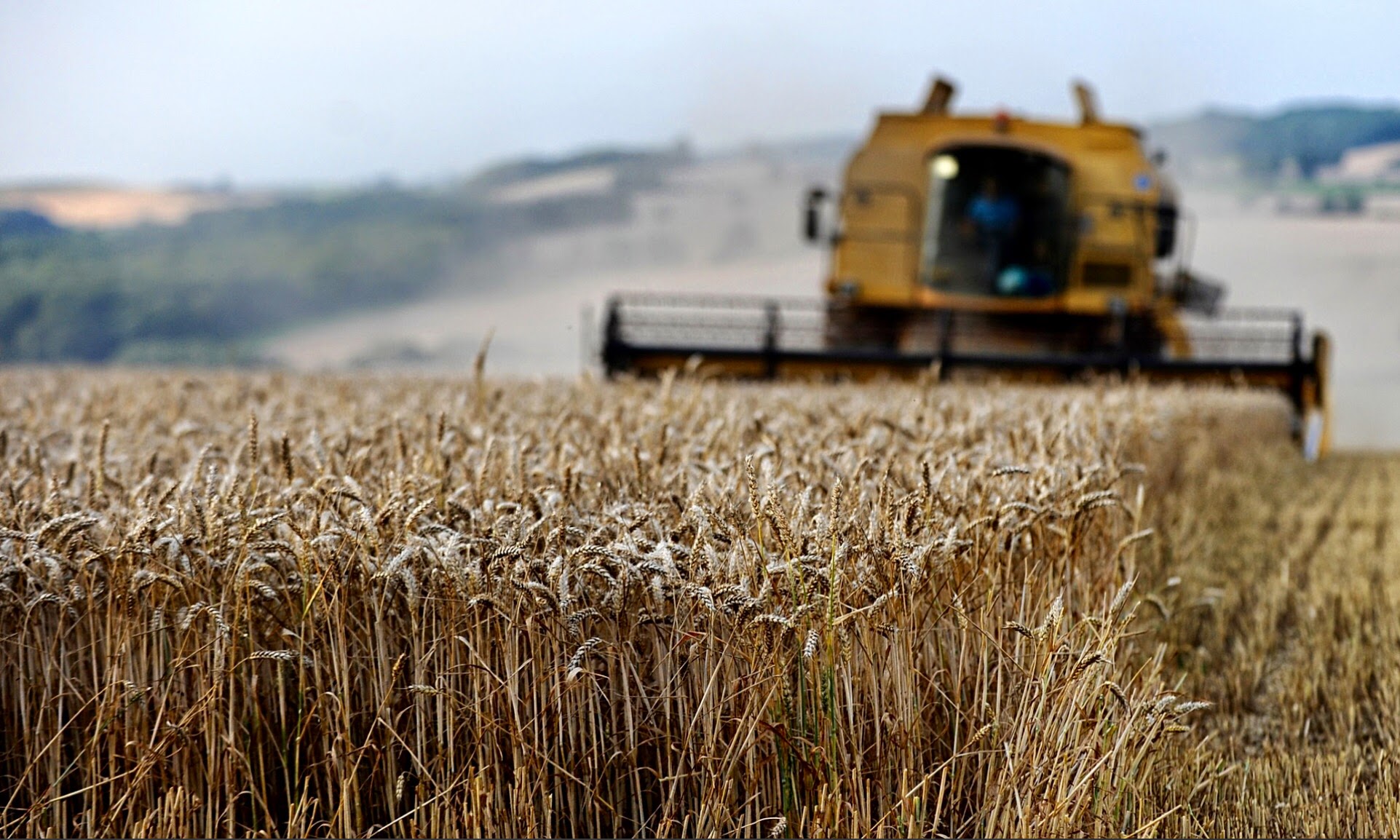
Another team has calculated that average yields of wheat per field, which only two decades ago were rising rapidly, are now down 2.5%, and barley by 3.8%. In each case, the scientists identify climate change as a contributing factor. Global warming has barely begun but climate scientists have been warning about the consequences for food security for 30 years.
The two latest bits of research into wheat yields are not isolated indicators of tomorrow’s troubles. The big heat has yet to arrive. It will be catastrophic. Another group has studied the consequences for harvests of extremes of heat and calculated that for each 1C notch in the thermometer, global wheat yields could fall by 6%. Some latitudes will benefit, but overall, world harvests could fall. This is very bad news: wheat is one of the world’s staples, and the world’s largest source of vegetable protein. There are other factors at play in the fields. Within a decade, 2.9 billion people in 48 nations will experience chronic water scarcity, another research team warns.
Agriculture consumes 70% of the world water supplies and action is needed “to pre-empt looming conflicts born of desperation”. Separately, US geologists have used historical analyses to work out what modern agriculture does to topsoil. When European settlers took the plough to the American heartlands, erosion accelerated one hundred-fold. At peak, an inch of soil was lost every 25 years. Before the Europeans, wind and water erosion took 2,500 years to remove the same thin layer. Because of erosion, overgrazing and drought, the planet’s farmland is being degraded at a catastrophic rate. An estimated 10m hectares are now abandoned each year; something the size of a family farm every minute. And as the food supply is threatened, demand will accelerate. There will be many more hungry people at the table.
In the last year, researchers re-examined UN population projections and decided that the global numbers may not peak at 9 billion. By 2100, the world could be home to 12 billion and still rising. By 2100, according to business-as-usual climate projections, temperatures will have risen by 4C and sea levels by a metre or so. So land that is ever less productive will be expected to deliver vastly more food at ever greater cost in fossil fuel energy to feed increasingly conflict-torn nation states.
Solutions exist but none are easy. All will require a generous adjustment between the haves and the have-nots and sustained global cooperation. That sounds like a dream, but the alternative is a nightmare. The enduring lesson of history is that drought and famine feed conflict, and conflict breeds more privation, and despair. Come December, each aspect of the climate challenge will have become more pressing, and more complex. Everything should be on the table in Paris except perhaps, symbolically, lunch. More
The Gold Standard Cities Programme is developing ground-breaking solutions that will unlock the finance needed by cities around the globe for low carbon development.
Urbanization and climate change will be defining issues of the 21st century. Half of the world’s population resides in cities and it is expected that by 2015, the world will have over 350 cities with more than one million inhabitants each.
Cities are already feeling the impacts of climate change and they will increasingly be susceptible to rising sea levels, inland flooding, frequent and stronger tropical cyclones, periods of increased heat and the spread of diseases. To mitigate climate change and to adapt to these impacts, it is estimated that by 2050 more than a trillion U.S. dollars in investment will be needed for cities but currently, less than 2% of climate finance is channeled into urban projects due to a lack of reliable monitoring, reporting…
Like a contest, terrorist groups like the Islamic State of Iraq and the Levant (ISIL), Boko Haram, Al-Qaeda and the Taliban, seem to be competing against each other. It seems like we are in an age where even terrorists are in a race for notoriety; for some kind of “celebrity status” that they can only obtain by expanding their influence with territorial gains, high numbers of supporters, and by committing bloodier terrorist acts as they go.
Unlike other less notorious terrorist groups, organizations like ISIL have taken very seriously the task of reinventing and differentiating themselves from the rest. Like a marketing strategy, this organization has made sure to become a recognized global brand. The Islamic State has a brand, marketing strategy, purpose and vast economic resources to carry out its plans. At every checkpoint and area under their control, ISIL has made it clear to put their flags up…
Bring the author & founder of Food Not Lawns to your town to teach workshops, plant gardens & build community.
Lawns are the Worst!
Americans spend over $30 billion every year to maintain over 40 million acres of lawn. Yet over 40 million people live below the poverty level. Even if only ⅓ of every lawn was converted to a food-producing garden, we could eliminate hunger in this country.
Lawns use more equipment, labor, fuel, and agricultural chemicals than industrial farming, making lawns the largest (and most toxic) agricultural sector in the United States. Lawnmowers burn more fuel every year than all industrial oils spills of the last twenty years, combined. Growing Food Not Lawns is a beautiful, responsible and empowering step towards finding real solutions to the major problems we face as a global society.
Grow Food, Not Lawns!
When the original chapter of Food Not Lawns started in 1999, in a tiny space behind a park in Eugene, Oregon, our vision was to share seeds and plants with our neighborhood, to promote local awareness about food security, and to learn about permaculture, sustainability and organic gardening.
Our project blossomed. We received a Neighborhood Improvement Grant from the City of Eugene, and conducted a low-cost permaculture design course for the neighborhood. We transformed most of the neighborhood lawns into lush organic gardens. We hosted annual seed swaps. Soon, we started to get mail from people around the country who were starting up local Food Not Lawns chapters of their own, and a movement had been born.
In 2006, co-founder Heather Flores published Food Not Lawns, How to Turn Your Yard into a Garden and Your Neighborhood into a Community (Chelsea Green.) The first half of the book is about gardening in the city, with no budget and on shared land. The second half is about working with people to build community around shared food and resources.
The book sold over 25,000 copies, and now there are more than 50 affiliated Food Not Lawns groups in the United States, Canada, and the U.K.. The original Food Not Lawns collective just hosted its 16th annual seed swap, and the meme, “Food Not Lawns,” has taken root in the mainstreamconsciousness.
We need your Support!
Stickers, T-shirts and Yard Signs help spread the message
This campaign is a tool to raise funds for outreach and education, and every donation comes with a Reward that helps everyone.
Starter kits help you establish and expand your local Food Not Lawns project.
Website sponsorships connect people to your work (we place your logo on our website) and support the expansion of the long-standing website, www.foodnotlawns.org, into a user-generated network for sharing skills, knowledge, photos, events and other resources.
Consultations with Heather Flores help you get creative with your garden design and/or community project.
“50 ways to Grow Food Not Lawns,” a new audio handbook from Heather Flores, gives a fun overview of urban permaculture and lawn-transformation techniques.
Workshops in your community will help jump-start new gardens and strengthen local networks by bringing people together to share seeds, resources, tools and knowledge about permaculture, sustainability and organic food.
Food Not Lawns Workshop Tour
This is the main focus of this campaign, and if funding is successful, Heather Jo Flores will travel all over, teaching workshops and helping people turn lawns into gardens and neighborhoods into communities. Please note that all events on this tour will be booked through this Kickstarter campaign, as premium rewards. If you want your town to be on the tour, pledge $500 or more. You can sponsor the event yourself, collaborate with a local nonprofit or university, or sell advance tickets to workshop participants. Funding deadline is March 21 and at that time tour schedule will be confirmed and announced.
Hosting Heather Jo Flores in your community means so much more than just hearing her talk. Heather literally wrote the book on Food Not Lawns, and as one of the founding members, she has had her thumb on the pulse of this movement since the beginning. She emphasizes friendship-based learning, and her events always incorporate a heavy dose of community interaction and team-building play. Specific curriculum will be tailored to meet the needs of your community.To learn more about workshop details, visit foodnotlawns.org/events.html.
It’s Not Just About Gardening!
Food not Lawns is not just about gardening. It’s not just about food. And it is certainly not just about social media. We are about building neighborhood-based, friendship-driven communities, on the ground, in person, and for real.
FNL has always maintained a very simple approachWe help each other turn yards into gardens;
We host events to share seeds, plants, skills, tools, land and information;
And we educate and advocate for communities that want to take back control of their food from the corporate profiteers.
These actions, when combined, build empowered local networks, and help foster a strong sense of community-wide security, stability and sustainability.
Remember, if we don’t reach our goal of $10,000 by March 21, we don’t get any of the funding!
This means no tour, no t-shirts and no audiobook! We really want to share all of this with you, so please help us make it happen.
Guess what? Almost all the current wars, uprisings, and other conflicts in the Middle East are connected by a single thread, which is also a threat: these conflicts are part of an increasingly frenzied competition to find, extract, and market fossil fuels whose future consumption is guaranteed to lead to a set of cataclysmic environmental crises.
Amid the many fossil-fueled conflicts in the region, one of them, packed with threats, large and small, has been largely overlooked, and Israel is at its epicenter. Its origins can be traced back to the early 1990s when Israeli and Palestinian leaders began sparring over rumored natural gas deposits in the Mediterranean Sea off the coast of Gaza. In the ensuing decades, it has grown into a many-fronted conflict involving several armies and three navies. In the process, it has already inflicted mindboggling misery on tens of thousands of Palestinians, and it threatens to add future layers of misery to the lives of people in Syria, Lebanon, and Cyprus. Eventually, it might even immiserate Israelis.
Resource wars are, of course, nothing new. Virtually the entire history of Western colonialism and post-World War II globalization has been animated by the effort to find and market the raw materials needed to build or maintain industrial capitalism. This includes Israel’s expansion into, and appropriation of, Palestinian lands. But fossil fuels only moved to center stage in the Israeli-Palestinian relationship in the 1990s, and that initially circumscribed conflict only spread to include Syria, Lebanon, Cyprus, Turkey, and Russia after 2010.
The Poisonous History of Gazan Natural Gas
Back in 1993, when Israel and the Palestinian Authority (PA) signed the Oslo Accords that were supposed to end the Israeli occupation of Gaza and the West Bank and create a sovereign state, nobody was thinking much about Gaza’s coastline. As a result, Israel agreedthat the newly created PA would fully control its territorial waters, even though the Israeli navy was still patrolling the area. Rumored natural gas deposits there mattered little to anyone, because prices were then so low and supplies so plentiful. No wonder that the Palestinians took their time recruiting British Gas (BG) — a major player in the global natural gas sweepstakes — to find out what was actually there. Only in 2000 did the two parties even sign a modest contract to develop those by-then confirmed fields.
BG promised to finance and manage their development, bear all the costs, and operate the resulting facilities in exchange for 90% of the revenues, an exploitative but typical “profit-sharing” agreement. With an already functioning natural gas industry, Egypt agreed to be the on-shore hub and transit point for the gas. The Palestinians were to receive 10% of the revenues (estimated at about a billion dollars in total) and were guaranteed access to enough gas to meet their needs.
Had this process moved a little faster, the contract might have been implemented as written. In 2000, however, with a rapidly expanding economy, meager fossil fuels, and terrible relations with its oil-rich neighbors, Israel found itself facing a chronic energy shortage. Instead of attempting to answer its problem with an aggressive but feasible effort to develop renewable sources of energy, Prime Minister Ehud Barak initiated the era of Eastern Mediterranean fossil fuel conflicts. He brought Israel’s naval control of Gazan coastal waters to bear and nixed the deal with BG. Instead, he demanded that Israel, not Egypt, receive the Gaza gas and that it also control all the revenues destined for the Palestinians — to prevent the money from being used to “fund terror.”
With this, the Oslo Accords were officially doomed. By declaring Palestinian control over gas revenues unacceptable, the Israeli government committed itself to not accepting even the most limited kind of Palestinian budgetary autonomy, let alone full sovereignty. Since no Palestinian government or organization would agree to this, a future filled with armed conflict was assured.
The Israeli veto led to the intervention of British Prime Minister Tony Blair, who sought to broker an agreement that would satisfy both the Israeli government and the Palestinian Authority. The result: a 2007 proposal that would have delivered the gas to Israel, not Egypt, at below-market prices, with the same 10% cut of the revenues eventually reaching the PA. However, those funds were first to be delivered to the Federal Reserve Bank in New York for future distribution, which was meant to guarantee that they would not be used for attacks on Israel.
This arrangement still did not satisfy the Israelis, who pointed to the recent victory of the militant Hamas party in Gaza elections as a deal-breaker. Though Hamas had agreed to let the Federal Reserve supervise all spending, the Israeli government, now led by Ehud Olmert, insisted that no “royalties be paid to the Palestinians.” Instead, the Israelis would deliver the equivalent of those funds “in goods and services.”
This offer the Palestinian government refused. Soon after, Olmert imposed a draconian blockade on Gaza, which Israel’s defense minister termed a form of “‘economic warfare’ that would generate a political crisis, leading to a popular uprising against Hamas.” With Egyptian cooperation, Israel then seized control of all commerce in and out of Gaza, severely limiting even food imports and eliminating its fishing industry. As Olmert advisor Dov Weisglass summed up this agenda, the Israeli government was putting the Palestinians “on a diet” (which, according to the Red Cross, soon produced “chronic malnutrition,” especially among Gazan children).
When the Palestinians still refused to accept Israel’s terms, the Olmert government decided to unilaterally extract the gas, something that, they believed, could only occur once Hamas had been displaced or disarmed. As former Israel Defense Forces commander and current Foreign Minister Moshe Ya’alon explained, “Hamas… has confirmed its capability to bomb Israel’s strategic gas and electricity installations… It is clear that, without an overall military operation to uproot Hamas control of Gaza, no drilling work can take place without the consent of the radical Islamic movement.”
Following this logic, Operation Cast Lead was launched in the winter of 2008. According to Deputy Defense Minister Matan Vilnai, it was intended to subject Gaza to a “shoah” (the Hebrew word for holocaust or disaster). Yoav Galant, the commanding general of the Operation, said that it was designed to “send Gaza decades into the past.” As Israeli parliamentarian Tzachi Hanegbi explained, the specific military goal was “to topple the Hamas terror regime and take over all the areas from which rockets are fired on Israel.”
Operation Cast Lead did indeed “send Gaza decades into the past.” Amnesty International reported that the 22-day offensive killed 1,400 Palestinians, “including some 300 children and hundreds of other unarmed civilians, and large areas of Gaza had been razed to the ground, leaving many thousands homeless and the already dire economy in ruins.” The only problem: Operation Cast Lead did not achieve its goal of “transferring the sovereignty of the gas fields to Israel.”
More Sources of Gas Equal More Resource Wars
In 2009, the newly elected government of Prime Minister Benjamin Netanyahu inheritedthe stalemate around Gaza’s gas deposits and an Israeli energy crisis that only grew more severe when the Arab Spring in Egypt interrupted and then obliterated 40% of the country’s gas supplies. Rising energy prices soon contributed to the largest protests involving Jewish Israelis in decades.
As it happened, however, the Netanyahu regime also inherited a potentially permanent solution to the problem. An immense field of recoverable natural gas was discovered in the Levantine Basin, a mainly offshore formation under the eastern Mediterranean. Israeli officials immediately asserted that “most” of the newly confirmed gas reserves lay “within Israeli territory.” In doing so, they ignored contrary claims by Lebanon, Syria, Cyprus, and the Palestinians.
In some other world, this immense gas field might have been effectively exploited by the five claimants jointly, and a production plan might even have been put in place to ameliorate the environmental impact of releasing a future 130 trillion cubic feet of gas into the planet’s atmosphere. However, as Pierre Terzian, editor of the oil industry journal Petrostrategies, observed, “All the elements of danger are there… This is a region where resorting to violent action is not something unusual.”
In the three years that followed the discovery, Terzian’s warning seemed ever more prescient. Lebanon became the first hot spot. In early 2011, the Israeli government announcedthe unilateral development of two fields, about 10% of that Levantine Basin gas, which lay in disputed offshore waters near the Israeli-Lebanese border. Lebanese Energy Minister Gebran Bassil immediately threatened a military confrontation, asserting that his country would “not allow Israel or any company working for Israeli interests to take any amount of our gas that is falling in our zone.” Hezbollah, the most aggressive political faction in Lebanon, promised rocket attacks if “a single meter” of natural gas was extracted from the disputed fields.
Israel’s Resource Minister accepted the challenge, asserting that “[t]hese areas are within the economic waters of Israel… We will not hesitate to use our force and strength to protect not only the rule of law but the international maritime law.”
Oil industry journalist Terzian offered this analysis of the realities of the confrontation:
“In practical terms… nobody is going to invest with Lebanon in disputed waters. There are no Lebanese companies there capable of carrying out the drilling, and there is no military force that could protect them. But on the other side, things are different. You have Israeli companies that have the ability to operate in offshore areas, and they could take the risk under the protection of the Israeli military.”
Sure enough, Israel continued its exploration and drilling in the two disputed fields, deploying drones to guard the facilities. Meanwhile, the Netanyahu government invested major resources in preparing for possible future military confrontations in the area. For one thing, with lavish U.S. funding, it developed the “Iron Dome” anti-missile defense system designed in part to intercept Hezbollah and Hamas rockets aimed at Israeli energy facilities. It also expanded the Israeli navy, focusing on its ability to deter or repel threats to offshore energy facilities. Finally, starting in 2011 it launched airstrikes in Syria designed, according to U.S. officials, “to prevent any transfer of advanced… antiaircraft, surface-to-surface and shore-to-ship missiles” to Hezbollah.
Nonetheless, Hezbollah continued to stockpile rockets capable of demolishing Israeli facilities. And in 2013, Lebanon made a move of its own. It began negotiating with Russia. The goal was to get that country’s gas firms to develop Lebanese offshore claims, while the formidable Russian navy would lend a hand with the “long-running territorial dispute with Israel.”
By the beginning of 2015, a state of mutual deterrence appeared to be setting in. Although Israel had succeeded in bringing online the smaller of the two fields it set out to develop, drilling in the larger one was indefinitely stalled “in light of the security situation.” U.S. contractor Noble Energy, hired by the Israelis, was unwilling to invest the necessary $6 billion dollars in facilities that would be vulnerable to Hezbollah attack, and potentially in the gun sights of the Russian navy. On the Lebanese side, despite an increased Russian naval presence in the region, no work had begun.
Meanwhile, in Syria, where violence was rife and the country in a state of armed collapse, another kind of stalemate went into effect. The regime of Bashar al-Assad, facing a ferocious threat from various groups of jihadists, survived in part by negotiating massive military support from Russia in exchange for a 25-year contract to develop Syria’s claims to that Levantine gas field. Included in the deal was a major expansion of the Russian naval base at the port city of Tartus, ensuring a far larger Russian naval presence in the Levantine Basin.
While the presence of the Russians apparently deterred the Israelis from attempting to develop any Syrian-claimed gas deposits, there was no Russian presence in Syria proper. So Israel contracted with the U.S.-based Genie Energy Corporation to locate and develop oil fields in the Golan Heights, Syrian territory occupied by the Israelis since 1967. Facing a potential violation of international law, the Netanyahu government invoked, as the basis for its acts, an Israeli court ruling that the exploitation of natural resources in occupied territories was legal. At the same time, to prepare for the inevitable battle with whichever faction or factions emerged triumphant from the Syrian civil war, it began shoring up the Israeli military presence in the Golan Heights.
And then there was Cyprus, the only Levantine claimant not at war with Israel. Greek Cypriots had long been in chronic conflict with Turkish Cypriots, so it was hardly surprising that the Levantine natural gas discovery triggered three years of deadlocked negotiations on the island over what to do. In 2014, the Greek Cypriots signed an exploration contract with Noble Energy, Israel’s chief contractor. The Turkish Cypriots trumped this move by signing a contract with Turkey to explore all Cypriot claims “as far as Egyptian waters.” Emulating Israel and Russia, the Turkish government promptly moved three navy vesselsinto the area to physically block any intervention by other claimants.
As a result, four years of maneuvering around the newly discovered Levantine Basin deposits have produced little energy, but brought new and powerful claimants into the mix, launched a significant military build-up in the region, and heightened tensions immeasurably.
Gaza Again — and Again
Remember the Iron Dome system, developed in part to stop Hezbollah rockets aimed at Israel’s northern gas fields? Over time, it was put in place near the border with Gaza to stop Hamas rockets, and was tested during Operation Returning Echo, the fourth Israeli military attempt to bring Hamas to heel and eliminate any Palestinian “capability to bomb Israel’s strategic gas and electricity installations.”
Launched in March 2012, it replicated on a reduced scale the devastation of Operation Cast Lead, while the Iron Dome achieved a 90% “kill rate” against Hamas rockets. Even this, however, while a useful adjunct to the vast shelter system built to protect Israeli civilians, was not enough to ensure the protection of the country’s exposed oil facilities. Even one direct hit there could damage or demolish such fragile and flammable structures.
The failure of Operation Returning Echo to settle anything triggered another round of negotiations, which once again stalled over the Palestinian rejection of Israel’s demand to control all fuel and revenues destined for Gaza and the West Bank. The new Palestinian Unity government then followed the lead of the Lebanese, Syrians, and Turkish Cypriots, and in late 2013 signed an “exploration concession” with Gazprom, the huge Russian natural gas company. As with Lebanon and Syria, the Russian Navy loomed as a potential deterrent to Israeli interference.
Meanwhile, in 2013, a new round of energy blackouts caused “chaos” across Israel, triggering a draconian 47% increase in electricity prices. In response, the Netanyahu government considered a proposal to begin extracting domestic shale oil, but the potential contamination of water resources caused a backlash movement that frustrated this effort. In a country filled with start-up high-tech firms, the exploitation of renewable energy sources was still not being given serious attention. Instead, the government once again turned to Gaza.
With Gazprom’s move to develop the Palestinian-claimed gas deposits on the horizon, the Israelis launched their fifth military effort to force Palestinian acquiescence, Operation Protective Edge. It had two major hydrocarbon-related goals: to deter Palestinian-Russian plans and to finally eliminate the Gazan rocket systems. The first goal was apparently met when Gazprom postponed (perhaps permanently) its development deal. The second, however, failed when the two-pronged land and air attack — despite unprecedented devastation in Gaza — failed to destroy Hamas’s rocket stockpiles or its tunnel-based assembly system; nor did the Iron Dome achieve the sort of near-perfect interception rate needed to protect proposed energy installations.
There Is No Denouement
After 25 years and five failed Israeli military efforts, Gaza’s natural gas is still underwater and, after four years, the same can be said for almost all of the Levantine gas. But things are not the same. In energy terms, Israel is ever more desperate, even as it has been building up its military, including its navy, in significant ways. The other claimants have, in turn, found larger and more powerful partners to help reinforce their economic and military claims. All of this undoubtedly means that the first quarter-century of crisis over eastern Mediterranean natural gas has been nothing but prelude. Ahead lies the possibility of bigger gas wars with the devastation they are likely to bring. More
They say you learn something new everyday. For me, this day qualifies. Michael Specter writes at the New Yorker on the increasingly dire prospects for water — of the clean, unpolluted kind — for a clamoring humankind and of the water wars that are surely on the horizon.
And he has this, on the origins of the word “rivals”: “After all, the word 'rivals' has its roots in battles over water—coming from the Latin, rivalis, for 'one taking from the same stream as another.'” Who knew? Not me. Specter's prognostication on our looming water disasters is a grim but important read and not just for Pakistanis or Nigerians, but for us in a country in which California is parched for water in a prolonged drought and researchers are predicting humongous droughts coming later in the century for our breadbasket, the Midwest! TomDispatch
Angry protesters filled the streets of Karachi last week, clogging traffic lanes and public squares until police and paratroopers were forced to intervene. That’s not rare in Pakistan, which is often a site of political and religious violence.
But last week’s protests had nothing to do with freedom of expression, drone wars, or Americans. They were about access to water. When Khawaja Muhammad Asif, the Minister of Defense, Power, and Water (yes, that is one ministry), warned that the country’s chronic water shortages could soon become uncontrollable, he was looking on the bright side. The meagre allotment of water available to each Pakistani is a third of what it was in 1950. As the country’s population rises, that amount is falling fast.
Dozens of other countries face similar situations—not someday, or soon, but now. Rapid climate change, population growth, and a growing demand for meat (and, thus, for the water required to grow feed for livestock) have propelled them into a state of emergency. Millions of words have been written, and scores of urgent meetings have been held, since I last wrote about this issue for the magazine, nearly a decade ago; in that time, things have only grown worse.
The various physical calamities that confront the world are hard to separate, but growing hunger and the struggle to find clean water for billions of people are clearly connected. Each problem fuels others, particularly in the developing world—where the harshest impact of natural catastrophes has always been felt. Yet the water crisis challenges even the richest among us.
California is now in its fourth year of drought, staggering through its worst dry spell in twelve hundred years; farmers have sold their herds, and some have abandoned crops. Cities have begun rationing water. According to the London-based organization Wateraid, water shortages are responsible for more deaths in Nigeria than Boko Haram; there are places in India where hospitals have trouble finding the water required to sterilize surgical tools.
Nowhere, however, is the situation more acute than in Brazil, particularly for the twenty million residents of São Paulo. “You have all the elements for a perfect storm, except that we don’t have water,” a former environmental minister told Lizzie O’Leary, in a recent interview for the syndicated radio show “Marketplace.” The country is bracing for riots. “There is a real risk of social convulsion,” José Galizia Tundisi, a hydrologist with the Brazilian Academy of Sciences, warned in a press conference last week. He said that officials have failed to act with appropriate urgency. “Authorities need to act immediately to avoid the worst.” But people rarely act until the crisis is directly affecting them, and at that point it will be too late.
It is not that we are actually running out of water, because water never technically disappears. When it leaves one place, it goes somewhere else, and the amount of freshwater on earth has not changed significantly for millions of years. But the number of people on the planet has grown exponentially; in just the past century, the population has tripled, and water use has grown sixfold. More than that, we have polluted much of what remains readily available—and climate change has made it significantly more difficult to plan for floods and droughts.
Success is part of the problem, just as it is with the pollution caused by our industrial growth. The standard of living has improved for hundreds of millions of people, and the pace of improvement will quicken. As populations grow more prosperous, vegetarian life styles often yield to a Western diet, with all the disasters that implies. The new middle classes, particularly in India and China, eat more protein than they once did, and that, again, requires more water use. (On average, hundreds of gallons of water are required to produce a single hamburger.)
Feeding a planet with nine billion residents will require at least fifty per cent more water in 2050 than we use today. It is hard to see where that water will come from. Half of the planet already lives in urban areas, and that number will increase along with the pressure to supply clean water.
“Unfortunately, the world has not really woken up to the reality of what we are going to face, in terms of the crises, as far as water is concerned,” Rajendra Pachauri, the chairman of the International Panel on Climate Change, said at a conference on water security earlier this month. “If you look at agricultural products, if you look at animal protein, the demand for which is growing—that’s highly water intensive. At the same time, on the supply side, there are going to be several constraints. Firstly because there are going to be profound changes in the water cycle due to climate change.”
Floods will become more common, and so will droughts, according to most assessments of the warming earth. “The twenty-first-century projections make the [previous] mega-droughts seem like quaint walks through the garden of Eden,” Jason Smerdon, a climate scientist at Columbia University’s Lamont-Doherty Earth Observatory, said recently. At the same time, demands for economic growth in India and other developing nations will necessarily increase pollution of rivers and lakes. That will force people to dig deeper than ever before into the earth for water.
There are ways to replace oil, gas, and coal, though we won’t do that unless economic necessity demands it. But there isn’t a tidy and synthetic invention to replace water. Conservation would help immensely, as would a more rational use of agricultural land—irrigation today consumes seventy per cent of all freshwater.
The result of continued inaction is clear. Development experts, who rarely agree on much, all agree that water wars are on the horizon. That would be nothing new for humanity. After all, the word “rivals” has its roots in battles over water—coming from the Latin, rivalis, for “one taking from the same stream as another.” It would be nice to think that, with our complete knowledge of the physical world, we have moved beyond the limitations our ancestors faced two thousand years ago. But the truth is otherwise; rivals we remain, and the evidence suggests that, until we start dying of thirst, we will stay that way. More
Today al-Qaeda-type movements rule a vast area in northern and western Iraq and eastern and northern Syria, several hundred times larger than any territory ever controlled by Osama bin Laden.It is since bin Laden’s death that al-Qaeda affiliates or clones have had their greatest successes, including the capture of Raqqa in the eastern part of Syria, the only provincial capital in that country to fall to the rebels, in March 2013. In January 2014, ISIS took over Fallujah just forty miles west of Baghdad, a city famously besieged and stormed by US Marines ten years earlier. Within a few months they had also captured Mosul and Tikrit. The battle lines may continue to change, but the overall expansion of their power will be difficult to reverse. With their swift and multipronged assault across central and northern Iraq in June 2014, the ISIS militants had superseded al-Qaeda as the most powerful and effective jihadi group in the world.
These developments came as a shock to many in the West, including politicians and specialists whose view of what was happening often seemed outpaced by events. One reason for this was that it was too risky for journalists and outside observers to visit the areas where ISIS was operating, because of the extreme danger of being kidnapped or murdered. “Those who used to protect the foreign media can no longer protect themselves,” one intrepid correspondent told me, explaining why he would not be returning to rebel-held Syria.
This lack of coverage had been convenient for the US and other Western governments because it enabled them to play down the extent to which the “war on terror” had failed so catastrophically in the years since 9/11. This failure is also masked by deceptions and self-deceptions on the part of governments. Speaking at West Point on America’s role in the world on May 28, 2014, President Obama said that the main threat to the US no longer came from al-Qaeda central but from “decentralized al-Qaeda affiliates and extremists, many with agendas focused on the countries where they operate.” He added that “as the Syrian civil war spills across borders, the capacity of battle-hardened extremist groups to come after us only increases.” This was true enough, but Obama’s solution to the danger was, as he put it, “to ramp up support for those in the Syrian opposition who offer the best alternative to terrorists.” By June he was asking Congress for $500 million to train and equip “appropriately vetted” members of the Syrian opposition. It is here that there was a real intention to deceive, because, as Biden was to admit five months later, the Syrian military opposition is dominated by ISIS and by Jabhat al-Nusra, the official al-Qaeda representative, in addition to other extreme jihadi groups. In reality, there is no dividing wall between them and America’s supposedly moderate opposition allies.
An intelligence officer from a Middle Eastern country neighboring Syria told me that ISIS members “say they are always pleased when sophisticated weapons are sent to anti-Assad groups of any kind, because they can always get the arms off them by threats of force or cash payments.” These are not empty boasts. Arms supplied by US allies such as Saudi Arabia and Qatar to anti-Assad forces in Syria have been captured regularly in Iraq. I experienced a small example of the consequences of this inflow of weapons even before the fall of Mosul, when, in the summer of 2014, I tried to book a flight to Baghdad on the same efficient European airline that I had used a year earlier. I was told it had discontinued flights to the Iraqi capital, because it feared that insurgents had obtained shoulder-held anti-aircraft missiles originally supplied to anti-Assad forces in Syria and would use them against commercial aircraft flying into Baghdad International Airport. Western support for the Syrian opposition may have failed to overthrow Assad, but it has been successful in destabilizing Iraq, as Iraqi politicians had long predicted.
The failure of the “war on terror” and the resurgence of al-Qaeda is further explained by a phenomenon which had become apparent within hours of the 9/11 attacks. The first moves from Washington made it clear that the anti-terror war would be waged without any confrontation with Saudi Arabia or Pakistan, two close US allies, despite the fact that without the involvement of these two countries 9/11 was unlikely to have happened. Of the nineteen hijackers that day, fifteen were Saudi. Bin Laden came from the Saudi elite. Subsequent US official documents stress repeatedly that financing for al-Qaeda and jihadi groups came from Saudi Arabia and the Gulf monarchies. As for Pakistan, its army and military service had played a central role since the early 1990s in propelling the Taliban into power in Afghanistan where they hosted bin Laden and al-Qaeda. After a brief hiatus during and after 9/11, Pakistan resumed its support for the Afghan Taliban. Speaking of the central role of Pakistan in backing the Taliban, the late Richard C. Holbrooke, US special representative to Afghanistan and Pakistan, said: “We may be fighting the wrong enemy in the wrong country.”
The importance of Saudi Arabia in the rise and return of al-Qaeda is often misunderstood and understated. Saudi Arabia is influential because its oil and vast wealth make it powerful in the Middle East and beyond. But it is not financial resources alone that make it such an important player. Another factor is its propagating of Wahhabism, the fundamentalist, eighteenth-century version of Islam that imposes sharia law, relegates women to the status of second-class citizens, and regards Shia and Sufi Muslims as non-Muslims to be persecuted along with Christians and Jews.
This religious intolerance and political authoritarianism, which in its readiness to use violence has many similarities with European fascism in the 1930s, is getting worse rather than better. For example, in recent years, a Saudi who set up a liberal website on which clerics could be criticized was sentenced to a thousand lashes and seven years in prison. The ideology of al-Qaeda and ISIS draws a great deal from Wahhabism. Critics of this new trend in Islam from elsewhere in the Muslim world do not survive long; they are forced to flee or are murdered. Denouncing jihadi leaders in Kabul in 2003, an Afghan editor described them as “holy fascists” who were misusing Islam as “an instrument to take over power.” Unsurprisingly, he was accused of insulting Islam and had to leave the country.
A striking development in the Islamic world in recent decades is the way in which Wahhabism is taking over mainstream Sunni Islam. In one country after another Saudi Arabia is putting up the money for the training of preachers and the building of mosques. A result of this is the spread of sectarian strife between Sunni and Shia. The latter find themselves targeted with unprecedented viciousness, from Tunisia to Indonesia. Such sectarianism is not confined to country villages outside Aleppo or in the Punjab; it is poisoning relations between the two sects in every Islamic grouping. A Muslim friend in London told me: “Go through the address books of any Sunni or Shia in Britain and you will find very few names belonging to people outside their own community.”
Even before Mosul, President Obama was coming to realize that al-Qaeda–type groups were far stronger than they had been previously, but his recipe for dealing with them repeats and exacerbates earlier mistakes. “We need partners to fight terrorists alongside us,” he told his audience at West Point. But who are these partners going to be? Saudi Arabia and Qatar were not mentioned by him, since they remain close and active US allies in Syria. Obama instead singled out “Jordan and Lebanon, Turkey and Iraq” as partners to receive aid in “confronting terrorists working across Syria’s borders.”
There is something absurd about this, since the foreign jihadis in Syria and Iraq, the people whom Obama admits are the greatest threat, can only get to these countries because they are able to cross the 510-mile-long Turkish-Syrian border without hindrance from the Turkish authorities. Saudi Arabia, Turkey, and Jordan may now be frightened by the Frankenstein’s monster they have helped to create, but there is little they can do to restrain it. An unspoken purpose of the US insistence that Saudi Arabia, UAE, Qatar, and Bahrain take part or assist in the air strikes on Syria in September was to force them to break their former links with the jihadis in Syria.
There was always something fantastical about the US and its Western allies teaming up with the theocratic Sunni absolute monarchies of Saudi Arabia and the Gulf to spread democracy and enhance human rights in Syria, Iraq, and Libya. The US was a weaker power in the Middle East in 2011 than it had been in 2003, because its armies had failed to achieve their aims in Iraq and Afghanistan. Come the uprisings of 2011, it was the jihadi and Sunni-sectarian, militarized wing of rebel movements that received massive injections of money from the kings and emirs of the Gulf. The secular, nonsectarian opponents of the long-established police states were soon marginalized, reduced to silence, or killed. The international media was very slow to pick up on how the nature of these uprisings had changed, though the Islamists were very open about their sectarian priorities: in Libya, one of the first acts of the triumphant rebels was to call for the legalization of polygamy, which had been banned under the old regime.
ISIS is the child of war. Its members seek to reshape the world around them by acts of violence. The movement’s toxic but potent mix of extreme religious beliefs and military skill is the outcome of the war in Iraq since the US invasion of 2003 and the war in Syria since 2011. Just as the violence in Iraq was ebbing, the war was revived by the Sunni Arabs in Syria. It is the government and media consensus in the West that the civil war in Iraq was reignited by the sectarian policies of Iraqi prime minister Nouri al-Maliki in Baghdad. In reality, it was the war in Syria that destabilized Iraq when jihadi groups like ISIS, then called al-Qaeda in Iraq, found a new battlefield where they could fight and flourish.
It was the US, Europe, and their regional allies in Turkey, Saudi Arabia, Qatar, Kuwait, and United Arab Emirates that created the conditions for the rise of ISIS. They kept the war going in Syria, though it was obvious from 2012 that Assad would not fall. He never controlled less than thirteen out of fourteen Syrian provincial capitals and was backed by Russia, Iran, and Hezbollah. Nevertheless, the only peace terms he was offered at the Geneva II peace talks in January 2014 was to leave power. He was not about to go, and ideal conditions were created for ISIS to prosper. The US and its allies are now trying to turn the Sunni communities in Iraq and Syria against the militants, but this will be difficult to do while these countries are convulsed by war.
The resurgence of al-Qaeda–type groups is not a threat confined to Syria, Iraq, and their near neighbors. What is happening in these countries, combined with the growing dominance of intolerant and exclusive Wahhabite beliefs within the worldwide Sunni community, means that all 1.6 billion Muslims, almost a quarter of the world’s population, will be increasingly affected. It seems unlikely that non-Muslims, including many in the West, will be untouched by the conflict. Today’s resurgent jihadism, having shifted the political terrain in Iraq and Syria, is already having far-reaching effects on global politics, with dire consequences for us all. More
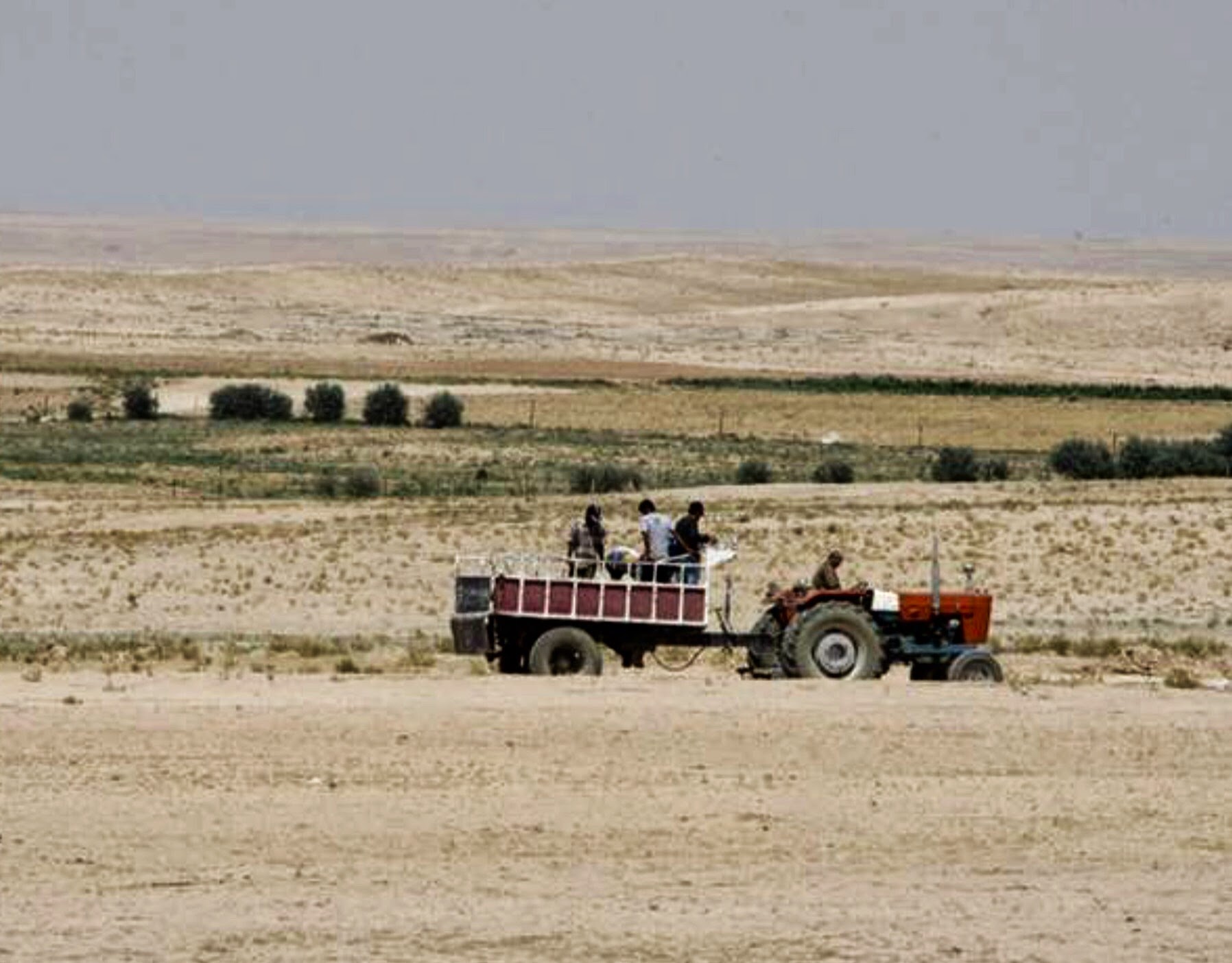
The Water Partnership Programme (WPP) published a new video that shows how climate change affects the Middle East, Latin America and Central Asia. The video looks at how climate change impacts the poor and most vulnerable populations. It is a free resource for those in the climate change community who want to raise awareness on the issue. The WPP works globally to counter the effects of climate change by supporting water-related programmes that promote innovative tools to help countries build resilience and prepare for an uncertain future.


 ©
©