Image

It Is A Tragic Mistake

U. S. statesman doubtful about wisdom of NATO expansion

By Thomas L Frledman

His voice is a bit frail now, but the mind, even at age 94, is as sharp as ever. So when I reached George Kennan by phone to get his reaction to the Senate’s ratification of NATO expansion, it was no surprise to find that the man who was the architect of America’s successful containment of the Soviet Union and one of the great American statesmen of the 20th century was ready with an answer.

“I think it is the beginning of a new Cold War,” Kennan said from his Princeton home. “I think the Russians will gradually react quite adversely, and it will affect their policies. I think it is a tragic mistake. There was no reason for this whatsoever. No one was threatening anybody else. This expansion would make the Founding Fathers of this country turn over in their graves. We have signed up to protect a whole series of countries, even though we have neither the resources nor the intention to do so in any serious way.

(NATO expansion) was simply a light- hearted action by a Senate that has no real interest in foreign affairs.” “What bothers me is how superficial and ill informed the whole Senate debate was,” added Kennan, who was present at the creation of the North Atlantic Treaty Organization and whose anonymous 1947 article in the journal Foreign Affairs, signed “X,” defined America’s Cold War containment policy for 40 years.

“I was particularly bothered by the references to Russia as a country dying to attack Western Europe. Don’t people understand? Our differences in the Cold War were with the Soviet Communist regime. And now we are turning our backs on the very people who mounted the greatest bloodless revolution in history to remove that Soviet regime.” “And Russia’s democracy is as far advanced, if not farther, as any of these countries we’ve just signed up to defend from Russia,” said Kennan, who joined the State Department in 1926 and was ambassador to Moscow in 1952.

“It shows so little understanding of Russian history and Soviet history. Of course there is going to be a bad reaction from Russia, and then (the NATO expanders) will say that we always told you that is how the Russians are but this is just wrong.” say. If we are lucky, they will say NATO expansion to Poland, Hungary and the Czech Republic simply didn’t matter, because the vacuum it was supposed to fill had already been filled, only the Clinton team couldn’t see it.

They will say the forces of globalization integrating Europe, coupled with the new arms control agreements, proved to be so powerful that Russia, despite NATO expansion, moved ahead with democratization and Westernization, and was gradually drawn into a loosely unified Europe. If we are unlucky, they will say, as Kennan predicts, that NATO expansion set up a situation in which NATO has to either expand all the way to Russia’s border, triggering a new Cold War, or stop expanding after these three new countries and create a new dividing line through Europe.

But there is one thing future historians will surely remark upon, and that is the utter poverty of imagination that characterized U. S. foreign policy in the late1990s.

They will note that one of the seminal events of this century took place between1989 and 1992 – the collapse of the Soviet empire, which had the capability, imperial intentions and ideology to truly threaten the entire free world.

Thanks to Western resolve and the courage of Russian democrats, that Soviet empire collapsed without a shot, spawning a democratic Russia, setting free the former Soviet republics and leading to unprecedented arms-control agreements with the United States. And what was America’s response? It was to expand the NATO Cold War alliance against Russia and bring it closer to Russia’s borders. Yes, tell your children, and your children’s children, that you lived in the age of Bill Clinton and William Cohen, the age of Madeleine Albright and Sandy Berger, the age of Trent Lott and Joe Lieberman, and you, too, were present at the creation of the post-Cold War order, when these foreign-policy Titans put their heads together and produced… a mouse. We are in the age of midgets.

The only good news is that we got here in one piece because there was another age – one of great statesmen who had both imagination and courage. As he said goodbye, Kennan added just one more thing: “This has been my life, and it pains me to see it so screwed up in the end.”

Thomas L. Friedman – is a columnist for the New York Times
Iran Calls GOP Letter ‘Propaganda Ploy,’ Offers To ‘Enlighten’ Authors

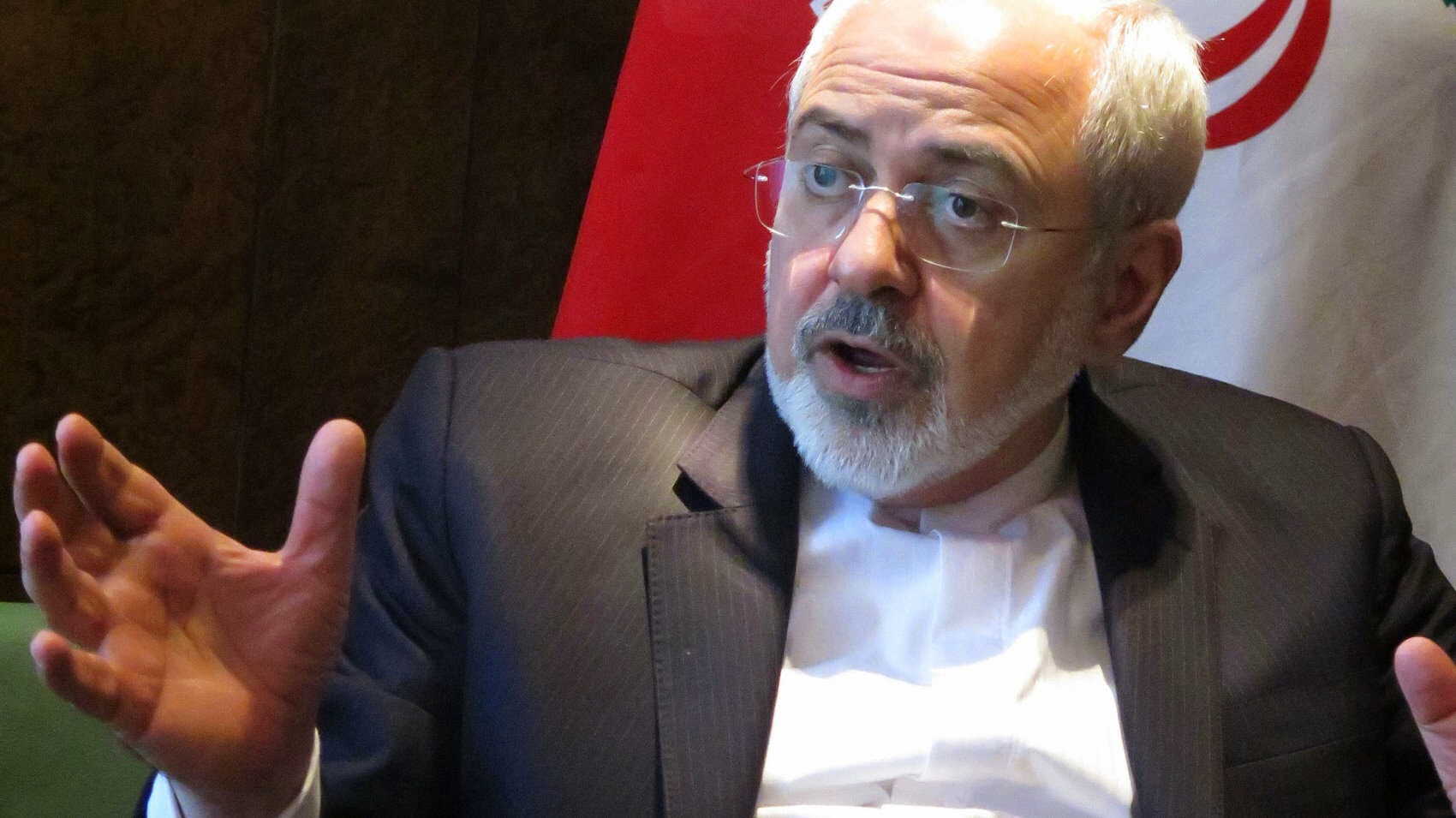
A letter from U.S. senators suggests the lawmakers “not only do not understand international law, but are not fully cognizant of the nuances of their own Constitution,” says Iranian Foreign Minister Mohammad Javad Zarif.

Republican senators’ letter to Iran about ongoing nuclear talks has prompted a lengthy response from Iranian Foreign Minister Mohammad Javad Zarif, who delivered an overview of international law as he critiqued the letter.

Zarif said he was astonished by the letter, saying it suggests the U.S. lawmakers “not only do not understand international law” — a subject in which he is a professor — “but are not fully cognizant of the nuances of their own Constitution when it comes to presidential powers in the conduct of foreign policy,” according to Iran’s Foreign Ministry.

The Iranian minister said that “in our view, this letter has no legal value and is mostly a propaganda ploy.”

His response (we have more of it below) came after it was announced Monday that 47 Senate Republicans who oppose a potential deal with Iran over its nuclear program had signed a letter to the country’s leaders.

Coming two weeks before the deadline for envoys to reach general terms with Iran, the signatories wrote that they had been observing the negotiations over potentially relaxing economic sanctions — and told Iran’s leaders they were concerned “that you may not fully understand our constitutional system.”

The letter seemed to strike a nerve for Zarif, who moved to the U.S. as a teenager and holds a doctorate and two other advanced degrees from American universities.

As NPR’s It’s All Politics blog noted, “The letter was written by freshman Arkansas Sen. Tom Cotton and co-signed by 46 of his GOP colleagues, including Majority Leader Mitch McConnell.”

The senators cited the U.S. process of ratifying treaties in Congress and President Obama’s term that expires in January of 2017, writing:

“What these two constitutional provisions mean is that we will consider any agreement regarding your nuclear-weapons program that is not approved by Congress as nothing more than an executive agreement between President Obama and Ayatollah Khamenei. The next president could revoke such an executive agreement with the stroke of a pen and future Congresses could modify the terms of the agreement at any time.”

The Republicans’ message was quickly criticized by Vice President Joe Biden, a former senator who said it was “beneath the dignity of an institution I revere.”

Seven Republicans did not sign the letter, as NPR’s Ailsa Chang reported today on Morning Edition.

President Obama said, “I think it’s somewhat ironic to see some members of Congress wanting to make common cause with the hard-liners in Iran” who are also against making a deal over Iran’s nuclear program.

Zarif, noting that negotiations are ongoing and haven’t yielded an agreement, said the U.S. lawmakers’ “unconventional methods” show that they “are opposed to any agreement, regardless of its content.”

Saying he hopes to “enrich the knowledge of the authors,” Zarif said:

“I should bring one important point to the attention of the authors and that is, the world is not the United States, and the conduct of inter-state relations is governed by international law, and not by US domestic law. The authors may not fully understand that in international law, governments represent the entirety of their respective states, are responsible for the conduct of foreign affairs, are required to fulfill the obligations they undertake with other states and may not invoke their internal law as justification for failure to perform their international obligations.”

Zarif also noted that many previous international agreements the U.S. has been a party to have been “mere executive agreements,” and not full treaties that received Senate ratification.

He said any deal on sanctions and Iran’s nuclear program would not be bilateral; would require approval by the U.N. and the U.N. Security Council; and would not be subject to modification by Congress.

He added, “I wish to enlighten the authors that if the next administration revokes any agreement with the stroke of a pen, as they boast, it will have simply committed a blatant violation of international law.”

For a different perspective, Ailsa spoke to Richard Nephew, who was on U.S. teams negotiating with Iran during both the Bush and Obama administrations.

Nephew said, “The idea that a sitting group of senators of either party would write to the other side of a negotiation to say, ‘Eh, don’t sign a deal with these guys’ — to me, it really smacks of a misplaced understanding of how the international system is supposed to work.” More


Reality of National Security State Trumps ‘Delusions’ of U.S. Democracy

In the halls of U.S. government, “policy in the national security realm is made by the concealed institutions,” political scientist argues in new book

“I think the American people are deluded.”

So says Tufts University political scientist Michael J. Glennon, whose new book, National Security and Double Government (Oxford University Press), describes a powerful bureaucratic network that's really pulling the strings on key aspects of U.S. foreign policy.

The 'double government' explains why the Obama version of national security is virtually indistinguishable from the one he inherited from President George W. Bush.

The American public believes “that when they vote for a president or member of Congress or succeed in bringing a case before the courts, that policy is going to change,” Glennon told the Boston Globe in an interview published Sunday. “Now, there are many counter-examples in which these branches do affect policy… But the larger picture is still true—policy by and large in the national security realm is made by the concealed institutions.”

Glennon argues that because managers of the military, intelligence, diplomatic, and law enforcement agencies operate largely outside the institutions meant to check or constrain them—the executive branch, the courts, Congress—national security policy changes very little from one administration to the next.

This explains, he says, why the Obama version of national security is virtually indistinguishable from the one he inherited from President George W. Bush. It's also why Guantanamo is still open; why whistleblowers are being prosecuted more; why NSA surveillance has expanded; why drone strikes have increased.

“I was curious why a president such as Barack Obama would embrace the very same national security and counterterrorism policies that he campaigned eloquently against,” Glennon said. Drawing on his own personal experiences as former legal counsel to the Senate Foreign Relations Committee, as well as conversations with dozens of individuals in U.S. military, law enforcement, and intelligence agencies and elected officials, Glennon drew the following conclusion: “National security policy actually bubbles up from within the bureaucracy. Many of the more controversial policies, from the mining of Nicaragua’s harbors to the NSA surveillance program, originated within the bureaucracy.”

To dismantle this so-called “double government”—a phrase coined by British journalist and businessman Walter Bagehot to describe the British government in the 1860s—will be a challenge, Glennon admits. After all, “There is very little profit to be had in learning about, and being active about, problems that you can’t affect, policies that you can’t change.”

But he is not hopeless. “The ultimate problem is the pervasive political ignorance on the part of the American people. And indifference to the threat that is emerging from these concealed institutions. That is where the energy for reform has to come from: the American people,” he said. “The people have to take the bull by the horns.” More

This work is licensed under a Creative Commons Attribution-Share Alike 3.0 License


Britain ‘attempts to censor’ US report on torture sites

The government stands accused of seeking to conceal Britain’s role in extraordinary rendition, ahead of the release of a declassified intelligence report that exposes the use of torture at US secret prisons around the world.

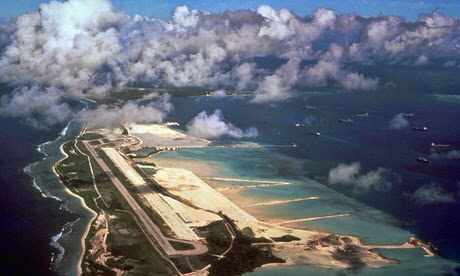
Diego Garcia

The Senate report on the CIA’s interrogation programme, due to be released in days, will confirm that the US tortured terrorist suspects after 9/11. In advance of the release, Barack Obama admitted on Friday: “We tortured some folks. We did some things that were contrary to our values.”

Now, in a letter to the human rights group Reprieve, former foreign secretary William Hague has confirmed that the UK government has held discussions with the US about what it intends to reveal in the report which, according to al-Jazeera, acknowledges that the British territory of Diego Garcia was used for extraordinary rendition.

“We have made representations to seek assurances that ordinary procedures for clearance of UK material will be followed in the event that UK material provide[d] to the Senate committee were to be disclosed,” Hague wrote.

Cori Crider, a director at Reprieve, accused the UK government of seeking to redact embarrassing information: “This shows that the UK government is attempting to censor the US Senate’s torture report. In plain English, it is a request to the US to keep Britain’s role in rendition out of the public domain.”

Lawyers representing a number of terrorist suspects held at Guantánamo Bay believe their clients were rendered via Diego Garcia. Papers found in Libya indicated that the US planned to transport Abdul-Hakim Belhaj, an opponent of Muammar Gaddafi, and his wife via the territory, an atoll in the Indian Ocean leased by Britain to the US. The government has denied Belhaj was rendered via Diego Garcia, but there are suspicions that others were held on the atoll.

Crider said the UK’s attempts to lobby the US into redacting parts of the report “turns the government’s defence in the Libyan renditions case of Abdul-Hakim Belhaj and his wife entirely on its head”.

The government has consistently sought to block Belhaj from bringing a case against it.

“The government protested America would be angered if this kidnap case ever went to trial – and now we learn the British government is leaning on the Americans not to air Britain’s dirty laundry. It exposes their litigation stance as mere posturing,” she added.

Confirmation that a British territory was involved in extraordinary rendition could leave the government vulnerable to legal action. Last month the European court of human rights ruled that the Polish government actively assisted the CIA’s European “black site” programme, which saw detainees interrogated in secret prisons across the continent.

The court concluded it was “established beyond reasonable doubt” that Abu Zubaydah, a Guantánamo detainee the US mistakenly believed to be a senior member of al-Qaida, was flown from a secret site in Thailand to another CIA prison in Stare Kiejkuty in northern Poland.

The judges concluded that not only was Poland “informed of and involved in the preparation and execution of the [High Value Detainee] Programme on its territory”, but also “for all practical purposes, facilitated the whole process, created the conditions for it to happen and made no attempt to prevent it”, prompting lawyers to ask what else it has been used for since. More