The West’s hypocrisy towards Gaza’s breakout is stomach-turning

The West’s hypocrisy towards Gaza’s breakout is stomach-turning
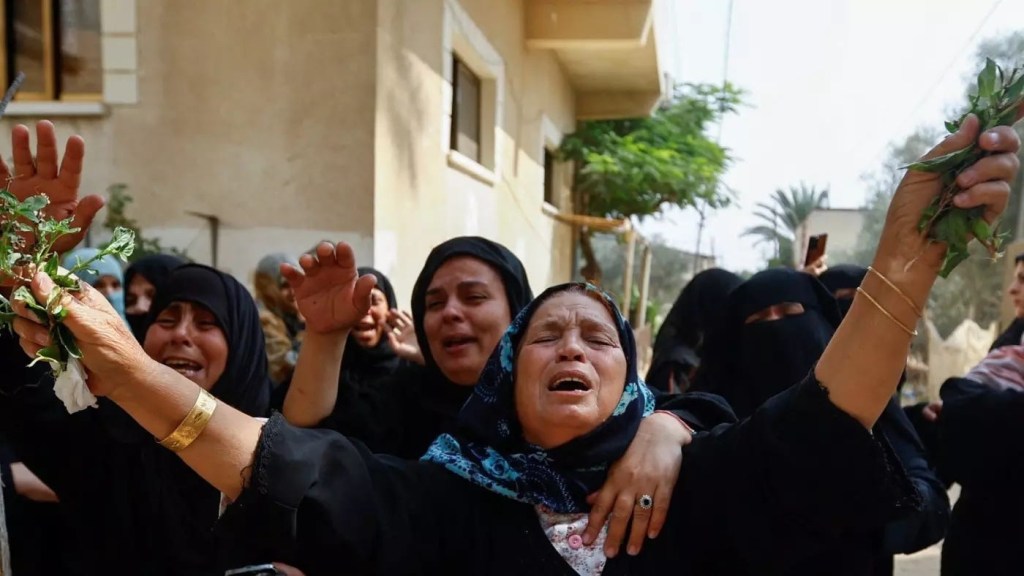
Not because it is not awful that Israeli civilians are dying and suffering in such large numbers. But because Palestinian civilians in Gaza have faced repeated rampages from Israel decade after decade, producing far more suffering, but have never elicited a fraction of the concern currently being expressed by western politicians or publics.


https://bit.ly/3RNRuFV

The cruel experiments of Israel’s arms industry

The cruel experiments of Israel’s arms industry | The Electronic Intifada

Round the back of Ramallah’s main hospital lies the house of Iyad Haddad, a 52-year-old human rights investigator. His home office is the shopfront of a decrepit building and at first glance it looks like a bric-a-brac shop. But the objects placed out on the tables are not household trinkets. The surfaces are, in fact, cluttered with spent ammunition, tear gas canisters, sponge bullets and shell casings.

https://bit.ly/3LOSaXQ

More than 200 Palestinians, nearly 30 Israelis killed so far this year: UN

More than 200 Palestinians, nearly 30 Israelis killed so far this year: UN

UN Middle East envoy Tor Wennesland says deaths from violence so far this year are the highest recorded since 2005.

More than 200 Palestinians and nearly 30 Israelis have been killed so far this year in the occupied West Bank and Israel – a level of violence surpassing last year’s entire death toll and the highest number of fatalities since 2005, the United Nations Middle East envoy has said.
Tor Wennesland, UN special coordinator for the Middle East peace process, told the UN Security Council on Monday that escalating violence is being fuelled by growing despair about the future among Palestinians and a lack of progress towards achieving an independent state.

https://www.aljazeera.com/news/2023/8/22/more-than-200-palestinians-nearly-30-israelis-killed-so-far-this-year-un

How to Shrink the Israeli-Palestinian Conflict

How to Shrink the Israeli-Palestinian Conflict 

By dramatically enhancing Palestinian autonomy, Israel can deliver a better future for itself, its neighbors, and the Palestinians
 The middle east is changing in front of our eyes. The process that began with an agreement between Israel and the United Arab Emirates in August is gaining momentum and changing the political map of the region. Israel has now built ties with the United Arab Emirates, Bahrain, Sudan, and Morocco. But the Israeli-Palestinian conflict remains intractable and unsolved, standing as an obstacle to further peace deals.
There is, however, more room than is commonly understood for progress on this front—and it is found in the fascinating disconnect between the political identity most Israelis embrace and the policies they support. In polls, most Israelis today identify as politically right-wing. But when asked what they think about the Israeli-Palestinian conflict, most Israelis do not offer right-wing positions. Instead, they articulate much more complicated moderate or centrist views. If politics is about choosing an identity, then Israel is a right-wing country. But if politics is about solving problems, then most Israelis are somewhere in the center. https://bit.ly/3r5bbsj

Raise the Roof for Marda Farm Teaching Center

Salam (Peace) from Palestine!

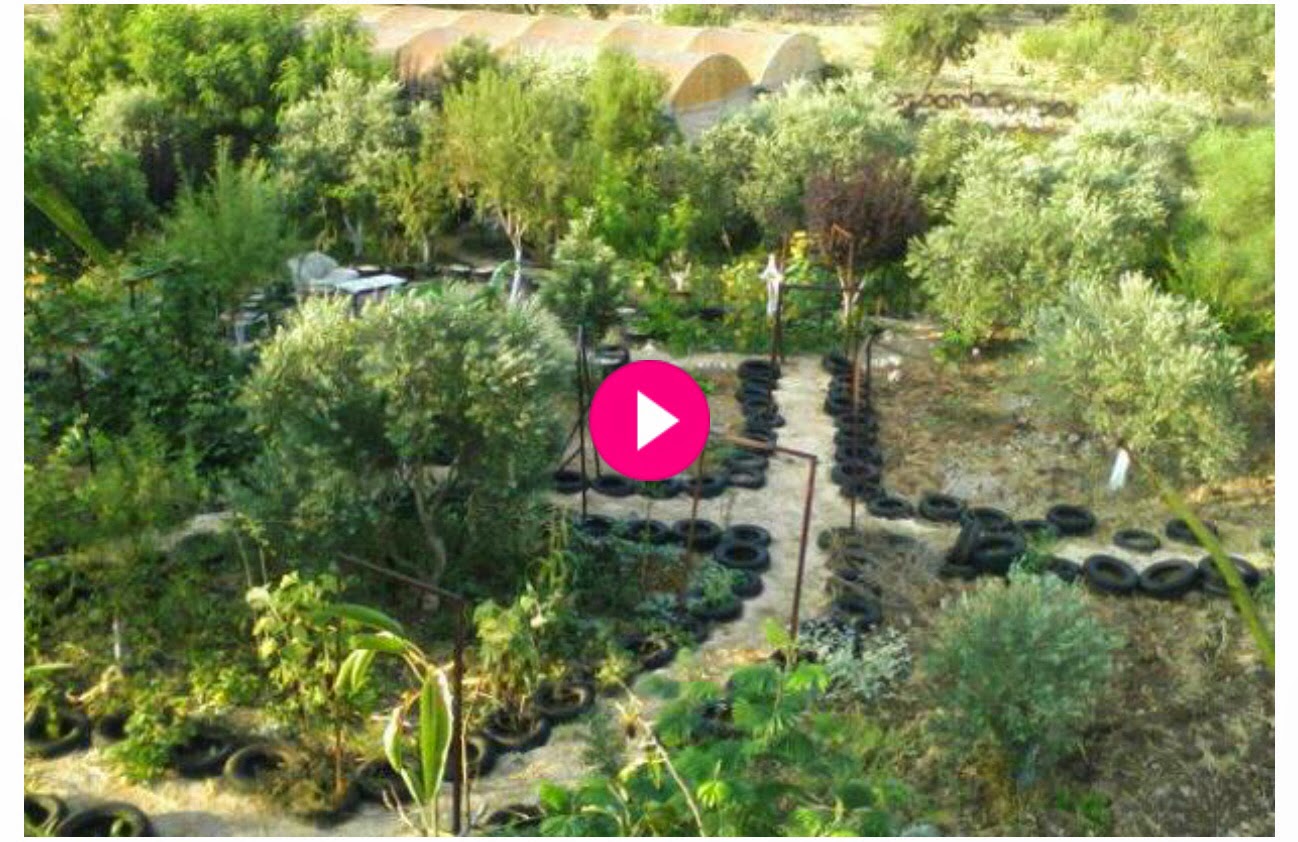
The Marda Permaculture Farm is a working farm and demonstration site for permaculture principles, techniques and strategies in Palestine. Based in the picturesque ancient village of Marda, the project promotes food sovereignty, health, self-reliance and empowerment. This is accomplished through modeling water harvesting, recycling, energy conservation and home-scale garden production with readily available and locally-appropriate materials.

Farm Founder and Director Murad AlKhufash has long dreamed of a Teaching Building using natural materials and techniques such as earth bag construction, cobb, adobe, and local building technologies. The building, which would maximize space at two stories would provide a much needed office, indoor space for workshops, and lodging for interns and volunteers.

We are ready to begin this process, with your help! $4000 will support Murad in launching the project by working with students at nearby Birzeit University to complete renderings for the building, begin the permitting process, and initiate a Natural Building Workshop April 2015 to jumpstart the project!

This Teaching Building will integrate passive and active solar power, rainwater catchment and graywater recycling, thus enabling the farm to go “off grid” and so reduce dependence on Israeli-controlled and high cost energy and water supplies.

Over the past eight years the farm has become a destination for international visitors as well local farmers and backyard gardeners. The farm has thrived despite continual challenges posed by the occupation ranging from destructive hogs unleashed by settlers that destroyed crops and fences, high costs of materials, food, and water.

Murad and his neighbors have endured ongoing curfews, harassment by the Israeli military, difficulty leaving and returning. Thanks to Murad's dedication and strong partners the Farm has survived, on a shoestring.

We are grateful for you contribution and our farm has bounties to offer to send a warm thank you for believing in our cause. Olive oil, organic soap and honey from Palestine as well as fantastic donations from our international allies Starhawk, Albert Bates, and Brad Lancaster are our small thank you for your generous support, with an open invitation to visit us in the Marda Permaculture Farm and Palestine anytime.

Please specify “Marda Teaching Building ” in comments sections when submitting the donation.

Please share widely with friends and colleagues who are passionate about the environment, farming, sustainable agriculture and Palestine. Just spreading the word about the work we do will be very much appreciated.

Our next Permaculture Design Course with instructors Klaudia Van Gool and Leslie Buerk will take place from March 25 to April 10, 2015. April Natural Building Course to be announced soon!

Please consider joining us!

Shukran (Thank you) from the Marda Permaculture Team! Click Here for the IndeGoGo Site


Gaza reminds us of Zionism’s original sin

The morning after Lailat al-Qadr, the death toll in Gaza was approaching its first thousand.

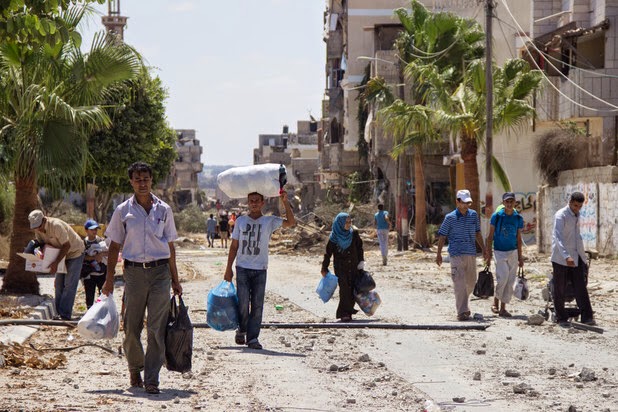
Palestinians recover belongings from the
Khuzaa neighborhood of Khan Younis

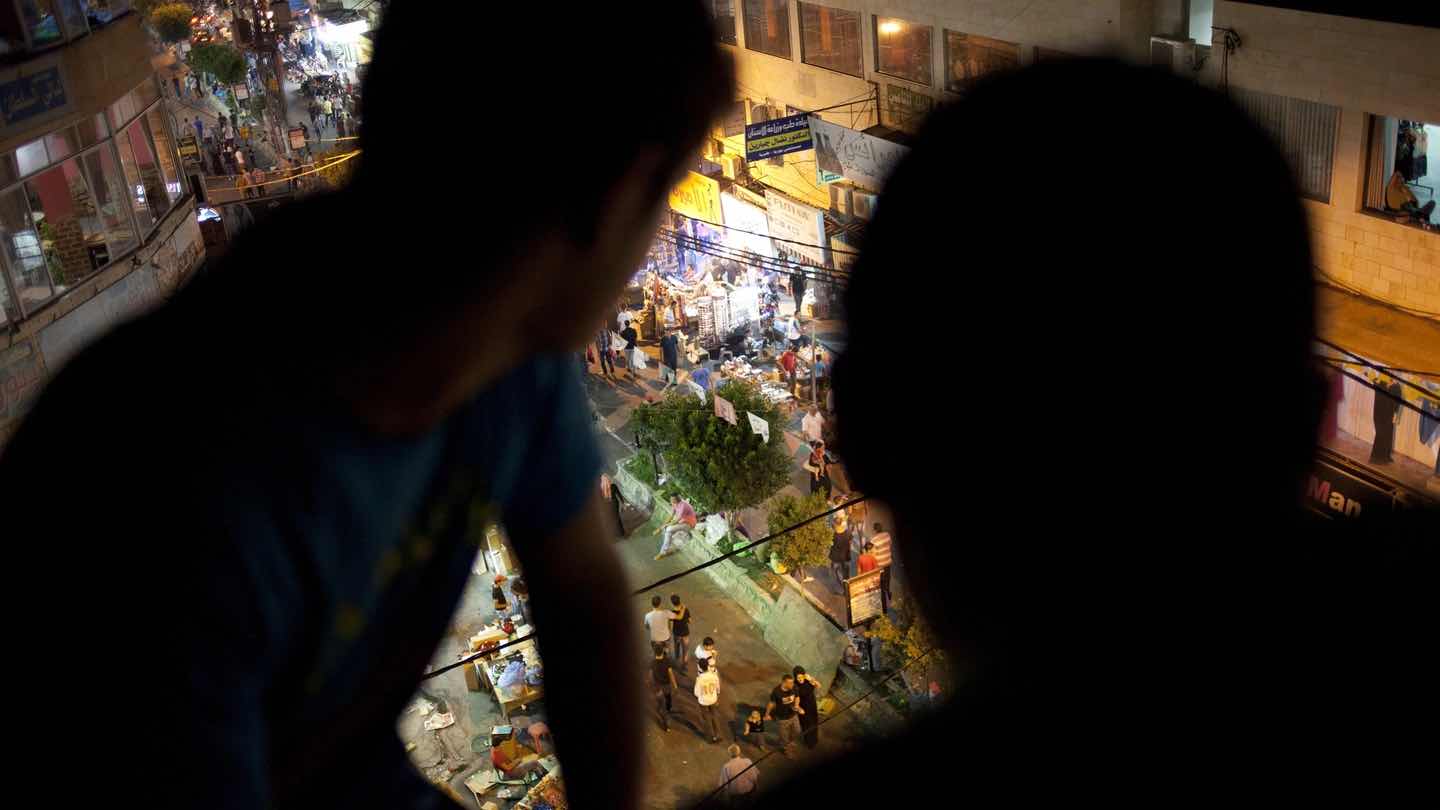
Al-Qadr — the night before the last Friday in the holy month of Ramadan — is believed to be the night when the Quran was revealed to the prophet Muhammad. I spent this special night with friends in the occupied West Bank city of Ramallah after participating in the “48K March” for Gaza.

The march began in Ramallah and went to Qalandiya checkpoint. What began as a peaceful event with families bringing their children and even babies in strollers, ended with young Palestinians with gunshot wounds being rushed in ambulances to the local hospital.

Qalandiya crossing was fortified and air-tight, and the Israeli soldiers stationed on top were shooting live ammunition at the crowd.

As the ambulances were speeding through the crowd, I couldn’t help but wonder why there is no hospital between Qalandiya and Ramallah, a good distance which includes the municipalities of Jerusalem, al-Bireh and Ramallah.

The following night I was scheduled to leave Palestine to return to the United States. But Israeli forces sealed all the roads from Ramallah to Jerusalem for the night, and they were likely to be sealed the following day as well.

At the crack of dawn, when things had quietened down, my friend Samer drove me to a checkpoint that he suspected would be open. It was open, albeit for Israelis only, and from there I made my way back to Jerusalem.

That evening, as I was preparing to leave for Ben Gurion airport near Tel Aviv, people around me were trying to calm me down. “Don’t aggravate them, cooperate and they will be nice,” they said. “Why go through all this unnecessary inconvenience?”

They were talking about the “Smiling Gestapo,” Israeli security officers at Tel Aviv airport that go by the squeaky clean name of the Airport Security Division.

Non-cooperation and resistance

Listening to this, I was reminded of Jewish communities under the Nazi regime who believed that if they cooperated and showed they were good citizens then all would be well. But the road from cooperation to the concentration camps and then the gas chambers was a direct one.

The policies of racist discrimination and humiliation at Ben Gurion airport, and the policies of ethnic cleansing and murder of Palestinians in Gaza, emanate from the same Zionist ideology.

As we have seen over the past seven decades, cooperation and laying low do not make things ok.

Cooperation with the Israeli authorities might lead to short-term relief but it also validates Israel’s “right” to terrorize and humiliate Palestinians with our consent, “we” being all people of conscience. Whether we are Palestinian or not, the call of the hour is non-cooperation and resistance against injustice.

Today, Israel and its supporters lay the blame for the violence in Gaza on Hamas. But Israel did not start its assaults on the Gaza Strip when Hamas was established in the late 1980s. Israel began attacking Gaza when the Strip was populated with the first generation refugees in the early 1950s.

Palestinians, particularly in Gaza, are not faced with an option to resist and be killed or live in peace. They are presented with the options of being killed standing up and fighting or being killed sleeping in their beds.

“Sea of hatred”

Gaza is being punished because Gaza is a constant reminder to Israel and the world of the original sin of the ethnic cleansing of Palestine and the creation of a so-called Jewish state. Even though Palestinian resistance has never presented a military threat to Israel, it has always been portrayed as an existential threat to the state.

Moshe Dayan, the famed Israeli general with the eyepatch, described this in a speech in April 1956. He spoke in Kibbutz Nahal Oz, an Israeli settlement on the boundary of the Gaza Strip where Israeli tanks park each time there is a ground invasion of Gaza.

“Beyond the furrow of this border, there surges a sea of hatred and revenge,” Dayansaid then. Ironically, when six months later Israel had occupied Gaza and my father was appointed its military governor, he said that he saw “no hatred or desire for vengeance but a people eager to live and work together for a better future.”

Still, today, Israeli commanders and politicians say pretty much the same: Israel is destined to live by the sword and must strike Gaza whenever possible. Never mind the fact that Palestinians have never posed a military challenge, much less a threat to Israel.

After all, Palestinians have never possessed as much as a tank, a warship or a fighter jet, not to say a regular army.

So why the fear? Why the constant, six-decade-long campaign against Gaza? Because Palestinians in Gaza, more so than anywhere else, pose a threat to Israel’s legitimacy.

Israel is an illegitimate creation brought about by a union between racism and colonialism. The refugees who make up the majority of the population in the Gaza Strip are a constant reminder of this.

They are a reminder of the crime of ethnic cleansing upon which Israel was established. The poverty, lack of resources and lack of freedom stand in stark contrast to the abundance, freedom and power that exist in Israel and that rightfully belongs to Palestinians.

Generous offer

Back at Ben Gurion airport that night, I was told that if I cooperate and plead with the shift supervisor it would make the security screening go faster. When I declined this generous offer, I was told they “did not like my attitude.”

They proceeded to paste a sticker with the same bar code on my luggage and give me the same treatment Palestinians receive.

As I write these words, the number of Palestinians murdered by Israel in Gaza has exceeded two thousand. Ending the insufferable, brutal and racist regime that was created by the Zionists in Palestine is the call of our time.

Criticizing Palestinian resistance is unconscionable. Israel must be subjected toboycott, divestment and sanctions. Israeli diplomats must be sent home in shame. Israeli leaders, and Israeli commanders traveling abroad, must fear prosecution.

And these measures are to be combined with disobedience, non-cooperation and uncompromising resistance. This and only this will show mothers, fathers and children in Gaza that the world cares and that “never again” is more than an empty promise. More


Hague court under western pressure not to open Gaza war crimes inquiry

The international criminal court has persistently avoided opening an investigation into alleged war crimesin Gaza as a result of US and other western pressure, former court officials and lawyers claim.

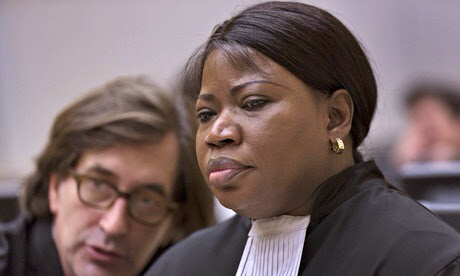
Fatou Bensouda, the international criminal court prosecutor

In recent days, a potential ICC investigation into the actions of both the Israel Defence Forces and Hamas in Gaza has become a fraught political battlefield and a key negotiating issue at ceasefire talks in Cairo. But the question of whether the ICC could or should mount an investigation has also divided the Hague-based court itself.

An ICC investigation could have a far-reaching impact. It would not just examine alleged war crimes by the Israeli military, Hamas and other Islamist militants in the course of recent fighting in Gaza that left about 2,000 people dead, including women and children. It could also address the issue of Israeli settlements in the Palestinian territories, for which the Israeli leadership would be responsible.

The ICC’s founding charter, the 1998 Rome statute (pdf), describes as a war crime “the transfer, directly or indirectly, by the occupying power of parts of its own civilian population into the territory it occupies”.

Also at stake is the future of the ICC itself, an experiment in international justice that occupies a fragile position with no superpower backing. Russia, China and India have refused to sign up to it. The US and Israel signed the accord in 2000 but later withdrew.

Some international lawyers argue that by trying to duck an investigation, the ICC is not living up to the ideals expressed in the Rome statute that “the most serious crimes of concern to the international community as a whole must not go unpunished”.

John Dugard, a professor of international law at the University of Leiden, in the Netherlands, and a longstanding critic of Israel’s human rights record, said: “I think the prosecutor could easily exercise jurisdiction. Law is a choice. There are competing legal arguments, but she should look at the preamble to the ICC statute which says the purpose of the court is to prevent impunity.”

In an exchange of letters in the last few days, lawyers for the Palestinians have insisted that the ICC prosecutor, Fatou Bensouda, has all the legal authority she needs to launch an investigation, based on a Palestinian request in 2009. However, Bensouda is insisting on a new Palestinian declaration, which would require achieving elusive consensus among political factions such as Hamas, who would face scrutiny themselves alongside the Israeli government. There is strong US and Israeli pressure on the Palestinian leader, Mahmoud Abbas, not to pursue an ICC investigation.

Western pressure on the ICC to stay away from the issue has caused deep rifts within the prosecutor’s office. Some former officials say the Palestinians were misled in 2009 into thinking their request for a war crimes investigation – in the wake of an earlier Israeli offensive on Gaza, named Cast Lead – would remain open pending confirmation of statehood. That confirmation came in November 2012 when the UN general assembly (UNGA) voted to award Palestine the status of non-member observer state, but no investigation was launched.

Bensouda initially appeared open to reviewing the standing Palestinian request, but the following year issued a controversial statement (pdf) saying the UNGA vote made no difference to the “legal invalidity” of the 2009 request.

Luis Moreno Ocampo, who was prosecutor at the time of the Palestinian 2009 declaration, backed Bensouda, saying in an email to the Guardian: “If Palestine wants to accept jurisdiction, it has to submit a new declaration.”

But another former official from the ICC prosecutor’s office who dealt with the Palestinian declaration strongly disagreed. “They are trying to hiding behind legal jargon to disguise what is a political decision, to rule out competence and not get involved,” the official said.

Dugard said Bensouda was under heavy pressure from the US and its European allies. “For her it’s a hard choice and she’s not prepared to make it,” he argued. “But this affects the credibility of the ICC. Africans complain that she doesn’t hesitate to open an investigation on their continent.”

Moreno Ocampo took three years to make a decision on the status of the 2009 Palestinian request for an investigation, during which time he was lobbied by the US and Israel to keep away. According to a book on the ICC published this year, American officials warned the prosecutor that the future of the court was in the balance.

According to the book, Rough Justice: the International Criminal Court in a World of Power Politics, by David Bosco, the Americans suggested that a Palestine investigation “might be too much political weight for the institution to bear. They made clear that proceeding with the case would be a major blow to the institution.”

Although the US does not provide funding for the ICC, “Washington’s enormous diplomatic, economic and military power can be a huge boon for the court when it periodically deployed in support of the court’s work,” writes Bosco, an assistant professor of international politics at American University.

In his book, Bosco reports that Israeli officials held several unpublicised meetings with Moreno Ocampo in The Hague, including a dinner at the Israeli ambassador’s residence, to lobby against an investigation.

A former ICC official who was involved in the Palestinian dossier said: “It was clear from the beginning that Moreno Ocampo did not want to get involved. He said that the Palestinians were not really willing to launch the investigation, but it was clear they were serious. They sent a delegation with two ministers and supporting lawyers in August 2010 who stayed for two days to discuss their request. But Moreno Ocampo was aware that any involvement would spoil his efforts to get closer to the US.”

Moreno Ocampo denied that he had been influenced by US pressure. “I was very firm on treating this issue impartially, but at the same time respecting the legal limits,” he said in an email on Sunday. “I heard all the arguments. I received different Oxford professors who were explaining the different and many times opposing arguments, and I concluded that the process should … go first to the UN. They should decide what entity should be considered a state.”

He added: “Palestine was using the threat to accept jurisdiction to negotiate with Israel. Someone said that if you have nine enemies surrounding you and one bullet, you don’t shoot, you try to use your bullet to create leverage.”

A spokeswoman for his successor, Fatou Bensouda, rejected allegations of bias in the prosecutor’s choice of investigations. “The ICC is guided by the Rome statute and nothing else,” she said. “Strict rules about jurisdiction, about where and when ICC can intervene should be not be deliberately misrepresented … Geographical and political consideration will thus never form part of any decision making by the office.”

The French lawyer representing the Palestinians, Gilles Devers, argued that it was for the court’s preliminary chamber, not the ICC’s prosecutor, to decide on the court’s jurisdiction in the Palestinian territories. Devers said negotiations were continuing among the Palestinian parties on whether to file a new request for an investigation, even though he believed it to be unnecessary in legal terms. Ultimately, he said, the outcome would be determinedly politically.

“There is enormous pressure not to proceed with an investigation. This pressure has been exerted on Fatah and Hamas, but also on the office of the prosecutor,” Devers said. “In both cases, it takes the form of threats to the financial subsidies, to Palestine and to the international criminal court.”

Among the biggest contributors to the ICC budget are the UK and France, which have both sought to persuade the Palestinians to forego a war crimes investigation. More