Image

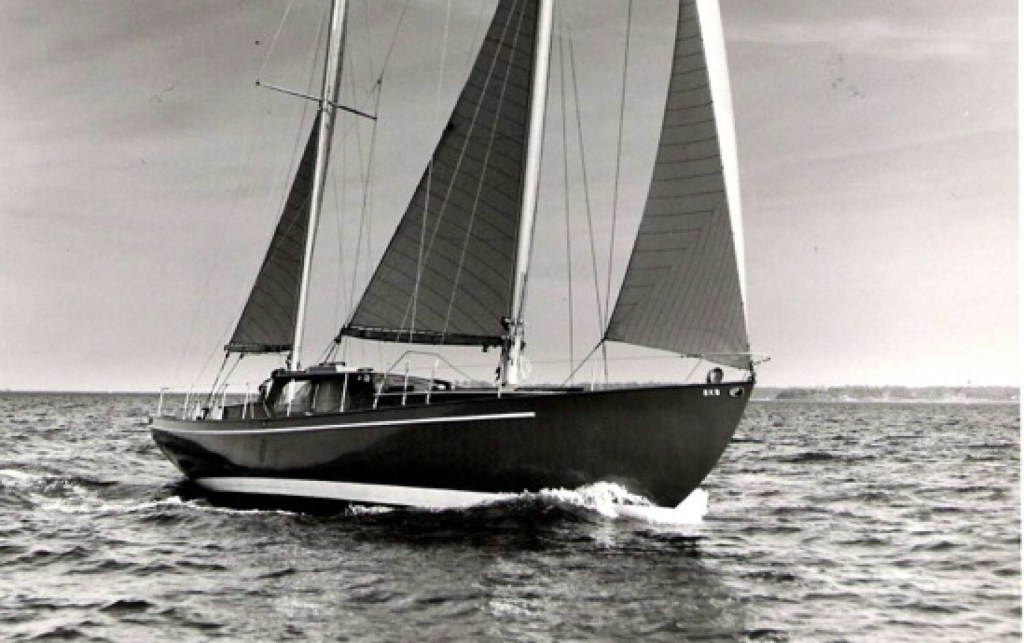
UFO sighting at Great Exuma, Bahamas in December 1965 onboard the yacht Dutch Treat

The sun had just dropped below the horizon and we were anchored in two fathoms of water over a sandy bottom. The plan was to go ashore in the dingy and have dinner at the Peace & Plenty Club, a small hotel overlooking the beach.
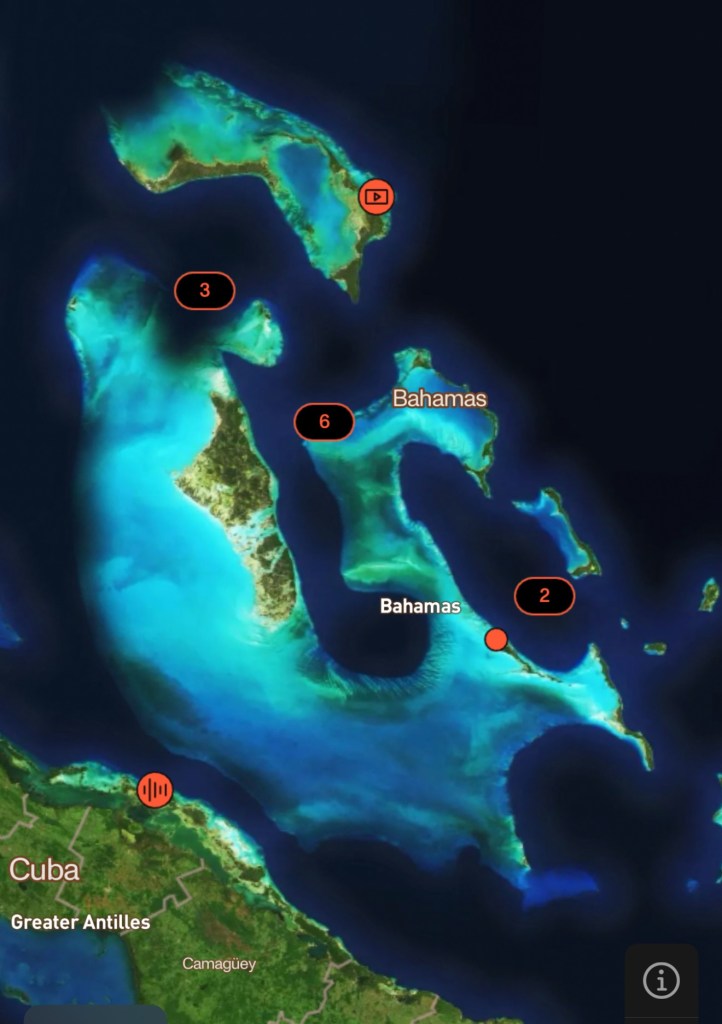
The red dot below and to the left of the numeral ‘2’ marks the location of Great Exuma.
The Red dot marks beach off which we were anchored at Great Exuma.
A photo similar to the object that I spotted in orbit

The crew were relaxing in the cockpit, having an aperitif prior to heading ashore for dinner. I was sitting facing aft (rear of the vessel) when I spotted what appeared to be a satellite in orbit with the sun reflecting brilliantly off the object which was on a western trajectory. I said aloud ‘look, here comes a satellite. However, Tom, my stepfather, a civil engineer, replied saying “it is not a satellite as it is going in the wrong direction”. Tom went on to explain that satellites launched from Earth were launched to the East to take advantage of the planet’s rotational speed.

Within seconds of spotting the craft overhead it (the craft) came to a complete halt and split into two pieces. The newly detached piece, with instantaneous acceleration sped away to the south disappearing instantly. The original piece of the craft, again with instantaneous acceleration sped away to the west.

The Dutch Treat was a 45 foot (LOA) steel hulled yacht built in the Netherlands. She was Captained by Robert Fletcher, whose French wife Monique ensured that our cuisine was up to par. Dr. Herewood Taylor MD, ensured that we stayed healthy, and my stepfather Thomas Robson held the rank of Bosun. I needless to say filled the role of yachtsman-in-training.

Unfortunately no one had a camera to hand so no photographs were captured. I needless to say did not even own a camera until 1969.

Bahamas takes on renewable energy challenge – Missed Opportunity for Cayman?

The Bahamas has become the latest recruit to Richard Branson's green energy drive for Caribbean islands.

Branson's Carbon War Room NGO is aiming to help islands in the region transition from expensive fossil fuel imports to using their own renewable energy resources as part of its Ten Island Challenge programme.

This week the Bahamas joined the push, committing to developing 20MW of solar PV generation in the outer Family Islands, bringing energy efficiency and solar solutions to a local high school, and replacing streetlights across the nation with energy efficient LED lights.

Carbon War Room plans to support these goals by providing the country's government with a range of technical, project management, communications, and business advisory services.

The Bahamas joins the islands of Aruba, Grenada, San Andres and Providencia in Colombia, Saint Lucia, and Turks & Caicos in the challenge, which aims to generate how small states can decarbonise in a cost-effective manner.

“The Bahamas' entry into the Ten Island Challenge signals another step forward for the Caribbean region in the effort towards a clean energy future,” Branson said in a statement. “The progress made in The Bahamas will help inspire other islands to work towards accomplishing their renewable energy objectives.”

While the focus to date has been on Caribbean islands, earlier this year Peter Boyd, Carbon War Room's chief operating officer, told BusinessGreen the programme could expand into the Pacific and to isolated communities, military bases, or mines. “There are island energy economies even if the 'island' isn't surrounded by water,” he said at the time.