Ajamu Baraka on Campaign to Shut Down US Foreign Military Bases

Eva Bartlett's avatarIn Gaza

On January 22, 2018, I had the opportunity to speak with the well-respected, highly-informed, longtime rights activist and writer, Ajamu Baraka.

A human rights defender whose experience spans four decades of domestic and international education and activism, Ajamu Baraka is a veteran grassroots organizer whose roots are in the Black Liberation Movement and anti-apartheid and Central American solidarity struggles. Please see his extended bio on his website.

He was the 2016 Green Party vice presidential candidate, and is a lead organizer of the Black Alliance for Peace. Mr. Baraka is an editor and contributing columnist for the Black Agenda Report, and also publishes at Black Commentator, Commondreams, Pambazuka, and Dissident Voice.

Related Links

http://noforeignbases.org
https://blackagendareport.com/peace-requires-social-transformation
https://twitter.com/i/web/status/954098699189346305
https://blackagendareport.com/peace-requires-social-transformation
https://twitter.com/ajamubaraka/status/955471891019550720
https://twitter.com/ajamubaraka/status/953314222775169025
https://ingaza.wordpress.com/2018/01/20/a-personal-reply-to-the-fact-challenged-smears-of-terrorist-whitewashing-channel-4-snopes-and-la-presse/

View original post

A Hawaiian Missile Lullaby

The Great Change

Hawaii had already begun preparing for a nuclear attack before the President of the United States had taunted North Korea with that “my button is bigger than yours” tweet.

How anyone prepares for an incoming ICBM frankly baffles us.

In a bygone era the government would make civil defense films and slide shows and require them to be shown them in schools. They installed large sirens and urged people to buy bomb shelters.

People were advised to stay in their shelters until the extent of the impact is known. Some people might in theory be told to stay inside for up to two weeks to avoid the radioactive fallout. What they would do after 2 weeks was left to science fiction writers. Read More

A lioness of Palestine !

#freeahed

Nahida Exiled Palestinian's avatarPoetry for Palestine

Fearsome and Awesome

Look at you… My beloved

Look at you

This little fist of yours

Slams before the world

The final word

This little fist of yours

Says it all

RIGHT is GREATER than MIGHT

The sparkle in your eyes

BLAZING FIRE

Burns deep

Renders them to ashes;

Soulless shadows

Void of life

Void of love

Void of heart

Remnants of human beings

They wither away

Before your magnificence

They bow down

Lost… Defeated… Humiliated…

Drenched in shame

Humanity you embody

Dignity you teach

Wonders you inspire

Tall you stand, my sweetheart

Tall you stand

What mother of glory gave birth to you

O great daughter of Palestine

Your Tears

Your Pain

Your sacrifice

A Wake Up call

To a sleepy world

A zombie world

A beaten world

Who forgot what it means to be alive

Lift your fist

Shake your wrist

Move the world

Beloved daughter…

View original post 21 more words

The Doomsday Machine: The Madness of America’s Nuclear Weapons

wjastore's avatarBracing Views

41zhRYUMyYLW.J. Astore

I just finished Daniel Ellsberg’s new book, The Doomsday Machine: Confessions of a Nuclear War Planner.  Talk about hair-raising!  Ellsberg, of course, is famous for leaking the Pentagon papers, which helped to end the Vietnam war and the presidency of Richard Nixon as well.  But before Ellsberg worked as a senior adviser on the Vietnam war, he helped to formulate U.S. nuclear policy in the late 1950s and early 1960s.  His book is a shattering portrayal of the genocidal nature of U.S. nuclear planning during the Cold War — and that threat of worldwide genocide (or omnicide, a word Ellsberg uses to describe the death of nearly everything from a nuclear exchange that would generate disastrous cooling due to nuclear winter) persists to this day.

Rather than writing a traditional book review, I want to list some memorable facts and lessons I took from the book…

View original post 1,091 more words

Nine Rows of Ribbons!

Trading intellect for ribbons. Land of the Fee and Home of the Slave

wjastore's avatarBracing Views

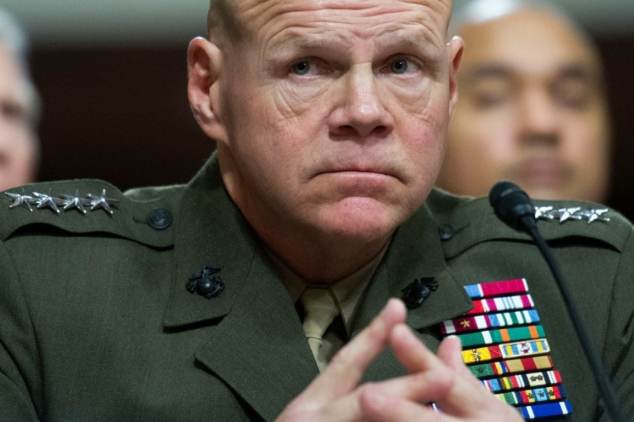
General Robert Neller, the Commandant of the Marine Corps, is in the news since he told Marines to get ready for a big fight.  This doesn’t really alarm me.  A military exists to be ready to fight, and the Marines place a premium on combat readiness.  No — what bothers me is the nine rows of ribbons General Neller is sporting on his uniform.

marine He may need a bigger chest for all those ribbons

And compared to the other services (Army, Navy, and Air Force), the Marines are usually the most reluctant to hand out ribbons freely.

I wrote about this back in 2007: why medals and metrics in the U.S. military mislead. A big offender back then was General David Petraeus, whose uniform was festooned with ribbons and badges of all kinds, most of them of the “been there” rather than “done that” variety.

Petraeus with Broadwell Petraeus: 10 rows…

View original post 155 more words

Reversing desertification with the Sahara Forest Project

Jeremy Williams's avatarThe Earthbound Report

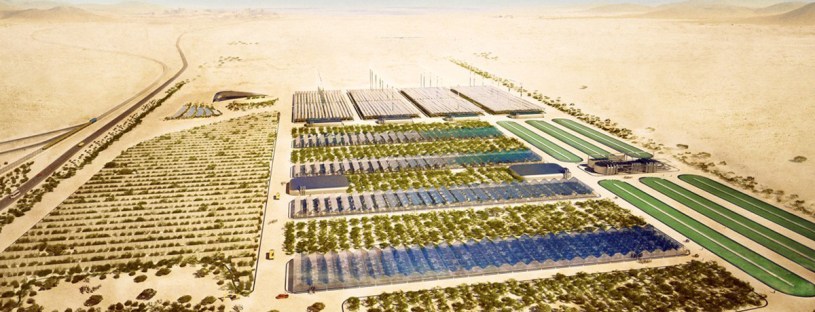
The Sahara Forest Project has an intriguing premise. Start with things that we have in abundance – deserts, saltwater and CO2, and work with them to produce what we lack – food, fresh water and energy. It’s an idea I’ve read about before and wondered if it would ever come to anything, but this week a press release arrived in my inbox. The first Sahara Forest Project station has just launched in Aqaba, Jordan, and is now producing vegetables in one of the world’s most inhospitable landscapes.

The plan is to tap the desert heat to evaporate seawater, and use the process to maintain a consistent growing temperature inside a seawater-cooled greenhouse. The evaporated seawater then condenses as fresh water to irrigate the crops. There’s also enough water left over to grow desert plants and hedges outside, beginning the processes of restoring soil and reversing desertification.

It would be impossibly…

View original post 200 more words

Gigantic Iceberg Disintegrates as Concern Grows Over Glacier Stability, Sea Level Rise

robertscribbler's avatarrobertscribbler

The stability of a key Antarctic glacier appears to have taken a turn for the worse as a large iceberg that broke off during September has swiftly shattered. Meanwhile, scientists are concerned that the rate of sea level rise could further accelerate in a world forced to rapidly warm by human fossil fuel burning.

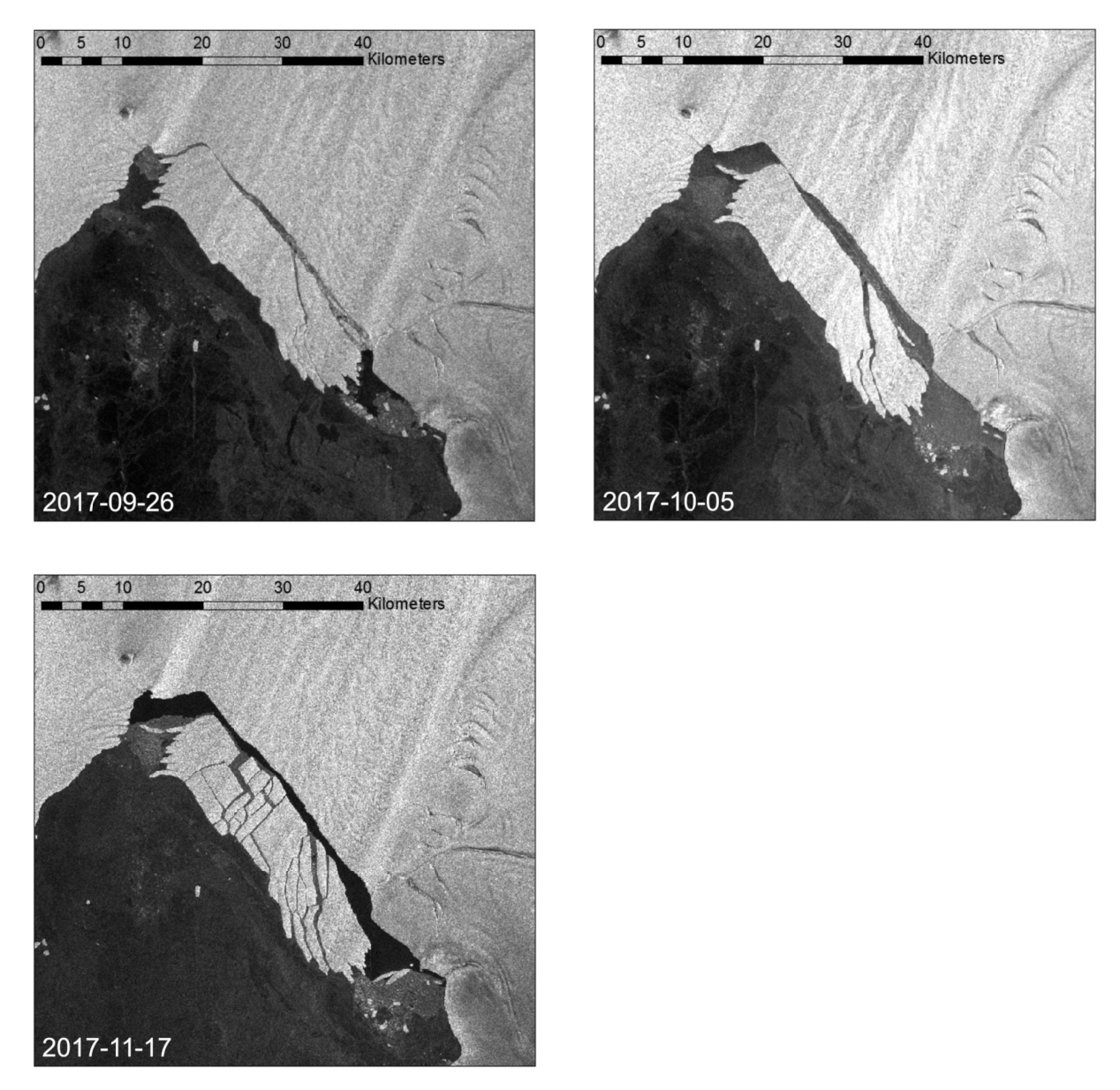
(Iceberg drifting away from the Pine Island Glacier rapidly shatters. Image source: European Space Agency.)

This week, a large iceberg that recently calved from West Antarctica’s Pine Island Glacier rapidly and unexpectedly disintegrated as it drifted away from the frozen continent. The iceberg, which covers 103 square miles, was predicted to drift out into the Southern Ocean before breaking up. But just a little more than two months after calving in September, the massive chunk of ice is already falling apart.

The break-off and disintegration of this large berg has caused Pine Island Glacier’s ice…

View original post 518 more words

Scientists In Houston Tell A Story Of Concrete, Rain And Destruction


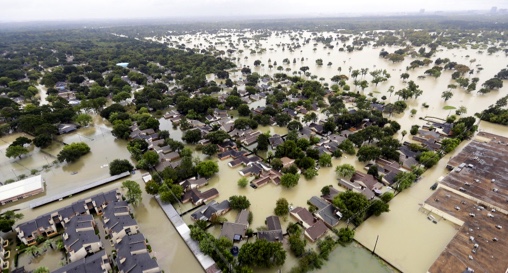
Hurricane Harvey was the worst flood in Houston’s history. Scientists and citizens are still piecing together why it was so bad, but it’s becoming clear that a lot of the damage comes down to how people have built America’s fourth-largest city.

You can see the problem from your car. Houston is a sprawling web of strip malls and 10-lane freeways.

Hydrologist Jeff East stands under one of those freeways, beneath an overpass and above the east fork of the San Jacinto River. The river is more like a trickling stream, 20 feet below. But East points to a line of seeds and debris in the grass by the highway. “Actually there’s a high water mark over here,” he says.

Debris left at the high-water mark is like a bathtub ring around Harris County. Along with gauges in the San Jacinto River, it shows flood levels never seen before. “This is the highest that it’s been since we’ve been gauging the site since the 1940s,” East says. https://goo.gl/RSVi1u

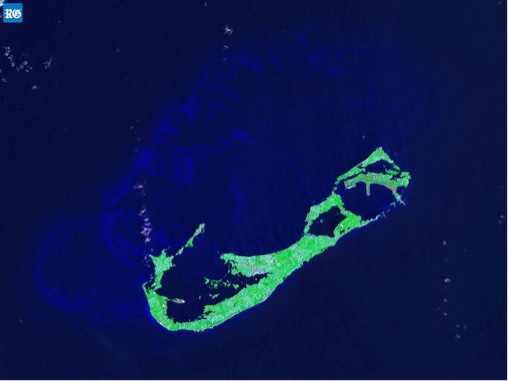
Bermuda needs comprehensive contingency plan

Does Cayman need a comprehensive contingency plan?

On November 5, Bermuda residents became stunningly aware of the radical vulnerability of our island’s economic success.
For more than 30 years, international business has poured billions into the local money supply, infrastructure (buildings), government tax coffers, businesses, households, events, education, and charities. As a result, Bermuda has had an enormously enviable standard of living — for most of us, but not all. We’ve grown used to having what we want when we want it.
We’ve touted our monoline-focused business model smugly, some would say. We relied complacently on our sterling reputation as a premier international financial centre.
Then it happened.
While not a single “black swan event” — the outlier that everyone hopes never happens, such that no one plans for such an outcome, as described in Nassim Nicholas Taleb’s black swan theory — the cumulative effect of a series of events facing Bermuda have the potential for major consequences.
Each of the five events below can singularly deliver a significant economic body blow to our reputation, but taken together, no one wants to contemplate the outcome.

(http://mobile.royalgazette.com/martha-myron/article/20171118/island-needs-comprehensive-contingency-plan&template=mobileart

Regional Scientists To Present 1.5 Report at Caribbean Climate Change Conference

PRESS RELEASE – Port-of-Spain: October 9, 2017: When scientists and researchers meet in Trinidad at the International Climate Change Conference for the Caribbean this week, it will be in the aftermath of the devastation wrought in the region by successive monster storms in the current 2017 Hurricane Season.

The conference, which is being hosted by the Caribbean Community Climate Change Centre (CCCCC) in association with the European Union (EU) funded Global Climate Change Alliance Plus Initiative (GCCA+) runs from October 9 to 12. It brings together regional scientists to update regional stakeholders on the ongoing regional research in climate change, inform on actions being undertaken to build climate resilience across the region by regional and international organisations, and discuss issues related to climate finance and the science, policy and finance nexus.

Scientists will present the key findings of the 1.5 to Stay Alive research project for the Caribbean region, which was funded by the Caribbean Development Bank. This should offer more insight into the consequences of global warming exceeding a 1.5 degree Centigrade threshold and provide our regional climate change negotiators with a more robust science-based platform for further insisting at the forthcoming Conference of Parties (COP) at the United Nations Framework Convention of Climate Change (UNFCCC) that global mitigation efforts need to be scaled up so that global warming does not exceed this threshold.

The meeting is being held under the theme “Adaptation in Action” which CCCCC’s Deputy Executive Director and Science Advisor Dr. Ulric Trotz said because this best describes the focus of regional institutions and countries in the face of threats posed by Climate Change.

“The 2017 Hurricane Season shows us that we must be proactive in building resilience in the small nation states of the region. And while adaptation and mitigation are critical, climate financing is a much-needed lifeline if the region is to successfully pursue a low carbon climate resilient development pathway. We cannot survive unless we are able to build to withstand these super storms,” he said.

Climate negotiators and Inter-governmental Panel on Climate Change (IPCC) Focal Points from across the region are also in attendance.

Other sponsors include the Caribbean Development Bank (CDB), United Nations Development Programme Japan-Caribbean Climate Change Partnership (UNDP J-CCCP) and Food and Agriculture Organisation of the United Nations (FAO).

–END–