The Return of the Taliban: The End of the US Empire?

Before 9/11, Nafeez Ahmed warned of an impending invasion of Afghanistan to control a strategic pipeline. 20 years on, the return of the Taliban is the predictable legacy of America’s failed strategy


 “We did not push the Russians into invading, but we knowingly increased the probability that they would,” said Zbigniew Brzezenski, former national security advisor to President Jimmy Carter. “That secret operation was an excellent idea. The effect was to draw the Russians into the Afghan trap.” 
The US and UK played the lead roles in channelling funds and arms to the newly formed ‘mujahideen’, which brought in up to a hundred thousand recruits from across the Muslim world. Pakistan and Saudi Arabia were the most prominent among the network of Muslim states funnelling financial, military and logistical support into Afghanistan, coordinated by the CIA, Pentagon, MI6 and Ministry of Defence. Read More

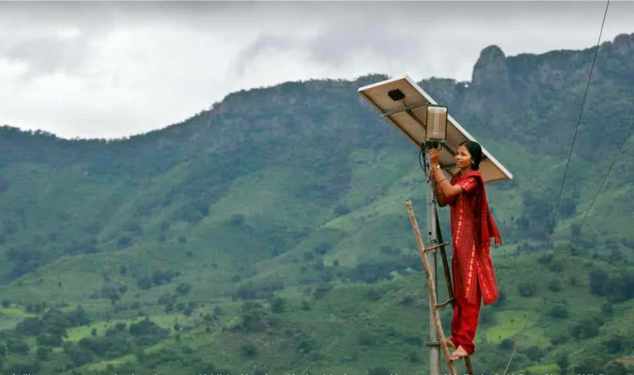
Why renewable energy ‘mini-grids’ in remote communities fail and how to avoid it

Powering our appliances and charging our smart devices night and day is something many take for granted. Yet 789 million people living in remote communities and isolated areas globally do not have access to electricity. If we include the people who are not connected to their national grid, the number rises to 1.4 billion.

Why renewable energy ‘mini-grids’ in remote communities fail and how to avoid it

 Powering our appliances and charging our smart devices night and day is something many take for granted. Yet 789 million people living in remote communities and isolated areas globally do not have access to electricity. If we include the people who are not connected to their national grid, the number rises to 1.4 billion.

The Latest IPCC Report Is a Catastrophe – The Atlantic

The Latest IPCC Report Is a Catastrophe – The Atlantic

 A new United Nations–led report from hundreds of climate scientists around the world makes it clear: The human-driven climate crisis is now well under way. 
Earth is likely hotter now than it has been at any moment since the beginning of the last Ice Age, 125,000 years ago, and the world has warmed 1.1 degrees Celsius, or nearly 2 degrees Fahrenheit, since the Industrial Revolution began—an “unprecedented” and “rapid” change with no parallel in the Common Era. 
What’s more, the recent spate of horrific heat waves, fire-fueling droughts, and flood-inducing storms that have imperiled the inhabited world are not only typical of global warming, but directly caused by it.

IPCC to Say Drastic Methane Cuts Necessary to Avert Climate Hell | Common Dreams News

 Slashing carbon dioxide emissions will not be sufficient to avert climate disaster unless the international community also acts boldly to stop releasing methane, a powerful greenhouse gas that is playing an increasingly significant role in intensifying planetary heating and extreme weather.

“Cutting methane gives us time.”
—Durwood Zaelke, Institute for Governance and Sustainable Development

The Intergovernmental Panel on Climate Change will issue that warning on Monday in the first of three reports that together will constitute the United Nations’ sixth climate assessment since 1990, The Guardian reported Friday. According to the British newspaper, part one of the IPCC’s forthcoming report, which covers physical science, “will show in detail how close the world is to irreversible change.”

Leadership Qualities That made Lee Kuan Lee A Great Leader

Lee Kuan Lee 
 Lee Kuan Yew may have passed but his legacy is here to stay and there are a few things about leadership that we can learn from this visionary leader.
Since Singapore separated from Malaysia in 1965 — an event Mr. Lee called his “moment of anguish” — he had seen himself in a never-ending struggle to overcome the nation’s lack of natural resources, a potentially hostile international environment and a volatile ethnic mix of Chinese, Malays and Indians.
Lee led Singapore from a colonial backwater under British control to one of the world’s most thriving financial centers, and he did so with a tight grip on power.
“To begin with, we don’t have the ingredients of a nation, the elementary factors: a homogeneous population, common language, common culture and common destiny. So, history is a long time. I’ve done my bit.”