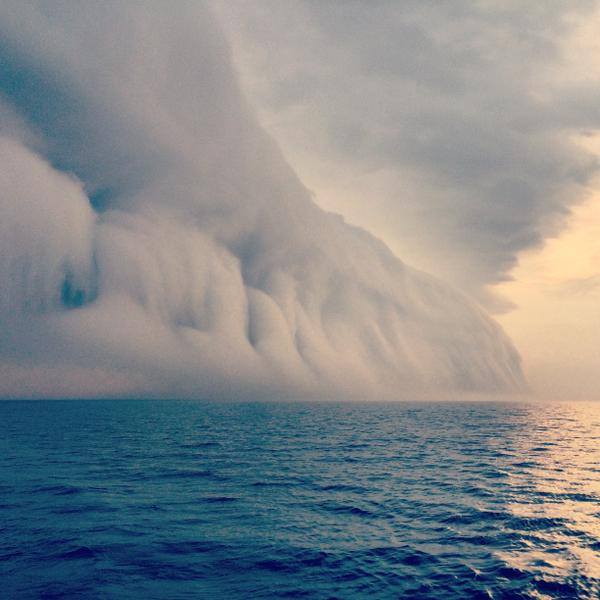
Saint Lucia attends marine workshop

caribbeanclimate's avatarcaribbeanclimate

Saint Lucia attends marine workshop

Press Release – Leading marine experts from the Caribbean and the UK are joining up this week at a three-day workshop aiming to support the sustainable growth of marine economies in the region.

In the Caribbean region, Antigua and Barbuda, Belize, Dominica, Grenada, Guyana, Jamaica, Saint Lucia and Saint Vincent and the Grenadines are set to benefit from the Commonwealth Marine Economies (CME) programme workshop.

The marine workshop, hosted by the British High Commission in Kingston Jamaica, is being attended by senior-level representatives from governments, regional agencies, external science agencies, academia and key donors.

The initiative is part of the UK Government funded CME programme, and follows on from similar consultation events held in the Pacific and Indian Ocean regions.

Discussions will focus on what and how shared expertise, collaboration and co-ordination with existing regional projects can best help achieve sustainable blue growth.

Key themes to be addressed will include…

View original post 392 more words
CRFM and fisheries powerhouse, Norway, launch fact-finding mission

caribbeanclimate's avatarcaribbeanclimate

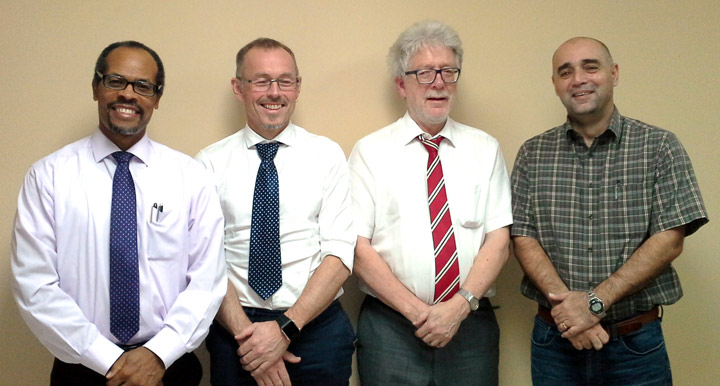
CRFM_-Norway-and-Belize-reps-meet.jpg From  left to right: Milton Haughton, CRFM Executive Director; Dr. Åge Høines, Senior Scientist, Institute of Marine Research, Norway; Dr. Johán Williams, Special Director, Norwegian Ministry of Fisheries and Coastal Affairs; and Hon. Dr. Omar Figueroa, Minister of State in the Ministry of Agriculture, Fisheries, Forestry, the Environment and Sustainable Development and Climate Change, Belize

The Caribbean Regional Fisheries Mechanism (CRFM) and the Government of Norway have launched a two-week mission to explore the development of a regional technical assistance project to be funded by Norway. The project would support the region’s fisheries and aquaculture sector by strengthening evidence-based management.

Dr. Åge Høines, Senior Scientist, Institute of Marine Research, Norway; and Dr. Johán Williams, Specialist Director, Norwegian Ministry of Fisheries and Coastal Affairs, began meeting on Monday, January 16, with CRFM Executive Director Milton Haughton at the CRFM Secretariat in Belize City, after which the team embarked in a two-week…

View original post 506 more words

Three Pillars

Three Pillars


Naysayers about the potential for a radical shift in the foundational structure of civilization argue by looking backward, not forward. “It has never happened before and so it cannot happen now.” But there are three fundamental differences.

First, the change of our climate away from the Holocene and into the Anthropocene is without any historical analog, even looking back hundreds of millions of years. Nafeez Mosadeq Ahmed terms this “Earth System Disruption.”

Industrial civilization is undergoing a second geophysically driven change that will shake it to its roots. It has never happened before and it cannot happen again. You can call this “peak oil,” but as Richard Heinberg pointed out, its really “peak everything.”

The thin driving wedge that will crack open our assumptions about what is normal will be financial collapse, but that is just a reflection of what the peak oil community has been saying since M. King Hubbert presented a paper to the 1956 meeting of the American Petroleum Institute:

[W]e are living on a finite world and infinite growth of material consumption is simply not possible.

Nor, as Paul and Anne Ehrlich warned nearly half a century ago, is exponential population growth. Ahmed terms this “Human System Destabilization.”

The unprecedented part — something few advocates for a renewables revolution yet grasp — is that each time humans moved from one dominant energy supply to the next it was towards greater caloric density at lower cost. We went from firewood to charcoal, to whale oil, to coal and coal gas, to petroleum and natural gas, and each time we got more bang for our buck, production and automation revolutionized, and our population and its footprint leaped another notch. After conventional oil peaked in the first years of the new millennium (just as Hubbert forecast in 1974), unconventional sources like fracked gas and oil shales filled the gap, but with a significant hitch — they cost more.
http://bit.ly/2jp900d

Vacancy – Research Associate

caribbeanclimate's avatarcaribbeanclimate

Climate Analytics is seeking a Research Associate in the field of Ecological and Climate Economics to expand its science unit. The successful applicant will strengthen Climate Analytics’ Science Team through strong skills in quantitative and qualitative research methods, working closely with research associates in Berlin, the Pacific and Caribbean Small Island States and (West-)Africa. The position will contribute to the IMPACT project, an international project jointly implemented between Climate Analytics and the Caribbean Community Climate Change Centre (CCCCC) and other partners. The project focuses on providing support for the implementation of science-based climate change strategies and improving access to international climate finance, by providing robust methods and analyses as well as through scientific capacity building. The position will be based with the CCCCC in Belmopan, Belize, and will require frequent regional and international travel.

Starting date: As soon as possible

Location: Belmopan, Belize

Terms: Fixed term contract until 09/2019 with…

View original post 63 more words

The Coming Tsunami of Grief

Kevin Hester's avatarKevin Hester

As runaway abrupt climate change and it’s brutal reality bares down on us with the speed of a tsunami, another little discussed side affect is grief. I shall try to cover it in this blog and provide some avenues for readers to seek solace and solidarity below.
11921707_964981540228183_4406605340541774810_n

Those of us who are monitoring the unraveling of the biosphere will be fully aware of this aching phenomenon already but our numbers are relatively few (sic) due to the lies and obfuscating taking place regarding the severity of the crisis, yet when the awareness of the imminent demise of our species dawns on the afflicted planets populace, all the symptoms of grief will manifest on a monumental scale!

Sadness, depression, anger, denial, resignation, pick your poison (sic), try and be gentle with yourself and those you interact with. Embrace your grief, acknowledge it, share it with those you trust. Support those of…

View original post 901 more words

Obama Commutes Chelsea Manning’s Sentence

Supporters ‘Ecstatic’ After Obama Commutes Chelsea Manning’s Sentence | Common Dreams | Breaking News & Views for the Progressive Community

President Barack Obama has commuted noted whistleblower Chelsea Manning’s prison sentence, and Manning will be released on May 17 of this year.

While Manning was reportedly on Obama’s short list for commutations, many were shocked that the president—notorious for dealing harshly with whistleblowers—followed through.

Human rights defenders, government watchdogs, and LGBTQ advocates have long been pushing Obama to commute Manning’s 35-year sentence, particularly as Manning, who is transgender and is being denied appropriate healthcare in military prison, has attempted suicide twice in the past six months.

“I’m relieved and thankful that the president is doing the right thing and commuting Chelsea Manning’s sentence,” said Chase Strangio, a staff attorney with the American Civil Liberties Union’s LGBT Project representing Manning, in a statement.

(http://www.commondreams.org/news/2017/01/17/breaking-news-obama-commutes-chelsea-mannings-sentence

At UN Biodiversity conference, new guidelines for agro-environmental policies in Latin America & Caribbean

caribbeanclimate's avatarcaribbeanclimate

Photo: ©FAO/ Camilo Vargas

The guidelines will serve as a template for countries to create their own policies to promote sustainable production and consumption patterns

In an effort to combat the impacts of environmental degradation and promote sustainable agriculture in the face of climate change, FAO this week presented a set of Voluntary guidelines for agro-environmental policies meant to help policy makers in Latin America and the Caribbean in their ongoing work to eradicate hunger and poverty in the region.

The guidelines were introduced at an event on the sidelines of COP 13 – the UN conference on Biodiversity taking place in Cancun, Mexico, December 4-17 – for an audience of ministers and representatives of Latin American and Caribbean countries.

The guidelines will serve as a template for countries to create their own policies to promote sustainable production and consumption patterns, enabling them to transform their agricultural systems, ensure sustainable development and comply with…

View original post 538 more words

Study: Climate change will lead to annual coral bleaching in the Caribbean

caribbeanclimate's avatarcaribbeanclimate

Coral bleaching on the Great Barrier Reef. Photo Credit: Paul Marshall

A new study has predicted that if current trends continue and the world fails to reduce greenhouse gas emissions, nearly all of the world’s coral reefs, including many in the Caribbean, will suffer severe bleaching — the gravest threat to one of the Earth’s most important ecosystems — on annual basis.

The finding is part of a study funded by the United Nations Environment Programme (UNEP) and partners, which reviewed new climate change projections to predict which corals will be affected first and at what rate.

The report is published in the journal Nature Scientific Reports. Researchers found that the reefs in Taiwan and the Turks and Caicos archipelago will be among the first to experience annual bleaching, followed by reefs off the coast of Bahrain, in Chile and in French Polynesia.

Calling the predictions “a treasure trove”…

View original post 177 more words

One By One, the Flood Gates of Antarctica are Breaking Open

robertscribbler's avatarrobertscribbler

“We have still time to avoid the worst of it, but we have already opened a number of flood gates, one in West Antarctica, and several in Greenland.”Dr Eric Rignot.

“This kind of rifting behavior provides another mechanism for rapid retreat of these glaciers, adding to the probability that we may see significant collapse of West Antarctica in our lifetimes.” Ian Howat, Earth Sciences associate Professor at Ohio State University.

“Burning all the world’s coal, oil and gas would melt the entire Antarctic ice-sheet and cause the oceans to rise by over 50m, a transformation unprecedented in human history. The conclusion of a new scientific study shows that, over the course of centuries, land currently inhabited by a billion people would be lost below water.” — The Guardian.

*****

Massive Rift Forming in Larsen C

Larsen C. It’s the next big ice shelf on the…

View original post 1,152 more words