Gallery

CARICOM prepares positions on imminent UN oceans agreement

caribbeanclimate's avatarcaribbeanclimate

Senior environment officials from the Caribbean Community (CARICOM) met recently in Belize as CARICOM rationalises its position on the United Nations (UN) process to establish an international legally binding agreement on sustainable use of marine resources.

The two-day workshop held 20-22 February 2017, in Belize City, Belize, was titled, ‘CARICOM Regional Workshop on the Conservation and Sustainable Use of Marine Biological Diversity beyond Areas of National Jurisdiction’.

Foreign Minister of Belize, the Hon. Wilfred Elrington, addressing the opening, said that CARICOM Member States had championed the negotiation and adoption of the 1982 UN Convention on the Law of the Seas (UNCLOS), which was opened for signature in Jamaica. He also reminded that when the International Tribunal for the Law of the Sea was constituted, two CARICOM citizens – Edward Laing of Belize and Dolliver Nelson of Grenada, joined the ranks of the first 21 Members of the Tribunal.

“Judge…

View original post 411 more words

Building climate resilience is integral to continued prosperity in the Caribbean

caribbeanclimate's avatarcaribbeanclimate

Photo Credit: Carlos Octavio Uranga

The escalating cost of climate change to the Caribbean region makes a compelling argument for taking early action for adapting to climate change. An analysis of ten years of climate change research in the Caribbean found that sectors that are vital to regional economic and social development, including agriculture and tourism, are especially vulnerable to climate change and its impacts. The findings suggest that well-targeted measures to adapt will be essential to protect the development gains made by the region in recent decades.

The findings come from a new synthesis of climate research that has been compiled and released by the Climate and Development Knowledge Network (CDKN). The package draws on three CDKN-funded projects that have studied climate change in the Caribbean region over the past decade. The new analysis provides fresh insight into the nature of the climate threat to key sectors in the…

View original post 291 more words

Public-Private Insurance Partnerships Bolster Latin American/Caribbean Resilience

caribbeanclimate's avatarcaribbeanclimate

Globally, three of the ten most costly natural disaster events in the last 35 years occurred in total or in part in the Latin America/Caribbean (LAC) region; losses from Hurricane Matthew in the Caribbean are still being assessed.

Today, 80 percent of the LAC population lives in urban areas, second only to North America (82 percent) and well above the global average of 54 percent. The region’s 198 large cities (>200,000 residents) contribute over 60 percent of gross domestic product (GDP), and its 10 largest cities produce 50…

View original post 1,670 more words

National government is at the heart of climate change action in the Caribbean

caribbeanclimate's avatarcaribbeanclimate

New analysis of over a decade’s-worth of research on climate change in the Caribbean, suggests that national governments are important drivers of co-ordinated climate change action in the region. The research acknowledges the importance of ‘bottom-up’, community level approaches, but found that in isolation they are insufficient to meet the complex challenges posed by climate change. Delivering coordinated climate change action at the regional, national and local level, therefore was shown to require government to actively intervene to drive the process. To that extent, the research suggests that climate change adaptation is a question of governance.

The findings come from a newly-released ‘knowledge package’ that draws on research from projects that have been conducted in the Caribbean over the past 10 years. Funded by the Climate and Development Knowledge Network (CDKN), these projects produced many research papers, case studies, and decision-support tools, which have progressed thinking and action on climate…

View original post 392 more words

Caribbean warned to prepare for more severe storms

caribbeanclimate's avatarcaribbeanclimate

Caribbean warned to prepare for more severe storms

At an OECS climate change forum, environmentalists warn that frequency and intensity of extreme weather conditions is likely to increase.

OECS member states have been urged to prepare for more extreme weather conditions and natural disasters as a result of climate change.

The warning came from Crispin d’Auvergne, Saint Lucia’s Chief Sustainable Development Officer, who was a contributing panelist at an OECS climate change forum in Dominica.

The forum is part of the Vini Kozè (Let’s Chat) Series that engages citizens in discussion and debate on development opportunities and challenges facing the region.

According to Mr. d’Auvergne, a 2008 environmental study showed that while Saint Lucia sees an average of one to two Category 4 or Category 5 hurricanes per year, it is likely to increase to four or five hurricanes of that magnitude each year. Citing another study, Mr. d’Auvergne said rainfall in the Caribbean is expected to increase…

View original post 409 more words

UN kicks off preparations for upcoming summit on oceans, launches voluntary commitment website

United Nations News Centre – UN kicks off preparations for upcoming summit on oceans, launches voluntary commitment website


 15 February 2017 – The world dumps the equivalent of one garbage truck of plastic into the ocean every minute, the United Nations heard today at the start of a two-day meeting to prepare for this June’s Ocean Conference that will aim to help safeguard the planet’s oceans and help them recover from human-induced problems.

“When leaders from across Governments, international organizations, civil society, the private sector, and the scientific and academic communities, gather together in New York, from 5-9 June for The Ocean Conference, we will be witness to a turning point,” the President of the UN General Assembly, Peter Thomson, told the participants, who also included the Deputy Prime Minister of Sweden and the Minister for Fisheries of Fiji, the countries co-hosting the conference.

“We will witness the point in history when humanity truly began the process of reversing the cycle of decline that accumulated human activity has brought upon the Ocean,” Mr. Thomson added.

The high-level Oceans Conference aims to get everyone involved in conserving and sustainably using the oceans, seas and marine resources, in line with the UN Sustainable Development Goals (SDGs), specifically Goal 14.

The UN has called for voluntary commitments to implement Goal 14 and today launched an online commitment registry which has its first three commitments – the Swedish Government, the UN Environment Programme (UNEP), and Peaceboat, a non-governmental organization. The site will be up through the end of the Conference, which starts on World Environment Day, marked annually on 5 June, and includes 8 June, celebrated as World Oceans Day.

(http://www.un.org/apps/news/story.asp?NewsID=56179)

Petition to UN Secretary-General to change the name of our planet from Earth to Peace


Humanity is now playing in the Major Leagues.
As I said in 2011, in 2016, and say again today in 2017, unless the Trans Mountain pipeline expansion protest, like the Standing Rock Sioux Tribe’s Dakota Access Pipeline protest is successful, there will be casualties, political casualties and eventually millions of human casualties. Casualties from run-away climate change, sea level rise and from conflict. Not to mention from from difficulties in feeding an ever increasing population.

Continued burning of fossil fuel, driven mainly by capitalist greed, will eventually pollute the atmosphere and the environment to the degree that is will no longer support life. What future are we leaving to our children and grandchildren and future generations? There are those scientists like James Lovelock who argues that it is too ‘little too late’. http://bit.ly/2irVnAY

Even if we did suspend the burning of petroleum and coal tomorrow our coastal cities and small island developing states would continue to experience sea level rise for hundreds of years. http://bit.ly/2irRxrC

We have had now had, besides the upcoming Trans Mountain pipeline expansion protest, the Standing Rock Sioux Tribe’s Dakota Access Pipeline protest, the election of president-elect Trump, OWS protests in 2011, protests in Brazil and Turkey, and like it or not social protests are here to stay. As Robbert Muggah said of Brazil’s Protests “There is little doubt that the protests have challenged the existing social order and alerted a new generation of youth to the unacceptability of the status quo”. This holds true globally. http://huff.to/2gTbl60

The political paradigm has changed. Politicians and governments and the corporate world are proving once again to be slow learners, they are resisting change rather than embracing it, and without listening to their people’s protests, they will be swept away by the winds of change.

Globally we are faced with climate change, the most serious peril that has faced humanity in its brief history. However, we are faced with more than climate change, there are the life threatening CO2 levels and looming sea level rise, resource shortages and an out of control population, as well as concerns for water and food security in the years to come.

As I say frequently “failing to plan is planning to fail”.

Humanity is today playing in the major leagues. We are in a sink or swim situation. If we can keep the planet habitable by mitigating and adapting to the changing climate, switching to alternative sources of energy such as solar, wind, geothermal, wave, ocean thermal and nuclear, sequester CO2 and provide the population with adequate supplies of water and food and bring the population under control, humanity may survive . Survival means, amongst all the issues above, learning to navigate successfully through a new political morass.

Warfare and conflict will also need to become a thing of the past, as climate change and energy may well exacerbate conflict situations. With a 9.5 billion global population by 2050 ensuring that everyone has adequate food and water could be problematic.

There is however, no ‘Plan B’ if we fail to resolve all the problems facing us.

When playing in the major leagues, there is no time out, there is no one that is going to offer help, let alone rescue us. Look around, the neighbourhood is somewhat sparsely populated and there are no other worlds on which humanity can survive. Even if there were other habitable worlds nearby they would in all probability belong to someone else. Neo-colonialism on an intergalactic scale may well not end well for humans.

There are, in all likelihood, other intelligent races out there somewhere, however, in the major leagues one survives on ones own. As a young civilization it is up to us to solve all our problems, to make peace among ourselves, to bring the population under control, to implement the Millennium Development Goals (MDG) and resolve the inequality that is partially responsible for the protests that are occuring around the world.

We must solve our own problems. As a young race we are as children, and as such we may not be able to solve our own problems. But solve them we must. If we are able to solve the situation facing us and make it to adulthood, in the galactic meaning of the world, we may then be introduced to the neighbors. If we do not make it to adulthood we will be just another minor statistic, a failure, a insignificant footnote in the universal history book.

Humanity needs an initiative to train our young people to become Stewards of Nature and the Environment. I envision this being done by involving and employing indigenous peoples around the world to introduce our youth, at the appropriate age, to indigenous philosophy and cultural understanding of the environment and what nature provides for mankind through ecosystem services.

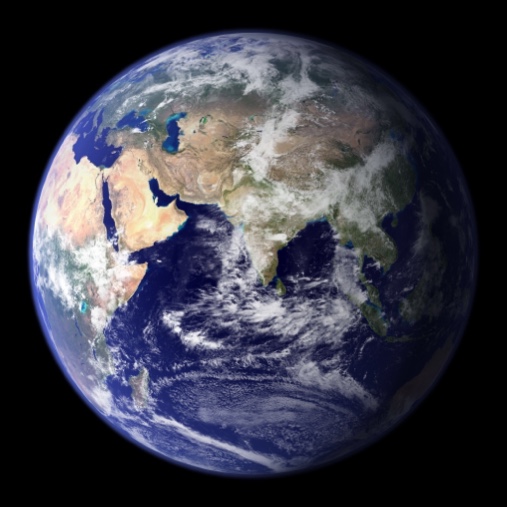
Let us therefore be aspirational and rename our planet, the home of the human race and many other species, as the planet PEACE

http://bit.ly/2kQtOBc

Trump’s Immigration Ban: Map

decolonialatlas's avatarThe Decolonial Atlas

trumpmuslimban

Trump’s Immigration Ban Excludes Countries With Business Ties, Includes Most Countries US has Bombed in Past Year.

President Trump has signed an executive order that bans citizens from seven Muslim-majority countries in the Middle East from entering the United States for 90 days, according to the White House. His proposed list doesn’t include Muslim-majority countries where his Trump Organization has done business or pursued potential deals. Properties include golf courses in the United Arab Emirates and two luxury towers operating in Turkey.

Sources:
http://blogs.cfr.org/zenko/2017/01/05/bombs-dropped-in-2016/

https://www.bloomberg.com/graphics/2017-trump-immigration-ban-conflict-of-interest/

View original post

Save the Reefs: How to Preserve the Caribbean’s Underwater Landscape

caribbeanclimate's avatarcaribbeanclimate

Douglas Klug via Getty Images

As beautiful as the Caribbean is above water, an even more breathtaking and diverse landscape exists just below the surface, where an ecosystem of reefs boasts some of the best scuba diving and snorkeling on the planet. The Caribbean accounts for around 7 percent of the world’s shallow coral reefs, home to dozens of types of coral and as many as 700 species of reef fish.

Beyond being home to diverse sea life, the reefs also shelter island shorelines from the threat of devastating hurricanes. By acting as a natural barrier to buffer the effects of waves and erosion, reefs are essential to coastal communities. And with 70 percent of Caribbean populations living along coastlines, reef health is critical in this region.

But the Caribbean reefs are part of an ecosystem that could be in danger of extinction. The coverage of coral reefs in the…

View original post 889 more words

Latin America and the Caribbean could be first developing region to eradicate hunger

caribbeanclimate's avatarcaribbeanclimate

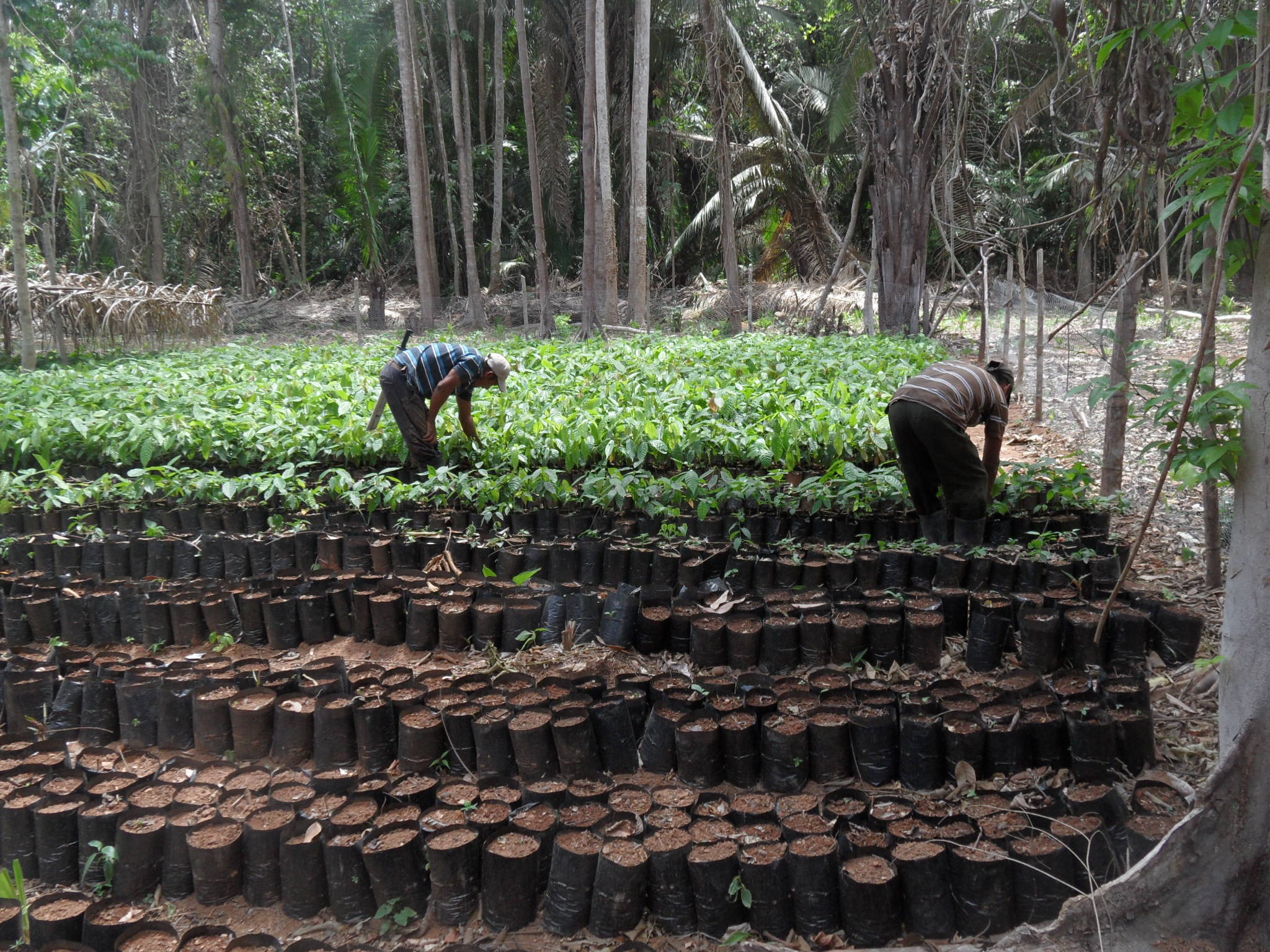
Nursery at agro-forestry concession, Ya'axche, Punta Gorda, Belize Nursery at agro-forestry concession, Ya’axche, Punta Gorda, Belize

Community of Latin American and Caribbean States food security plan offers a clear pathway to zero hunger within ten years, FAO Director-General says.

Latin America and the Caribbean could be the first developing region to completely eradicate hunger if its governments further strengthen their implementation of a food security plan developed by the CELAC bloc, FAO’s Director-General José Graziano da Silva said today.

Speaking at the Summit of Presidents and Heads of State and Government of the Community of Latin American and Caribbean States (CELAC) in Punta Cana, Dominican Republic, Graziano da Silva stated that, “CELAC’s Food Security, Nutrition and Hunger Eradication Plan (FNS) represents the crystallization of governments’ political will to eradicate hunger before 2025.”

Approved by CELAC in 2015, the plan promotes comprehensive public policies to reduce poverty, improve rural conditions, adapt agriculture to climate change, end food waste…

View original post 611 more words