My path to becoming a Volcanologist – Richie Robertson and the 1979 eruption on St Vincent

londonvolcano's avatarlondonvolcano

Guest post by Richie Robertson, Director of University of the West Indies Seismic Research Centre

La Soufriere volcano looms largely in the consciousness of most Vincentians.  Although it occupies the northern third of the island and is often shrouded in clouds, it does not take very much to command our attention.  There have been numerous instances in the past when the occasional smell of sulphur, thunderstorms over the volcano and the spurious observation of someone visiting the summit crater, have led to rumours of an eruption.  It is, therefore, not surprising that the most recent eruption of the volcano still remains fresh in the minds of those of us who experienced it.

St Vincent in eruption, April 1979. Photo credit - Steve Sparks. St Vincent in eruption, April 1979. Photo credit – Steve Sparks.

My own path to becoming a volcanologist and current leader of the regional volcano monitoring organization in the English-speaking Eastern Caribbean began with the 1979 eruption.  I…

View original post 567 more words

CCCCC Supports Jamaica in Climate Change Dialogue

caribbeanclimate's avatarcaribbeanclimate

Minister without Portfolio in the Ministry of Economic Growth and Job Creation, Daryl Vaz (centre), displays a signed copy of the Instrument of Ratification of the Paris Agreement on climate change during a seminar at the Terra Nova All-Suite Hotel in St Andrew on April 11. Others sharing the moment (from left) are Deputy Resident Representative, United Nations Development Programme (UNDP), Elsie Laurence Chounoune; and Principal Director, Climate Change Division, Una-May Gordon. The Paris Agreement, which was adopted at the Climate Change Summit in Paris in December 2015, signals the commitment of the international community to combat climate change and its wide-ranging effects. (Photo: JIS)

The Climate Change Division of the Ministry of Economic Growth and Job Creation of Jamaica is undertaking a public outreach entitled “Uncut Conversations on Climate Change: Dialogue for the Future” at the Terra Nova Hotel in Kingston, Jamaica from 11 to 13 April 2017. The…

View original post 327 more words

Caribbean communities on the front lines of climate change adaptation

caribbeanclimate's avatarcaribbeanclimate

Photo Credit: Stuart Claggett

Newly-released analysis from CDKN has identified a series of approaches to help community-level organisations to increase climate resilience. The analysis focusses on the Caribbean, but has widely applicable lessons for community-based adaptation in other parts of the world. Will Bugler and Olivia Palin explain further:

The research acknowledges that the success of adaptation measures is highly dependent on local context, and shows how multi-level governance approaches can deliver locally-appropriate adaptation actions. By using approaches and methods such as network analysis, community-based vulnerability assessments and a ‘local adaptive capacity framework’, the research suggests that communities can improve the efficacy of climate action at the local level. What’s more the analysis also finds that more co-ordinated action at the local level can lead to increased influence on regional and national decision making.

The new analysis draws on outputs from three CDKN-funded projects spanning a decade’s worth of applied research…

View original post 227 more words

Caribbean communities take on climate change

caribbeanclimate's avatarcaribbeanclimate

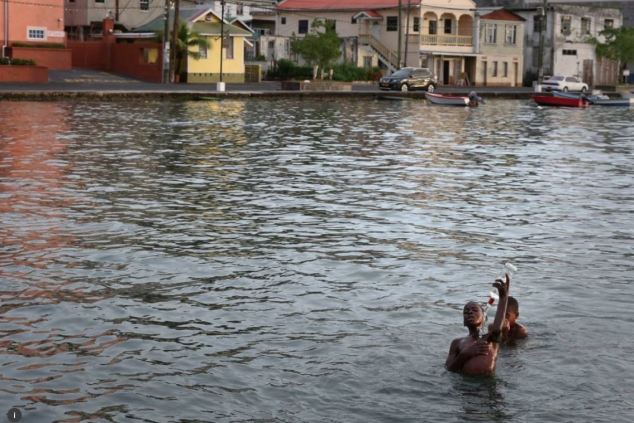
Children playing in the water at sunset in the harbour of St. George’s, Grenada, November 27, 2016. REUTERS/Carlo Allegri

When powerful storms tear through the islands of the Caribbean, it’s often fishing families and famers in coastal villages who bear the brunt of flooding and damage – and it’s those same people who can help lead climate change adaptation, say experts.

Across the region, decision makers are realising a top-down approach isn’t always the way forward, and often those who live and work in high-risk areas – whether they grow coffee, run small businesses or work as tour guides – best understand the particular issues they face, and have ideas about how to tackle them.

Those local insights can positively shape policy at a national level in the climate-vulnerable tropical island nations, a discussion hosted by the Climate and Development Knowledge Network (CDKN) heard this week.

“It’s saying ‘this is…

View original post 406 more words

POLICY BRIEF: Climate data and projections: Supporting evidence-based decision-making in the Caribbean

caribbeanclimate's avatarcaribbeanclimate

Photo Credit: NASA Goddard Space Flight Center
Download POLICY BRIEF: Climate data and projections: Supporting evidence-based decision-making in the CaribbeanNo. of pages: 12Author(s): Will Bugler, Olivia Palin and Dr Ben RabbOrganisation(s): Acclimatise Format: pdfFile size: 620.51 KB

Governments in the Caribbean recognise climate variability and change to be the most significant threat to sustainable development in the region. Policies and strategies such as the regional framework for achieving development resilient to climate change and its implementation plan acknowledge the scale of the threat and provide a plan that aspires to safeguard regional prosperity and meet development goals. To do this, decision-makers need effective tools and methods to help integrate climate change considerations into their planning and investment processes. To build resilience, decision-makers can benefit from access to appropriate climate change data that are specific to their geographical location and relevant to their planning horizons.

The CARibbean…

View original post 351 more words

CDB provides funds for poverty reduction in 8 Caribbean countries

caribbeanclimate's avatarcaribbeanclimate

The Barbados-based Caribbean Development Bank (CDB) says it is providing US$40 million in funding for poverty reduction in eight Caribbean through the Basic Needs Trust Fund (BNTF).

It said the resources will support improved access to quality education; water and sanitation; basic community access and drainage; livelihoods enhancement and human resource development services in low-income and vulnerable communities under the ninth phase of BNTF (BNTF 9).

The countries that will benefit from the initiative are Belize, Dominica, Grenada, Guyana, Jamaica, St Lucia, St Vincent and the Grenadines, and Suriname.

“The participating countries share many common characteristics and face a number of challenges inherent to small, open economies. BNTF 9 will respond to the development needs of these countries, which face challenges associated with limited diversity in production and extreme vulnerability to natural hazards, which is  now exacerbated by climate change and other external shocks,” said Daniel Best, director of projects…

View original post 100 more words

It’s Already Happened Here- A Review of “The CIA as Organized Crime: How Illegal Operations Corrupt America and the World.”

prestonpeet's avatarprestonpeet

by Preston Peet

“The CIA is in charge of doing the things that are illegal and anti-democratic.” – Douglas Valentine

Douglas Valentine pulls no punches in his latest book, The CIA as Organized Crime: How Illegal Operations Corrupt America and the World. This is a book full of extremely hard truths. There is no dissembling, or beating around the bush here. It’s no wonder this book is published by the independent publisher Clarity Press Inc., out of Atlanta, Georgia, because it is chock full of information that will definitely never, ever be printed by any mainstream media outlet in the United States. For that matter, it’s going to upset most people who think the US government, military, and especially the CIA, are all good guys in it for the best of reasons and the betterment of humankind.

valentinecover-400x600

In 24 chapters, with titles such as “Propaganda as Terrorism,” “Creating a…

View original post 2,452 more words

Message from the Caribbean Community Secretariat to Commemorate International Women’s Day, 8 March, 2017

caribbeanclimate's avatarcaribbeanclimate

Photo Credit: CCCCC, International Women's Day 2017

The Caribbean Community joins with the global community in celebrating International Women’s Day 2017. The theme for this Forty-Second observance is #BeBoldForChange; a clarion call for all citizens of our Region and the world to play their part in forging more gender inclusive, just societies.

Over the past four decades, Member States of our Community have made legally binding commitments through various conventions and agreements to fulfill obligations related to human rights, gender equality and the empowerment of women. These include the 1979 Convention on the Elimination of All Forms of Discrimination Against Women (CEDAW) and the 1995 Beijing Declaration and Platform for Action. The 2030 Agenda for Sustainable Development (SDGs) recognises in profound ways that the achievement of gender equality and the empowerment of women and girls is crucial for targeted world progress towards poverty eradication and indeed represents a call for the…

View original post 401 more words

Caribbean | Early Warning System to Help Caribbean Fishermen Deal With ClimateFishermen who depend on fishing for a living need an early warning system Change

caribbeanclimate's avatarcaribbeanclimate

Fishermen who depend on fishing for a living need an early warning system Fishermen who depend on fishing for a living need an early warning system

The challenges of climate change and variability faced by fishermen and women in four Caribbean countries are to be addressed through early warning and emergency response tools being developed under the Caribbean Regional Track of the Pilot Programme for Climate Resilience (PPCR).

The information, communication and technology (ICT) solution, which is being developed by the ICT4Fisheries Consortium in collaboration with the Caribbean Regional Fisheries Mechanism (CRFM), will work to reduce risks to fishers’ lives and livelihoods posed by climate change and climate variability. The ICT4Fisheries Consortium is a multidisciplinary team comprising members from The University of the West Indies (UWI), the University of Cape Town and the Caribbean Network of Fisherfolk Organizations.

Possible impacts of long term climate change trends and short term extreme weather events on Caribbean fisheries include damage to fishing and aquaculture community infrastructure…

View original post 272 more words