The Cayman InstituteDirector-General of The Cayman Institute.
Nicholas Robson has a rich background in the non-governmental (NGO) sector. He received his MA in Peace Studies from the University of Bradford. Nick has consulted for the British Red Cross in Disaster Management and is the founder of the Cayman Institute, a think tank doing policy research in areas such as global warming and climate change, energy security and economic sustainability for small island states. Nick also has a background in security and law enforcement. His geographical areas of interest are Central and South Asia and the Middle East as well as Small Island Developing States. He is also the Chief Coordinator of the South Asian Strategic Stability Institute (SASSI) based in London whose aims are to make a leading contribution to regional and international academic and policy-orientated research discourses about South Asian security.
His publications include Cayman Islands Energy Policy: Background Advisory Report and Sea Level Rise and Its Implications for the Cayman Islands. See
Specialties
-Geopolitical, strategic and security implications of climate & energy security
-Food and water security implications
-Climate / Refugee problem
-Global terrorism and climate change
-Disaster management and climate change
-Economic, political and social issues in the world's smallest countries and dependencies (including SIDS)
Counter Terrorism.
Disaster Response - IFRC.
Human Rights - Int’l Human Rights Academy (University of Utrecht).
UN training in Peace Keeping Operations (UNITAR)
We’re the first Unidentified Anomalous Phenomena (UAP/UFO) sightings alert network. We are motivated by curiosity and optimism about the unknown.
By using modern technology we will crowdsolve this age-old mystery together. We are an independent, venture-backed startup dedicated to awareness of what’s in the sky.
A message from history to my fellow journalists on the British state’s persecution of Asa Winstanley
JONATHAN COOK
First they came for Julian Assange And I did not speak out Because I was not Julian Assange Then they came for the Palestinian journalists And I did not speak out Because I was not a Palestinian journalist Then they came for the independent journalists And I did not speak out Because I was not an independent journalist Then they came for the investigative journalists And I did not speak out Because I was not an investigative journalist They never came for me And I never spoke out Because I was not a real journalist
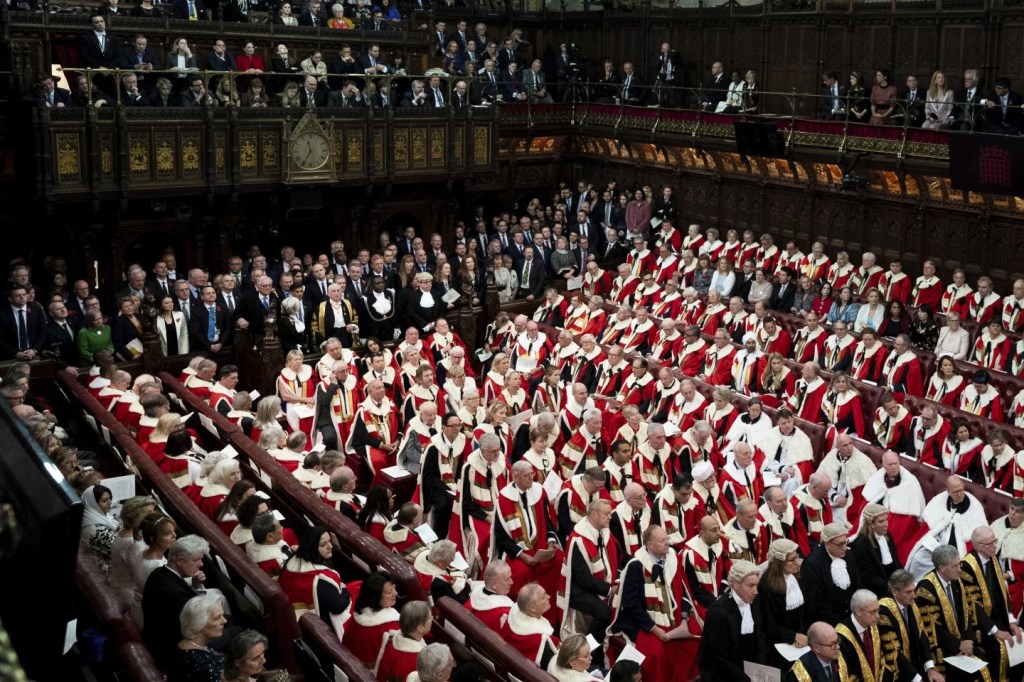
LONDON (AP) — Like his ancestors for centuries, the Earl of Devon serves in Parliament, helping to make the laws of the land. But not for much longer.
Is the House of Lords Democratic
British lawmakers voted Tuesday to approve in principle a bill to strip hereditary aristocrats of the right to sit and vote in the House of Lords after more than 700 years. The Labour Party government says the decision will complete a long-stalled reform of Parliament’s upper chamber and remove an “outdated and indefensible” relic of the past.
“In the 21st century, there should not be places in our Parliament, making our laws, reserved for those who are born into certain families,” Constitution Minister Nick Thomas-Symonds said Tuesday as he opened debate on the bill in the House of Commons.
He noted that Britain is one of only two countries — the other is Lesotho — with a hereditary element to its parliament.