

Times Now World
Author: The Cayman Institute

Unlocking the Secrets of UFOs: How UAP Could Change Science Forever – w Garry Nolan
Merged EP0101
Merged Podcast
The question of whether we are alone in the universe opens a plethora of possibilities. Are we the sole intelligent beings, or is there evidence of extraterrestrial activity, perhaps beings that have existed here on Earth long before us? This consideration leads to another profound query: do we truly own this planet? Conversely, if we are indeed alone, it raises the question of the nature of the phenomena people are witnessing, which remains enigmatic. Regardless of the answer, the inquiry itself is fascinating.
Dr. Gary Nolan serves as the director of the NHLBI Proteomics Center and is a distinguished professor of microbiology and immunology at Stanford University School of Medicine. With a PhD in genetics from Stanford and extensive experience in various prestigious laboratories, Dr. Nolan has authored over 120 peer-reviewed papers and holds numerous patents. Recently, he was recognized as one of the top 25 inventors at Stanford University. In our discussions, his expertise and remarkable career add significant depth to the conversation surrounding unidentified aerial phenomena (UAP).
During our discussion, I expressed appreciation for Dr. Nolan’s willingness to engage in the UAP topic, particularly as a respected scientist. We both noted the anticipation surrounding the forthcoming UAP report associated with the National Defense Authorization Act of 2023, which has sparked considerable interest in the UAP community. Yet, notable mainstream media outlets have conveyed skepticism, asserting that recent articles seeking to delegitimize the findings might indicate disorganization among those opposing the UAP investigation. Dr. Nolan implied that this perceived opposition might not be as formidable as it appears, suggesting that the resistance often stems from an outdated understanding of humanity’s place in the cosmos.
As our conversation delved deeper into the implications of UFO discussions, we reflected on the psychology surrounding scientific inquiry. Dr. Nolan highlighted how discussions about UAP can be met with hesitation within the scientific community due to a fear of social backlash. However, sharing experiences among pilots interacting with these phenomena has begun to break down barriers, voicing collective concerns about aviation safety. Dr. Nolan himself became involved when he worked on a project analyzing a mummy that some believed was extraterrestrial, propelling him into the scientific investigation of anomalous materials.
The interplay between skepticism and scientific inquiry is crucial. Dr. Nolan described his determination to pursue UAP study in defiance of suggestions that such an involvement might jeopardize his career. He emphasized the importance of remaining curious and committed to evidence-based exploration. Moreover, as he collaborated with Lou Elizondo and others who were instrumental in the public revelation of UAP phenomena, Nolan witnessed a growing acceptance within the scientific community, where former skeptics began to express genuine interest in exploring these matters further.
As a pilot myself, I empathize with the pragmatic approach taken toward UAPs. My background in aviation safety led me to confront the reality of these incidents, underscoring the need for proper investigations and data analysis. Dr. Nolan and I discussed the need to redefine how UAP phenomena are analyzed scientifically, emphasizing that experiences, no matter how anecdotal, can spark serious inquiry into the underlying data.
Throughout this dialogue, we posited the need to explore the physics of these phenomena and the innovative technologies that could ultimately enrich our understanding. Collecting better data through advanced sensing tools may be the key to uncovering how these objects operate. The potential of the Galileo Project—initiated by Avi Loeb at Harvard—represents a promising avenue for capturing evidence pertaining to these enigmatic sightings. The conversation emphasized the critical relationship between experimental data collection and its implications for our understanding of extraterrestrial technology, encouraging scientists to actively engage with emerging phenomena.
Ultimately, the intersection of scientific curiosity and technological advancement presents an exciting frontier. Dr. Nolan’s insights underscore the importance of collaboration in scientific exploration and the necessity of viewing materials and phenomena with fresh eyes. By fostering a culture of inquiry and openness, we may inch closer to uncovering the truths behind the UAP phenomenon, which could, in turn, lead to transformative advancements in our understanding of physics and materials science. The scene is set over Council Bluffs, Iowa, where various individuals gaze at a strange craft hovering in the distance, its lights flashing in the night sky. Suddenly, something appears to drop from the craft, prompting several cars to converge on the site, including police vehicles. Upon investigation, they discover a pool of liquid metal weighing around 35 pounds. The original pictures taken by the police are analyzed as part of research conducted through Jacques Vallée. The aim is not to draw conclusions but to gather and present data for scrutiny.
The analysis of the liquid metal reveals interesting insights. Rather than homogeneous material, it shows varying elemental ratios, specifically iron, nickel, and silicon, resembling a swirling mix of flavors in melted ice cream. This uneven composition raises questions about its origin and the industrial processes that could create it. There are similar samples reported from other locations, such as Australia and Fresno, continuing the quest to understand why this metal is dropping from the sky.
A critical component of this exploration is encouraging open dialogue and research. The need for a supportive atmosphere in which people feel empowered to investigate and discuss their findings is crucial. There are many opportunities to pursue this research; however, without a consolidated approach to standardize the analysis, it becomes overwhelming. The goal is to publish comprehensive studies that compare data from various occurrences, alongside human-made materials analyzed in the same manner.
Funding is often a significant hurdle in scientific research, and attracting investment can create pathways for exploring UAP studies more rigorously. Setting up charitable organizations could channel funds into writing policy papers advocating for research support, thereby facilitating collaborative efforts among academics. Financial resources can also be directed to laboratories and postdoctoral fellows who can advance the study of these phenomena.
With momentum building in the scientific community, the hope is to eventually draw researchers from prestigious institutions to engage with the UAP topic. A recent collaboration with respected scientists announced the founding of Copernicus, an organization aimed at reshaping the paradigm of space exploration. This innovative approach seeks to deploy smaller objects in large quantities to collect data around the solar system and examine potential residues of past extraterrestrial encounters.
The pursuit of knowledge requires a strategic approach, including leveraging advances in synthetic biology and engineering techniques. By applying natural processes, like those of bacteria, researchers can contemplate mining asteroids or harnessing local materials for space exploration. This vision aligns closely with contemporary scientific endeavors, such as the utilization of AI for data collection and analysis.
While the conversation around UAPs remains intricate and at times contentious, professionals in the field are beginning to acknowledge the significance of pilot observations and anecdotal evidence. As more reports of sightings emerge, statistical analyses can help detect patterns and contribute to a burgeoning understanding of the phenomenon.
As discussions evolve, it is essential to note that UAP studies should transcend mere curiosity and serve as an opportunity for collective discourse, encouraging individuals to contribute meaningfully to the inquiry. Events like the upcoming organization-hosted conference at Stanford present fertile ground for cross-disciplinary exploration and community engagement.
In conclusion, the journey toward understanding UAPs is multifaceted, requiring an amalgamation of scientific rigor, community involvement, and open-mindedness to both new and established ideas. By cultivating an environment where inquiry is welcomed, we can unlock the potential for significant discoveries that challenge our existing perceptions of intelligence and existence. The idea that intelligence can arise multiple times throughout the universe opens up intriguing possibilities about life beyond Earth. This concept suggests that if intelligent life emerged once, it could happen again, which raises questions about why certain civilizations might have vanished. One speculative answer is that their demise could be linked to our own development and expansion; however, the reasons remain a topic for further exploration. Bayesian inference comes into play here, as it provides a framework which posits that the occurrence of a phenomenon once suggests its potential for recurrence. This perspective may not be fully incorporated into our understanding of humanity’s existence and the chances of other intelligent life forms.
Reflecting on personal experiences, I recall a moment from my childhood that ignited my fascination with the cosmos. In my early years, I stumbled upon an edition of Scientific American that presented a breathtaking view of the Milky Way galaxy. As a child, I was captivated and began to ponder the history of potential empires and stories that might have transpired in the vastness of space. This early sense of wonder and the realization of our insignificance relative to the universe fuels curiosity in students and others today, driving them to explore profound questions, including what data is required to validate or negate various hypotheses regarding extraterrestrial life.
Recently, I’ve been in discussions with commercial pilots who have observed unusual objects while flying over the continental United States. Their accounts over the past year have included sightings of unidentified lights and formations that defy explanation, heightening interest in these phenomena. The pilots—professionals who navigate the skies daily—report seeing things that should not be there, prompting questions about whether these sightings have always existed but went unnoticed until now. This notion leads to the idea that intelligence may not only concern deduction but also the awareness of anomalies that others overlook.
The human brain is wired to filter information and prioritize what is essential for survival, often sidelining anything extraneous. This filtering process can obscure our ability to perceive certain realities, including aspects of our environment that might harbor life forms. When discussing the concept of a “dark biosphere,” we are referring to the possibility of undiscovered life existing just beyond our current understanding, further complicated by the limitations of our perception due to our intrinsic filtering mechanisms. In scientific discussions, anomalies—data points that deviate from established trends—often serve as catalysts for discovery. Noticing these anomalies, rather than dismissing them, is crucial for scientific advancement.
The tension between established scientific understanding and emerging anomalies highlights a pivotal moment in scientific discourse. Thomas Kuhn’s philosophy, articulated in “The Structure of Scientific Revolutions,” emphasizes that scientific progress often occurs in significant leaps rather than gradual increments. When anomalies accumulate, they signal a potential shift in understanding, but often, those advocating for new ideas face skepticism. Ultimately, creating a framework for discussing such anomalies without ridicule is paramount for fostering open-minded exploration of topics like UFO phenomena. This initiative is part of a larger movement to cultivate a community of curious minds dedicated to exploring the unknown, recognizing that interest in the extraordinary is a fundamental aspect of the human experience.
In conclusion, there is an exciting convergence of thought around the search for meaning in anomalies and the broader implications they may hold. The discussions surrounding UFOs and the potential for life elsewhere are part of a growing field of inquiry that encourages innovative thinking and collaboration. Thank you for joining me in this conversation; it’s clear that there is much more to explore in the realms of possibility that lie beyond our current understanding.
Israel, Gaza, and the Empire of Lies: Dr. Gabor Maté on Truth and Trauma
Israel, Gaza, and the Empire of Lies: Dr. Gabor Maté on Truth and Trauma
Out Loud with Ahmed Eldin
Israel had to be a colonial enterprise. You couldn’t possibly establish a Jewish state in Palestine without coming in with the force of empire. In order to maintain power, you have to dehumanize the other. As you dehumanize the other, you dehumanize yourself; you lose your own humanity. The New York Times, for example, has a blind spot. They recently published an article about a caviar farm in Israel, showcasing the farm’s operations despite the ongoing war and the suffering in the region. This highlights a significant disconnect in how Palestinian lives are represented compared to Israeli interests. The International Criminal Court (ICC) has become ineffective, and there has always been a question about its actual power. Legally, there is a recognized definition of genocide, and many scholars from Israel have claimed that Israel’s actions meet this definition.
Bernie Sanders’ viewpoint seems to minimize the larger issue by suggesting that Netanyahu is the problem. One has to consider whether peace can truly be achieved without accountability for Israel’s actions. The narratives constructed by both the Israelis and Americans about their own histories are riddled with falsehoods. This so-called rule-based order has always been questionable. The psychological repercussions of living in a profit-driven system hinder our ability to confront pressing issues like these. Many struggle with anxiety, depression, and feelings of hopelessness just as I do.
In this conversation, I am joined by Dr. Gabor Maté, whose work has dramatically influenced my understanding of pain, politics, and the stories we carry in our bodies. Dr. Maté is a physician and Holocaust survivor who has been a formidable voice against the moral decay we are witnessing today. His insights into trauma, addiction, and child development have resonated with millions, myself included. Once a Zionist youth leader, Dr. Maté now identifies as a former Zionist and has referred to Gaza as a concentration camp while consistently challenging the ideological and political machinery that underlie the genocide happening today.
We delve into the legacies of trauma, the fabrications we cling to, and the essential choices that define our humanity in these distressing times. Dr. Maté, thank you for joining me. To clarify, the term “concentration camp” is not my invention; it originates from Israeli sociologist Baruch Kimmerling, who identified Gaza as the world’s largest concentration camp decades ago. Several months before the events of October 7th, a group of Israeli scholars categorized Israel as an apartheid state, further grounding the conversation in acknowledgment from within Israeli society itself.
You mentioned that you are a former Zionist. I’m curious to know what you once believed and what triggered such a profound shift in your views. Was it a gradual realization, or was there a specific moment that caused your beliefs to fracture? Zionism is an ideology with particular assumptions about the world and one’s place in it. At one point, this framework made sense to me, influenced largely by my family’s horrific experiences during the Holocaust. It seemed logical to have a Jewish state where we could protect ourselves against historical persecution.
However, Zionism conveniently ignored the existence of the Palestinians, who also have a rich history and claim to the land. By the time I engaged with that reality, my beliefs began to shift. This transformation was gradual but significantly expedited by the research I conducted on the Six-Day War in 1967, revealing that Israel initiated the conflict rather than merely defending itself against Arab aggression. I openly stated that the war aimed at capturing territory that would never be returned, which led to my estrangement from my family.
As someone familiar with the process of disillusionment, I can relate to your sentiments. It seems that many people encounter similar feelings regardless of their backgrounds. Disillusionment, while uncomfortable, can be liberating. It’s essential to confront and shed the ideologies we cling to, even when they promise a sense of belonging. As someone who grew up under communism, I experienced my first disillusionment regarding the ideals of equality and justice that the regime promised but failed to deliver.
When we look at the present context, especially with the ongoing violence, it raises profound questions about our collective humanity. Trauma, especially inherited trauma, shapes our responses. The horrors of the Holocaust should never justify the subjugation of another people. The weaponization of trauma leads to collective cruelty, evidenced by public approval of escalated violence against Palestinians.
We need to recognize that the dehumanization inflicted on Palestinians reflects a broader trend in colonial environments. Throughout history, colonial systems operate by dismissing the humanity of the indigenous populations. Current attitudes in Israel, backed by political leaders, reveal a dangerous trajectory. You could almost predict the outbursts of collective violence that equate self-defense with the justification for mass killings.
The ongoing media narratives and societal attitudes allow for this horrible cycle to continue. As members of society grapple with these truths, we must also question the very foundations of their operational frameworks, which prioritize profit over people. In terms of the path forward, it’s important to center conversations around healing, collective responsibility, and systemic change.
In addressing disillusionment and trauma, there’s an innate struggle in us all. Many people are grappling with empathy, feeling increasingly isolated or discouraged by the powerful forces around them. Those who aim to speak truthfully and compassionately, like Francesca Alban, often face backlash, yet their perseverance is crucial.
Ultimately, as much as these systemic issues seem daunting, the hope lies in human connection and grassroots movements for justice. Disillusionment can be a catalyst for change. It forces us to confront uncomfortable truths about ourselves and our systems. And while it may feel like a struggle, acknowledging our shared humanity can foster a sense of community and responsibility toward change.
This is a moment for advocacy and amplification of voices that challenge these narratives. Young people today have the potential to transform their anger, despair, and hopelessness into unified actions that demand accountability, emphasize empathy, and protect the dignity of all people. The ongoing spirit of resistance found in truth-telling is an essential reminder that against all odds, humanity will always seek justice.
Preparing for war in space: inside a Space Force base
Reality Check with Ross Coulthart
NewsNation
America Has NO IDEA What’s Coming Next…. | Jeffrey Sachs”
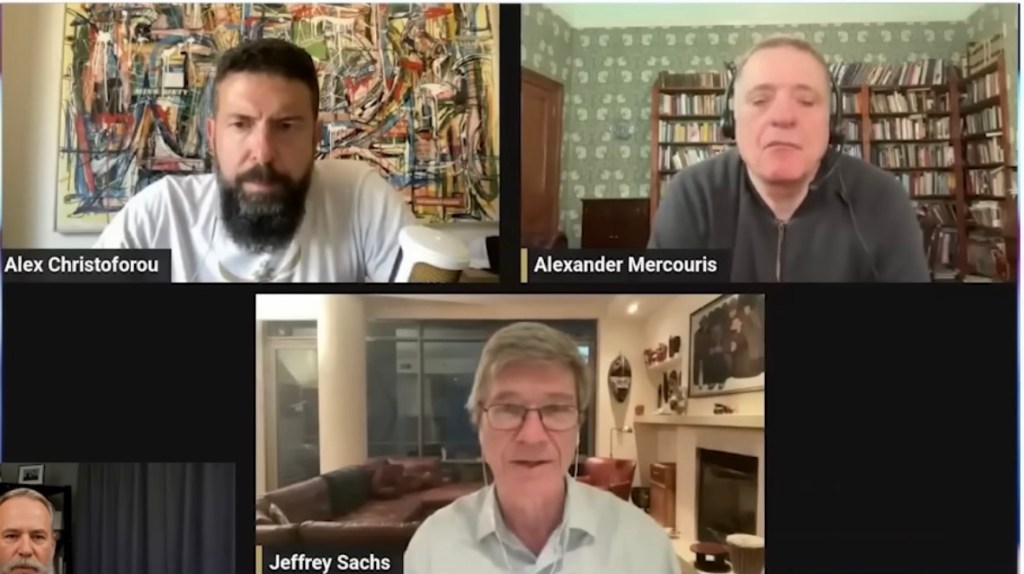
The United States, to this day, remains deluded in its ambition for global hegemony. This is not merely propaganda; it is a stated policy. The concept of “primacy” or “full spectrum dominance,” as articulated by the military, reflects a worldview that is increasingly outdated. For two decades, I have observed the futility of Washington pursuing this perspective. The reality is stark: the U.S. represents just 4.2% of the world, and we are no longer in the eras of 1945, 1950, or even 1990. China has eclipsed the U.S. economy when measured accurately, and it boasts a far greater industrial capacity. My frequent visits to China reveal that they have surpassed the U.S. in many fields of technology—though not all. This fact serves as an important reminder of the dramatic shifts that have taken place since the post-World War II era.
Historically, the U.S. enjoyed a period of uncontested dominance, but the rise of China’s industrial prowess and technological advancements are both measurable and observable. Cities like Shenzhen and Shanghai showcase China’s rapid progress, and it begs the question: can the United States adapt to this new reality, or will it cling to outdated notions of superiority? History shows that empires that resist change often decline more swiftly than anticipated. Moreover, China is poised to lead in critical technological sectors, including electric vehicles and solar energy production, where it currently holds over 80% of the global supply chain from panels to essential minerals. The U.S. may talk about attaining green energy independence, but it begins from a position of significant disadvantage.
China’s advantages extend beyond economics; they influence geopolitical dynamics as well, particularly in areas like zero-emission ocean shipping, a sector where the U.S. is not competitive. The disconnect between the growing capabilities of other nations and the outdated ambitions of the U.S. reflects a delusion fostered by years of historical power. From my perspective, this power has not been wielded responsibly; in fact, the legacy of Western imperialism leaves little attractive from a moral standpoint. Ideals espoused by figures like Adam Smith—who believed in trade over ownership—highlight the effectiveness of cooperation over conquest. European nations historically spread knowledge and culture, but they did so through colonization, leaving behind scars that continue to afflict many nations today.
In our current multipolar world, the narrative must change. The false sense of a Western-led world has faded, yet there persists a misalignment in the understanding among Western leaders. Many in the West, particularly in the U.S., remain unaware of the extent of global shifts in literacy, technology, and industrial capability. Some leaders seem to cling to notions of a lost empire, failing to recognize that national priorities, such as health care and education, should take precedence over pursuing outdated imperial dreams. Instead, the relentless pursuit of dominance fosters domestic instability, as political aspirations conflict with public needs.
European leaders, in particular, continue grappling with outdated fears rooted in 19th and 20th-century conflicts. The idea that Russia’s primary ambition is to invade Western Europe is not only irrational but demonstrates a disconnect from historical context. Such fears perpetuate a narrative that undermines rational dialogue, replacing it with emotional reactions that serve only to deepen divisions. Leaders must actively seek understanding through dialogue and engagement rather than taking a confrontational stance, which only heightens misunderstandings.
We now live in a multipolar reality that is evident across economic, technological, and military dimensions. The persistent delusion of Western hegemony—especially that of the United States—creates a widening gap between what is real and what is imagined. This disconnect can have dire consequences. Prominent figures, such as Donald Trump, exemplify this dissonance as they attempt to issue commands to other nations, oblivious to their growing autonomy and interests. Countries like India, with significant populations and developing economies, are no longer willing to take orders from Washington, pointing out a significant decline in U.S. influence.
While Trump may reflect the broader tendencies of the military-industrial complex, the responsibility of leadership lies in acknowledging these shifts and guiding the nation toward cooperation and restraint. A presidency that fails to recognize the realities of a multipolar world not only risks damaging American power but accelerates its decline. Leadership in the modern context involves navigating the complexities of global relations with humility and foresight, rather than issuing ultimatums that ignore the evolving landscape. Accepting the world as it is—not as one wishes it to be—is the critical challenge for U.S. leaders going forward.
Jeffrey David Sachs’ Trump Just Made A BIG MISTAKE And No One Is Ready
Daily Update News Hub
Jeffrey David Sachs’ Trump Just Made A BIG MISTAKE And No One Is Ready
What happens when the most powerful office in the world makes a decision without foresight, without strategy, and without an understanding of the consequences?**
That is precisely what we are witnessing today. President Trump has made a mistake so significant and reckless that few are truly prepared for the cascading effects it will unleash, not only on America but on the fragile balance of global politics. This critical miscalculation transcends another entry in the long list of controversies that have defined his political career; it is a blunder with implications that extend beyond partisan divides and domestic skirmishes. The danger lies not only in the policy itself but in the mindset behind it—a reckless disregard for foresight, measured strategy, and the lessons of history.
We must ask ourselves: how often can the world absorb the shocks of ill-conceived decisions by a superpower before the system begins to crack? This question is no longer theoretical; it unfolds before our very eyes. The essence of leadership is the ability to anticipate consequences. Great leaders study history, listen to advisers, weigh risks, and prepare for outcomes that may not be immediately visible. In this case, Trump has once again substituted strategy with spectacle. His decision, framed as a demonstration of strength, is, in reality, a profound miscalculation that exposes the United States to risks it cannot afford. By prioritizing headlines over substance and bravado over strategy, he has chosen a path that weakens rather than strengthens America’s global standing.
When the United States falters, the world feels it. Consider the architecture of global stability; it rests on assumptions that America, while imperfect, acts with a degree of predictability, weighs its choices carefully, and recognizes its responsibilities as the world’s most powerful nation. Trump’s action shatters those assumptions. Suddenly, allies question the reliability of U.S. commitments, adversaries sense an opening, and international institutions struggle to maintain coherence in the face of erratic American behavior. The ripple effects of such a misstep are profound; once the perception of American steadiness is lost, the very foundations of global cooperation begin to erode. This mistake is symptomatic of broader patterns that conflate domestic political theater with global strategy.
Trump, ever the showman, treats foreign policy as if it were an extension of campaign rallies, seeking applause lines instead of long-term stability. The world is not an arena for performance politics. When decisions are made on impulse without calculation, the consequences are paid in fractured alliances, lost economic opportunities, and, in some cases, needless conflict. The real tragedy is that these costs are not borne by the architects of the mistakes but by ordinary citizens who see jobs lost, prices rise, and security diminished.
Consider also the psychological impact of this blunder. Nations across the globe constantly read signals from Washington, adjusting their policies based on what they perceive to be America’s direction. A sudden, reckless move is not just a tactical error; it is a signal, a declaration that the U.S. is no longer guided by strategy but whim. This breeds uncertainty, and in international relations, uncertainty is dangerous. It prompts nations to hedge, to reorient toward other powers, and to invest in alternative partnerships that dilute America’s influence. Each rash decision does not just harm America in the present; it accelerates the long-term decline of U.S. leadership. History offers sobering reminders: great powers rarely fall in a single dramatic collapse. They decline slowly through a series of mistakes, miscalculations, and squandered opportunities.
Trump’s critical error today may well be remembered as one of those pivotal moments—a decision signifying the weakening of American leadership, not because the U.S. lacked power, but because it lacked wisdom. Wisdom is the true currency of leadership. Without it, even the most powerful nations can find themselves adrift. The uncomfortable truth is that this was avoidable. The United States did not have to walk into this trap of its own making; there were other paths available, rooted in diplomacy, consultation, and prudence. Instead, the choice was made to elevate short-term gain over long-term stability. Once such a precedent is set, it becomes harder to reverse and harder to convince the world that the United States can again be trusted to act with restraint and foresight.
We must treat this miscalculation with the seriousness it deserves. It is not merely another passing storm in Washington’s political theater; it is a turning point, a warning flare that tells us the guardrails of strategy have been abandoned. Unless those guardrails are restored, this mistake will not stand alone. It will be followed by others, each more costly and more destabilizing, until the world wakes up to a new reality where America’s role as a global anchor is no longer taken for granted. America’s global credibility has always been its most valuable asset. It is not simply the size of the economy nor the might of the military that has given the United States influence across continents; it is the perception built carefully over decades that America could be trusted to stand by its commitments, to provide stability when others faltered, and to lead when the stakes were high.
That credibility was earned slowly and painfully through wars fought, treaties negotiated, and international institutions shaped. But credibility, unlike material power, is fragile. It vanishes quickly when trust is broken, and rebuilding it often takes generations. President Trump’s miscalculation strikes at the heart of that credibility, sending a message to allies and adversaries alike that the United States may no longer be the reliable partner it once was.
The importance of credibility in global politics cannot be overstated. Nations act not only based on capabilities but also on the belief that promises will be honored, that commitments are more than just words on paper. The NATO alliance, for instance, is not just a military arrangement; it is a bond of trust that each member will come to the defense of the other. International trade agreements are not merely about tariffs and quotas; they are assurances that rules will be respected. If that trust erodes, the entire system begins to fray. Once allies begin to doubt America’s word, they do not simply wait patiently for Washington to correct course; they seek alternatives. They hedge their bets with new partnerships and strengthen ties with other powers. Slowly, the gravitational pull of U.S. leadership weakens.
We are already witnessing signs of this shift. European leaders, once willing to follow Washington’s lead, are openly questioning whether the United States can be relied upon. They are now speaking more frequently of strategic autonomy, building defense and trade frameworks that do not depend on American approval. In Asia, where the U.S. once anchored stability, nations are recalibrating their diplomacy, turning to China not because they prefer Beijing’s leadership, but because they cannot afford to place all their trust in an America that seems increasingly erratic. Latin American nations, long accustomed to Washington’s dominance, are diversifying their partnerships, accepting Chinese investments and Russian arms deals not out of ideological affinity but out of pragmatic necessity.
The erosion of credibility is not a theoretical concern; it is a reality unfolding day by day. When allies begin to question the reliability of the U.S., they start to act accordingly, rewriting defense strategies, recalibrating economic deals, and redirecting diplomatic channels toward other centers of power. The danger is compounded by the fact that credibility cannot be manufactured on demand. Once trust is broken, it must be painstakingly rebuilt, often over generations. This erosion was not inevitable; it is the result of deliberate choices prioritizing short-term political spectacle over long-term credibility.
Trump may view his decisions as victories in the domestic arena, but internationally they register as warning signs—evidence that the United States no longer values reliability. The world is taking note. Once the perception solidifies, the costs will be staggering. The long-term implications of this cycle of distrust and instability could redefine America’s place in the world for decades to come, leaving the nation weaker, more isolated, and less capable of shaping the global future.
The need for course correction is not abstract or optional. It is urgent. The danger lies not only in the immediate consequences of Trump’s decision but in the precedent it sets—a normalization of recklessness at the highest levels of power. This approach will invite even greater mistakes, each compounding the last until the damage becomes irreversible. The responsibility falls not only on Trump but on institutions, policymakers, and citizens who must demand accountability and insist on a return to wisdom, strategy, and cooperation.
A course correction begins with recognizing the depth of the mistake. Too often, leaders cling to denial, hoping that time will soften criticism or that public attention will shift elsewhere. But denial is perilous in a world that reacts instantly. Markets do not wait, rivals do not wait, and allies do not wait. Every day of hesitation amplifies uncertainty, and uncertainty erodes stability. The first step of course correction is honesty. Acknowledging that this was not just another minor misstep but a significant failure that jeopardizes America’s credibility and global leadership is essential; without that acknowledgment, no genuine correction can begin.
The second element of course correction is rebuilding a culture of consultation and strategy. One glaring feature of Trump’s leadership style is the rejection of expert advice and the sidelining of institutions designed to provide balance and foresight. Foreign policy thus becomes a stage for improvisation rather than a framework of careful calculation. Reversing this trend requires re-empowering diplomacy, listening to the expertise of career professionals, and reestablishing processes that weigh consequences before decisions are made.
Allies also play a crucial role in pressing for course correction. It is no longer enough for them to quietly express concern while adjusting their strategies in private. They must be clear that American unpredictability carries costs not only for them but for the United States itself. A strong message from European, Asian, and Latin American leaders that reliability matters and that commitments must be honored can help create external pressure that reinforces the internal need for change. This is not about humiliation; it is about preserving a global system that benefits all.
Domestically, course correction requires citizens and institutions to step beyond partisanship. The danger of Trump’s error is not limited to one party or ideology; it is systemic. If America becomes comfortable with impulsive leadership, accepting recklessness as the new normal, future leaders—regardless of party—will feel emboldened to follow the same path. The checks and balances of democracy exist to prevent this; however, they only function if they are activated. Congress, the courts, the media, and civil society must resist the temptation to normalize dangerous behavior, illuminating mistakes, and insisting on accountability.
Lastly, course correction means reasserting a vision of leadership rooted in cooperation rather than confrontation. The United States cannot navigate today’s challenges—climate change, pandemics, economic inequality, and technological disruption—through unilateralism. These are global problems requiring global solutions. Leadership in this century will be measured not by dominance but by the ability to build coalitions. Trump’s approach undermines precisely that capacity, alienating partners when cooperation is most urgent.
Above all, urgency must replace complacency. The idea that mistakes can be corrected eventually is itself a dangerous illusion. In international politics, time is not neutral; it compounds risk. Rivals consolidate their advantages, allies drift further away, and citizens lose faith in institutions. By the time leaders recognize the full cost of their actions, it is often too late. Therefore, course correction must begin immediately—not tomorrow, not after the next election cycle, but now. Every delay increases the cost of repair, and every day of silence deepens complicity.
The warning we face is clear: America is at a crossroads where the path of recklessness leads to decline. The path of responsibility offers the possibility of renewal. Trump’s mistake has illuminated the stakes, stripping away the illusion that the system can absorb endless shocks without consequence. The world is watching, waiting to see whether the United States will acknowledge its errors and adjust its course, or whether it will continue down a path of arrogance and isolation. History, as always, will deliver its judgment.
Jewish Journalist EXPOSES Israel’s DARKEST SECRET
Double Down News
Iran’s SHOCKING Move — Israel’s Future in Middle East is OVER | Jeffrey Sachs
Openminded Thinker Show
“Whether your oversightes are the result of obtuseness or provocation, they would be a tragedy for Israel alone were it not for the fact that you attempted to rope me and millions of other Jews into your government’s crimes against humanity.” These powerful words underscore Professor Jeffrey Sachs’ deep concern regarding Israel’s actions in the ongoing conflict and his strong stance against the atrocities he believes are being committed. He continues, “Israel is a sovereign state of its citizens. I’m a Jew and a citizen of the United States. Israel is not my state and never will be.” This assertion sets the stage for an important dialogue on the intersection of personal identity, national policy, and global politics.
Sachs doesn’t hold back in his condemnation of the Israeli government’s actions, describing them as “criminal” and “genocidal.” He recounts a moment from a UN event where he felt the need to express his dissent against Israel’s policies. His letter, which he wrote to address these concerns, reflects not only his disagreement with the Israeli government but also his discontent with its claim to represent all Jews, a narrative he believes is misleading and harmful. He emphasizes the moral, political, and diplomatic ramifications of a state built on endless war and suggests that the international community’s response to Israel’s actions is crucial.
In the conversation that unfolds, Sachs recognizes the complexity of the situation, particularly regarding the viability of a two-state solution. He points to historical challenges and the strong influence of the pro-Israel lobby in the United States as significant barriers. Despite these obstacles, he advocates for the survival of the Palestinian people and seeks a practical approach to solutions, placing emphasis on international support for a two-state resolution, which he believes is overwhelmingly backed by the global community. He contends that the majority of the world’s population resides in countries supportive of this solution, contrasting this with the position of the U.S. government, which he criticizes for its complicity in what he describes as genocide.
Sachs elaborates on the power dynamics at play, suggesting that a change in the U.S. government’s position could significantly impact Palestinian statehood and ultimately help end the ongoing violence and divisions. He argues for a shift in U.S. policy that aligns with the global consensus favoring a two-state solution. By advocating for a change in the U.S. stance at the UN, he believes it could lead to concrete actions, such as sanctions on Israel and intervention by international security forces.
As the dialogue progresses, Sachs acknowledges the importance of addressing public opinion in the U.S. He notes that American perceptions of Israel are shifting, even as elite political circles may remain resistant to change. He highlights the disconnect between politicians and the American public, who largely support a two-state solution and oppose aggressive Israeli policies. This discrepancy, he argues, could create an opportunity for grassroots movements to demand accountability and justice for Palestinians.
Further, he critiques the narrative of anti-Semitism used to silence criticism of Israeli actions, asserting that growing international outrage signals a pivotal moment in public discourse. Sachs’ analysis points to the urgency for action against what he labels a genocidal project, noting how increasing scrutiny may challenge the long-held perception of Israel as an unassailable ally.
Finally, he underscores that change is not just necessary but imperative for the future of both Israelis and Palestinians. By advocating for immediate recognition of Palestinian statehood, he aims to disrupt the current status quo and refocus international attention on the realities on the ground. This, he argues, would not only benefit Palestinians but contribute to a more equitable future for both peoples, highlighting that neglecting these issues could lead to dire consequences.
In an era marked by rising voices against injustice, Sachs calls for collective action from the global community and provokes reflection on the role of silence in complicity. His message compels listeners to be active participants in the struggle for justice, urging them to utilize their platforms to amplify the call for change.
The New Paradigm (Short Film)
- New Paradigm Institute
Western man in the last several centuries has voided the universe of all other intelligence. This voiding has left human beings in a deep state of grief, feeling that something fundamental is missing, something is wrong, and something is left out. It appears that what this reflects is a kind of “reinsolment” of the disowned cosmos. The sentiment is palpable; there are elements in our existence that we have not yet fully acknowledged or integrated into our understanding of reality.
Turning to current events, the spotlight is on Capitol Hill, where a highly anticipated congressional hearing is set to discuss unidentified aerial phenomena (UAPs), commonly referred to as UFOs. Interest in this topic has surged, moving from the fringes to the mainstream, drawing government officials, military experts, and whistleblowers. The atmosphere is charged with anticipation as members of the public line up to access the hearing.
At the hearing, witnesses highlighted that inexplicable phenomena have been observed by multiple individuals, challenging our current scientific understanding. Army Colonel Carl Nell, a member of the federal UAP task force, claimed that non-human intelligence interacts with humanity and that this engagement is not a new phenomenon. Such claims raise questions regarding governmental transparency and assert that there are unelected officials aware of these interactions, which they may be reluctant to disclose fully.
The upcoming release of information to the National Archives marks a pivotal moment in the journey toward transparency regarding UAPs. However, many believe that this “controlled disclosure” process is designed to both mitigate public reaction and manage how this information is released. While some may see efforts to slow down the revelation of information as an attempt to keep the truth hidden, others argue it is a responsible way of preparing society for profound new realities.
The complexity of this situation is compounded by the claims that programs related to UAPs operate without proper congressional oversight, raising significant concerns about the constitutional structure of governance. There is a growing sentiment that such secrecy undermines democracy, allowing a national security bureaucracy to make decisions that should involve elected representatives. This has prompted calls for a more engaged citizenry and greater accountability from government officials.
In Europe, efforts are underway to establish a harmonized system for monitoring and analyzing UAPs, reflecting the global nature of the phenomenon. Reports indicate that millions have witnessed UAPs, yet only a small fraction feel safe enough to report their experiences. This underlines a widespread need for a more robust platform for those who have encountered unexplained aerial phenomena.
As the dialogue continues, the global community grapples with the implications of nonhuman intelligences potentially visiting Earth. This moment challenges historical notions of human supremacy, urging a shift in perspective towards a respectful relationship with other forms of life and intelligence, both terrestrial and extraterrestrial. The transformation in human identity that this realization demands could mark a significant evolutionary leap.
Ultimately, public engagement is critical to driving demand for transparency and accountability on this pressing issue. History shows that substantial movements for change often arise from grassroots demands that push for attention from policymakers. Organizations like the New Paradigm Institute are stepping up to facilitate this process, encouraging citizens to mobilize and hold their representatives accountable in matters of UAP disclosure.
ARTH-SHATTERING Speech on Gâza by Slovenian President SHOCKS the West!
The Africa News Network
Only 80 years have passed since the end of the Second World War. Only 80 years. And we already seem to have forgotten how vital human rights and dignity are for civilization and social progress. So deep is this collective amnesia that even the prevention of genocide, the most abhorrent crime against humanity, no longer carries the urgency it once did. I’m not here to compare the dehumanization of millions under Nazism and fascism leading to the Holocaust and other crimes against humanity. Far from it. But I must say this: the world condemned the Cerebranita genocide and brought its perpetrators to justice. Why then, only three decades later, do some politicians tolerate or even defend Israel’s genocidal policy against Palestinians in Gaza?
The international community resoundingly condemned Hamas’s terrorist attack in October 2023. How come we have no such consensus when it comes to the people living in Gaza? How can it be that there are still politicians, including those in European Union member states, who tolerate that most people in Gaza have been displaced multiple times? That more than 90% of homes are damaged or destroyed? How can they accept acute shortages of food, water, fuel, medicine, and shelter? Or reports of Israel negotiating with South Sudan to transfer people from one war-torn land at risk of famine to another? And let’s not forget the fact that humanitarian workers and doctors themselves are starving while trying to help those in need.
How can they not be moved after the news hit the world that Gaza city and surrounding areas are now, ladies and gentlemen, officially under famine? Distinguished guests, these are not rhetorical questions. As human beings, we must ensure that the Gaza Strip and the West Bank never fade from the political spotlight for several reasons. Firstly, through our dealings with Gaza, we reveal who we are. Gaza has become a symbol of our attitude towards atrocities worldwide. If we cannot address Gaza, what legitimacy do we have to confront gross violations of human rights anywhere else? Secondly, our handling of Gaza reflects our understanding of humanity. When Europe advocates human rights as universal values, do we truly mean it, or are they merely a tool for dominating political discourse?
Thirdly, humanity is indivisible. We are rightly united in strongly condemning Russia’s aggression against Ukraine. We stand with the Ukrainian people and support the principle of territorial integrity. We cannot allow a country to seize another country’s territory just because it can. We cannot allow people to be killed merely for defending their country against an aggressor. In Ukraine, we defend international law and humanity. Values and norms are values and norms everywhere for everyone, including in Gaza.
Fourthly, Europe needs to show unity in defending humanity. The EU’s ultimate response to Israel’s actions in Gaza will show the world how our leaders see Europe’s future—whether democracy, unity, diversity, and trust in international law remain at the center of European integration. That being said, I find little cause for optimism. Attacks on democracy and fundamental freedoms are visible basically everywhere. Many of us grew up with leaders criticizing autocracies during the Cold War. Several of those regimes endure, and their practices are spreading regrettably even in Europe. Freedom of thought, academic freedom, and investigative journalism once shaped democratic discourse. Not anymore. And this is wrong; this is historically wrong.
Without freedom of thought, there can be no progress. Attempts to restrict free speech are always met with resistance. Those who suppress freedom of thought and critical thinking always end up on the scrap heap of history. With this in mind, I would like to express my support for the initiative to award the Nobel Peace Prize to Franchesca Albanz, the UN Special Rapporteur on the West Bank and Gaza, and to the doctors caring for the people of Gaza. They deserve recognition for risking their lives to restore peace and uphold humanity. They embody what multilateralism for human rights also means—preventing individual politicians from acting with impunity.
Dear friends, we cannot stand by and watch history unfold without us. We must not let cold pragmatism drain the soul from Europe. Now is the time to speak truth—bold, unwavering truth—to power to bring the united in diversity back to the very heart of the European dream. In an enlarged European Union, human rights and human dignity flourish in a world that is stable and just. But it is in times of crisis and uncertainty that the true test begins: the test of our courage, conviction, and willingness to stand firm and defend our values. Now is the time to raise our voices, not in whispers of compromise, but in a thunder of determination.
Let us reject those who bend their values to the winds of profit and personal gain. Let us fight for a Europe that speaks out loudly through every multilateral form against injustice and exclusion, against every crime against humanity, and for every silenced voice. Ladies and gentlemen, as leaders, we shape the future—a path towards democracy, prosperity, and peace, or a spiral into fear, crisis, and war. This is our moment to choose the side of history we will stand on. Billions, ladies and gentlemen, billions, depend on our choice. We Slovenians believe in justice, and we have no doubt. We stand firmly and proudly on the side of humanity. Thank you.

