

Times Now World
Month: September 2025

Rare Video: Nelson Mandela Speaking on Palestine [Extracts]
Africa 4 Palestine
What They’re Hiding About ISRAEL Will Make You Angry! | COL. Douglas Macgregor
ASLAN KAMERA
We can talk about that if you’d like. But I think the bottom line is this is the beginning, not the end. Maybe it’s the end of the beginning of the new long war. Because I see no evidence that the Israelis will accept anything other than total destruction of Iran if necessary or, for that matter, of anybody else in the region that challenges them. And there is no end to what’s happening in Gaza. Every day I try to tune in and find out the state of these ceasefire talks, and I still see an impasse between Hamas and Israel.
Israel wants no end to the destruction. They’ll take a 60-day ceasefire and take hostages back, but then they want to resume the war. Hamas doesn’t want to resume the war. It’s no surprise in that. I think we would like to see this thing end obviously in Washington, but Israel is really in charge, not us. I think that’s the other thing that we need to come to terms with: President Trump is profoundly influenced and shaped in his thinking and behavior by the Israel lobby.
Absolutely. Without question. Colonel, if you go back to October 7th and look at the situation until now, from a military standpoint, is it overall fairly impressive that Israel was able to neutralize, to a certain extent, Hamas, Hezbollah, and the Houthies, as well as Iran, in the course of less than a two-year period? Now that we see Syria with a new president and that region potentially shifting a little, can this turn into a major victory for peace in that region? I know those are two separate questions, but you know, I don’t think anybody saw Israel coming back so quickly and those forces, like Hezbollah and Iran, that seemed unstoppable, basically being on pause temporarily. Did that impress you or surprise you as a strategist?
I’m a little surprised that Iran accepted the ceasefire. If they had kept it up for another week, that would have been the end of Israel. So, we need to keep that in mind. No doubt Moscow and Beijing both advised the Iranians to accept the ceasefire. Now, we’ll see if that was a prudent decision for them over the weeks ahead. I think we need to understand that Israel had finally struck what I would call granite and could not advance any further, risking being destroyed by Iran.
Of course, that leaves open the possibility that, under those circumstances, Israelis would have announced they were going to use a nuclear weapon because they’ve always threatened that behind the scenes. They certainly did in 1973, and I see no evidence that they would not have done that since. It was always the United States that intervened and said fine, we know you have that, do not use it. I don’t think that restraint exists anymore. I don’t think we have that kind of influence over them; their influence over us seems greater.
As far as the other issues are concerned, they have not gone; they still exist. If anything, they’re rearming. I do not think that you could regard Lebanon, even though Israel did a great deal of damage there, as a foregone conclusion. If I were to point to an area where they’ve had significant success—without the assistance of others—it’s Syria. They managed to replace the government in Syria of Mr. Assad, which they’ve wanted to get rid of for years due to his friendly relations with Iran and other reasons.
Now, we have the former deputy head of Al-Qaeda and a deputy head of ISIS who has become president of this new Syrian Republic, if you want to dignify it with that name. They’re killing Christians on a routine basis. They went into a church just the other day and killed half the people in it and burned it down. That was just a suicide bomber, right? I don’t think that was government sanctioned.
I don’t think it was a rogue attack. I think we’re dealing with a very vicious and dangerous regime in Syria, which is backed by Mr. Erdogan. But then again, Mr. Erdogan and the Turks actually helped to establish ISIS to begin with. Remember that ISIS was really designed to do one thing: kill Shiites in Iraq. It was not meant to wander all over the map and kill anybody that got in its way. I think that focus is now more present in Syria, where Mr. Erdogan and Mr. Netanyahu have a condo of interest, if they can focus Syria and the thugs in Syria on killing Shiites in Iraq.
That’s a vital area for Mr. Erdogan right now because he is also concerned about the emergence of a Kurdish state, which is a potential in Syria and northern Iraq. If there’s one thing that aggravates him, perhaps more than anything else at this stage, it’s the possibility that those Kurds could come together. We, including MI6 and the CIA, have worked very closely with the Kurds, so this is a touchy area for Mr. Erdogan.
Simultaneously, we’ve worked very hard with Mr. Erdogan to unseat Assad and his government. So, I think we have to understand that this was a success, but do you think that was a success? Well, it depends on how you view it. I don’t see anything particularly socially, culturally, or politically redeeming about the government in Syria. I think, at some point, Mr. Erdogan will regret what he’s done because he and the Turkish military may ultimately have to go in there. Syria is by no stretch of the imagination, in my judgment, permanently stable or a status quo member of the region.
However, the Sunni Islamists are very happy with it for the reasons I’ve outlined. Mr. Netanyahu is happy with it, and I don’t think Mr. Netanyahu will have too much trouble with Mr. Erdogan, provided that Mr. Netanyahu and the Israelis stay south of Damascus. Damascus holds great significance in the Islamic world; one of the earliest Turkish sultans is interred there in one of the great mosques. When the Turkish chief of intelligence visited Damascus shortly after the fall of the previous government, he landed at Damascus airport and went instantly to the great mosque to pray.
That was done with great symbolism—first, to signal that we Turks are back and that we are serious, and second, to indicate to Israel not to try to occupy Damascus. How long will this last, Brian? How long did the Nazi-Soviet pact last? It lasted from August of ’39 until June of ’41, which is less than two years. In the Middle East, that’s a blink of an eye. So, we’ll see how long this condominium of interest between Israel and Turkey lasts.
The interesting thing is that I think Israel has gotten at least short-term what it wants in Syria and part of what it wants in Lebanon. The conditions in the Sinai and Egypt, on the other hand, are something else entirely. The Israelis have made threats to the Egyptians because the Egyptians have moved forces to the border with Gaza. Some people say that’s just to keep all the people in Gaza from coming into Egypt, and that’s part of it. However, the population in Egypt is absolutely enraged.
This is the largest Arab country in the world, and they are furious at what the Israelis have been doing—murdering Palestinians by the bushel. Very recently, there was another example in the West Bank, where a whole village of Christian Arabs were driven out of their homes, and some were killed. The Israelis burned down the town. These actions will not endear the Israelis to many people, and that’s why I say this war is not over. It’s just the beginning, and it’s going to go on.
Now, if we can move briefly to the Caucasus, this is much more significant, I think. Trump recently lifted sanctions after meeting with the president in Saudi Arabia, and now we hear rumors that Syria might even sign the Abraham Accords before the end of the year. What do you make of both? Not much, I would say. First of all, the Abraham Accords are anathema to everyone in the Islamic world except the ruling elites in Saudi Arabia and perhaps the Emirates.
The distance today between the populations in the region—among the peninsula Arabs and in North Africa—and their ruling political class is enormous. As long as they can keep the food available and ensure that everyone is paid and enjoys a relatively cushy life, this can continue. But any interruption would be devastating. At this stage, I wouldn’t attach much significance to that. It may be important to President Trump’s donors and the Israel lobby, and it might be good optics temporarily for America and his friends, but it’s not very meaningful.
Regarding the Caucasus, as you know, it links the soft underbelly of Russia to Iran. I’m sure you’ve had people come on and talk about the One Belt, One Road initiative. Recently, one of the first trains made its way all the way from China on the rail lines to offload freight in Iran. This just occurred a few weeks ago. That’s the tip of the proverbial iceberg. The Chinese are not interested in Iran and the One Belt, One Road just because they dream of resurrecting the Silk Road; it’s much more than that.
There’s an organization they worry about constantly, called the United States Navy. And they concern themselves that their ports, because of their long coastline with the Pacific, could suddenly be bottled up. Bottling up their ports would take no more than a handful of submarines. You don’t need a big surface fleet for that anymore; just torpedo or missile someone coming in or out, and everybody stops. They’ve been working tirelessly to build an alternative commercial structure that could move goods and services back and forth across the Eurasian landmass without making them entirely dependent upon the sea.
More recently, as you look at the Persian Gulf, something else has definitely been on Mr. Trump’s mind: the possibility of moving a quarter of the world’s natural gas and oil through the Persian Gulf. He understands the impact that a spike in oil prices would have on inflation. That’s another reason why he seemed very anxious to tie a bow, at least for this phase of the operation. The Chinese depend heavily on that oil and want to circumvent any confrontation related to it.
Alongside this, you have the Russians wanting to develop a line of communication—a north-south route—running from the Indian Ocean all the way up into Russia, with potential connections through Russia and Ukraine into Europe. They have been working on that, supported by the Saudis. Everyone has a vested interest in this, particularly given the problems we saw with the Suez Canal; no one wants to be dependent on that place if they can avoid it.
I think what’s happening in the Caucasus really touches a nerve. Azerbaijan is the Asian face of Turkey. When I say “Asian face,” I mean they’re facing east, north, and south, while Anatolia is more western in its strategic orientation for obvious reasons. Both Ali, who is the president of Azerbaijan, and President Erdogan share a similar dream of a Turkic empire extending all the way across to Kazakhstan.
People in Central Asia, until you reach Mongolia (except for the Tajiks), speak languages that are very close, and they see themselves as “Turk.” You had the Organization of Turkish States, and the two of them have been trying to transform this organization into something more powerful politically, militarily, and economically. It’s kind of a Turkic version of the dream of Genghis Khan, uniting Central Asia with their allies in the Caucasus and Anatolia. However, it hasn’t worked all that well due to the Central Asian republics, which are on extremely good terms with Moscow.
In fact, the leadership there loves Vladimir Putin; they believe he’s the only man they can depend upon in a crisis. Meanwhile, we’ve been working since the late ’70s to destabilize and create unrest in Central Asia. This began with the Soviet intervention in Afghanistan and continued, getting shot in the arm in ’96 and ’97, led by Brzezinski promoting ways to create instability for both Russia and China. Interestingly, both Russia and China share the same interest in stabilizing Central Asia.
While the Central Asian population may not be particularly enthusiastic about the Chinese, they want to do business with them and are very comfortable with the Russians. Thus, Russia has become the muscle in Central Asia. Someone recently mentioned that it was puzzling to see pallets of cash continuing to be delivered to Kabul after we left Afghanistan. However, this cash seemed meant for sowing subversion in Central Asia.
If you’re sitting in Moscow and examining U.S. actions—whether in the Middle East or through sanctions and tariffs—the discontent it breeds, particularly when we’ve been trying to destabilize areas they hold dear, can create animosity. Putin once suggested to President Obama, “Are you going to put a stop to this? We’d like to see it end.” And while they agreed, it never ended, leading to questions about who ultimately controls the Central Intelligence Agency and its apparatus.
The point is this issue is ongoing. Ali has shown that he is interested not only in annihilating Armenia but has now expressed interest in more than just portions of Armenia. He even mentioned being prepared to send troops into northern Iran to move into areas around Tabriz, which is historically Turkic and Azeri. How seriously should we take this? Well, we should monitor it in the weeks and days ahead. The Russians have certainly taken him very seriously; they recently arrested the head of the Azerbaijani diaspora inside Russia in Yekaterinburg. Moscow has made it very clear that they are not pleased with any attempt to destabilize and break up Iran.
This is pertinent to understand, as we have been attempting to destabilize Russia through Ukraine—overthrowing regimes, breaking up states, and moving in to exploit their resources. That effort failed. Now, Western financial interests in London and New York City, led by Israel and the United States, have shifted their focus toward Iran, particularly its resources. How do you execute this? By breaking the north-south axis of communications, transportation, and cooperation between Russia and Iran, which is the first step in isolating Iran and beginning to dismantle it under a guise of, quote, “liberating” the Turks in northern Iran from Iranian leadership.
I don’t know the current state of the population in northern Iran; perhaps you need to talk to someone more familiar with it. My impression is that the Turks there have been integrated into the larger Iranian structure for a long time, dating back to their time under Persia, and I don’t think they have any grievances that could easily be exploited. However, with Russian interests at play, we might see that their hand may not be as free as they think.
Mr. Erdogan is the western side of this eastern effort and might even be laying low for now. There’s the reality that the Mossad has been operating out of Azerbaijan for some time, launching strikes into Iran from there. We’ll wait and see what action the Russians take, but they’re certainly displeased with that situation. It would be a mistake to assume that Russia will not take steps to stop it. But this matter will not go away; it is part of a larger strategy to regime change Iran and ultimately dismantle it. That’s why I say the war continues—it’s just evolving with different means.
Did those strikes seriously inhibit the Iranian nuclear program? Were they able to get the uranium out beforehand? I heard it is quite movable, and you implied that they gave them notice before they struck. Satellite images show they already rebuilt roads around the main facility just a week later. What do you think the actual state of that program is? It’s one thing to have nuclear capacity and another to be able to arm it on a warhead. What do you think the status is, aside from all the media coverage we hear?
I think that’s an important caveat you mentioned at the end. First of all, I’m not privy to whatever intelligence tells us. Through many years of military service, I’ve learned that intelligence tends to align with what the boss wants. Often, the information filtered to the top is shaped to fit that narrative. We’ve heard Mr. Netanyahu claim for two months, two weeks, or even two days, that Iran is two hours from a nuclear weapon since 1995. I’m very skeptical of that narrative.
People I trust who have insight into Iran and access to sensitive intelligence suggest there’s no effort to build a bomb. I tend to think that’s true. The question remains: What about the installations we bombed? Was there anything left? Ted Postol, who knows a great deal about this, mentioned that the enriched uranium was likely removed since we did not detect any radiation release, which typically occurs if you successfully destroy a facility containing plutonium.
There’s an accumulation of evidence suggesting that not only was the material moved but they may have relocated some centrifuges along with the uranium to unknown locations. The Iranians recognized that the IAEA functioned as an intelligence collection agency for the Mossad, so I doubt we’ll see the IAEA return to the scene. Therefore, I don’t believe this is the end at all. President Trump seems to think we didn’t even kill anyone, so considering all of this, what actually happened? It seems more like a symbolic gesture.
Remember, the Iranians subsequently struck Bahrain, where our military installations are based. They warned us before doing so, and in fact, we had already evacuated personnel from Bahrain. Regarding whether Hezbollah sleeper cells exist in America, is that something to be concerned about? The FBI rounded up individuals and made arrests, so I think we probably know who they are. It’s tough to keep such activities concealed, especially since we have a large Iranian population in California.
Interestingly, you can’t buy a Ferrari in California without dealing with Iranians who own the dealerships. It’s somewhat of a joke: if you want a Ferrari, better speak Farsi! They definitely don’t sell immediately, either. I think we know where the Iranian population is focused. The other point is that Iran likely doesn’t want to act in a way that would worsen the current situation. This may change as the situation deteriorates—if more people die, they’re more likely to retaliate.
Colonel, what’s China’s angle here? What do you think they were doing behind the scenes? Or is it more prudent for them to wait, focusing on bigger objectives? The Chinese are akin to Donald Trump in that they don’t want war. Their perspective, aligned with Russia’s, is that if Iran is destroyed and regime change occurs, with a puppet government in place, they risk losing everything they aim to achieve commercially on the Eurasian landmass.
The Chinese depend heavily on Iranian oil and natural gas. They will work on alternative routes to avoid conflict arising from these. Both China and Russia have stated that they will not let Iran fail. Reports claim that China is providing Iran with a significant number of new fifth-generation aircraft. Some say this is because Iran and Russia have had a fallout, but that is not the case.
During a recent meeting of the Iranian and Russian foreign ministers after a devastating 12-day conflict, Putin highlighted an aspect of their alliance, expressing that they could have helped Iran protect its assets. The Iranians were reluctant to accept assistance for pride reasons. However, it’s clear that Putin conveyed to Iran they must consider cooperation during crises.
The Russians could easily supply them with multiple S-400 systems if necessary. I see that both Russia and China have committed not to let this state fail.
Colonel, you’ve mentioned that other countries might begin developing nuclear weapons—not for supremacy, but perhaps as deterrents against attacks or to gain leverage. Consider North Korea; they’ve given themselves a bargaining chip based on the potential use of their nuclear weapons. Recently, we heard media reports that North Korea was ready to ship nuclear weapons to Iran, a suggestion even made by a former Russian president, which Trump dismissed. What are your thoughts on this posturing, and which countries stand out in your mind?
I think President Netanyahu’s statement in the Oval Office was crucial. He chuckled while saying, “We want the Libya solution for Iran.” If we look back at the Libya case, it can be summed up by demanding that a country relinquishes its nuclear weapons and halting any biological or chemical activities. In return, you can rejoin the family of nations, sanctions will lift, flowers will bloom, peace will thrive, and so on. But we know what happened: they cooperated entirely, gave up their nuclear arsenal, and were subsequently killed horrifically.
That’s the scenario Netanyahu envisions for Iran. In the region, there are compelling motivations to develop a nuclear deterrent capable of unveiling at the right moment. People can easily understand the reasoning: if you do not submit to Israeli dominance and U.S. backing, you risk destruction by the air and missile power of the U.S. and Israel.
While I’m not advocating for nuclear proliferation, one must consider how North Korea has effectively demonstrated that having such weapons could ensure survival, particularly for regimes targeted by the West.
Colonel, what are the perspectives of the Saudis, Qataris, and Emirates regarding the ongoing situation? Iran has been viewed as a threat to them for decades; meanwhile, they are also invested in the Muslim populations of Gaza. Take into account all these factors—where do their allegiances lie? They also have to keep the Houthies in mind, who always pose challenges. Ultimately, what do these nations want in the region?
It’s important to remember that all these nations have significant Shiite minorities, which plays a critical role. Whenever Iran has been active in the region, its main focus has not been to destroy Israel, despite what the Israelis might suggest; it has aimed to protect the Shiite minorities. For example, Hezbollah is fundamentally a product of Israeli occupation, which is rarely mentioned.
Hamas was effectively created with Mr. Netanyahu’s assistance as a counterbalance to the Palestinian Liberation Authority. If you go to Saudi Arabia or the Emirates, you will find Shiites regarded as second-class citizens. In some instances, their treatment can be worse, akin to Russians in eastern Ukraine. Iranians aim to protect those individuals whenever possible, in which they’ve had success.
During my time in Saudi Arabia in 1990 and ’91, a senior Saudi officer joked that during artillery practice, they would fire rounds toward Shiite settlements for amusement, demonstrating a clear attitude towards them. I wouldn’t want to live in an environment like that, but it illustrates the prevailing mindset. There remains a persistent catalyst for conflict between Iran and its neighbors in the Persian Gulf.
As for the Gulf states, they absolutely do not want war—this is evident. These nations are among the most non-militant on Earth. All were formed as part of British imperialism. Before the British Empire’s arrival, the history was less than pleasant. It’s essential to recognize that these nations emerged due to Great Britain’s influence in the post-World War I era, when families were chosen to rule. They have endured a luxurious lifestyle due to the wealth they accumulated, much of which is stored in London.
Consequently, they seek to avoid conflict at all costs. They would prefer the path of least resistance, knowing that failing to do so jeopardizes their sovereignty due to the myriad forces present. In the Arabian Peninsula, many individuals harbor fears of the Turks, especially considering their recent resurgence.
Turkey, Iran, China, and India have all historically lagged behind the West for several centuries; however, this is no longer the case. They are now great powers in their own right, with rich histories, cultures, and civilizations that are unlikely to be disregarded. Thus, if you consider what it would take for a Turkish advance on Riyadh, it’s feasible they could accomplish it in just a few days.
Consequently, these states will align with anyone who promises to keep them in power and offer their protection. Up to this point, that role has transitioned from Great Britain to the United States. The premise is straightforward: if you want our assistance and cooperation, you must engage with Israel. That’s the crux of what Iran actively resists.
Finally, Colonel, the situation for Trump six months into his presidency is intriguing. At the year’s end, what steps do you think he should take? Notably, he could leverage the strike on Iran to promote his significant legislation, where foreign policy is interwoven with domestic objectives. Given your experience serving presidents, what are your thoughts on the actions he needs to ensure his agenda continues to progress?
Peace is indeed in everyone’s interest; however, no one seems to be addressing the elephant in the room: the soaring national debt. A prominent figure, Nasim Taleb, aptly noted that the new reserve currency is gold. The dollar can no longer serve as a reliable store of value. Our accumulated sovereign national debt, treated with disdain by everyone, has grown to a point of a metastasizing cancer endangering the stability of the nation.
When I worked with RFK Jr., I authored a paper that circulated within the Trump administration on foreign and defense policy, suggesting immediate cuts of 50% in military spending by repatriating forces from overseas. Technology has evolved; modern warfare features precision-guided munitions and missiles that potentially render conventional force structures obsolete.
We’ve learned from conflicts in Eastern Ukraine as well as the Israeli-Iranian war that our military’s framework, designed during World War II, is in dire need of reevaluation. Continuing to maintain this outdated military posture in a world dominated by rapid technological advancements poses risks we cannot afford to ignore.
Moreover, our meddling in Central Asia, attempting destabilization, needs an overhaul. Interfering in the South China Sea doesn’t concern us; those regions should resolve their disputes independently. Whenever U.S. representatives speak about a looming war threat from China, they meet with disbelief; no one in Asia is pursuing this conflict except the U.S. No one there desires conflict with China, and such notions are baseless.
That’s where President Trump shines; he knows that military engagement yields nothing beneficial. Unfortunately, he finds himself a prisoner of various influencing forces. As Elon Musk suggested, passing the ‘big beautiful bill’ could take us over the edge financially, and the timeline for this occurrence remains uncertain—perhaps it could happen at any moment.
Scott Bessent, the Secretary of the Treasury, is making strides to prevent the bond market from collapsing, while Jerome Powell is wrestling with interest rates he ultimately doesn’t control. The reality is interest rates take on a life of their own, exacerbating fears of a disaster looming over financial stability. The U.S. military’s changes and its withdrawal from overseas commitments will be entirely dictated by our financial standing—a budgetary crisis could lead to a paradigm shift, leaving most military efforts immobilized.

“Trapped & Afraid”, Jeffrey Sachs Explains Why U.S. Presidents Can’t Make Peace
Times Now World
Unlocking the Secrets of UFOs: How UAP Could Change Science Forever – w Garry Nolan
Merged EP0101
Merged Podcast
The question of whether we are alone in the universe opens a plethora of possibilities. Are we the sole intelligent beings, or is there evidence of extraterrestrial activity, perhaps beings that have existed here on Earth long before us? This consideration leads to another profound query: do we truly own this planet? Conversely, if we are indeed alone, it raises the question of the nature of the phenomena people are witnessing, which remains enigmatic. Regardless of the answer, the inquiry itself is fascinating.
Dr. Gary Nolan serves as the director of the NHLBI Proteomics Center and is a distinguished professor of microbiology and immunology at Stanford University School of Medicine. With a PhD in genetics from Stanford and extensive experience in various prestigious laboratories, Dr. Nolan has authored over 120 peer-reviewed papers and holds numerous patents. Recently, he was recognized as one of the top 25 inventors at Stanford University. In our discussions, his expertise and remarkable career add significant depth to the conversation surrounding unidentified aerial phenomena (UAP).
During our discussion, I expressed appreciation for Dr. Nolan’s willingness to engage in the UAP topic, particularly as a respected scientist. We both noted the anticipation surrounding the forthcoming UAP report associated with the National Defense Authorization Act of 2023, which has sparked considerable interest in the UAP community. Yet, notable mainstream media outlets have conveyed skepticism, asserting that recent articles seeking to delegitimize the findings might indicate disorganization among those opposing the UAP investigation. Dr. Nolan implied that this perceived opposition might not be as formidable as it appears, suggesting that the resistance often stems from an outdated understanding of humanity’s place in the cosmos.
As our conversation delved deeper into the implications of UFO discussions, we reflected on the psychology surrounding scientific inquiry. Dr. Nolan highlighted how discussions about UAP can be met with hesitation within the scientific community due to a fear of social backlash. However, sharing experiences among pilots interacting with these phenomena has begun to break down barriers, voicing collective concerns about aviation safety. Dr. Nolan himself became involved when he worked on a project analyzing a mummy that some believed was extraterrestrial, propelling him into the scientific investigation of anomalous materials.
The interplay between skepticism and scientific inquiry is crucial. Dr. Nolan described his determination to pursue UAP study in defiance of suggestions that such an involvement might jeopardize his career. He emphasized the importance of remaining curious and committed to evidence-based exploration. Moreover, as he collaborated with Lou Elizondo and others who were instrumental in the public revelation of UAP phenomena, Nolan witnessed a growing acceptance within the scientific community, where former skeptics began to express genuine interest in exploring these matters further.
As a pilot myself, I empathize with the pragmatic approach taken toward UAPs. My background in aviation safety led me to confront the reality of these incidents, underscoring the need for proper investigations and data analysis. Dr. Nolan and I discussed the need to redefine how UAP phenomena are analyzed scientifically, emphasizing that experiences, no matter how anecdotal, can spark serious inquiry into the underlying data.
Throughout this dialogue, we posited the need to explore the physics of these phenomena and the innovative technologies that could ultimately enrich our understanding. Collecting better data through advanced sensing tools may be the key to uncovering how these objects operate. The potential of the Galileo Project—initiated by Avi Loeb at Harvard—represents a promising avenue for capturing evidence pertaining to these enigmatic sightings. The conversation emphasized the critical relationship between experimental data collection and its implications for our understanding of extraterrestrial technology, encouraging scientists to actively engage with emerging phenomena.
Ultimately, the intersection of scientific curiosity and technological advancement presents an exciting frontier. Dr. Nolan’s insights underscore the importance of collaboration in scientific exploration and the necessity of viewing materials and phenomena with fresh eyes. By fostering a culture of inquiry and openness, we may inch closer to uncovering the truths behind the UAP phenomenon, which could, in turn, lead to transformative advancements in our understanding of physics and materials science. The scene is set over Council Bluffs, Iowa, where various individuals gaze at a strange craft hovering in the distance, its lights flashing in the night sky. Suddenly, something appears to drop from the craft, prompting several cars to converge on the site, including police vehicles. Upon investigation, they discover a pool of liquid metal weighing around 35 pounds. The original pictures taken by the police are analyzed as part of research conducted through Jacques Vallée. The aim is not to draw conclusions but to gather and present data for scrutiny.
The analysis of the liquid metal reveals interesting insights. Rather than homogeneous material, it shows varying elemental ratios, specifically iron, nickel, and silicon, resembling a swirling mix of flavors in melted ice cream. This uneven composition raises questions about its origin and the industrial processes that could create it. There are similar samples reported from other locations, such as Australia and Fresno, continuing the quest to understand why this metal is dropping from the sky.
A critical component of this exploration is encouraging open dialogue and research. The need for a supportive atmosphere in which people feel empowered to investigate and discuss their findings is crucial. There are many opportunities to pursue this research; however, without a consolidated approach to standardize the analysis, it becomes overwhelming. The goal is to publish comprehensive studies that compare data from various occurrences, alongside human-made materials analyzed in the same manner.
Funding is often a significant hurdle in scientific research, and attracting investment can create pathways for exploring UAP studies more rigorously. Setting up charitable organizations could channel funds into writing policy papers advocating for research support, thereby facilitating collaborative efforts among academics. Financial resources can also be directed to laboratories and postdoctoral fellows who can advance the study of these phenomena.
With momentum building in the scientific community, the hope is to eventually draw researchers from prestigious institutions to engage with the UAP topic. A recent collaboration with respected scientists announced the founding of Copernicus, an organization aimed at reshaping the paradigm of space exploration. This innovative approach seeks to deploy smaller objects in large quantities to collect data around the solar system and examine potential residues of past extraterrestrial encounters.
The pursuit of knowledge requires a strategic approach, including leveraging advances in synthetic biology and engineering techniques. By applying natural processes, like those of bacteria, researchers can contemplate mining asteroids or harnessing local materials for space exploration. This vision aligns closely with contemporary scientific endeavors, such as the utilization of AI for data collection and analysis.
While the conversation around UAPs remains intricate and at times contentious, professionals in the field are beginning to acknowledge the significance of pilot observations and anecdotal evidence. As more reports of sightings emerge, statistical analyses can help detect patterns and contribute to a burgeoning understanding of the phenomenon.
As discussions evolve, it is essential to note that UAP studies should transcend mere curiosity and serve as an opportunity for collective discourse, encouraging individuals to contribute meaningfully to the inquiry. Events like the upcoming organization-hosted conference at Stanford present fertile ground for cross-disciplinary exploration and community engagement.
In conclusion, the journey toward understanding UAPs is multifaceted, requiring an amalgamation of scientific rigor, community involvement, and open-mindedness to both new and established ideas. By cultivating an environment where inquiry is welcomed, we can unlock the potential for significant discoveries that challenge our existing perceptions of intelligence and existence. The idea that intelligence can arise multiple times throughout the universe opens up intriguing possibilities about life beyond Earth. This concept suggests that if intelligent life emerged once, it could happen again, which raises questions about why certain civilizations might have vanished. One speculative answer is that their demise could be linked to our own development and expansion; however, the reasons remain a topic for further exploration. Bayesian inference comes into play here, as it provides a framework which posits that the occurrence of a phenomenon once suggests its potential for recurrence. This perspective may not be fully incorporated into our understanding of humanity’s existence and the chances of other intelligent life forms.
Reflecting on personal experiences, I recall a moment from my childhood that ignited my fascination with the cosmos. In my early years, I stumbled upon an edition of Scientific American that presented a breathtaking view of the Milky Way galaxy. As a child, I was captivated and began to ponder the history of potential empires and stories that might have transpired in the vastness of space. This early sense of wonder and the realization of our insignificance relative to the universe fuels curiosity in students and others today, driving them to explore profound questions, including what data is required to validate or negate various hypotheses regarding extraterrestrial life.
Recently, I’ve been in discussions with commercial pilots who have observed unusual objects while flying over the continental United States. Their accounts over the past year have included sightings of unidentified lights and formations that defy explanation, heightening interest in these phenomena. The pilots—professionals who navigate the skies daily—report seeing things that should not be there, prompting questions about whether these sightings have always existed but went unnoticed until now. This notion leads to the idea that intelligence may not only concern deduction but also the awareness of anomalies that others overlook.
The human brain is wired to filter information and prioritize what is essential for survival, often sidelining anything extraneous. This filtering process can obscure our ability to perceive certain realities, including aspects of our environment that might harbor life forms. When discussing the concept of a “dark biosphere,” we are referring to the possibility of undiscovered life existing just beyond our current understanding, further complicated by the limitations of our perception due to our intrinsic filtering mechanisms. In scientific discussions, anomalies—data points that deviate from established trends—often serve as catalysts for discovery. Noticing these anomalies, rather than dismissing them, is crucial for scientific advancement.
The tension between established scientific understanding and emerging anomalies highlights a pivotal moment in scientific discourse. Thomas Kuhn’s philosophy, articulated in “The Structure of Scientific Revolutions,” emphasizes that scientific progress often occurs in significant leaps rather than gradual increments. When anomalies accumulate, they signal a potential shift in understanding, but often, those advocating for new ideas face skepticism. Ultimately, creating a framework for discussing such anomalies without ridicule is paramount for fostering open-minded exploration of topics like UFO phenomena. This initiative is part of a larger movement to cultivate a community of curious minds dedicated to exploring the unknown, recognizing that interest in the extraordinary is a fundamental aspect of the human experience.
In conclusion, there is an exciting convergence of thought around the search for meaning in anomalies and the broader implications they may hold. The discussions surrounding UFOs and the potential for life elsewhere are part of a growing field of inquiry that encourages innovative thinking and collaboration. Thank you for joining me in this conversation; it’s clear that there is much more to explore in the realms of possibility that lie beyond our current understanding.
Israel, Gaza, and the Empire of Lies: Dr. Gabor Maté on Truth and Trauma
Israel, Gaza, and the Empire of Lies: Dr. Gabor Maté on Truth and Trauma
Out Loud with Ahmed Eldin
Israel had to be a colonial enterprise. You couldn’t possibly establish a Jewish state in Palestine without coming in with the force of empire. In order to maintain power, you have to dehumanize the other. As you dehumanize the other, you dehumanize yourself; you lose your own humanity. The New York Times, for example, has a blind spot. They recently published an article about a caviar farm in Israel, showcasing the farm’s operations despite the ongoing war and the suffering in the region. This highlights a significant disconnect in how Palestinian lives are represented compared to Israeli interests. The International Criminal Court (ICC) has become ineffective, and there has always been a question about its actual power. Legally, there is a recognized definition of genocide, and many scholars from Israel have claimed that Israel’s actions meet this definition.
Bernie Sanders’ viewpoint seems to minimize the larger issue by suggesting that Netanyahu is the problem. One has to consider whether peace can truly be achieved without accountability for Israel’s actions. The narratives constructed by both the Israelis and Americans about their own histories are riddled with falsehoods. This so-called rule-based order has always been questionable. The psychological repercussions of living in a profit-driven system hinder our ability to confront pressing issues like these. Many struggle with anxiety, depression, and feelings of hopelessness just as I do.
In this conversation, I am joined by Dr. Gabor Maté, whose work has dramatically influenced my understanding of pain, politics, and the stories we carry in our bodies. Dr. Maté is a physician and Holocaust survivor who has been a formidable voice against the moral decay we are witnessing today. His insights into trauma, addiction, and child development have resonated with millions, myself included. Once a Zionist youth leader, Dr. Maté now identifies as a former Zionist and has referred to Gaza as a concentration camp while consistently challenging the ideological and political machinery that underlie the genocide happening today.
We delve into the legacies of trauma, the fabrications we cling to, and the essential choices that define our humanity in these distressing times. Dr. Maté, thank you for joining me. To clarify, the term “concentration camp” is not my invention; it originates from Israeli sociologist Baruch Kimmerling, who identified Gaza as the world’s largest concentration camp decades ago. Several months before the events of October 7th, a group of Israeli scholars categorized Israel as an apartheid state, further grounding the conversation in acknowledgment from within Israeli society itself.
You mentioned that you are a former Zionist. I’m curious to know what you once believed and what triggered such a profound shift in your views. Was it a gradual realization, or was there a specific moment that caused your beliefs to fracture? Zionism is an ideology with particular assumptions about the world and one’s place in it. At one point, this framework made sense to me, influenced largely by my family’s horrific experiences during the Holocaust. It seemed logical to have a Jewish state where we could protect ourselves against historical persecution.
However, Zionism conveniently ignored the existence of the Palestinians, who also have a rich history and claim to the land. By the time I engaged with that reality, my beliefs began to shift. This transformation was gradual but significantly expedited by the research I conducted on the Six-Day War in 1967, revealing that Israel initiated the conflict rather than merely defending itself against Arab aggression. I openly stated that the war aimed at capturing territory that would never be returned, which led to my estrangement from my family.
As someone familiar with the process of disillusionment, I can relate to your sentiments. It seems that many people encounter similar feelings regardless of their backgrounds. Disillusionment, while uncomfortable, can be liberating. It’s essential to confront and shed the ideologies we cling to, even when they promise a sense of belonging. As someone who grew up under communism, I experienced my first disillusionment regarding the ideals of equality and justice that the regime promised but failed to deliver.
When we look at the present context, especially with the ongoing violence, it raises profound questions about our collective humanity. Trauma, especially inherited trauma, shapes our responses. The horrors of the Holocaust should never justify the subjugation of another people. The weaponization of trauma leads to collective cruelty, evidenced by public approval of escalated violence against Palestinians.
We need to recognize that the dehumanization inflicted on Palestinians reflects a broader trend in colonial environments. Throughout history, colonial systems operate by dismissing the humanity of the indigenous populations. Current attitudes in Israel, backed by political leaders, reveal a dangerous trajectory. You could almost predict the outbursts of collective violence that equate self-defense with the justification for mass killings.
The ongoing media narratives and societal attitudes allow for this horrible cycle to continue. As members of society grapple with these truths, we must also question the very foundations of their operational frameworks, which prioritize profit over people. In terms of the path forward, it’s important to center conversations around healing, collective responsibility, and systemic change.
In addressing disillusionment and trauma, there’s an innate struggle in us all. Many people are grappling with empathy, feeling increasingly isolated or discouraged by the powerful forces around them. Those who aim to speak truthfully and compassionately, like Francesca Alban, often face backlash, yet their perseverance is crucial.
Ultimately, as much as these systemic issues seem daunting, the hope lies in human connection and grassroots movements for justice. Disillusionment can be a catalyst for change. It forces us to confront uncomfortable truths about ourselves and our systems. And while it may feel like a struggle, acknowledging our shared humanity can foster a sense of community and responsibility toward change.
This is a moment for advocacy and amplification of voices that challenge these narratives. Young people today have the potential to transform their anger, despair, and hopelessness into unified actions that demand accountability, emphasize empathy, and protect the dignity of all people. The ongoing spirit of resistance found in truth-telling is an essential reminder that against all odds, humanity will always seek justice.
Preparing for war in space: inside a Space Force base
Reality Check with Ross Coulthart
NewsNation
America Has NO IDEA What’s Coming Next…. | Jeffrey Sachs”
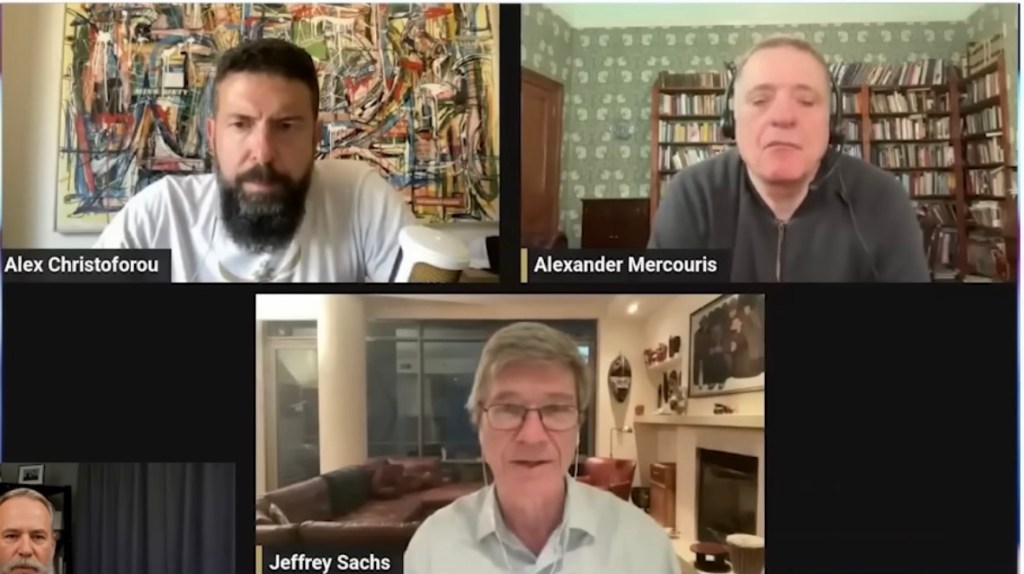
The United States, to this day, remains deluded in its ambition for global hegemony. This is not merely propaganda; it is a stated policy. The concept of “primacy” or “full spectrum dominance,” as articulated by the military, reflects a worldview that is increasingly outdated. For two decades, I have observed the futility of Washington pursuing this perspective. The reality is stark: the U.S. represents just 4.2% of the world, and we are no longer in the eras of 1945, 1950, or even 1990. China has eclipsed the U.S. economy when measured accurately, and it boasts a far greater industrial capacity. My frequent visits to China reveal that they have surpassed the U.S. in many fields of technology—though not all. This fact serves as an important reminder of the dramatic shifts that have taken place since the post-World War II era.
Historically, the U.S. enjoyed a period of uncontested dominance, but the rise of China’s industrial prowess and technological advancements are both measurable and observable. Cities like Shenzhen and Shanghai showcase China’s rapid progress, and it begs the question: can the United States adapt to this new reality, or will it cling to outdated notions of superiority? History shows that empires that resist change often decline more swiftly than anticipated. Moreover, China is poised to lead in critical technological sectors, including electric vehicles and solar energy production, where it currently holds over 80% of the global supply chain from panels to essential minerals. The U.S. may talk about attaining green energy independence, but it begins from a position of significant disadvantage.
China’s advantages extend beyond economics; they influence geopolitical dynamics as well, particularly in areas like zero-emission ocean shipping, a sector where the U.S. is not competitive. The disconnect between the growing capabilities of other nations and the outdated ambitions of the U.S. reflects a delusion fostered by years of historical power. From my perspective, this power has not been wielded responsibly; in fact, the legacy of Western imperialism leaves little attractive from a moral standpoint. Ideals espoused by figures like Adam Smith—who believed in trade over ownership—highlight the effectiveness of cooperation over conquest. European nations historically spread knowledge and culture, but they did so through colonization, leaving behind scars that continue to afflict many nations today.
In our current multipolar world, the narrative must change. The false sense of a Western-led world has faded, yet there persists a misalignment in the understanding among Western leaders. Many in the West, particularly in the U.S., remain unaware of the extent of global shifts in literacy, technology, and industrial capability. Some leaders seem to cling to notions of a lost empire, failing to recognize that national priorities, such as health care and education, should take precedence over pursuing outdated imperial dreams. Instead, the relentless pursuit of dominance fosters domestic instability, as political aspirations conflict with public needs.
European leaders, in particular, continue grappling with outdated fears rooted in 19th and 20th-century conflicts. The idea that Russia’s primary ambition is to invade Western Europe is not only irrational but demonstrates a disconnect from historical context. Such fears perpetuate a narrative that undermines rational dialogue, replacing it with emotional reactions that serve only to deepen divisions. Leaders must actively seek understanding through dialogue and engagement rather than taking a confrontational stance, which only heightens misunderstandings.
We now live in a multipolar reality that is evident across economic, technological, and military dimensions. The persistent delusion of Western hegemony—especially that of the United States—creates a widening gap between what is real and what is imagined. This disconnect can have dire consequences. Prominent figures, such as Donald Trump, exemplify this dissonance as they attempt to issue commands to other nations, oblivious to their growing autonomy and interests. Countries like India, with significant populations and developing economies, are no longer willing to take orders from Washington, pointing out a significant decline in U.S. influence.
While Trump may reflect the broader tendencies of the military-industrial complex, the responsibility of leadership lies in acknowledging these shifts and guiding the nation toward cooperation and restraint. A presidency that fails to recognize the realities of a multipolar world not only risks damaging American power but accelerates its decline. Leadership in the modern context involves navigating the complexities of global relations with humility and foresight, rather than issuing ultimatums that ignore the evolving landscape. Accepting the world as it is—not as one wishes it to be—is the critical challenge for U.S. leaders going forward.
 Democracy & Good Governance