

Eyes On Cinema @RealEOC presents: Eyes On UFOs
Month: July 2024
Why Don’t The UFO Controllers Reveal Themselves?
Project Unity
AATIP AND THE NEW YORK TIMES WITH COLM KELLEHER – UAP STUDIES PODCAST
UAP STUDIES Podcast
UFOs, Altered DNA, Hidden History | Best of Lue Elizondo, Alien abduction.
Theories of Everything with Curt Jaimungal
A Louisiana gas plant sea wall shows challenges of flooding, energy demand – Washington Post
The marshes that blanket this pancake-flat parish south of New Orleans stretch for miles, strewn with small streams that flow into the Gulf of Mexico. A lone four-lane road goes south past a Navy air base, an idle industrial site, a coal export terminal and a handful of small storm-battered communities.
Then, suddenly, a gigantic facility rises from the wetlands. Cranes dot the skyline. They hover over crews that are installing a jumble of pipes, pumps, storage tanks and two 720-megawatt power plants — equipment needed to freeze natural gas into a liquid form so it can be shipped around the world.

SKINWALKERS AT THE PENTAGON, BOB LAZAR & THE N.Y. TIMES TIC-TAC ARTICLE WITHGEORGE KNAPP
UAP STUDIES Podcast
Hurricane Beryl
‘This hurricane is a direct result of the climate crisis that Grenada, the Caribbean, and other Small Island Developing States (SIDS) are on the front line of.
We demand and deserve climate justice.
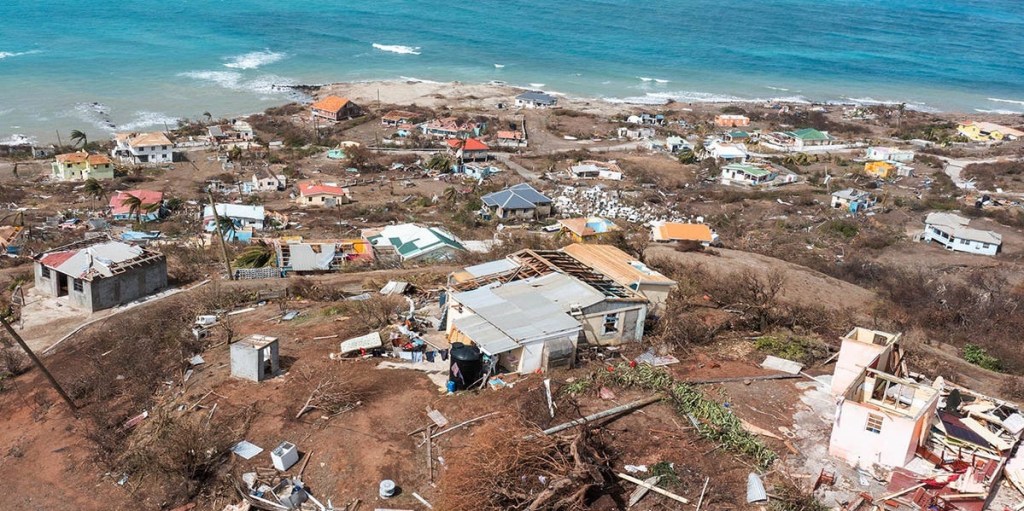
We are no longer prepared to accept that it is ok for us to constantly suffer significant loss and damage arising from climatic events and be expected to borrow and rebuild year after year while the countries that are responsible for creating the situation sit idly by with platitudes and tokenism.

This hurricane has put the people of Carriacou and Petite Martinique light years behind and they are expected to pull themselves up by the bootstrap on their own. This is not right, not fair and not just.’
- Grenada’s Prime Minister Hon. Dickon Mitchell
Permaculture found to be a sustainable alternative to conventional agriculture
RPTU University of Kaiserslautern-Landau has shown for the first time, in a joint study with BOKU University, that permaculture brings about a significant improvement in biodiversity, soil quality and carbon storage.

In view of the challenges of climate change and species extinction, this type of agriculture proved to be a real alternative to conventional cultivation—and reconcile environmental protection and high yields.
Permaculture uses natural cycles and ecosystems as blueprint. Food is produced in an agricultural ecosystem that is as self-regulating, natural and diverse as possible. For example, livestock farming is integrated into the cultivation of crops or the diversity of beneficial organisms is promoted in order to avoid the use of mineral fertilizers or pesticides.
(https://phys.org/news/2024-07-permaculture-sustainable-alternative-conventional-agriculture.html)
 Democracy & Good Governance