Manual for the ecological restoration of mangroves in the Mesoamerican Reef System and the Wider Caribbean
Scope of the Manual
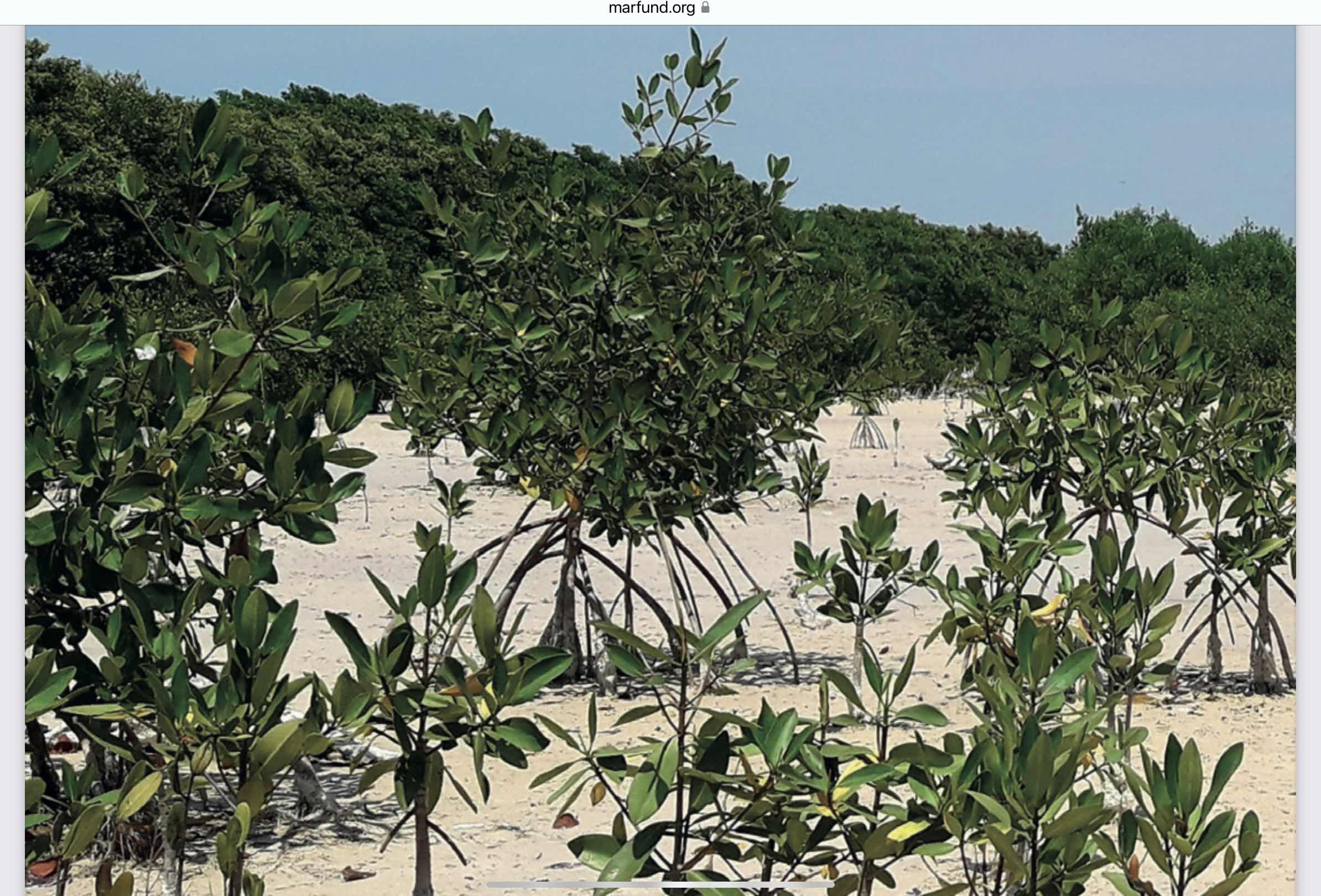
Mangroves in the Mesoamerican Reef Region (MAR) and the Wider Caribbean are the economic foundation of over 134 million people living in the coastal regions. Mangroves provide protection against floods and buffer against storms and hurricanes, to which the region is highly vulnera- ble. Additionally, due to their close relationship with other ecosystems, such as coral reefs and seagrasses, mangroves and the ecosystem services they provide are the conservation pillars of coastal ecosystems.
Among these services, the storage potential of blue carbon is one of the most essential services in mitigating the effects of climate change, in addition to supporting important tourism and fish- eries industries. However, every year the extent of mangroves continues to decline due to the im- pacts of climate change, change in land use, and the overexploitation of resources.
This manual contributes to strengthening local, national, and regional capacities for the eco- logical restoration of mangroves and the ecosystem services they provide in the MAR and the Wider Caribbean region. Within the framework of the Cartagena Convention and the United Na- tions Decade on Ecosystem Restoration 2021-2030, ecological restoration (ER) of mangroves is considered a Nature-based Solution (NbS) that allows addressing the effects of climate change. This favors biodiversity conservation and the economic well-being of the population, contribut- ing to the United Nations Sustainable Development Goals.
Mangrove ecological restoration in the MAR and the Wider Caribbean is a priority in the Regional Environmental Framework Strategy (ERAM, for its initials in Spanish) of the Central American Commission for Environment and Development (CCAD, for its initials in Spanish), in the devel- opment of the Blue Economy Regional Protocol, led by the MAR2R/CCAD/WWF-GEF Project as well as in the Regional Strategy and Action Plan for the Valuation, Protection and/or Restoration of Key Marine Habitats in the Wider Caribbean 2021-2030 (RSAP), developed under the Special- ly Protected Areas and Wildlife (SPAW) subprogram of the Cartagena Convention.
https://bit.ly/3KTbhgK Read More – Download


 Democracy & Good Governance